

This post was originally published on this site.
These are unprecedented times for England – enjoy them
To play this video you need to enable JavaScript in your browser.
This video can not be played
-
Published
Ten years ago the suggestion that England could become serial contenders in major tournaments would have sounded laughable.
After all, the Three Lions had just been knocked out in the last 16 at Euro 2016 by Iceland.
That came on the back of a dismal World Cup in Brazil where England finished bottom of their group, signing off with a 0-0 draw against Costa Rica for their only point in the tournament.
Spearheaded by the brilliance of Jude Bellingham and Harry Kane, England now firmly belong in the conversation as potential champions.
Not just this year, but every year.
Since Euro 2016, England have reached at least the semi-finals in four out of five tournaments. We are in unprecedented times.
It is a record only surpassed by Argentina and France, as they have World Cup and Copa America titles to show for it.
After England’s nail-biting 2-1 extra-time victory over Norway on Saturday, Argentina – and a first meeting with Lionel Messi – await in the final four.
Even if England fall short once again, this is now a team built to compete rather than enjoy a brief dalliance with success.
A remarkable era for England’s football teams
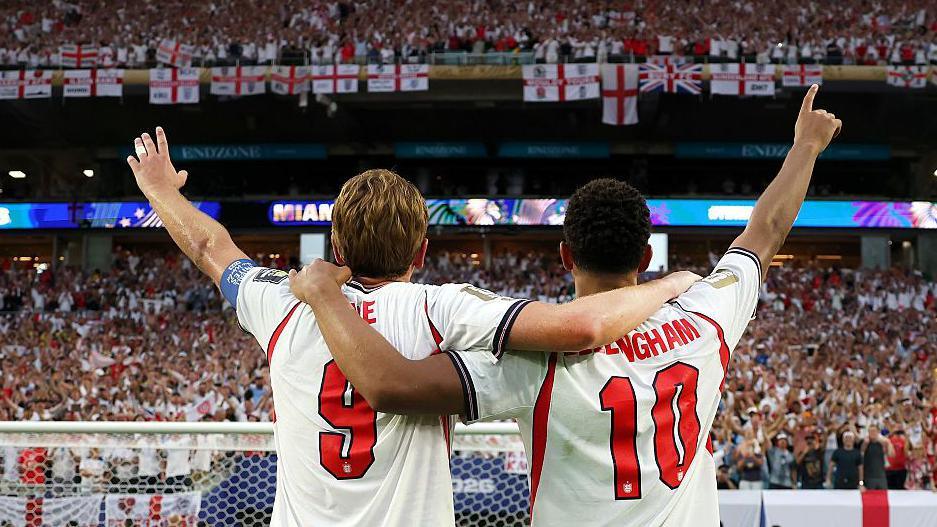 Image source, Getty Images
Three Lions, the song written by David Baddiel, Frank Skinner and the Lightning Seeds for Euro ’96, has long been derided outside of England for its supposed arrogance.
Yet it encapsulated what supporting this England team was about. Not just at the time, but what came before and the 20 years that followed, too.
“England’s gonna throw it away, gonna blow it away,” – a tale of hope over lived experience.
The idea that England fans expected success is hardly backed up by history.
After England reached the semi-finals of Euro ’68, losing 1-0 to Yugoslavia, they didn’t make it to the last four of another tournament until the 1990 World Cup. A wait of 22 years, during which time they failed to make it to two World Cups and three European Championships.
Then after Euro ’96, England had to wait another 22 years to reach a semi-final. A period littered with tournament exits which only backed up the sentiment within Three Lions.
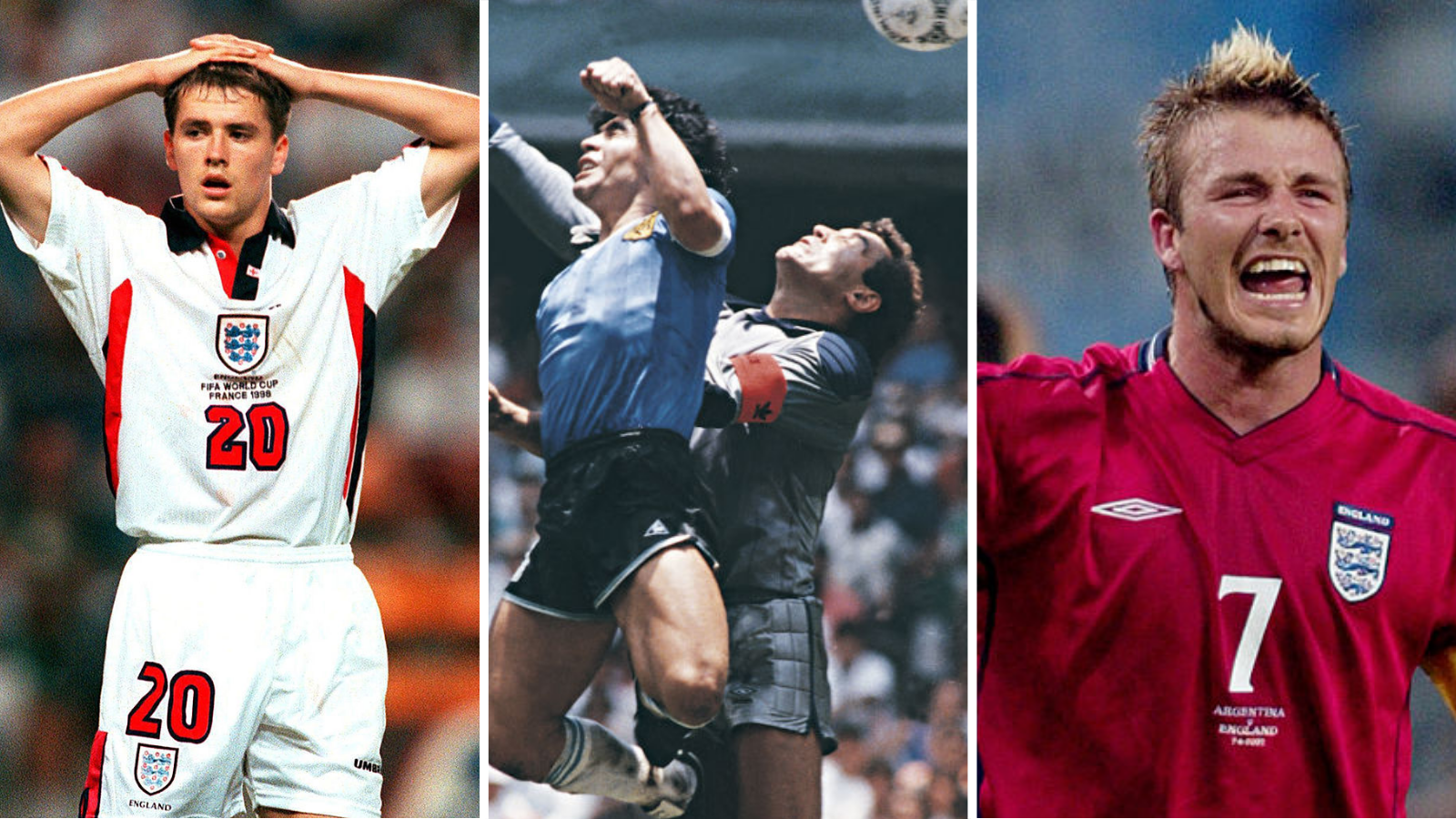
Take the red card for David Beckham against Argentina in the last 16 at France 98, or for Wayne Rooney versus Portugal in the 2006 quarter-finals. England lost both games.
Or David Seaman grasping at thin air as Ronaldinho’s free-kick found its way into the back of the net in the quarter-final loss to Brazil in 2002.
Even the failure to even make it to Euro 2008.
In the 68 years before Russia 2018, England had only ever reached one final and three semi-finals. And two of those were as hosts.
England’s ‘golden generation’ could not get beyond the quarter-finals.
Now everything is different. An extended period of excellence no England team has come close to.
A teenaged England fan today pretty much knows nothing other than deep runs into tournaments.
Two finals and two semi-finals in the space of eight years.
Gareth Southgate took England to successive finals of the Euros, losing to Italy on penalties in 2021 and 2-1 to Spain in 2024.
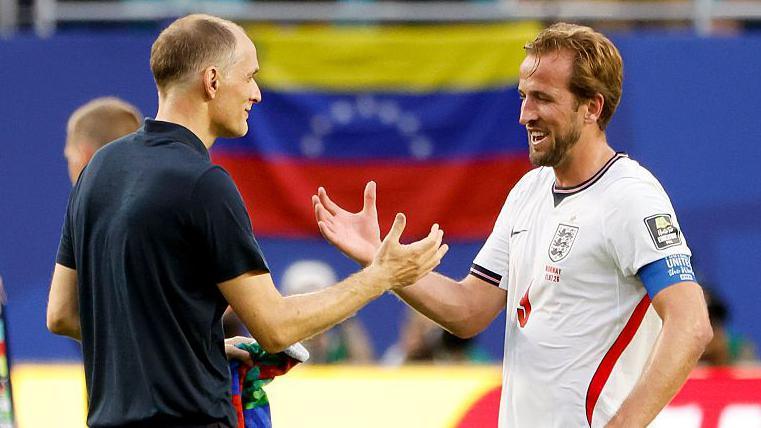
Thomas Tuchel is now tasked with taking the next step.
It is a remarkable era for England’s football teams, with the Lionesses winning back-to-back European Championships and being runners-up at the 2023 Women’s World Cup.
And with a home men’s Euros in two years, you would not bet against it continuing.
-
Bellingham reaching heights of World Cup legends with Messi next
-
Published1 day ago
-
-
Tuchel angry at ‘lucky’ England – but Bellingham defends players
-
Published1 day ago
-
-
‘We should all be excited’ – Messi set for first England meeting
-
Published1 day ago
-
England’s production line keeps on running
The transformation is incredible, but it is not by accident.
In 2013, shortly after taking over as chairman of the Football Association, Greg Dyke was fiercely critical of the structure of English football.
“The problem is serious, very serious,” Dyke said about an “alarming” lack of homegrown talent.
Dyke set the England team two targets: reach the semis of Euro 2020 and win the World Cup in 2022.
Many scoffed at the mere suggestion, external of such success, but he was not too far out.
Dyke knew that two key building blocks were already in place.
In 2011, the £340m elite player performance plan (EPPP) was voted through by EFL clubs. It funded an overhaul of elite academies and restructured the system.
Then came St George’s Park.
It took the Football Association 11 years to build it after purchasing the land in 2001.
Plans were approved, then mothballed, and then resurrected.
Finally, in 2012, it opened as the destination of coaching and development of the England team at all levels.
The EPPP was no quick fix, a long-term investment in coaching and facilities.
Today, academy players use state-of-the-art training centres with the best pitches, coaches and back-up staff.
And then they join up with the England development teams at a similarly high-quality training centre.
The pathway is not perfect. More than 12,000 boys are in the academy system and 91% will never play a professional game.
But 15 years on it has created a production line of talent that has helped to make England the competitive team they are today.
Bellingham – who only recently turned 23 – Declan Rice, Bukayo Saka and Elliot Anderson are star names within the squad as products of EPPP.
Such are the depth of options available that Trent Alexander-Arnold, Cole Palmer and Phil Foden can be left out of the squad – three players who were part of the squad which reached the final of the Euros just two years ago.
Tuchel can choose not to pick them and still get England to the final four of a World Cup.
And the production line keeps running, with Alex Scott, Josh King, Ethan Nwaneri and Rio Ngumoha part of the pre-tournament training squad.
Arsenal’s Max Dowman, 16, broke records for his age-related achievements in the Premier League and the Champions League and is destined to make the step up.
One thing now remains – a trophy
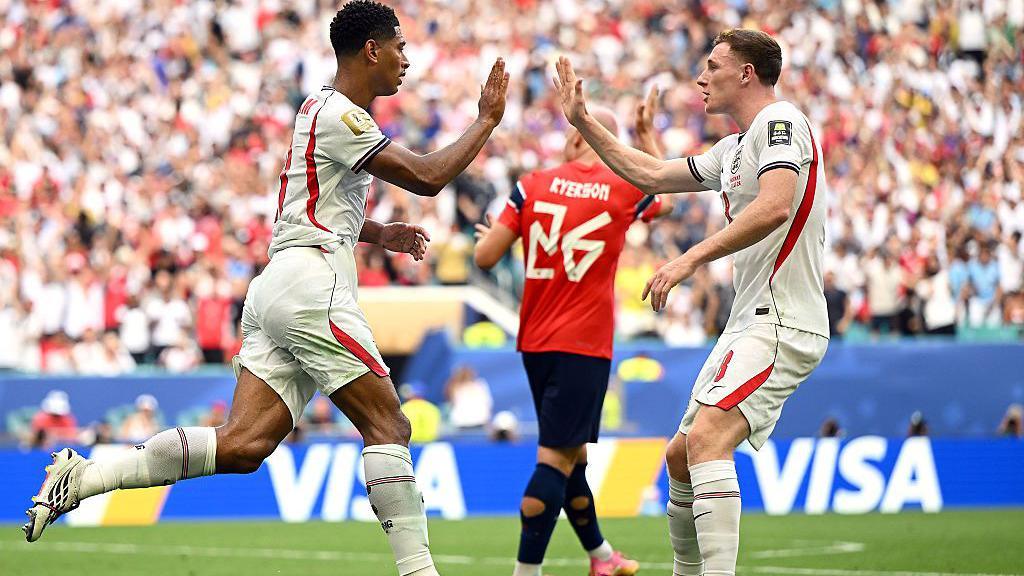 Image source, Getty Images
Three Lions seems to almost have been cast aside at this tournament.
Silence Is Talking by Reverend & The Makers is reborn as the terrace anthem, aided by the trumpeter in the England band playing the familiar riff taken from War’s 1975 song Low Rider.
The added lyrics, sung on repeat, have a nod to past and present: “Football’s coming home again, with Thomas Tuchel.”
While Three Lions does get played inside the stadium at full-time, it is Wonderwall by Oasis which has overtaken it as the anthem to unite players and fans.
The former will always have its place, but perhaps the sentiment no longer feels so relevant.
Maybe this indicates the fans are ready to move on and embrace success rather than fear the failures of the past.
This team feels more resilient and freed from the shackles of disappointment.
Take England’s 3-2 win over co-hosts Mexico.
Reduced to 10 men following the sending off of Jarell Quansah, the old script would have seen England knocked out as brave warriors. Probably on penalties.
“Everyone seems to know the score, they’ve seen it all before.”
Not this England team.
It is time to accept that this is where England belong. Through ability, not history.
Tuchel now needs to take the next step, and beat Argentina to send England to the World Cup final for only the second time.
Then anything could happen in New Jersey on Sunday.
One thing now remains for the men’s team.
Semi-finals and finals are only part of the story.
Kane needs to hold aloft a trophy to write the final line.
To play this video you need to enable JavaScript in your browser.
This video can not be played
-
-
Published20 hours ago
-
-
-
Published12 hours ago
-
-
-
Published2 days ago

-
-
-
Published2 July
-