
This post was originally published on this site.
Taiwan Semiconductor Manufacturing Company (TSMC) (Taipei: 2330 and NYSE: TSM) may be the most important business most people have never heard of. Right now, you’re probably carrying products that it has made. Most consumers recognise names such as Apple and Nvidia. Yet behind many of the products they sell sits a Taiwanese manufacturer responsible for turning their designs into reality.
Every day, billions of people rely on devices powered by chips produced by TSMC. The company’s influence stretches far beyond smartphones. From artificial intelligence to consumer electronics, much of the modern digital economy ultimately depends on a business with headquarters on an island roughly 100 miles off the coast of China.
What makes TSMC remarkable is not simply its scale, but the way it achieved it. Unlike most technology giants, it did not become dominant by creating the best consumer products or developing a monopoly over software. Instead, it positioned itself as a neutral supplier to an industry filled with fierce competitors. In effect, TSMC became the Switzerland of the semiconductor world, doing business with everyone and doing so in secrecy.
Sign up to Money Morning
Don’t miss the latest investment and personal finances news, market analysis, plus money-saving tips with our free twice-daily newsletter
Don’t miss the latest investment and personal finances news, market analysis, plus money-saving tips with our free twice-daily newsletter
How Morris Chang founded TSMC
That strategy was the brainchild of Morris Chang, a veteran semiconductor executive who spotted a flaw in the industry’s business model and built an entire company around solving it. Nearly four decades after it was founded, his insight sits at the centre of the global technology industry.
Chang never set out to build one of the world’s most important firms. For 25 years, he worked at Texas Instruments, rising high to run its global semiconductor business. During those years, Chang noticed a problem. Brilliant engineers regularly designed innovative chips, but turning those designs into products required vast sums of money.
In the 1970s and 1980s, semiconductor firms were expected to do everything themselves. Designing chips was only half the job. Companies also needed expensive factories, specialised equipment and the expertise to run them. The result was an industry dominated by a handful of large, vertically integrated firms.
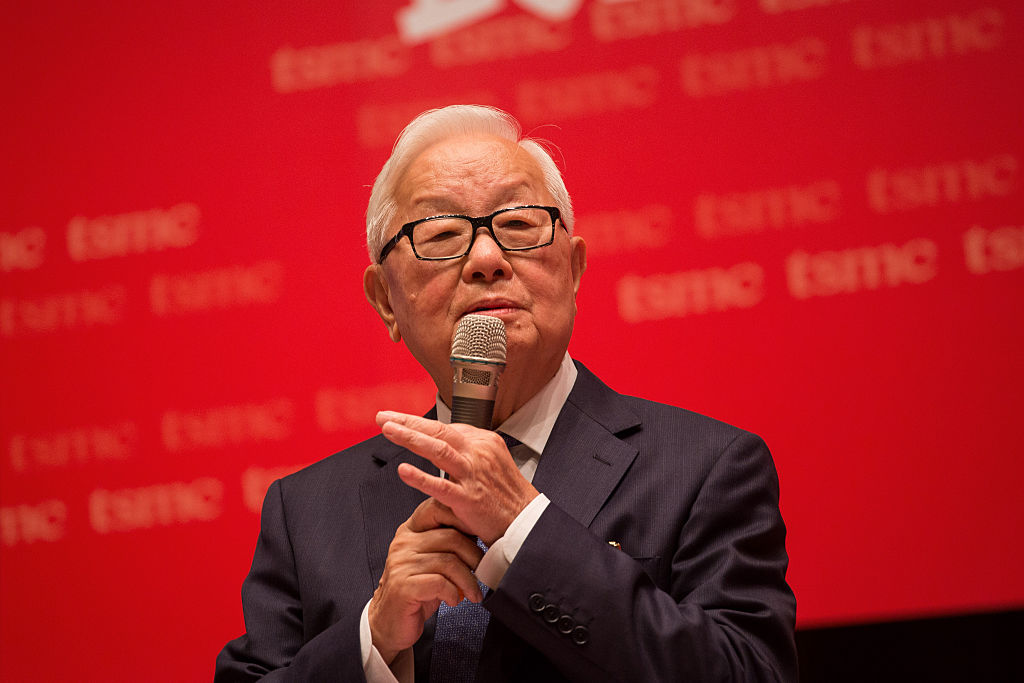
Then Chang’s own career took an unexpected turn. In 1983, aged 52, he was passed over for the top job at Texas Instruments and left the company. After a brief spell in a senior role at another American chip company, he received an unusual offer. The Taiwanese government wanted to build a domestic electronics industry and was looking for someone with Silicon Valley experience to lead the effort. Chang accepted.
(Image credit: Billy H.C. Kwok/Bloomberg via Getty Images)
He arrived in Taiwan with decades of semiconductor experience and a conviction that copying America would be a mistake. Taiwan lacked the design expertise, customer relationships and global brands needed to compete. But Chang had spent years watching another problem unfold. The industry was full of talented chip designers who could not afford to manufacture their ideas. What if somebody built the chips for them?
That simple question led to the creation of TSMC in 1987. At the time, the idea looked absurd. Bringing a chip to market required access to a fabrication plant, or “fab”. The industry believed serious companies should own these factories themselves. In practice, that meant chip designers relying on one of the industry giants.
That created another problem. The company manufacturing your chip was often also a competitor. Handing over your most valuable intellectual property required a leap of faith. Chang’s solution was that TSMC would make chips for anyone willing to pay, but would never design products of its own.
In 1987, that sounded like madness. When Chang went looking for investors, many of the industry’s biggest names rejected him. Texas Instruments and Intel both declined his offer. A factory without its own products looked like a recipe for bankruptcy. How could a manufacturer survive without guaranteed demand?
In the end, Chang persuaded the Dutch electronics group Philips and several wealthy Taiwanese families to back the venture. Even then, enthusiasm was limited. Philips largely viewed the investment as a way of supporting the Taiwanese government’s ambitions rather than as a compelling commercial opportunity. It intended liquidating its investment early. Potential customers were hardly more enthusiastic. Many designers saw little reason to outsource manufacturing. A company that only made chips for other people seemed unnecessary.
By now, Chang was a 56-year-old executive pitching an untested business model in an industry convinced it could never work. Then, fortune presented an opportunity. In 1988, Intel found itself short of manufacturing capacity. Faced with the prospect of disappointing customers, it reluctantly turned to TSMC for help. Intel’s engineers arrived in Taiwan expecting a low-cost, unsophisticated subcontractor. Instead, they found a world-class operation run by one of the industry’s most experienced executives. Passing Intel’s quality standards was not easy, but once TSMC secured the American giant’s approval, attitudes across the industry changed quickly. If Intel trusted TSMC, others reasoned, perhaps they could too.
That endorsement transformed the trajectory of the company. Designers no longer needed to spend billions building factories before launching a new product. Instead, they could focus on what they did best – designing chips, and letting TSMC handle the rest. Without TSMC, it’s unlikely that Nvidia could have existed, nor could a host of other chip companies.
A new generation of semiconductor firms emerged, freed from one of the industry’s biggest barriers to entry. While rivals competed to design better chips, TSMC focused on becoming the best manufacturer in the world. By choosing not to compete with its customers, the company turned neutrality into a competitive advantage. That decision would prove far more powerful than anyone imagined. But the success of TSMC’s model created an obvious question: if it was such a good idea, why didn’t somebody copy it?
Many tried, but almost all failed. For years, Samsung looked like the most credible challenger. The South Korean giant had deep pockets and decades of manufacturing experience. The problem was that Samsung was also a competitor. Unlike TSMC, Samsung sold smartphones and consumer electronics under its own brand. That created a dilemma for customers. Why hand your most valuable chip designs to a firm that might one day compete against you? No customer wrestled with that question more than Apple.
During the early years of the iPhone, Samsung made many of Apple’s processors. The arrangement worked, but it became increasingly awkward as the two companies emerged as fierce rivals in the smartphone market. By the early 2010s, they were fighting a series of patent disputes. Apple found itself in the strange position of relying on one of its biggest competitors to make some of its most important components.
TSMC offered an escape route. With the launch of the A8 processor in 2014, Apple shifted production to Taiwan. The move was risky, but Apple concluded that the benefits outweighed the costs. TSMC’s neutrality had become one of the most valuable assets in the technology industry. Today, many of Silicon Valley’s biggest rivals manufacture their chips at TSMC. Apple, Nvidia, AMD and Qualcomm all rely on the same company, despite competing aggressively in their own markets.
(Image credit: Jakub Porzycki/NurPhoto via Getty Images)
Samsung’s problem was a conflict of interest; Intel’s was something different: success. For decades, Intel dominated the semiconductor industry. Its factories were among the most advanced in the world. However, the company became increasingly focused on its own products. When Apple approached Intel in the mid-2000s about supplying chips for what would become the first iPhone, Intel declined.
Management believed the opportunity was too small to justify the investment. It was one of the most expensive misjudgements in the history of the technology industry. By the time Intel recognised its mistake, Apple had moved on and TSMC was becoming the manufacturing partner of choice for a new generation of chip designers. When Intel later attempted to open its factories to outside customers, its manufacturing systems had been built around Intel’s products, not the needs of third-party designers.
Other competitors couldn’t keep up with the investment needs. GlobalFoundries, an American rival, spent years trying to keep pace before effectively giving up on leading-edge manufacturing in 2018. The company concluded that each new generation of chip technology required so much investment that the returns no longer justified the risk.
China’s national champion, SMIC, faces a different challenge. Western export controls have restricted access to advanced manufacturing equipment, making it difficult to compete at the industry’s frontier.
TSMC’s greatest advantage
TSMC’s greatest advantage is not its technology, because that can be copied. Its real advantage is the business model Morris Chang created nearly four decades ago. The company sits at the centre of the semiconductor industry, serving customers that often compete with one another. That position generates enormous scale, which in turn funds the next generation of factories and equipment.
The most advanced chips require ultraviolet lithography machines built by the Dutch company ASML. Each cost more than £275 million. A state-of-the-art fab may contain dozens of these machines, helping to push the cost of a new facility beyond £15 billion before production even begins. That creates a problem for potential rivals.
Customers will not trust an unproven manufacturer with their most important products, especially if they don’t have advanced fabs. Yet building a state-of-the-art factory requires billions of pounds before those customers appear. Having already achieved enormous scale, TSMC now largely escapes this trap. The company controls roughly 92% of advanced chip manufacturing and generates the cash needed to fund the next generation of technology.
In 2026 alone, TSMC expects to spend nearly £45 billion on new factories and equipment. Few companies in the world could contemplate spending that much. None can do so with the same confidence of earning a return. The result is a powerful feedback loop. Scale attracts customers. Customers generate cash. Cash funds new factories. New factories attract even more customers.
Every year that cycle turns, TSMC becomes harder to catch as the price of entry rises ever higher. That scale gives TSMC another advantage: it allows customers to help fund its expansion. Most manufacturers have to build factories first and hope demand follows. Today, TSMC often works the other way around. Some of its largest customers commit billions of pounds years before new facilities begin production, effectively helping to finance the next generation of capacity.
At the end of 2024, TSMC held more than £7.3 billion of customers’ deposits. As production ramped up on newer technologies, some of that money was recognised as revenue, but the balance remained substantial. Technology companies are willing to tie up enormous sums because access to TSMC’s manufacturing has become critical to their own growth plans. This arrangement shifts much of the risk away from TSMC.
When companies such as Nvidia sign long-term agreements worth billions of pounds, they provide “visibility” – confidence in management forecasts – that few industrial businesses can match. New factories can be built with a high degree of confidence that demand will be waiting when they open. That helps explain why TSMC can continue investing through industry cycles.
AI is a game-changer for the semiconductor industry
For years, Apple was the company’s most important customer. The iPhone generated the predictable demand that allowed TSMC to refine successive generations of manufacturing technology and steadily expand its lead. Now a new force is reshaping the industry. AI has become the biggest driver of demand for advanced semiconductors. Training and running large AI models requires vast quantities of computing power, creating an arms race among technology companies desperate to secure enough chips.
The biggest beneficiary has been Nvidia. In 2025, Nvidia overtook Apple as TSMC’s largest customer, generating more than £18 billion of revenue for TSMC and accounting for roughly a fifth of total sales. The shift says a great deal about how quickly AI has altered the economics of the technology industry, but the opportunity extends beyond chip design.
Producing cutting-edge AI processors is one of the most demanding manufacturing tasks in the world. The chips themselves are larger, more complex and more difficult to assemble than those used in smartphones. As demand has exploded, bottlenecks have emerged throughout the supply chain. For TSMC, that has translated into even greater pricing power.
The world’s largest technology firms are competing for a limited supply of advanced manufacturing capacity. Many have little choice but to accept TSMC’s terms because there are few credible alternatives. AI has reinforced the advantages of specialisation. Developing a leading-edge AI chip already costs hundreds of millions of pounds. Building the factory to make it would require billions more. As AI pushes the technological frontier forward, the advantages of specialisation are becoming even more pronounced.
But TSMC’s dominance creates a problem. Most of the world’s most advanced semiconductor manufacturing remains concentrated in Taiwan. That has become a concern for governments, particularly as tensions between China and Taiwan have intensified. A disruption to TSMC’s operations would ripple through the global economy.
Smartphones, data centres, AI systems and countless other technologies depend on its chips. Under pressure from the US and other governments, it’s begun expanding overseas. The largest investment is a vast complex in Phoenix, Arizona. Similar projects are underway in Japan and Europe.
Building advanced factories in the US is estimated to be roughly 50% more expensive than doing so in Taiwan. Labour costs are higher, experienced engineers are harder to find and supply chains are less developed. TSMC has reportedly had to transfer experienced staff from Taiwan and create thousands of new operating procedures to support its US operations. Yet even these higher costs have not weakened the company’s position.
Customers are willing to pay a premium for chips manufactured on US soil. For many, securing a politically safer supply chain is worth the extra expense. In an ironic twist, efforts to reduce dependence on TSMC have largely demonstrated how dependent the world has become on its expertise.
The future looks bright for TSMC
Whether the company can maintain its current position forever is another question. The semiconductor industry has a long history of dominant firms losing their edge, while geopolitical tensions surrounding Taiwan remain an ever-present risk. Governments are spending heavily to build alternative sources of supply and rivals continue searching for ways to close the gap.
However, history suggests writing off TSMC would be unwise. For nearly 40 years, the company has repeatedly adapted to changes in technology, customers’ demands and the structure of the industry. It has survived downturns, outlasted competitors and continued strengthening its position at the heart of the digital economy. The story of TSMC is ultimately the story of how a company became indispensable. In an industry defined by relentless change, that may be its most remarkable achievement.
None of this means TSMC is a bargain. Investors are well aware of the company’s strengths and the shares have performed exceptionally well over the past decade. As a result, the stock trades on a valuation that reflects high expectations for future growth. Still, TSMC has qualities that are difficult to find elsewhere. It occupies a dominant position in one of the world’s most important industries, enjoys deep relationships with many of the largest technology companies on the planet and continues to invest heavily to maintain its lead.
Most importantly, investors do not need to predict which company will ultimately win the AI race. Whether the future belongs to Nvidia, AMD or some future challenger, there is a good chance that their chips will still be manufactured by TSMC. That does not guarantee attractive returns from today’s share price. But betting against the company has rarely been a profitable strategy. For investors seeking exposure to long-term growth in technology and AI, TSMC remains one of the highest-quality businesses in the market.
This article was first published in MoneyWeek’s magazine. Enjoy exclusive early access to news, opinion and analysis from our team of financial experts with a MoneyWeek subscription.
Explore More