
This post was originally published on this site.
Mountaineer who began fossil hunting after near-death experience discovers rare ‘sea dragon’
-
Published
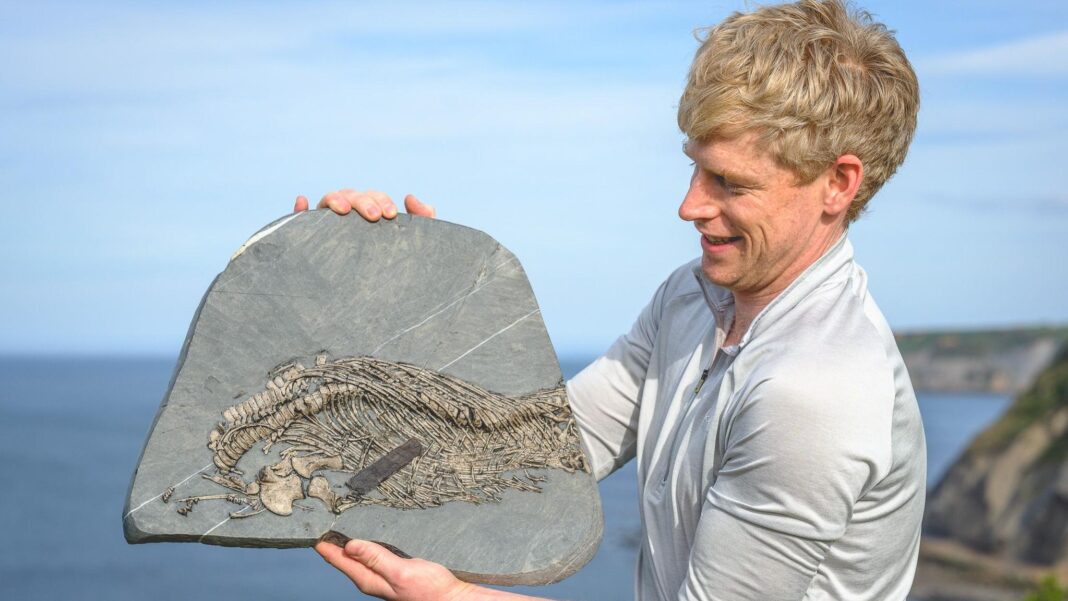
A mountaineer who nearly died in an avalanche has described how his recovery led him to amateur fossil hunting and the discovery of a marine reptile or “sea dragon” not found in Wales before.
Matthew Myerscough said he was left with post-traumatic stress disorder after being unconscious for 20 minutes buried beneath a metre of snow after a slide on Yr Wyddfa, also known as Snowdon, in 2014.
It led him away from the mountains to fossil-laden beaches at Lavernock Point in the Vale of Glamorgan, where he discovered a jaw bone from the Jurassic period 200 million years ago.
Myerscough, a civil engineer, said the painstaking process of fossil hunting helped his worries and stresses to “melt away”.
“Looking back now, I realise, I have had some PTSD, external,” he said of the accident.
Myerscough returned to Yr Wyddfa in 2018 for the Dragon’s Back Challenge, hiking past the place where he had almost died, but said by then he was moving away from mountaineering.
“Being on the beach, and looking for fossils, and being kind of really focused on one specific task… it has been a tool for me to kind of process things,” he said.
“Worries or stresses kind of melt away as you’re focused,” he said, comparing it to the mindfulness people can get from yoga, sport or watching a film.
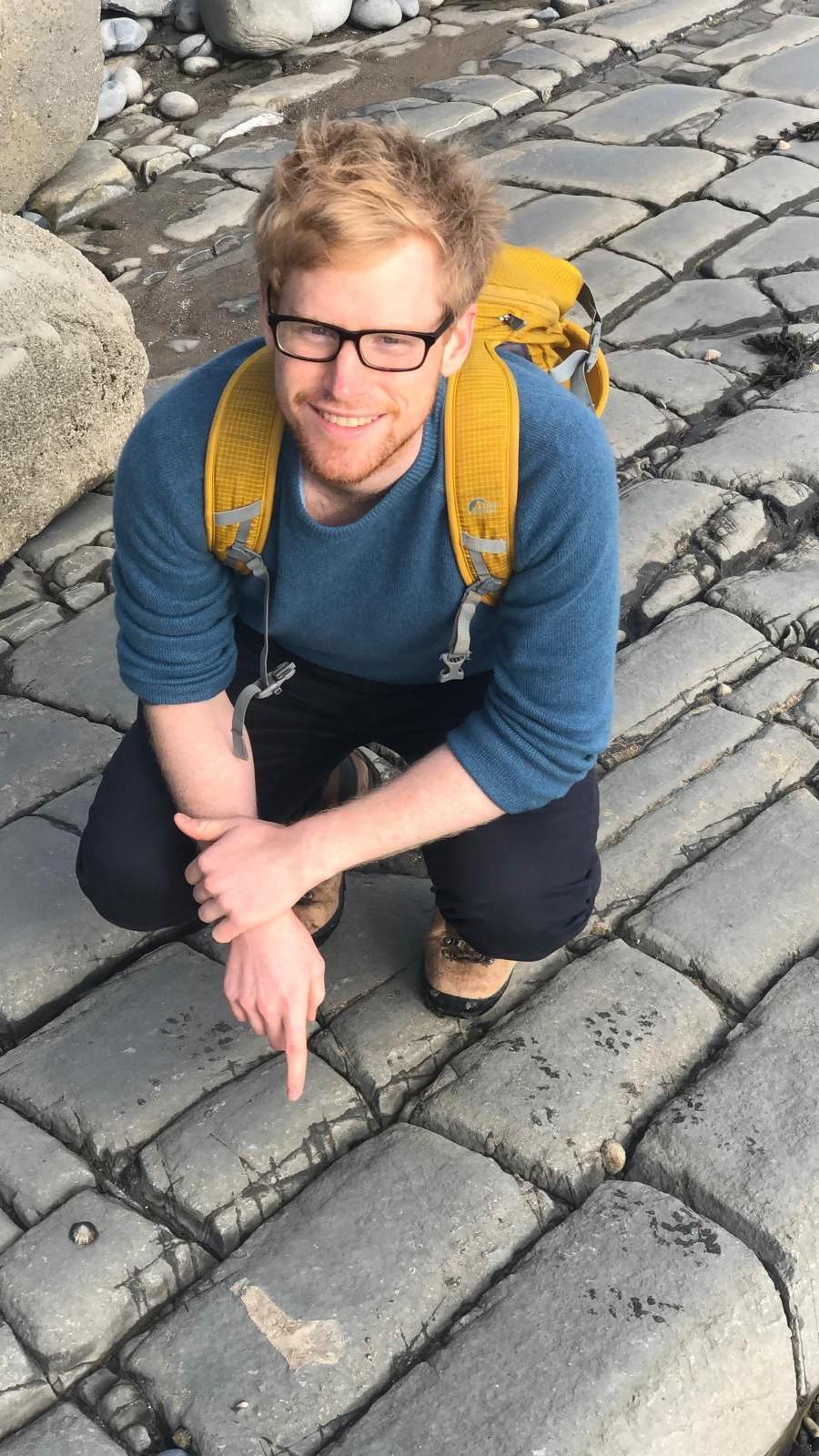 Image source, Matthew Myerscough
As well as helping his mental health, fossil hunting also led Myerscough to the discovery of a 201m-year-old plesiosaur jawbone, a type of marine reptile from the early Jurassic period which had never been found in Wales before.
He and two fellow fossil hunters were walking away from Lavernock Point when they spotted a large shape in the limestone.
Myerscough said that through contacting experts, they were able to establish that it was the lower jaw of a rhomaleosaurus, a carnivore also known as a sea dragon.
Research on the find by National Museum Cardiff continues and Myerscough said he hoped it would lead to the publication of an academic paper.
“Every now and again, whether it’s a five-year-old or a 50-year-old, somebody finds something that is scientifically important, new to science, and we learn from that.”
What is fossil hunting?
Myerscough said fossil hunting was all about looking for patterns in the rocks.
“I’m very much focused on using my eyes to find the fossils, so there’s definitely plenty of trips where I’ll go out and my hammer will stay in my rucksack.”
He said he carries a hand lens for taking a closer look at a rock that catches his eye, as well good hiking boots or wellies, and a flask of strong coffee.
“If you head towards Lavernock Point you can literally walk along the beach, and you may pick up a vertebra loose in the shingle from a plesiosaur or an ichthyosaur.
“You can find bits of ribs, you can find coprolites, the fossilized poo from these animals and from prehistoric sharks.
“You can find all those fossils just loose, you know, in the shingle there, if you’re lucky, and many families do, and I think that’s such a wonderful pastime.”
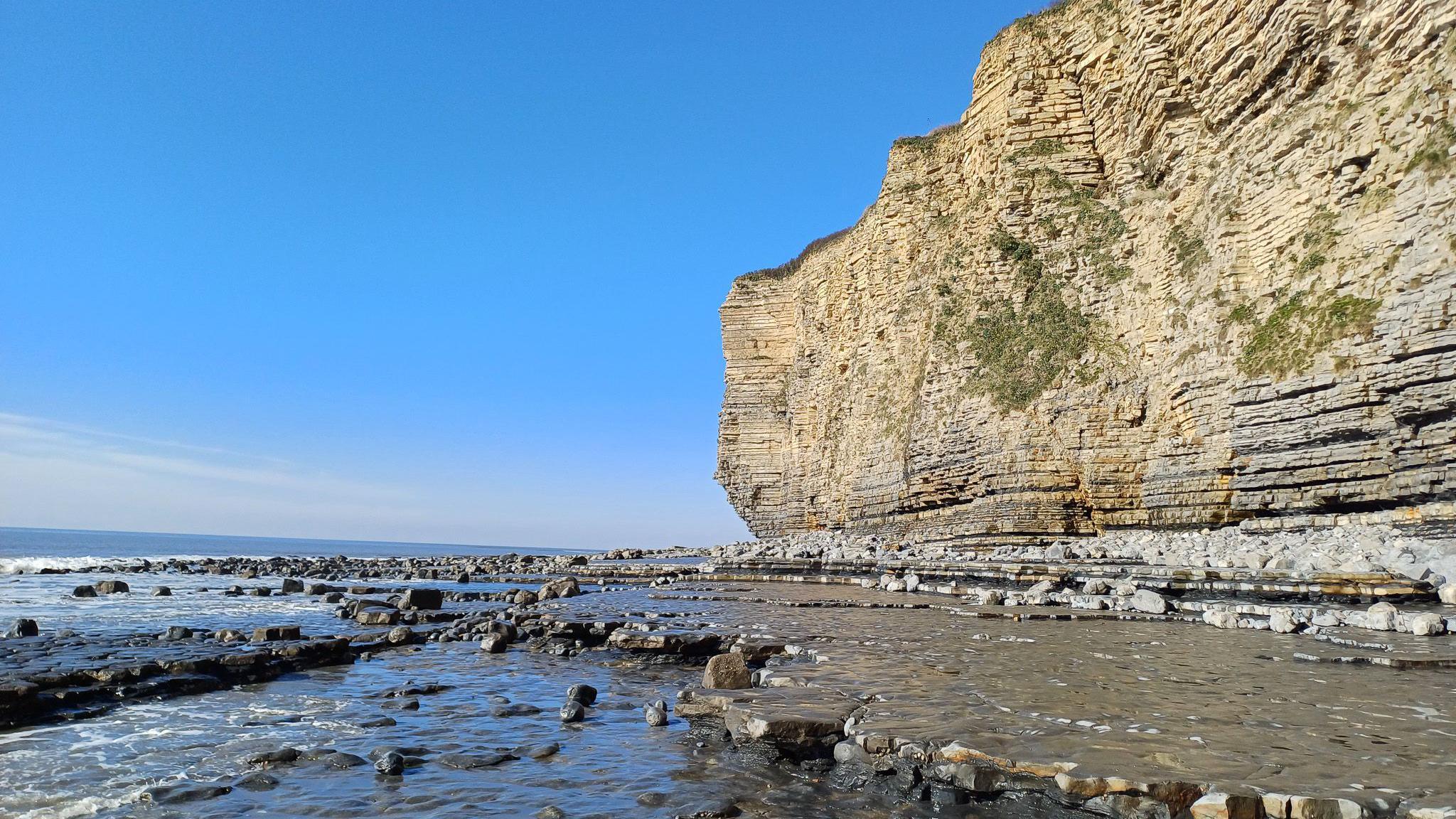 Image source, Matthew Myerscough
Myerscough said much writing about archaeology focused on the discipline itself, but he has written a book – In Search of Sea Dragons: A Fossil Hunter’s Odyssey – on the process of fossil hunting.
“I wanted to read about the experience of actually finding fossils, you know, what it was like to actually discover something on the beach,” he said.
He suggested that fossil hunters can sometimes be secretive about their process, especially the location of their finds.
“I’d seen photos of specimens, but perhaps the details of just where exactly they came from, or what they looked like when they were found was kind of shrouded in secrecy.
“I wanted to put this out there and say, ‘This is what I found, this is what it was like when I found it, this is how I collected and recovered it, and this is what it meant to me,” he said.
More top stories
-
-
Published1 day ago
-
-
-
Published1 day ago

-
-
-
Published19 hours ago
-