
This post was originally published on this site.
Archbishop of Canterbury committed to £100m slavery fund
-
Published
The Archbishop of Canterbury has renewed her commitment to a controversial £100m fund over the Church of England’s role in the transatlantic slave trade.
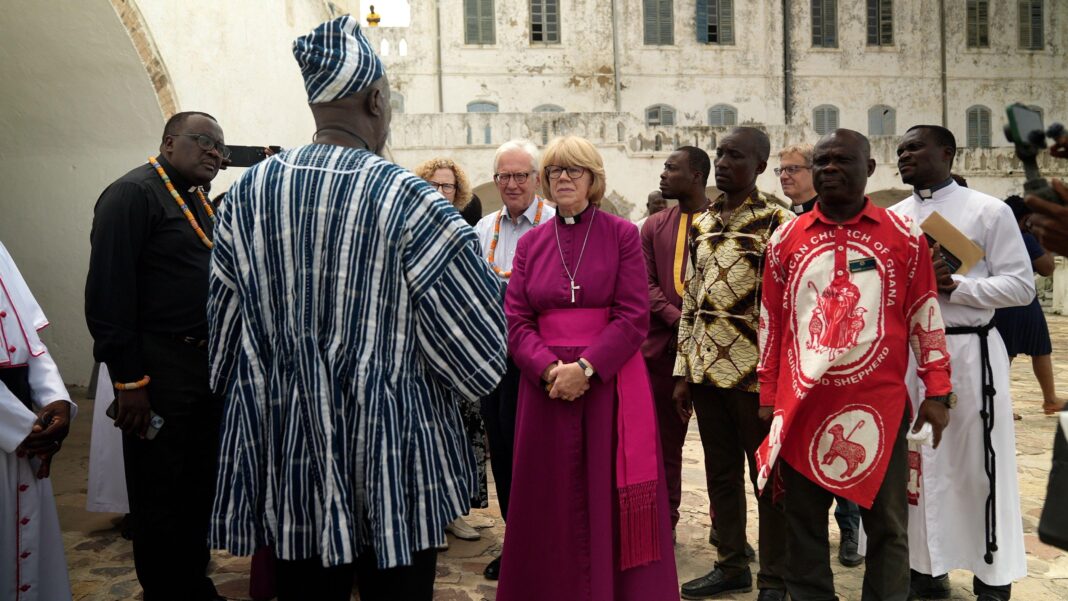
Dame Sarah Mullally was speaking on a visit to Cape Coast Castle in Ghana where enslaved Africans were held before being trafficked to the Americas.
She said touring the castle made her reflect on the crimes committed by the institution she leads.
“We played a part in the transatlantic slave trade. That is clear. Part of the Christian belief in repentance is about action, so we are putting in place action to support those communities that feel the legacy of the slave trade,” she added.
This is Dame Sarah’s first pastoral visit to Africa since being installed as head of the Church of England at a ceremony in Canterbury Cathedral in March.
Reparative justice has been one of the themes running through the Ghana leg of this trip.
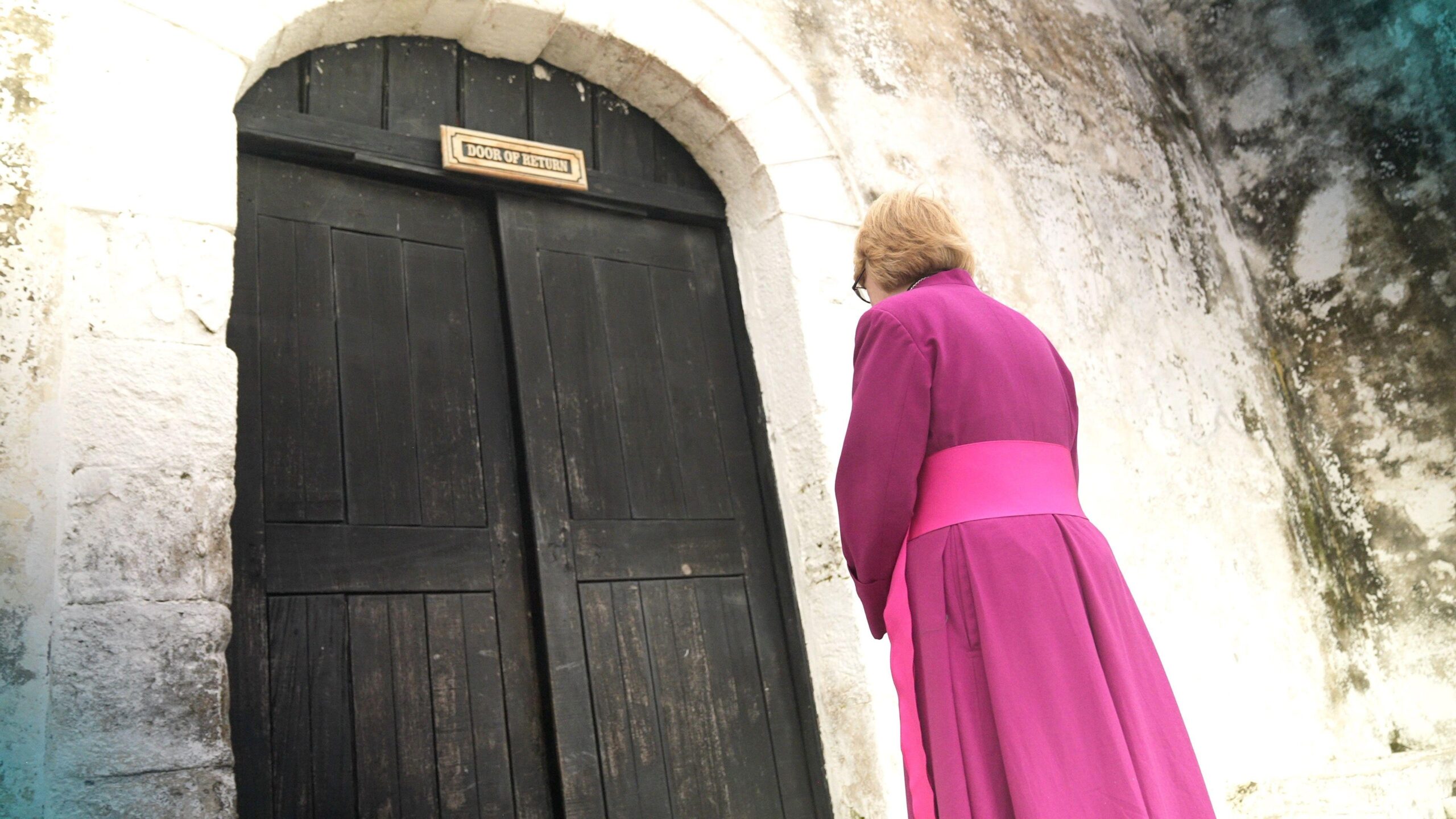
At Cape Coast Castle, which came under British control in the 1660s, Dame Sarah was shown dungeons where slaves were held, and the so-called “door of no return” through which they were forced on to ships.
The archbishop said: “You can’t help but be deeply moved by the horrific conditions that people were kept in and the way that they were treated.
“It completely throws you off balance and brings home the evil that was transatlantic slavery.”
Above the dungeons sits a chapel, which she said was a “stark illustration of the way the church was involved in the slave trade”.
The Church of England has previously apologised for its associations with the slave trade.
Its missionary arm ran slave-farmed plantations in the Caribbean to fund the spread of Anglicanism, individual members of clergy were slave owners, and the Church received large donations from slave traders.
-
New archbishop urged to scrap £100m fund over slavery links
-
Published28 December 2025
-
Three years ago it was decided the Church would set up the fund for reparative justice work, after an audit of its historical endowment fund also reported large investments made in a company that trafficked slaves.
The aim is for the fund to be spent on “a programme of investment, research and engagement” in communities damaged by the enslavement of African people during the transatlantic slave trade.
But there has since been vocal opposition to the fund. Some have questioned the historical accuracy of reports into the level of the Church’s complicity, while others have raised legal concerns about it and ideological objections.
Ghana has been spearheading a global campaign for institutions and nations across the world that benefitted from the slave trade to pay reparations.
The country’s foreign minister Samuel Okudzeto Ablakwa has praised Dame Sarah.
“What the Archbishop of Canterbury is doing in Ghana on her current visit will begin to send the right signals. And those who are either revisionists or who are obstructionists within the Church of England are going to start thinking twice,” he said
“The Christian religion which they brought to Ghana and Africa teaches us that without admission of sins, there can be no salvation. There can be no going to heaven.”