
This post was originally published on this site.
Why Africa could back controversial Fifa plan
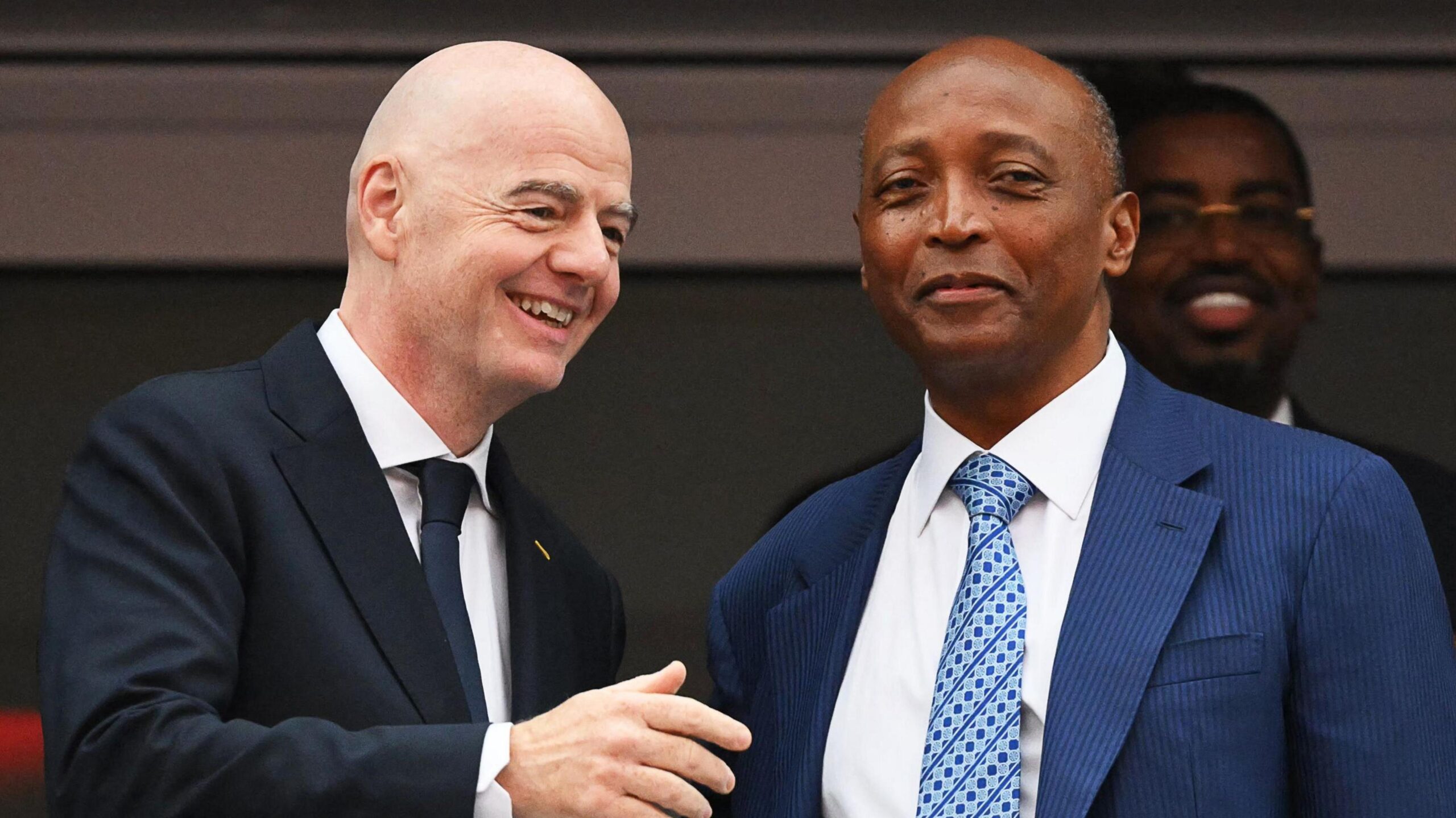 Image source, Getty Images
-
Published
In the row which has engulfed global football and the man who runs it, Gianni Infantino, could Africa end up as a lone voice of support for the Fifa president?
And why might that be?
While European governing body Uefa has voted to boycott Fifa competitions, including World Cups, if plans go ahead to sell stakes in those competitions to private investors, the Confederation of African Football (Caf) has remained largely silent so far.
Much of that has to do with the close relationship between Caf, Fifa and Infantino.
Caf president Patrice Motsepe lauded Infantino for his “excellent work” after this year’s World Cup and hailed the Swiss as “a good friend”.
“He is loyal to Africa,” Motsepe said on 22 July. “When people have been loyal to you, you never stab them in the back.”
Fifa’s aim is to create a commercial subsidiary to run its main events and allow external investors to buy stakes in it.
Fifa estimates the subsidiary, Fifa Forward Enterprise, could raise $4.2bn (£3.1bn) later this year, with the net benefits being reinvested into the global game.
Caf says its executive committee will meet to “assess and evaluate” the proposal next week, encouraging its member associations to do the same.
African countries have already benefited from previous Fifa funding.
The new sums at stake could continue to transform the footballing landscape on the continent.
-
Infantino ‘wrong man’ to lead Fifa says Burnham as criticism grows
-
Published6 hours ago
-
-
Fifa says ‘nobody selling football’ as plan continues
-
Published9 hours ago
-
Money on the table, but at what price?
So far Uefa, the Asian Football Confederation and Concacaf, which runs football in North and Central America and the Caribbean, have all opposed Infantino’s plan.
But given that many African football federations struggle financially, the lure of $40m (£30m) from Fifa may prove enticing to Caf’s 54 member associations, especially as an initial $20m (£15m) could be received as early as 1 January – provided the plans are approved by 19 September.
“Football is a very expensive venture, especially on the African continent where resources are not easy to come by,” Rogers Byamukama of Uganda’s football federation told the BBC.
“What is wrong with making more money and sharing that money with those that need it most?”
However, Isha Johansen, a former president of the Sierra Leonean FA who also served on Caf’s executive committee and the Fifa Council, says the proposal “does not sit well”.
“I think people have got to be really realistic here in knowing where we want to see football going in the coming years,” she added.
“Should football be commercialised in the manner in which it potentially could be if this proposal were to go through?
“As a businessman or woman you want something out of it. You’re not just doing it out of generosity.
“What price does one have to pay in order to get to this elevated development for football in Africa? I think it’s going to take a lot of soul-searching [but] I do hope that they (Caf) go along with all the other confederations.”
-
Courting controversy and befriending Trump – the story of Fifa boss Infantino
-
Published10 hours ago
-
Close ties to Infantino
Caf has developed a close relationship with Fifa since Motsepe and Infantino assumed their respective positions in 2016, with personal as well as business relationships to the fore.
Veron Mosengo-Omba, who served as Motsepe’s deputy from 2021 until March this year, was previously chief member associations officer at Fifa – and is a friend of Infantino, having studied law alongside him in Switzerland.
Mosengo-Omba was elected head of DR Congo’s football federation in May.
Together he and Motsepe undeniably improved the financial balance sheet at Caf, not least by improving revenues from the Africa Cup of Nations (Afcon), its flagship tournament, while Infantino has done his part to develop the game on the continent.
Africa was the main beneficiary of the expansion of the Fifa World Cup to 48 teams – with the continent awarded a guaranteed nine spots.
The previous allocation, five, had long been seen as a slight in Africa.
“You need to have a president of Fifa who is as committed to African development and growth as Gianni Infantino is,” Motsepe said.
“What Gianni has done, to contribute to us increasing the number of African national teams (at the World Cup), [is] enormously important.”
‘I don’t understand why Fifa took so long’
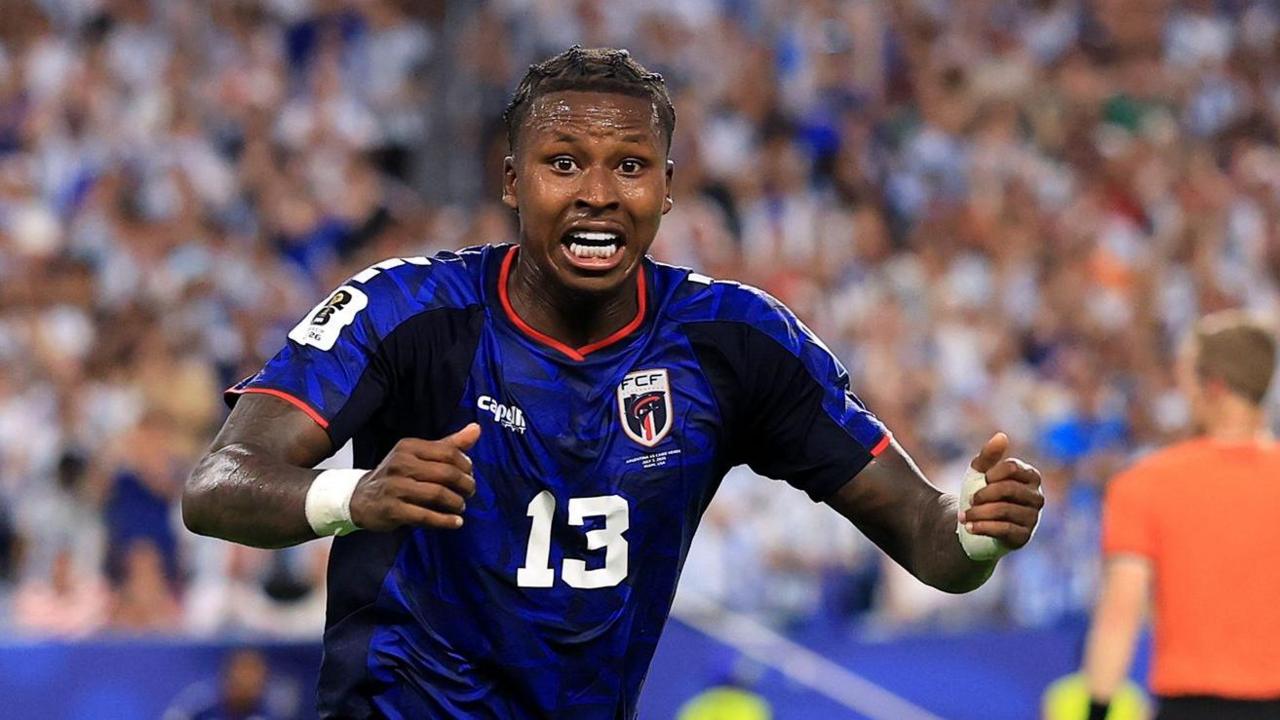 Image source, Getty Images
A lack of financial resources is a big reason for African member associations – many of whom rely on scant government funding – to back Fifa’s proposals.
“Our government cannot manage to give us even $1m (£740,000) every year for football,” Malawi FA president Fleetwood Haiya told Newsday on BBC World Service.
“Our government is not able to make sure that they have medical supplies in hospitals [and] at the same time to look at football.
“Malawi needs money. Malawi needs stadiums.
“I’m 100% in support (of the Fifa proposal). There is no dispute. I don’t understand why Fifa took so long to do this.”
African federations, however, may need to be careful what they wish for, with some people questioning whether governments will continue to fund organisations receiving significant support from elsewhere.
Europe, home to the world’s biggest domestic leagues, is undeniably where football is most developed and generates the most commercial income.
The majority of Africa’s top footballers play for clubs there, but the argument is their home countries get little in return.
“Uefa is a very rich region,” Uganda’s Byamukama added.
“But how much of their commercial success has been shared with federations that are poor, for instance in Africa, in Asia?”
-
Is Infantino finished? Could Uefa boycott World Cup? What happens now?
-
Published13 hours ago
-
-
Is World Cup sell-off plan a step too far by Infantino?
-
Published2 days ago
-
Benefits of Fifa support
Handily for Fifa and Infantino, African nations who have benefited from Fifa’s generosity have been making headlines.
Cape Verde’s impressive debut World Cup campaign came after the Blue Sharks upped their spend on logistical arrangements during qualifying.
Haiya says Malawi’s performance at the ongoing Women’s Africa Cup of Nations, where the Scorchers beat defending champions Nigeria on their debut at the finals, was also built on Fifa funds.
“These girls were not given the opportunity or the platform, or they were not supported to showcase their talents.
“Gianni Infantino believed in our project for women’s football.”
Byamukama points to money from Fifa helping to fund the construction of Uganda’s FA headquarters, a technical centre and a stadium, while a source from another southern African FA said the continent’s administrators back Infantino because he has increased financial support.
The promise of more to come would only strengthen that bond.
“It is a good financial comfort for federations in Africa,” the official said.
“They can do a lot with grassroots football and infrastructure.”
The drawbacks for Africa
 Image source, Getty Images
However, Caf’s close bond with Fifa has had its downsides, with Motsepe appearing unwilling to challenge Infantino or his organisation’s decisions in public.
Fifa was heavily criticised when US authorities refused to allow Somali referee Omar Artan into the country ahead of the World Cup and later also came under fire after suspending a one-match ban handed to United States striker Folarin Balogun for a red card at the tournament.
Caf did not publicly denounce the world governing body on either issue despite scathing statements from elsewhere.
Fifa’s expanded Club World Cup, held in June and July last year, meant the 2025 Afcon was forced to move to a December to January slot, causing issues with top European clubs over the release dates for players.
And the decision to hold Afcon every four years from 2028, rather than biennially, was seen as a decision that benefits Fifa and the global football calendar rather than Africa. Fifa general secretary Mattias Grafstrom sat alongside Motsepe when the announcement was made.
Johansen accepts that the funds from Fifa Forward Enterprise would be a game-changer for many in Africa, but she believes the long-term integrity of the game is under threat.
“It is an offer that is hard to refuse,” she said.
“We (in Africa) need the money.
“I think we now come to a point where you really need to know where to draw the line and not sacrifice the beautiful game.”
Infantino had indicated Fifa’s proposals would need a straight majority to go through – meaning 106 of its 211 members need to vote in favour.
Uefa has 55 votes, Asia 46 and Concacaf 35.
Should all member associations from those confederations back the stance of their governing body, that would mean 136 nations are already against Infantino’s plan.
Even if Caf’s 54 associations do stand behind the Swiss, the weight of the rest of the world could deny the second-largest and second-most populous continent what many view as a welcome windfall.
Additional reporting by BBC Sport Africa’s Celestine Karoney.