
This post was originally published on this site.
Emma Finucane: Can cycling’s new star be beaten?
-
Published
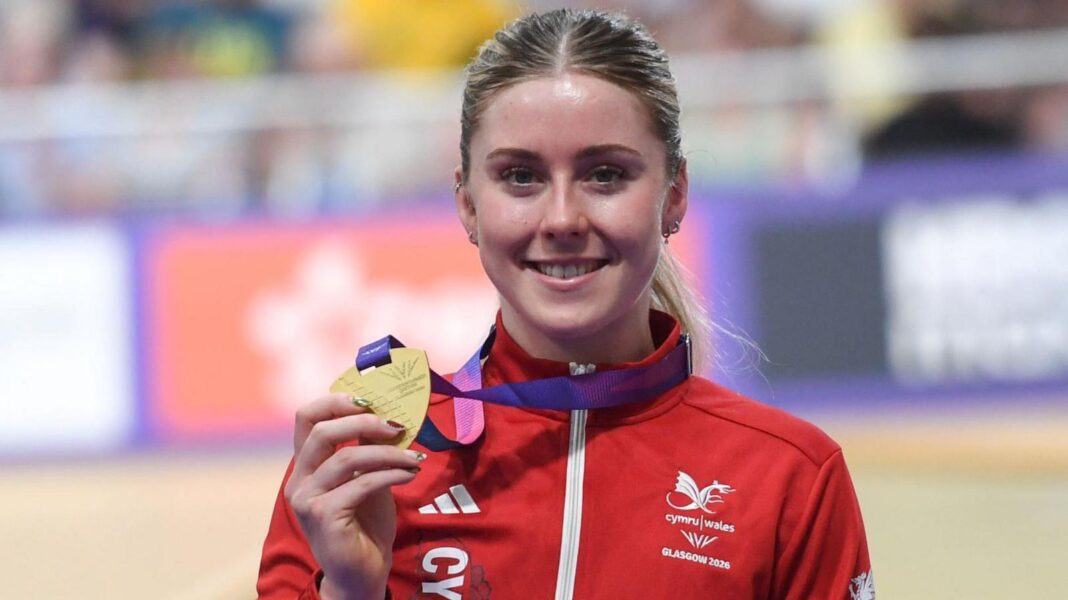
Emma Finucane left Glasgow with four Commonwealth gold medals. She had become the conversation inside the Sir Chris Hoy Velodrome.
Not simply because she kept winning but because of the way she was winning.
A dominant week in Glasgow does not automatically make someone the best rider on the planet.
The world’s best track cyclists are spread well beyond the Commonwealth.
As the week unfolded, conversations drifted away from the medal table.
How she rode.
Why she looked so different.
And where this “generational talent” might be by the time the Los Angeles Olympics arrive in 2028.
BBC Sport spoke to the people who worked closest with Finucane throughout the Games to understand why those inside the velodrome believed they had witnessed far more than just an outstanding medal haul.
‘A dream to coach’
Those people do not first talk about Finucane’s power or speed, but rather her methodical preparation.
“She’s a dream to coach. It’s the fact that she gets everything right off the bike in the lead-up to it is why she’s able to perform on the track,” said Team Wales sprint coach Rachel Draper.
Rob Partridge, a former professional cyclist who was part of Team Wales’ coaching staff in Glasgow, describes an athlete who takes complete ownership of every detail.
“Everything she does is elite. She’ll map everything out, be clear and concise and be first to send it,” Partridge explains.
“Everything is super crisp and planned out.”
-
Finucane’s record-breaking day to remember
-
Published19 hours ago
-
-
‘I can’t believe I’m living this life’ – Finucane
-
Published1 day ago
-
-
‘A huge success’ – Wales win 31 medals at Glasgow Games
-
Published21 hours ago
-
At one with the bike
Preparation explained part of the conversation. Watching her ride explained the rest.
Again and again, people used the same word. Smooth.
“She’s got a beautiful style. You could put a teacup on her back and it would not spill,” said two-time Commonwealth champion Katherine Bates.
“She’s got an exceptionally strong core. She does not move at all on the bike, even when putting out maximum power.”
Paralympic gold medalist and Finucane’s former Great Britain team-mate, Jenny Holl, believes that style is difficult to teach.
“Emma looks like she’s one with the bike,” she reveres.
“She’s so smooth, so dialed. She never looks like she’s fighting with it and, for me, that’s the biggest difference. That fluidity seems to give her that extra gear.”
Finucane’s positioning has taken years of refining and discipline.
“She’s so low but that’s really hard work. She’s trained herself to be in that position,” explained Partridge.
“The work she’s put in, the focus on the position and the discipline on her line, all these things add up to making her what she is.”
Perhaps the best example came in the women’s 1km time trial.
While most of the field opted for specialist time-trial handlebars, Finucane chose conventional drop handlebars.
She still won.
To play this video you need to enable JavaScript in your browser.
This video can not be played
Motivation, composure, emotion
Finucane left Paris an Olympic champion after winning gold in the team sprint.
But Holl believes those 2024 Games left her wanting more.
“The bronze medals in the [individual] sprint and keirin in Paris, where she wanted gold, have given Emma that extra boost of motivation,” she said.
“She was a brilliant athlete in Paris, but now we really are seeing something special.”
Another quality kept surfacing throughout the week – composure.
Bates says Finucane rarely betrays what she is feeling.
“She’s so determined, but she’s also so calm. Even under pressure, you just never see anything on her face but composure,” she said.
“She barely even cracks a smile until it’s over. That’s part of how she prepares for an event.
“It’s a big build-up. She maintains that and when it’s over, she releases the pressure valve and moves on to the next one.”
For Draper, these Games in the red lycra of Wales mattered deeply to Finucane.
“Emma put a lot of pressure on herself to perform at these Games,” she said.
“She’s already world champion, Olympic champion, but for Emma, this has meant everything.
“Seeing that emotion for her on the podium has just been really special for us as a team.”
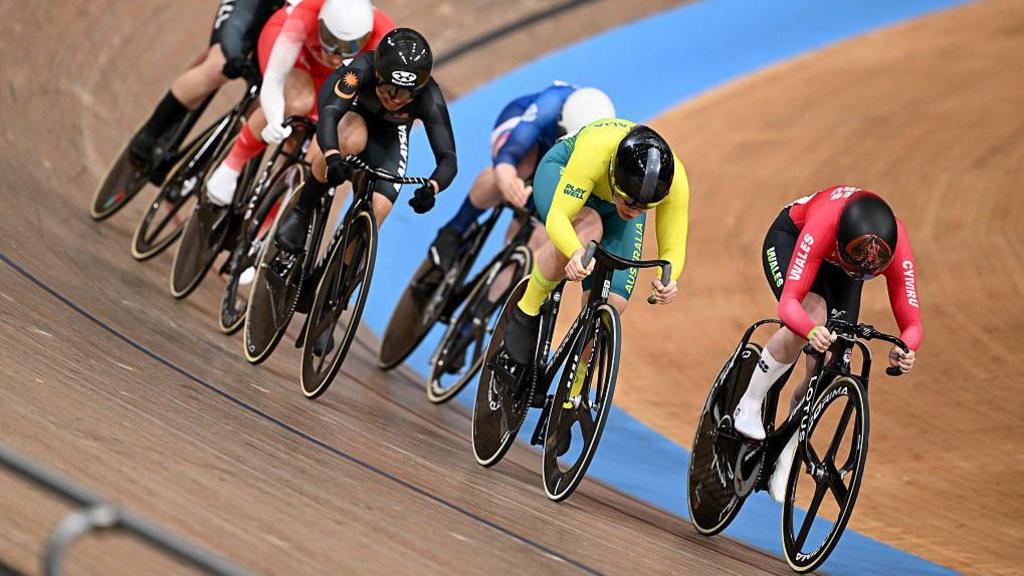 Image source, Getty Images
‘Is it even worth trying to beat her?’
By the end of the week, the conversation had moved beyond Glasgow.
When Bates reflects on the greatest female sprinters she has watched, her thoughts turn to Anna Meares, Victoria Pendleton and Kristina Vogel.
“Emma Finucane is like a combination of them all rolled up into one neat package,” explained the former world points race champion.
“Some have incredible acceleration, others are very good at the back end of a long race.
“There are others whose skills are just superior. She’s got excellent skills, acceleration and really good staying power, so it makes her a triple threat.
“She’s young that she hasn’t gone to four Olympic Games yet, or 15 World Championships that some of the others have.
“But I’m fairly confident in a decade’s time we’ll be looking back at her career, just wondrous of what she’s been able to achieve.”
Then comes the line that echoed around the Sir Chris Hoy Velodrome.
“A lot of the countries are looking at her and thinking, ‘Is it even worth trying to beat her? Or are we going there for a silver medal?’,” admitted Australian Bates.
“That’s a big statement two years out [from the Olympics] but that’s the kind of talent we’re looking at.”
Four gold medals made Finucane the most successful cyclist of the Games and her nation’s most decorated female Commonwealth Games athlete.
For those who know the sport best, they may also have been a glimpse of what comes next.