
This post was originally published on this site.
What can scientists learn from a stray SpaceX rocket hitting the Moon?
-
Published
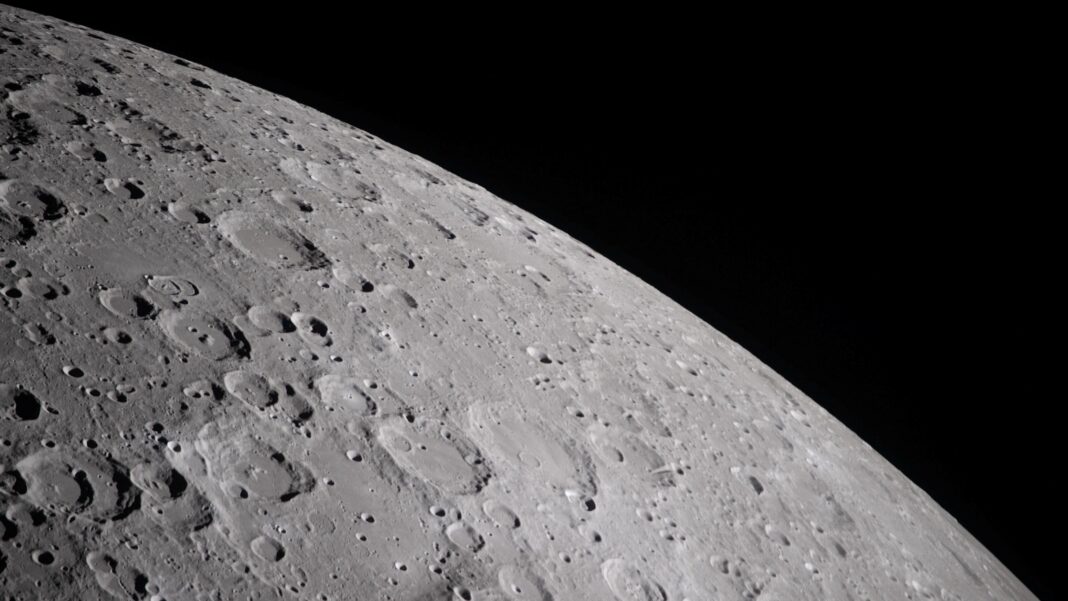
A stray SpaceX rocket is believed to have crashed into the Moon, forming a crater near a famous lunar landmark and giving scientists a unique research opportunity that could help future missions.
The empty upper stage of a Falcon 9 rocket was due to strike the Moon near the Einstein crater at a speed of about 5,400mph (8,700km/h) on Wednesday.
The short, dramatic flash it created would have been hard to catch by amateur astronomers even with high-end telescopes, but larger observatories in the Americas are analysing the information.
It could be days or even weeks before the full picture of what happened and what we can learn from it is known – but for planetary geologists, this accidental collision is a scientific gift.
To play this video you need to enable JavaScript in your browser.
This video can not be played
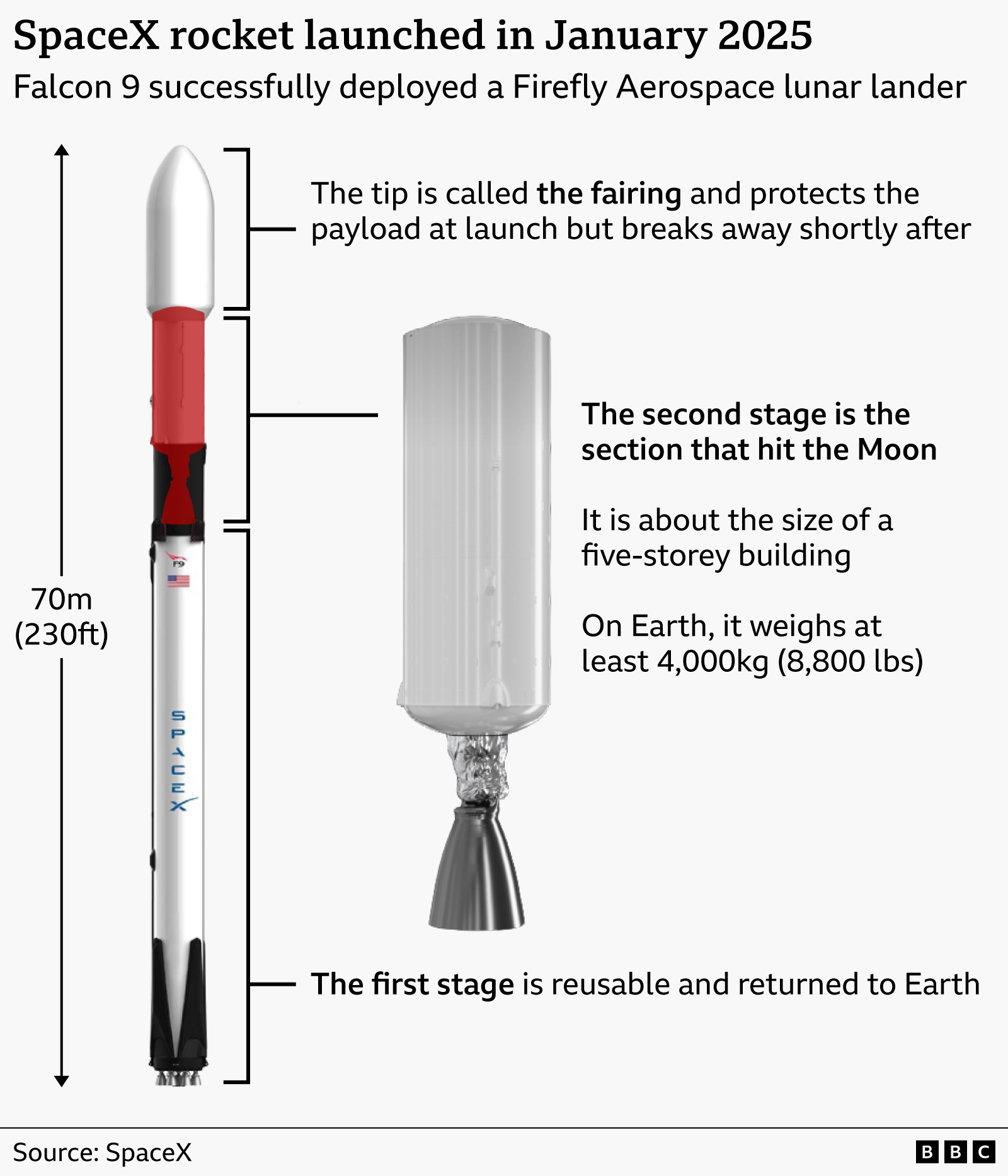
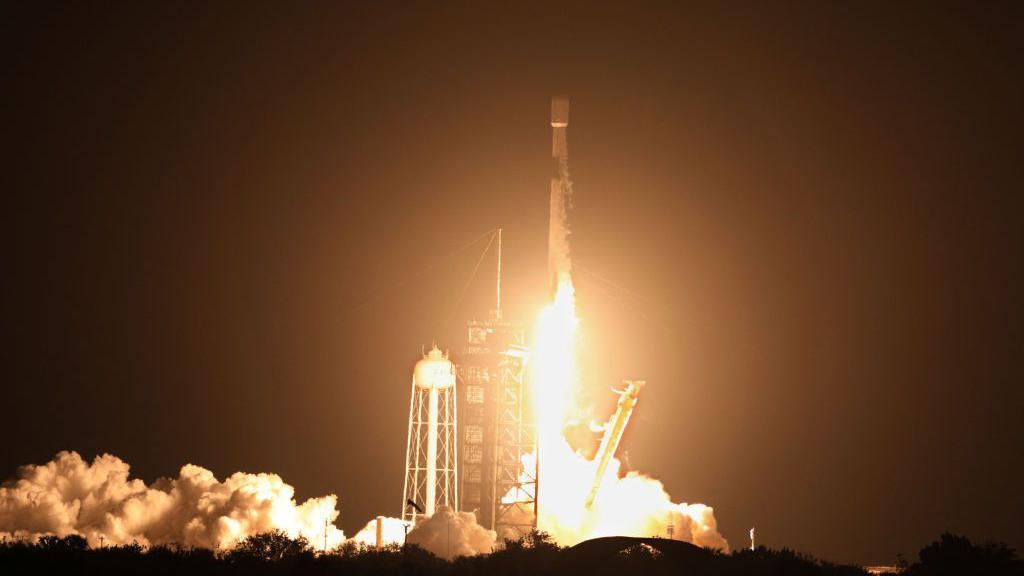
Space X’s Falcon 9 rocket is a reusable model and has been sent into space on several missions. Its design allows part of the rocket to return to Earth, but other sections are shed in space.
The rocket blasted off from Florida in January last year, carrying two lunar landers into space.
Its job was to fire the upper stage hard enough to send both of the landers out of Earth’s orbit and onto a path towards the Moon – mission accomplished.
The spent stage – which is about the size of a five-storey building and weighs at least 4,000kg – was left drifting in a long, looping orbit that swung out towards the Moon and back again.
Over the next 18 months, the gentle gravitational tug of the Earth, Moon and Sun, along with even light from the Sun, gave a faint push.
Astronomers tracking the rocket part eventually worked out that those small nudges had put it on a course towards the Moon and was picking up speed every day.
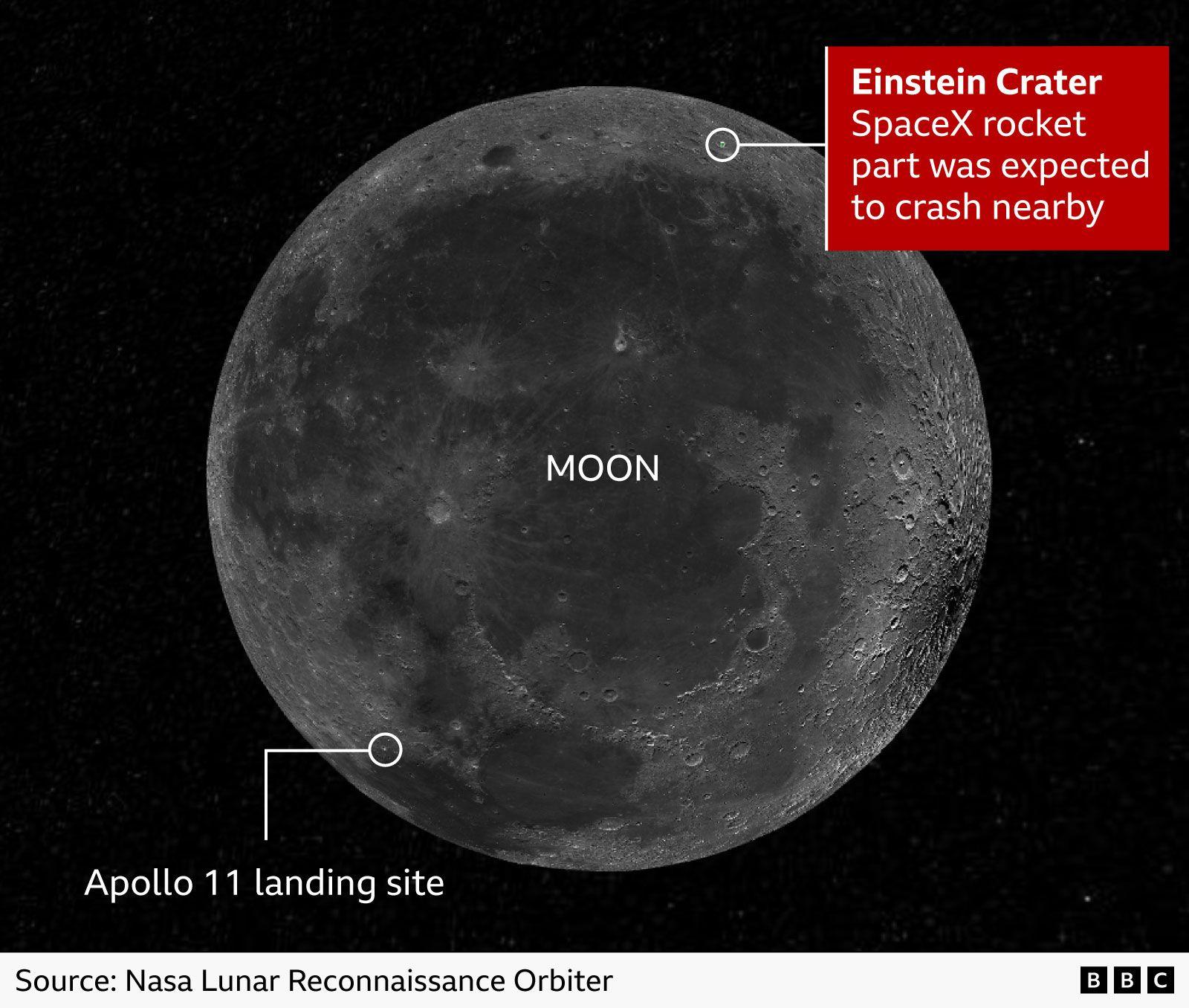
The impact at around 07:35 BST (06:35 GMT) on Wednesday happened in broad daylight for many parts of the world, but the tiny flash it produced would have been far too faint to see, even through a telescope.
Amateur astronomers observing in darkness would also have had little realistic chance of seeing the flash, given that it would have lasted a fraction of a second. But they may have seen a plume of dust stretching as far as 100km (62 miles) that lasted for several minutes.
Even spacecraft orbiting the Moon were not in the right place at the right time to watch the impact happen live. South Korea’s Danuri orbiter had the best chance, having passed near the crash site shortly beforehand. Its team has told Korean media that any footage will only be released once researchers have completed their analysis.
Over the next few days, Nasa’s Lunar Reconnaissance Orbiter will be in position to photograph the site, allowing images before and after the crash to be compared.
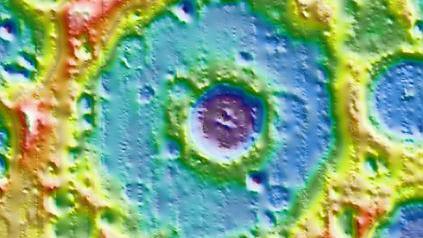 Image source, NASA
The science and probably the first images will come from powerful telescopes in the Americas where the sky was still dark. Even then, turning the detection of a 14m object hitting the lunar surface 385,000km away won’t be easy.
Image processing to clean up the picture can take hours, days or even weeks, as scientists check and process the data.
Because researchers already know the rocket’s exact size, speed and point of impact, this collision turns from being a random accident into a rare, controlled experiment.
It is a dream moment for planetary scientists because it lets them test their models of how impacts dig out craters, throw debris across the surface, and send tremors through the Moon’s interior.
That has real practical value.
Understanding how much rock and dust an impact throws up will help engineers design safer landers and future Moon bases, working out how far flying debris can travel and how hard the ground might shake nearby.
Material thrown up from beneath the surface offers fresh clues about the Moon’s geology, adding to what scientists already know about how the Earth-Moon system formed some 4.5 billion years ago.
This is not the first time a human-made object has struck the Moon. Since 1959, dozens of spacecraft have crashed into it, some by accident and many deliberately for science.
The Soviet probe Luna 2 was the first, followed over the decades by Nasa’s Ranger probes in the 1960s, several Apollo-era rocket stages, and more recently the LCROSS mission in 2009, which was deliberately crashed to search for water ice.
The last confirmed accidental impact, in 2022, was thought to be the leftover booster from a Chinese lunar mission launched back in 2014 – a reminder that this sort of space debris has been quietly piling up above our heads for well over half a century.
To play this video you need to enable JavaScript in your browser.
This video can not be played
-
-
Published1 day ago
-
-
-
Published4 March 2022
-