
This post was originally published on this site.
Below, we chat with Venegas about the city that raised her, and what about the border town experience she hopes listeners will come to understand.
What was the inspiration behind your last album?
I was living in Buenos Aires, and I was missing home. It all started because my sister, who is a photographer, has a project about a town called Santa Rosalia in Baja California and my grandfather: When he was very young, like 10 years old, [the rest of] his family died in Santa Rosalia because of a cyclone.
That memory has always been present in my family and her project was a way to heal. My grandfather eventually had a lot of kids, and even though he didn’t live such a long life, he was an inspiration. My sister’s project detonated in me something about Baja California, and about Tijuana. I started reading a lot about the state, a lot of history and poetry, and novels by writers from Tijuana. I explored scenes that had to do with missing someone, with crossing the border, and going to the other side. I feel like it has a lot to do with separating from someone because you live somewhere else, which is in Spanish called añoranza.
Missing someone feels like such a defining feature of being in a border town, particularly Tijuana. How has a childhood on the border shaped your life and work?
We’re a border family, so our relationship to it is very much an everyday thing. But it’s very different when you have the possibility of crossing the border versus when you don’t. In my family, we’ve always had that possibility. There are things that you choose to take from each side, and culturally, it’s interesting. I grew up bilingual because I watched a lot of TV when I was a kid—well, before my dad took it away.
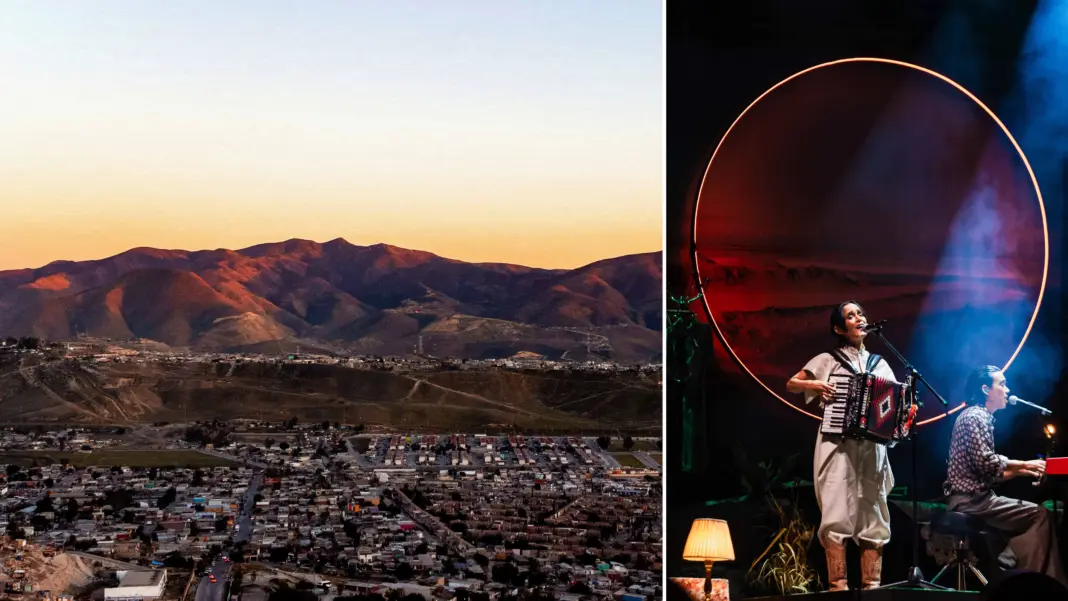
In my family, Mexico was the center of everything that was discussed, but in an everyday sense, we had the US right beside us. We listened to American radio. We would go to the supermarket in the US whenever we needed to. But there is a big contrast, and you see it as soon as you cross the border, even just the way the streets are designed and thought of in Tijuana. Tijuana is a city that has been constructed out of necessity, more than design. It’s been built the way that people need, and people need every corner of it.