
This post was originally published on this site.
Thousands of rail passengers hit by power failure disruption
-
Published
Thousands of rail passengers have described “nightmare” journeys, after being hit by delays and cancellations following a power failure at a signalling centre that caused major disruption across northern England.
Transport for Greater Manchester (TfGM) said the electrical failure at Network Rail’s Manchester Rail Operating Centre occurred just before 14:00 BST. The BBC understands there was then a delay to back-up systems kicking in, meaning affected trains had to stop while signalling was down.
Network Rail said “engineers are making good progress fixing the signalling issues” but warned of continuing disruption on Friday.
At least eight rail operators remain affected on Thursday evening.
“We’ve got to really understand what’s gone wrong here, because clearly something has and we’ve got to make sure we investigate that thoroughly to understand why things haven’t restored as we would have expected,” said Chris Wright, Route Director NW at Network Rail.
Manchester Rail Operating Centre was opened in July 2014 and houses all the controls to safely operate the railway in the region, including signalling.
According to Network Rail, its operational control boundary spans from Crewe in the south to Carlisle in the north, and from Todmorden in the east to the Welsh border in the west.
The initial power outage on Thursday afternoon was part of a wider power supply outage in the Ardwick area, but the BBC understands there was a delay to the back-up supply kicking in – which exacerbated the problem.
SP Electricity NW released a statement, detailing a power outage which had affected “around 5,000 customers in the Manchester area at 1:40pm today – all power was fully restored within 90 seconds,” the company said.
BBC Transport correspondent Katy Austin said the disruption caused a “ripple effect“, with some trains outside the area directly affected – including the Midlands – impacted.
Trains travelling north from stations including Birmingham New Street and London Euston were subject to delays and cancellations, and National Rail initially said the Midlands was also affected by the power failure.
To add to the chaos, Network Rail said “a wartime bomb” near the railway track between Tamworth and Burton-on-Trent had blocked all lines between the two stations for a time on Thursday.
The incident and the disruption has since ended, Network Rail said.
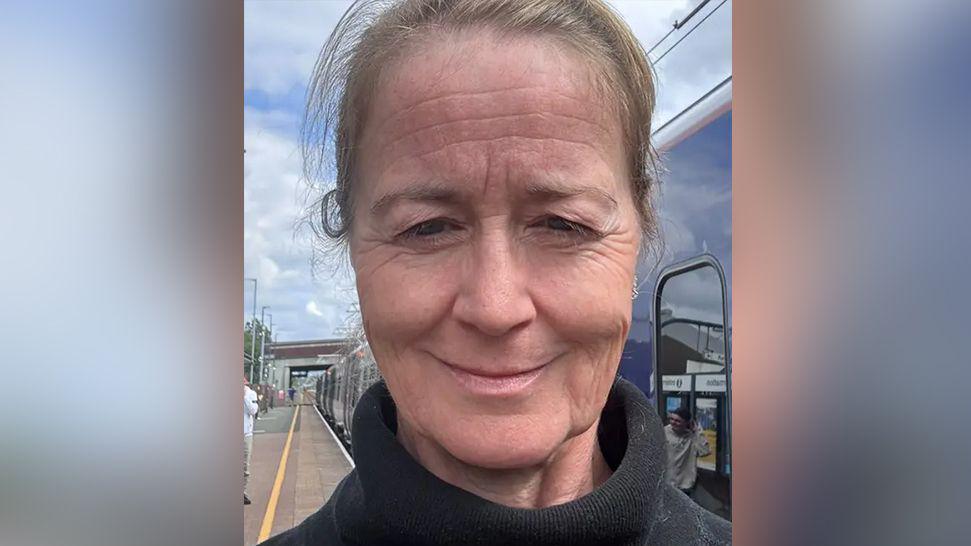 Image source, Sarah Nelson
Sarah Nelson, who was unable to get to work in Manchester, was one of a number of affected passengers who told BBC Your Voice about their disruption.
She said she faced a “nightmare” five-hour round trip to just get back to her home in Blackpool.
The remedial massage therapist’s train was stuck at Horwich Parkway for more than 90 minutes.
Chris, a technology consultant, travelled to Manchester from Scotland on Wednesday on business.
He said he would likely book a hotel for the night, despite the expense and inconvenience, describing the delay as “costly, inconvenient… frustrating”.
“We’re still being told there is no power to any of the trains, no electricity – and they don’t expect anything to run today until the end of the day,” he said.
“I will have to get a hotel here and see if I can get home tomorrow.”
A couple returning from a trip to Gibraltar were planning to get a train home to Clitheroe, Lancashire, after landing at Manchester Airport.
But Matt and Sarah had to book an Uber to take them home instead, adding it was “costing a fortune”.
Stacey was among passengers who were evacuated from a train that stopped prematurely in Manchester when signalling failed.
The 38-year-old office worker, who was travelling from Deansgate to Leyland, Lancashire, paid £60 for a taxi home.
“The train stopped when the signals went,” she said, praising the “phenomenal” staff for their “calm and professional” efforts organising a controlled evacuation from the viaduct.
Transport Secretary Heidi Alexander posted on X, external she was “sorry to hear passengers in the North West are affected by a power outage, with trains cancelled or delayed”.
“The focus rightly needs to be on getting trains back up and running as soon as possible,” said Bev Craig, the new mayor of Greater Manchester
Craig said she would be asking both Network Rail and the train operating companies for an investigation into the cause and their response.
“We need assurances that this cannot and will not happen again.”
Some train operators were continuing to advise against travel on Thursday night, with Northern Rail advising do not travel until 10:00 on Friday 7 August.
National Rail have advised passengers hoping to travel on Friday to continue to check online for information on any further disruption, external: “As soon as we have information, we will keep you updated.”
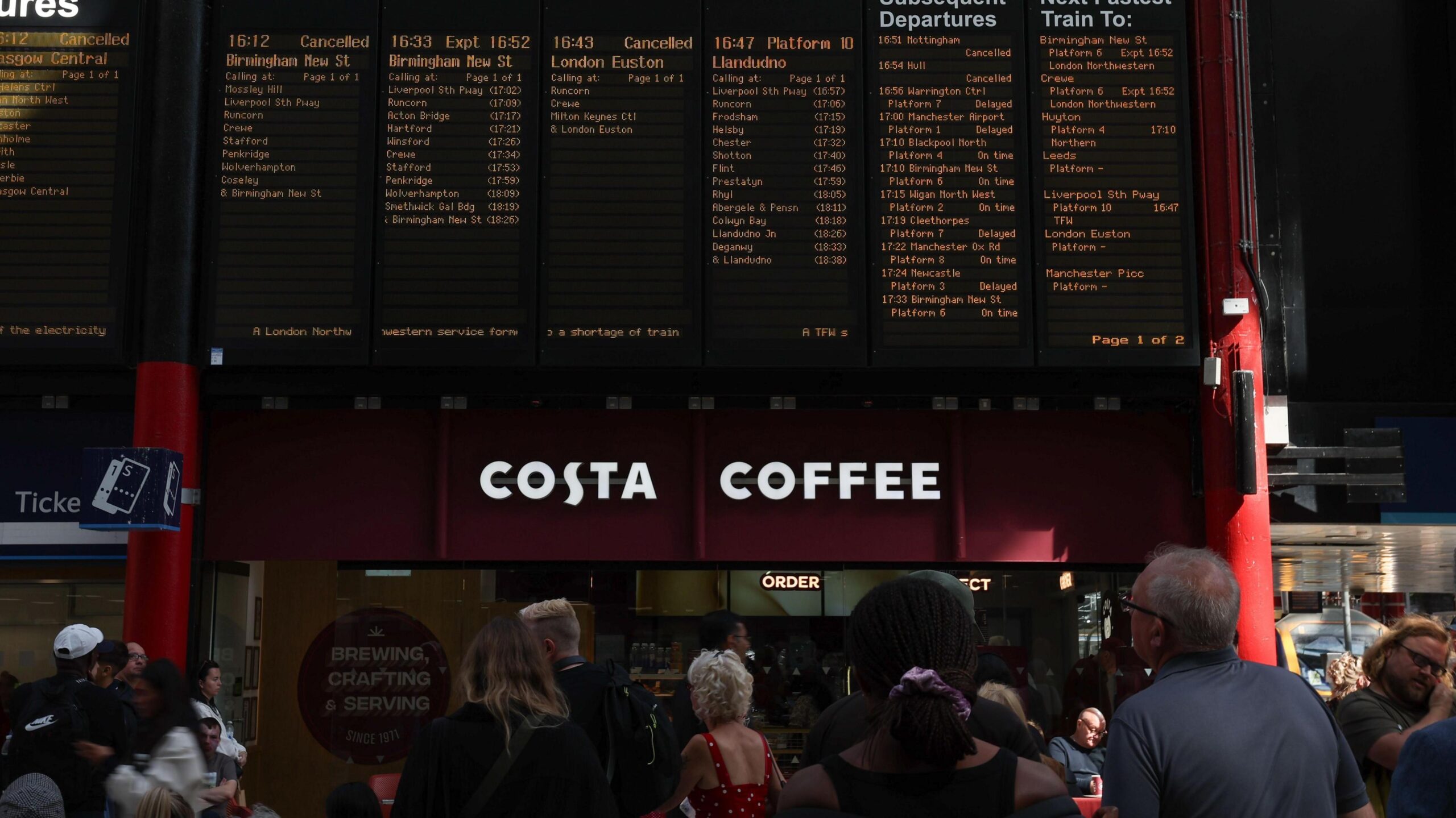 Image source, EPA/Shutterstock
Passengers whose journeys have been affected as a result of the disruption may be entitled to some money back.
The amount may depend on the type of ticket and the length of delay. Each train company has its own compensation threshold.
“Claims can be made online, or by post, using a form that you can download from a train company website or get from a staffed station,” according to National Rail.
Claims could also be made via the nationwide scheme Delay Repay.
Get in touch
Tell us which stories we should cover in Greater Manchester
Listen to the best of BBC Radio Manchester on Sounds and follow BBC Manchester on Facebook, external, X, external, and Instagram, external. You can also send story ideas via Whatsapp to 0808 100 2230.
-
-
Published17 February

-