
This post was originally published on this site.
Spain to impose border controls against Italy as row over Ceuta migrant influx intensifies
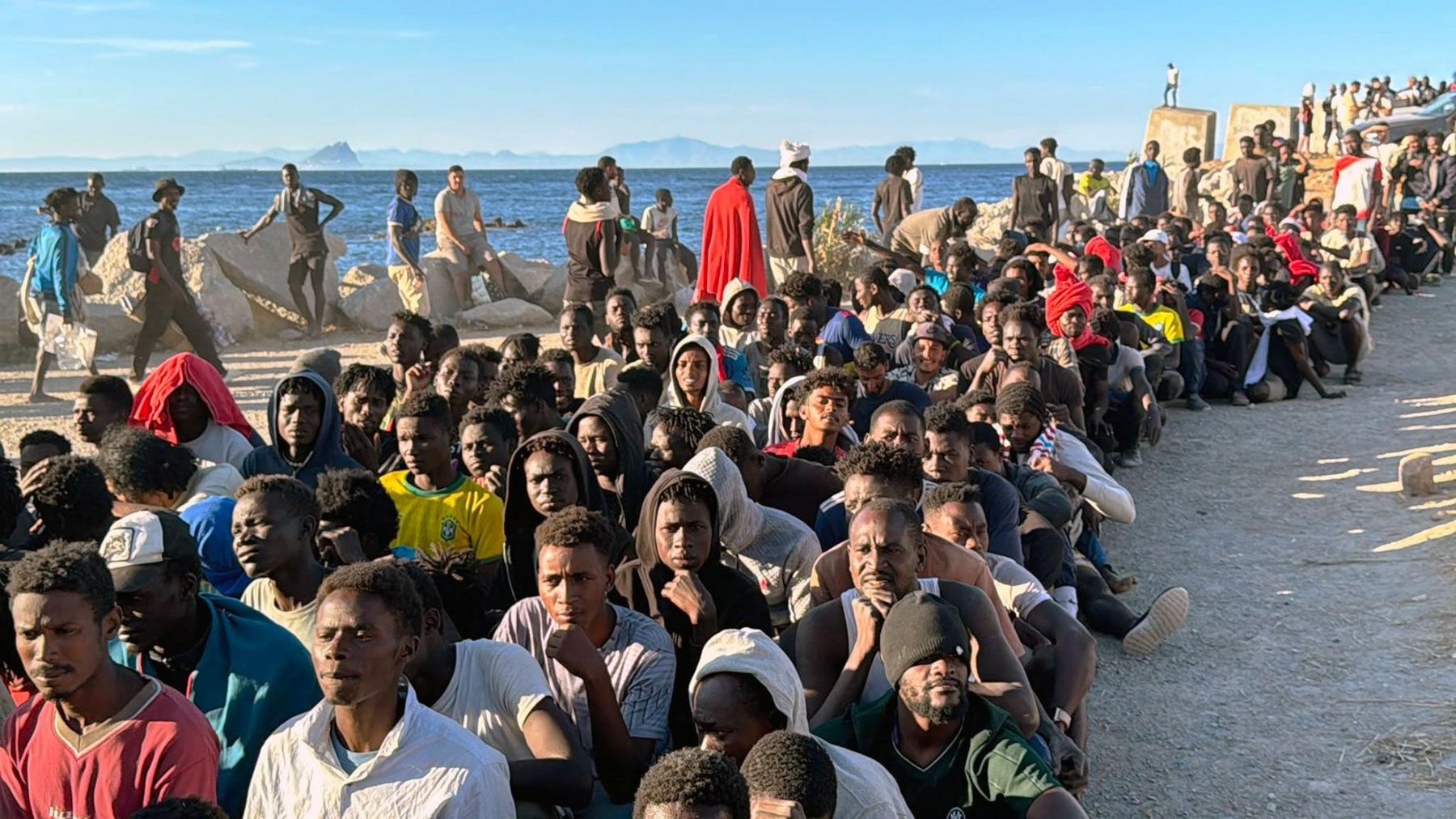 Image source, Getty Images
-
Published
Spain will impose border controls on all air and sea travel from Italy as a row between the two EU countries intensifies.
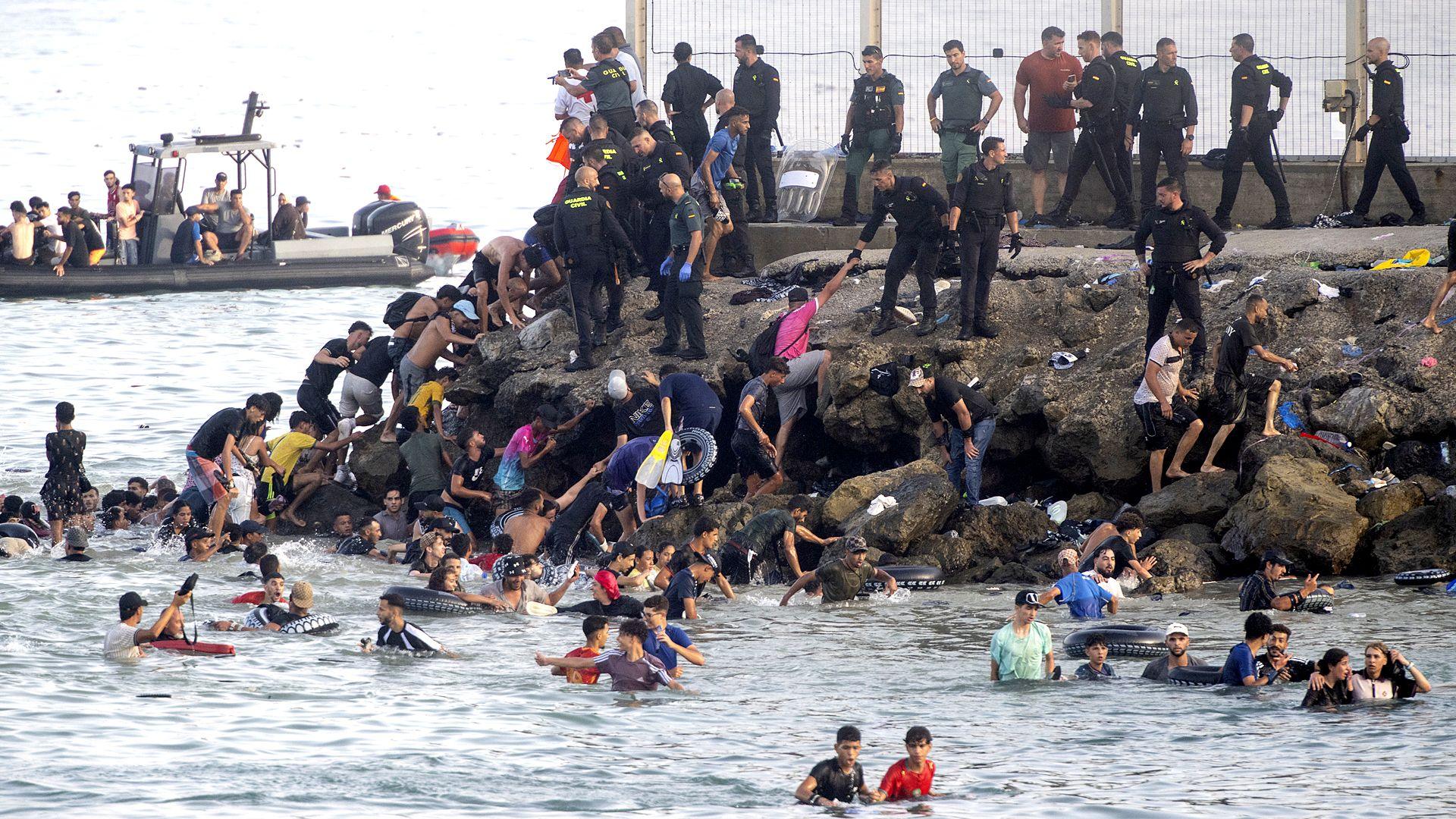
The measures – coming into force at midnight (22:00 GMT) and lasting for a month – come a week after Italy introduced similar restrictions following an influx of about 78,000 migrants from Morocco into the Spanish exclave of Ceuta.
On Friday, Spain demanded Italy reverse its checks by Sunday. Rome said they would stay until at least 15 August – when, according to it, Spain “expects a new wave of migration” to hit Ceuta.
The crisis has pitted Spain’s socialist leader Pedro Sanchez against Italy’s conservative leader Giorgia Meloni – who has long called for stricter EU migration rules.
Italy does not share a land border with Spain. Its government said last week that decision to temporarily suspend the border-free Schengen arrangement was to prevent any of the migrants who had entered Ceuta from travelling on to Italy.
Madrid dismissed this position, saying it was based on “spurious arguments” that lacked any basis in fact because the migrants who entered Ceuta had no way of entering the Schengen area.
In its response to the Spanish threat earlier on Friday, Italy’s government said it would not accept “ultimatums”. It added that it did not intend “under any circumstances to reconsider the decision to suspend the application of the Schengen Agreement for third-country nationals arriving from Spain, at least until August 15th and in any case until security and terrorist risks for Italy have been completely eliminated”.
Italian officials have said local authorities carrying out checks do “everything possible” to ensure maximum comfort for both Spanish and other European citizens arriving in Italy from Spain.
Rome has also reiterated that Spanish citizens are exempt from additional checks when arriving in Italy, with these extra steps only for non-EU residents.
However, El Pais reported that several airport terminals have seen long queues and waiting times in recent days, with passengers arriving from Spain directed to a specific line for checks.
The counter-measures Madrid decided to impose on Friday would include passport, nationality and visa checks for Italian passengers and visitors from other countries arriving from Italy “amid the persistent irregular migratory pressure” the country was experiencing, a statement from Spain’s government said.
Checks would stay in place until 7 September “unless a change in the circumstances that led to its adoption warrants modifying that period”.
To play this video you need to enable JavaScript in your browser.
This video can not be played
Temporary suspensions of the Schengen agreement are not unprecedented. Italy also maintains controls on its border with Slovenia.
Italy’s decision to suspend Schengen for a month was backed by Finland and Denmark, while the Czech Republic called for Spain’s membership to be temporarily suspended.
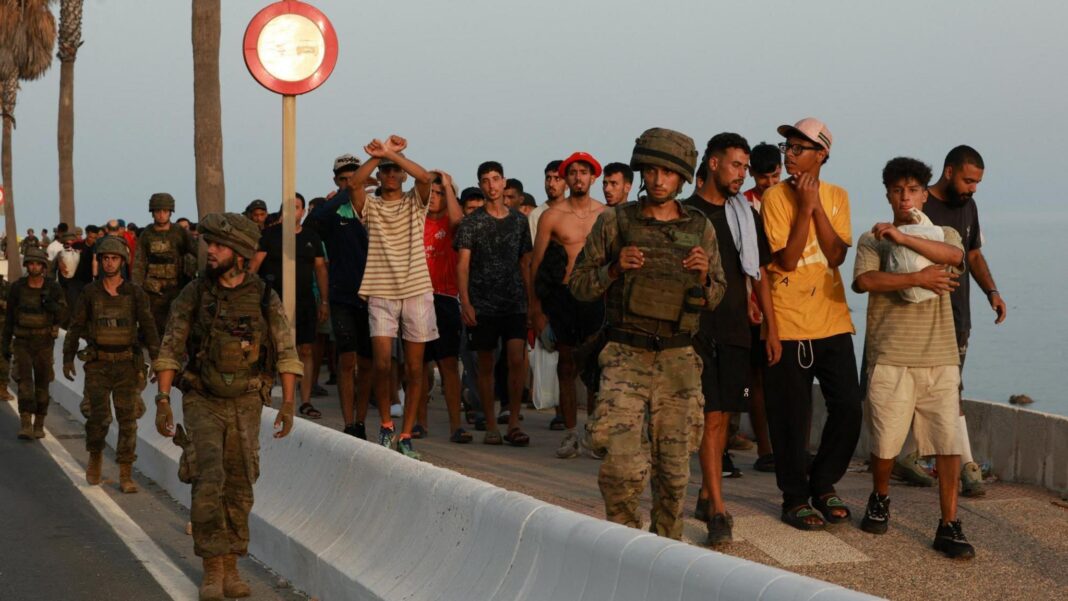
Most of the migrants who arrived in Ceuta last week were returned within days.
Nearly 1,400 minors, some of them “very young boys and girls”, still remain there.
Spain has not announced an anticipated second wave of crossings from Morocco. Reports have been fuelled by social media activity by Moroccan users planning another attempt, El Pais reports.
The Spanish prime minister’s office told the newspaper they were monitoring the situation but did not expect a repeat of scenes from last week.
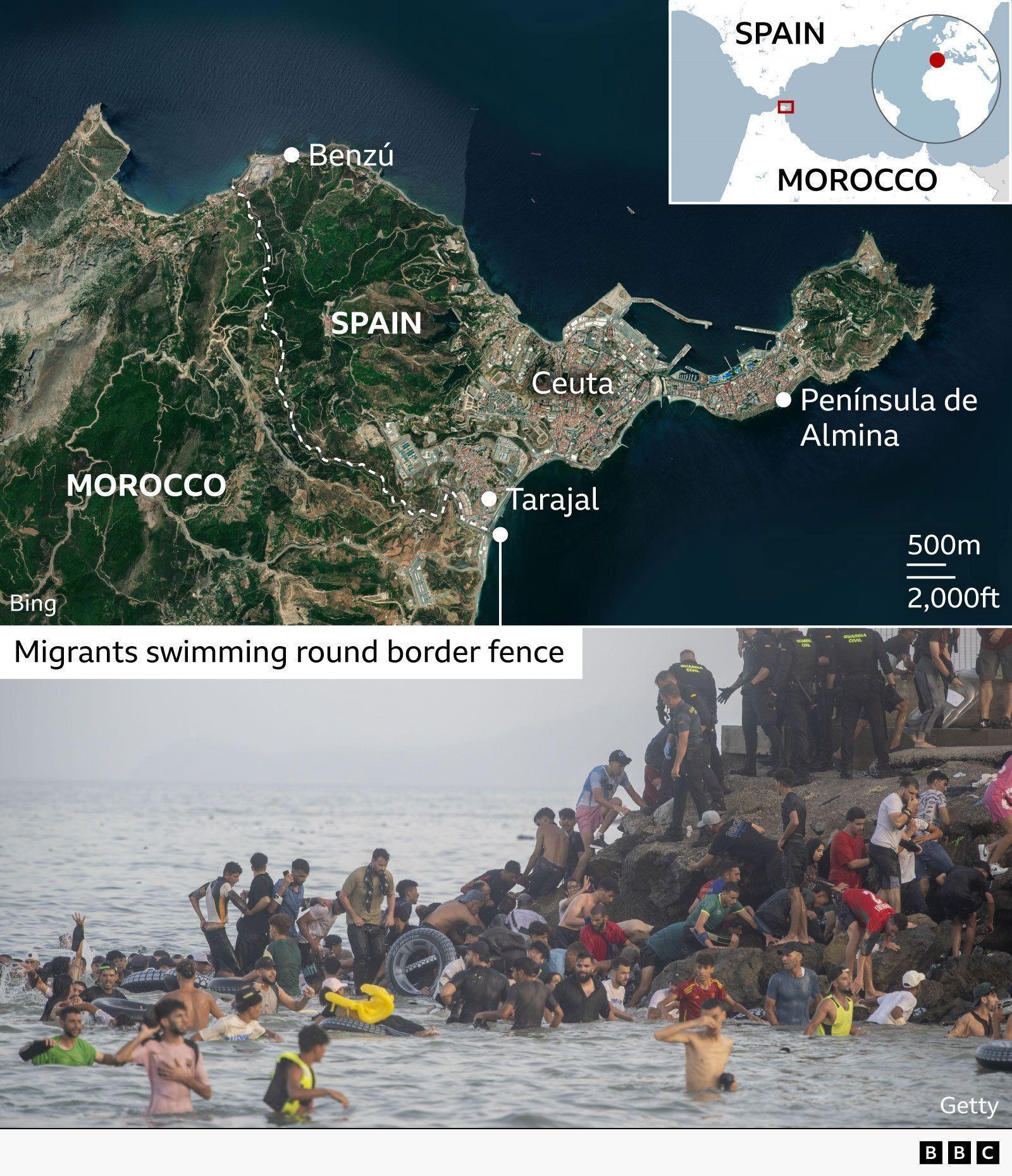
It remains unclear exactly why tens of thousands of migrants attempted to cross into Ceuta, but the EU’s Migration Commissioner Magnus Brunner has suggested criminal networks spreading disinformation were to blame – an assertion the Spanish government has agreed with.
The crossings came after Spain’s Supreme Court ruled that migrants stopped at sea while trying to reach Ceuta or Melilla cannot be summarily returned to Morocco.
Morocco, for its part, has laid blame for the crisis on the court, with an unnamed government source briefing local outlets that “the deterrent element of the system collapsed and the dam gave way, not under the weight of the criminals, but of a judge’s decision”.
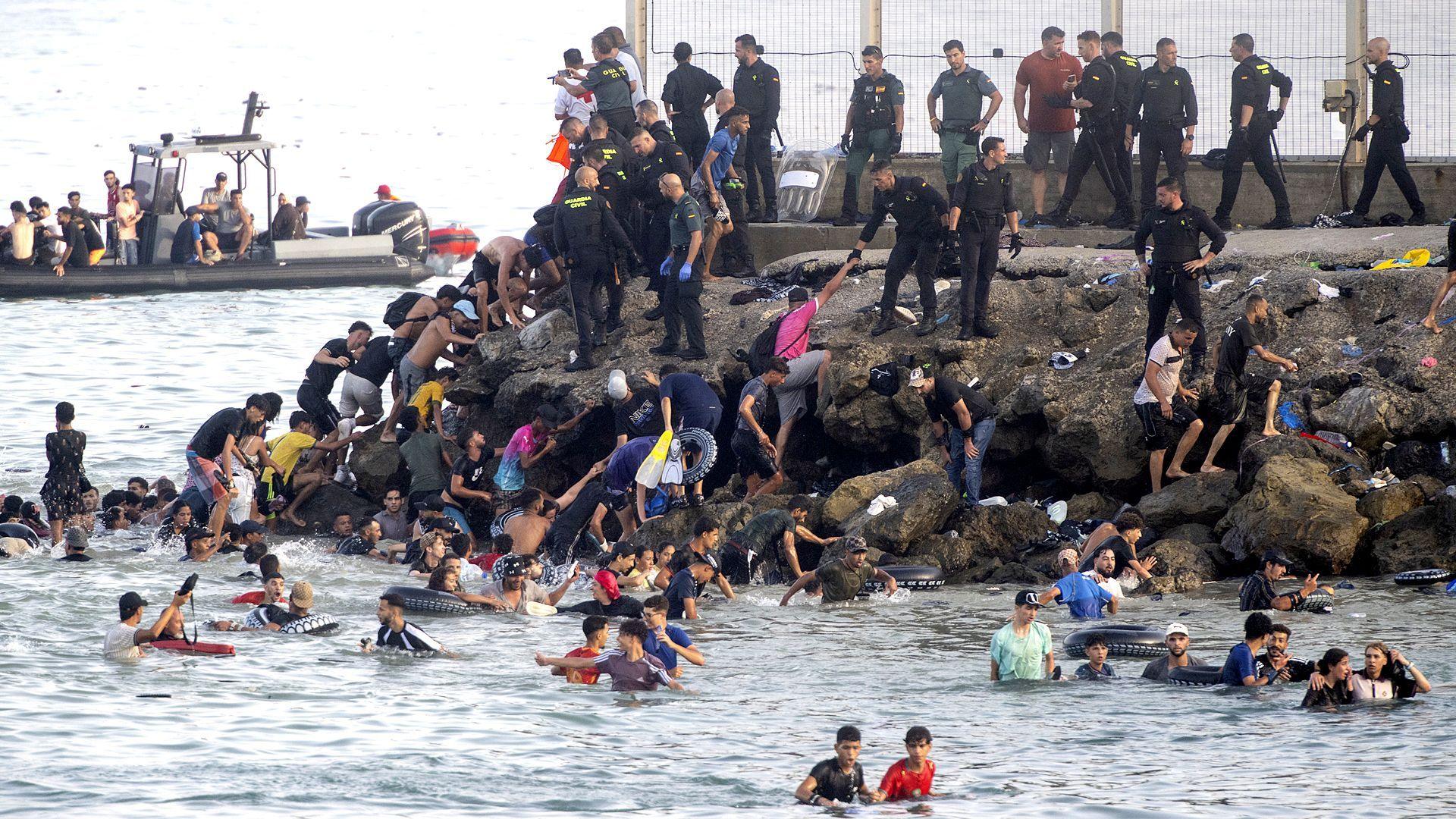
The number of people swimming to Ceuta at once has raised questions about why Morocco’s border guards did not attempt to stop them.
The two exclaves have long been a bone of diplomatic contention between Spain and Morocco, which does not recognise Spanish sovereignty over them.
-
-
Published3 days ago
-
-
-
Published7 days ago
-
-
-
Published5 days ago
-