
This post was originally published on this site.
Eclipse chasers scramble for glasses as stocks run low
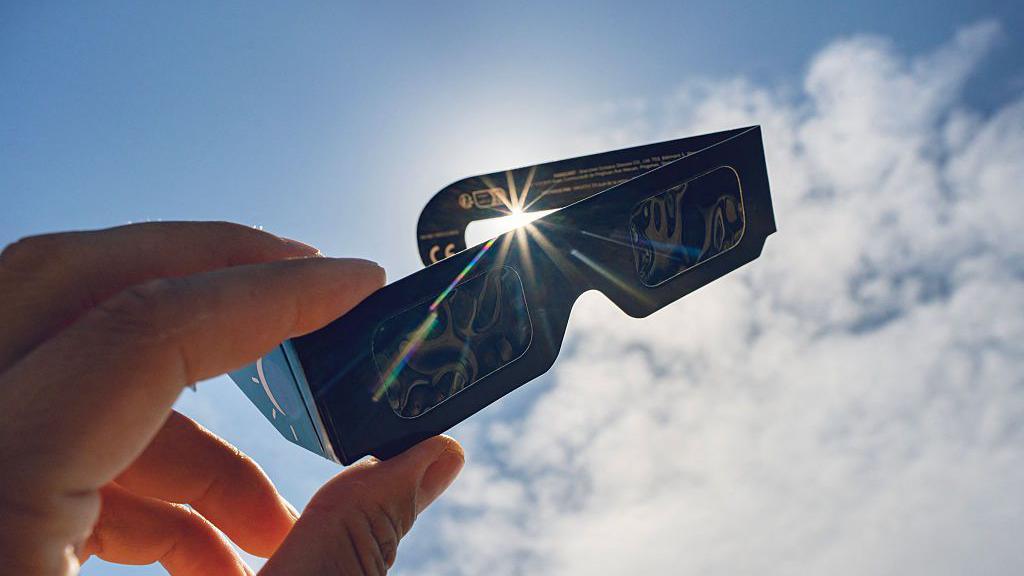 Image source, Getty Images
-
Published
At a bakery in central London, stock has been flying off the shelves.
“I’ve sold, like, 100 this morning,” a staff member tells the BBC. But it’s not baked goods driving queues out of the door – customers are here to buy eclipse glasses.
They are among those hoping to catch a safe glimpse of Wednesday’s solar eclipse – the UK’s most significant since 1999 – but struggling to get their hands on the right gear.
Experts have urged eclipse enthusiasts not to look directly at the Sun – with even brief exposure causing lasting damage – and to seek out specialist glasses instead.
But online, pairs that meet safety specifications have all but sold out. Those still available either require a hefty next-day delivery fee or simply cannot arrive on time.
Even the Royal Museums Greenwich – recommended as a reputable retailer by UK health officials – has sold out, citing an “unprecedented volume” of orders.
Meanwhile, eclipse glasses have been turning up for sale in unexpected places as retailers try to capitalise on the demand.
“I Googled ‘where can I get eclipse glasses but not through the post’, because I realised I was too late,” one customer waiting to buy three pairs at the bakery on Monday tells BBC Radio 4’s PM programme.
“People have been struggling to find them all over,” says another.
With around 90% of the Sun set to be obscured by the Moon, the UK is expecting its most significant eclipse in 27 years.
The right glasses should have the international safety standard ISO 12312-2 printed on them, the UK Health Security Agency (UKHSA) has advised, and the lenses should not be scratched, torn or damaged.
It has also advised buying a new pair rather than using ones from 1999, and to take caution when it comes to glasses being sold online as the scramble for safe spectacles has prompted eclipse chasers to trawl social media for tips.
-
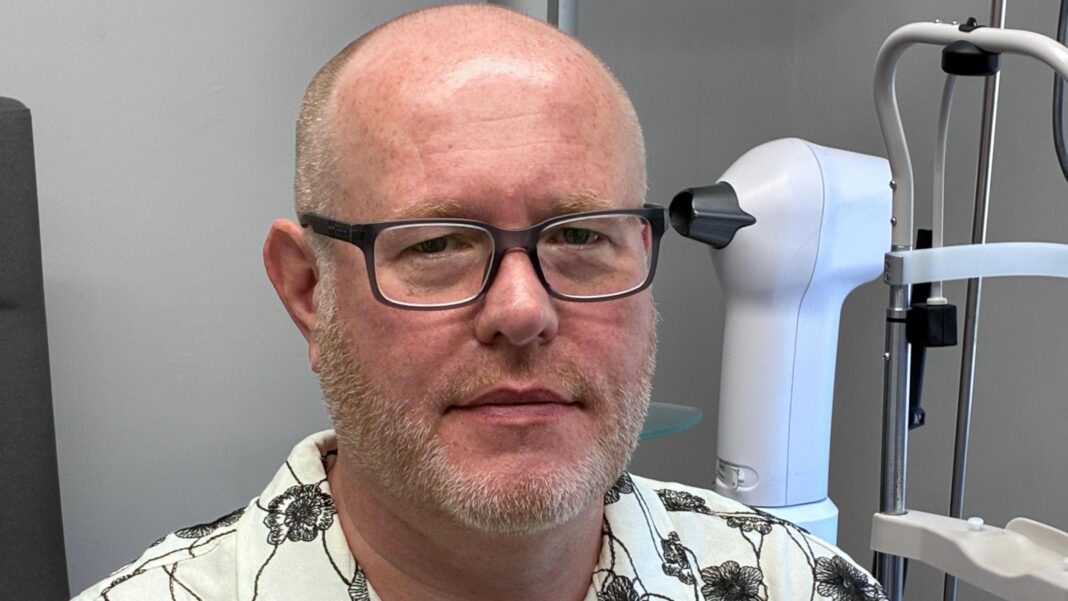
Watch safely says man with eye damage from eclipse
-
Published3 hours ago
-
A WhatsApp channel which advertises stock in corner shops – including some offering delivery – has attracted thousands of followers in a matter of days.
Elsewhere, hopeful buyers in Reddit and Facebook threads are directed to online marketplaces, including for more expensive bulk purchases.
“Be cautious of products sold online,” advises the UKHSA. “If you’re unsure whether a product is certified, don’t use it.”
UKEclipse, an initiative set up by UK astronomers, also warns that major eclipses often attract “counterfeit and substandard” glasses and advises going through specialist retailers and organisations instead.
The American Astronomical Society (AAS) urges eclipse chasers to check its list of manufacturers which it has confirmed test their glasses properly in a lab.
Those who have managed to find a pair can try them ahead of time, it says, by testing them both inside and outside on a sunny day.
In both settings, you should not be able to see anything other than perhaps very bright lights, including the Sun’s reflection off a shiny surface, “which should appear very faint”.
If they pass that test, you can glance at the Sun – only for less than a second – and should only be able to see “a sharp-edged, round disk… that’s comfortably bright, with a dark background all around it”.
“If your viewers pass all three tests, they are probably safe,” it says.
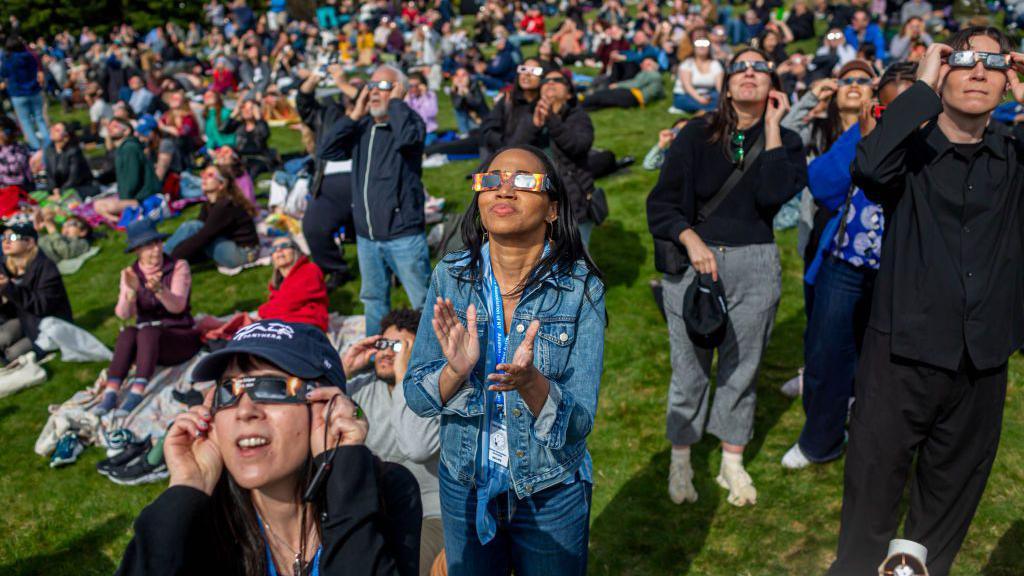 Image source, Getty Images
Even just a small part of the Sun breaking through the glasses can harm your eyes, the Royal College of Ophthalmologists has warned, adding that the safest way to watch the event is indirectly – such as through a livestream or broadcast.
“Crucially, the retina has no pain receptors, so people will not feel the damage as it happens,” explains the college’s president Mohamed Elalfy.
The college reported around 70 cases of people experiencing vision problems after watching 1999’s eclipse – around 40% of those affected had looked at it for less than a minute.
Anyone who notices a change in their vision after looking at the Sun should seek advice from an eye-care professional.
You should not use binoculars, telescopes or the viewfinder of a camera even with your eclipse glasses on, because their magnifying effect can nullify the protection of the glasses and damage your sight.
I don’t have eclipse glasses – what can I do?
If you cannot get your hands on proper glasses, the advice is to not simply opt for everyday sunglasses instead.
Imo Bell, a planetarium astronomer at The Royal Observatory Greenwich, says the specialist glasses are “very, very different” to regular sunglasses, which will not offer protection.
“They block out so much light that you can’t see anything through them except the Sun,” she told the PA news agency.
The UKHSA explains that regular sunglasses can also reduce glare and make it more comfortable for you to look at the Sun for longer – causing more damage.
If you do not have a pair of eclipse glasses you will need to follow the eclipse indirectly using a pinhole projector.
You can make a simple one with a single sheet of card or something more ambitious using a cardboard box – or you can use a colander to project multiple images all at once.
“We’re not going to get one this good for a really long time,” says Bell. “So, it’s important not to miss it, and to be prepared.”

Get in touch
What are your plans for watching the eclipse and how are you preparing?
-
-
Published2 days ago
-
-
-
Published3 hours ago
-