
This post was originally published on this site.
Parents pushed to breaking point by Child Maintenance Service, BBC told
-
Published
Parents have told BBC Panorama that the agency tasked with helping to secure financial support for children after separation or divorce is driving them to breaking point.
Mothers described battling with the Child Maintenance Service (CMS) to get their ex-partners to pay up, while fathers said they have been caused anxiety and stress by administrative mistakes.
One mother said she turned to food banks after the CMS failed to make her ex-partner pay child maintenance, leaving arrears of almost £10,000. Another said she had been forced to skip meals after her abusive ex-partner stopped paying.
We have also spoken to a father who said years of disagreements with the CMS have pushed him to the brink, including after it added an extra child to his account who was not his.
The Department for Work and Pensions (DWP), which runs the CMS, said “in the vast majority of cases” it successfully arranges “vital payments for children”. It said it takes “very seriously the small number of cases where things go wrong”.
Child Maintenance: Parents under Pressure
BBC Panorama meets parents who receive maintenance and those who pay it, and asks whether the system is failing both them and their children.
Watch on iPlayer now or on Monday 17 August at 20:00 on BBC One.
About four million children in England, Scotland and Wales have parents who are separated.
Parents must have a child maintenance arrangement if the child is under 16, or under 20 if they are in approved education or training. Both parents are responsible for the costs of raising their children, even if they do not see them.
If there is a dispute over how these payments are provided, parents can turn to the CMS to help ensure a child’s living costs, including bills, food and clothing, are paid. It uses a formula to work out how much a parent should pay, depending on a range of factors including their income.
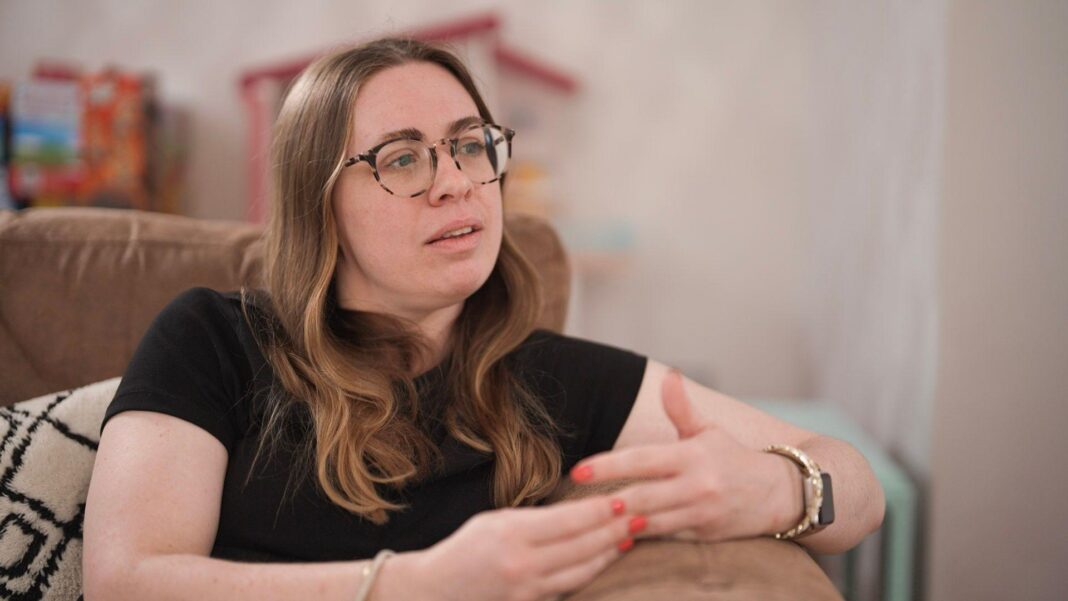
When Katy and her partner broke up more than three years ago, they could not agree on child maintenance payments for their two children. Like hundreds of thousands of others, she turned to the CMS for help. But she has told Panorama the service does not work.
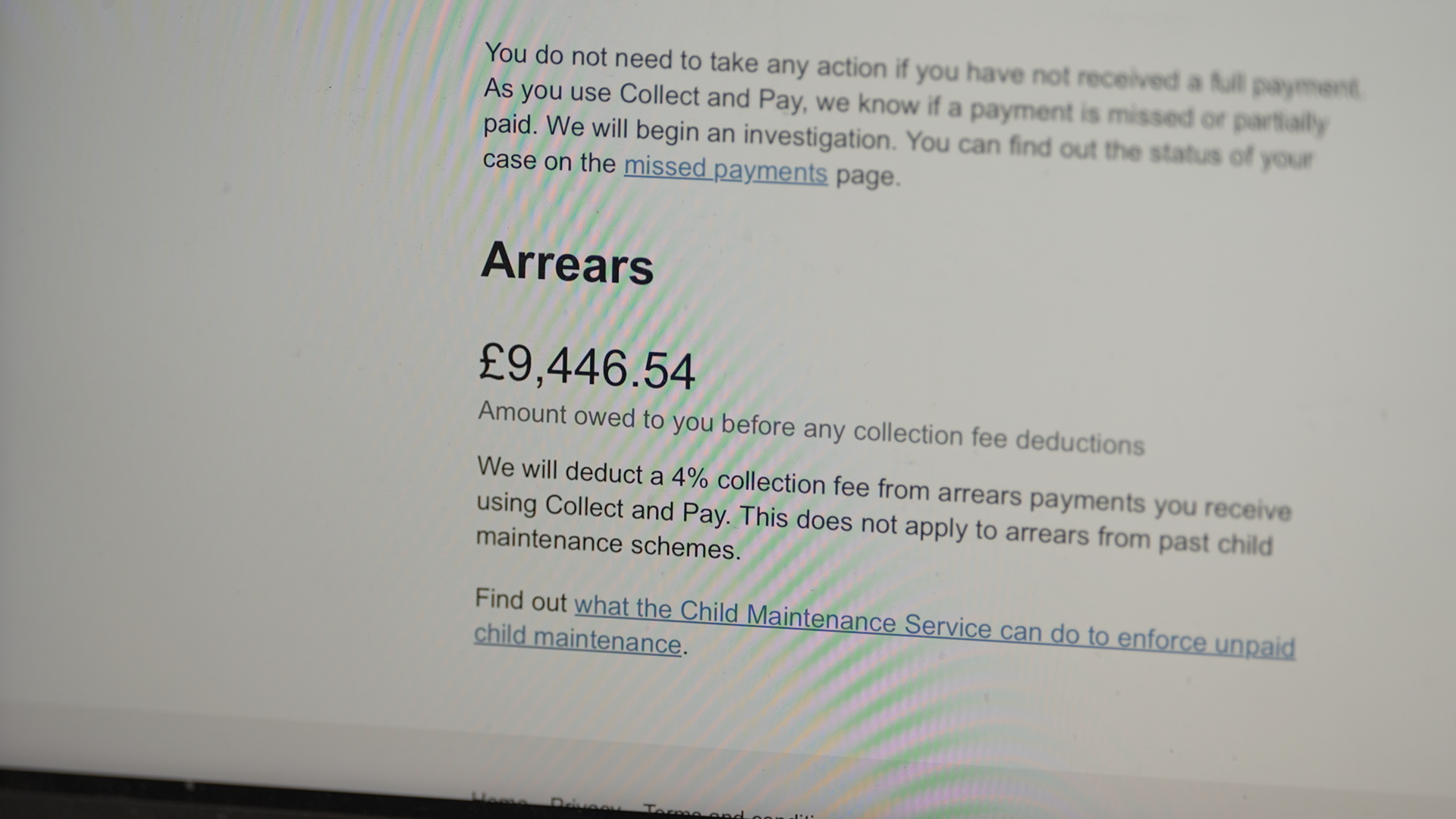
Her ex-partner is meant to pay more than £330 a month, but she said he is not paying, and had built up arrears of almost £10,000.
Katy said the lack of financial support meant she had been forced to make tough choices.
“Last year, I was really struggling,” she said.
“I did go to food banks… there’s been occasions where I’ve wanted the kids to be able to do more, more clubs, do stuff with their friends. I’ve had to say no, I feel terrible.”
The CMS is overseeing more than 800,000 cases in England, Scotland and Wales, involving more than a million children. Northern Ireland has a separate service.
The CMS is in more demand than ever – the number of cases has risen by about 300,000 in the past five years.
There were also more than 1,400 complaints in the first three months of this year, according to the DWP’s most recent annual report.
The CMS does not take into account both parents’ financial situations, relying on the paying parent’s income.
If a parent does not pay their ex-partner directly after setting up an arrangement with the CMS, the service can take money from wages, bank accounts or benefits, using its Collect and Pay service.
At the end of March 2026, there were about 350,000 Collect and Pay cases – including those of paying parents who had chosen to pay ex-partners this way.
In Collect and Pay cases, the CMS adds a fee of 20% to the amount owed by the paying parent. It also charges the receiving parent 4% of the money they are entitled to.
The CMS has the power to try to recover arrears if parents fall behind with payments. It can also go to court to recognise a debt exists and recover it using a liability order.
But in the first three months of this year there were no payments at all in almost 61,000 Collect and Pay cases – affecting 86,000 children, according to the DWP.
In March last year, the CMS said it would apply for a liability order for Katy’s ex, but warned it would take 26 weeks to go to court. Katy was relieved and put a note on the calendar.
But as the date approached, the CMS told her it had still not obtained the order. In September, the CMS again told her it would apply for a liability order – worth about £6,000.
Katy said the service told her last month it was no longer confident of her ex-partner’s address it needed to send him the paperwork.
She is now in debt herself and her case is, in effect, on hold.
“I was really upset because it just came as such a shock. I thought that I was going to get somewhere and just haven’t,” she told us.
“I’m not sure I’m ever going to see the money.”
Katy’s ex-partner did not respond to our questions.
The CMS said it had apologised for delays in progressing the liability order and made a consolatory payment. It said the case has been affected by ongoing difficulty confirming and maintaining a reliable address for the paying parent.
Mother Susan told Panorama the CMS’s efforts to chase her ex partner for money owed had been “a waste of everybody’s time… a waste of everyone’s money”.
Her ex stopped paying child maintenance regularly five years ago, and is more than £10,000 in arrears. He was abusive, so we have changed her name to protect her identity.
The lack of financial support, she said, meant she had been forced to skip meals.
“No matter how many hours I was working, it wasn’t making up for the payments that should have been coming from the paying parent,” she said.
In Susan’s case, financial investigators at the CMS found her ex had the money to pay. The CMS took him to court but he failed to appear.
The CMS told Susan the court had issued a warrant but it could not take further action.
“They… told me they had no warrant officers,” she said, calling it an “embarrassment”.
The CMS said it had apologised for failings in this case. It said enforcement action could be complex and it must follow statutory processes.
The DWP told Panorama “continued modernisation” of the service meant it was “progressing cases more quickly and effectively”.
Director of the CMS, Simon Hunter, said a lot of the service’s 800,000 cases were “highly satisfied” with the service and compliance had improved in the past three years.
“We are working hard behind the scenes to try and make sure that we can facilitate regular child maintenance payments,” he said. “Where the case might be in an enforcement which is a very, very small percentage of our customer base, that journey can be quite an extensive period for customers to be in, and I can totally accept and appreciate that it can feel like it has taken a long time.”

It is not just parents seeking child support who accuse the CMS of letting them down.
There are about 730,000 paying parents on the CMS’s books, and we have spoken to fathers who say their mental health has been impacted by what they describe as incompetence.
In fact, Citizens Advice, a network of local charities that offers free confidential advice, including on finances, said more paying parents ask it for help than receiving parents.
One father, Gerry, said years of disagreements with the CMS had pushed him to the brink – including after it added an extra child, who was not his, to his account.
He has two children from separate relationships. His salary has fluctuated with different jobs, and he has been a student, but the CMS has often struggled to keep up, he told us.
“I contacted them to say I can’t deal with this stress. It’s causing me anxiety [and] depression,” he said.
A decade ago, Gerry queried arrears on his account with the CMS. It investigated, but in doing so, created a much bigger problem. It added a third child to his account, though he only had two children he was required to pay for.
Once Gerry noticed this mistake, he became “numb”.
The CMS paid him a £100 “consolatory payment” and an internal note said mistakes at the time had caused Gerry “gross inconvenience”.
But he said he then faced more problems – being liable for child maintenance for about 18 months longer than necessary for his older child.
In October last year, he took the CMS to a tribunal and won.
However, his initial relief disappeared when the CMS told him, because he had paid the mother directly, he would have to ask her for the refund himself.
What is more, the bill for his monthly payments then almost trebled to £981 a month, after it appeared he had now underpaid for the younger child still entitled to support.
The CMS system had added the outstanding amount, and some arrears he had been disputing, to his continuing payments to come up with the new figure.
“I’m instantly broke, panic attack, phoning GPs, back on medication, anxiety through the roof,” Gerry said.

Marion Fellows, who was Gerry’s MP for nine years until 2024, raised his case in Parliament.
“I think Gerry’s case is atrocious,” she told Panorama. “What CMS have done to Gerry over the years is not right. It’s unbelievable. But it’s not, it’s CMS.”
The CMS said it had acknowledged and apologised for previous failings in Gerry’s case and made consolatory payments. It said it had given him explanations and assurances on action taken and ongoing payments.
Concerns about the CMS were raised with government in a House of Lords report entitled Reforming the Child Maintenance Service, in October 2025.
One parent described enforcement as “random, abusive and unregulated”.
“It punishes the wrong people and ignores real avoidance,” the report stated.
The government is planning to reform the CMS by moving all parents on to Collect and Pay and reducing the fees it charges. The DWP said it would “improve compliance” and “deliver better outcomes for children”.
CMS director Simon Hunter told Panorama he believed the service “has worked pretty effectively”.
“Every case has its own set of circumstances and there are always two sides to the case as well so… we do work through that as best as we possibly can,” he said. “Any opportunity for us, for myself, to improve the service, then we will absolutely take that on board.”
To parents who have been affected by “administrative mistakes… where we have made life difficult for our customers – I absolutely apologise for that”, he added.
Lots of parents successfully use the CMS, but when the system fails the consequences can be huge for parents and children.
“It can’t go on,” Gerry said. “It’s too many lives being broken.”

Get in touch
Are you affected by the issues raised in this story?