
This post was originally published on this site.
As part of the build-up to Eiheiji, we then drove to a deserted car park where a beaming monk greeted us in English and led us on a breathless, 20-minute hike up a hillside. At the top was the transfixing stillness of Kippoji, a temple with historical ties to Eiheiji, eight miles away along the mountains. The young monks in training served up a delectable shojin ryori, a monastic vegetarian meal including spiced tofu, mushroom rice and pancakes, all made, by custom, without milk or eggs.
Nothing could be heard in the hilltop monastery but birdsong. Then, in the meditation hall, our cheery host suddenly turned serious and began pounding on a 350-year-old drum from a samurai castle used for marking the beginning of chores. Returning to smiles, he confessed he’d been working for Tokyo TV—hence his relaxed English—until a relative died and his family temple needed a new priest. His brother was disinclined to take on robes, so he gave himself to a life of unbending training.
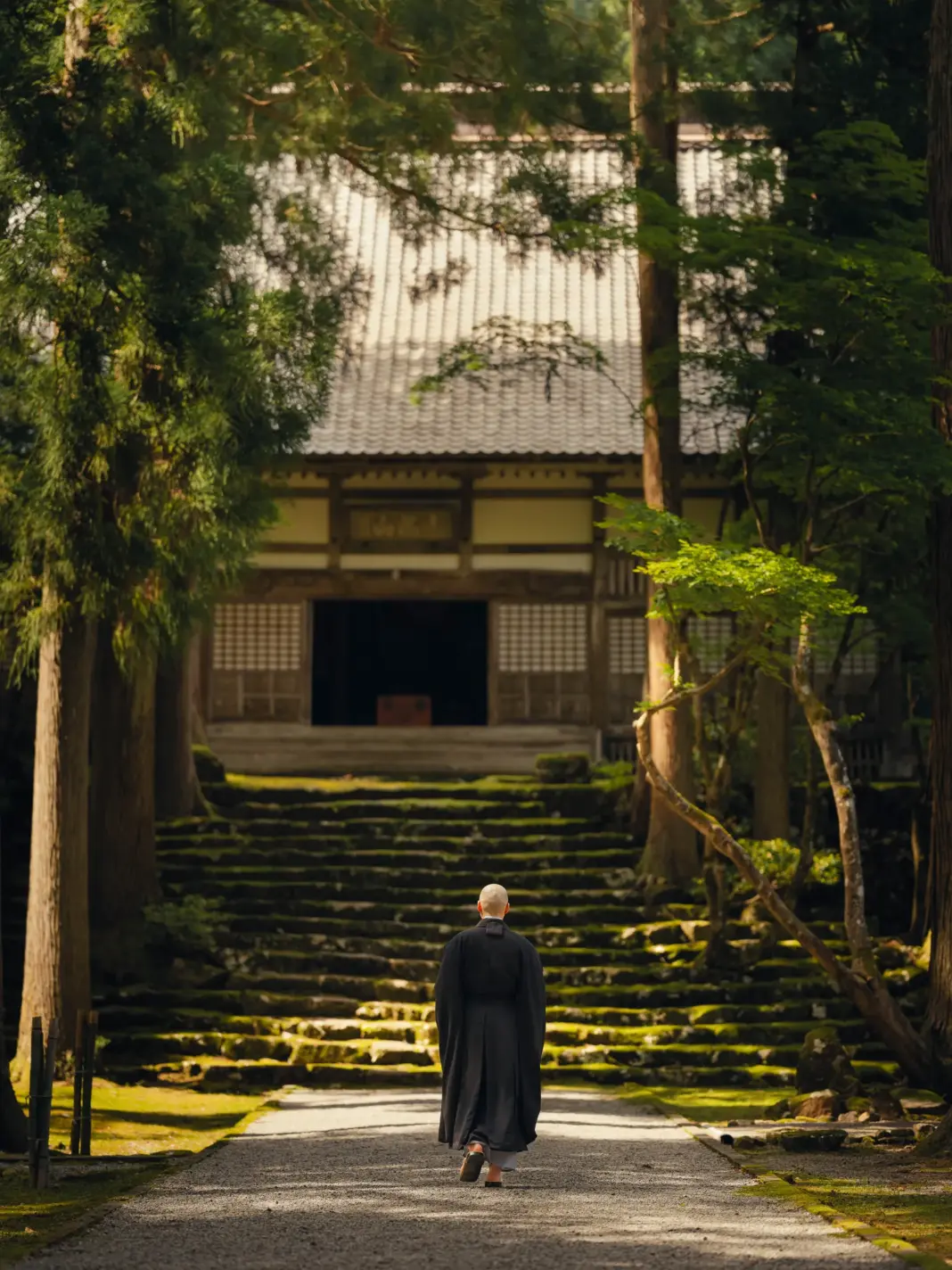
Though I’d been hearing about Eiheiji for half a lifetime, nothing prepared me for the monumental collection of large wooden buildings set against the hills, tall pines all around and another rushing river alongside. Its seven principal structures are said to resemble the head, heart, waist, arms and knees of the seated Buddha; in three of them, none of the training monks are allowed to speak. Reverend Donin Adachi, my monastic guide, opened a door to a large, dark space not usually seen by outsiders, and I peered in at the sodo, where the 80 or so training monks meditate, take their meals and sleep, each on a tatami mat.
When I complimented the reverend on his English, he told me he’d toured the world as an opera singer for years. But then his family temple needed a priest, and his life onstage came to an end. For visitors, there’s a stylish guesthouse, Hakujukan, across the street from the temples, and at 4:05 a.m. the next morning, I joined a dozen or so other foreigners in its lobby to follow a faint trail of lanterns under an indigo sky, past Eiheiji’s dragon entrance and up into its dark buildings. Reverend Adachi appeared to give us an introduction, in Japanese and English, to a day in the life of a training monk. Then he led us up to the dharma hall, which stands high above the other buildings. As we took seats at the back, dozens of black-clad monks began streaming in, and while a drum started pounding, they sat down in lines and took to chanting their sutras at high speed. Suddenly, they stood and walked in elaborate crisscrossing patterns. Older monks, many in gold robes, silently corrected the trainees who were bustling along the rows, bearing ceremonial objects. We joined in the recitation of syllables until the hall began to sound like a chorus of buzzing insects.