
This post was originally published on this site.
Officers told not to pursue car on wrong side of motorway, says police body
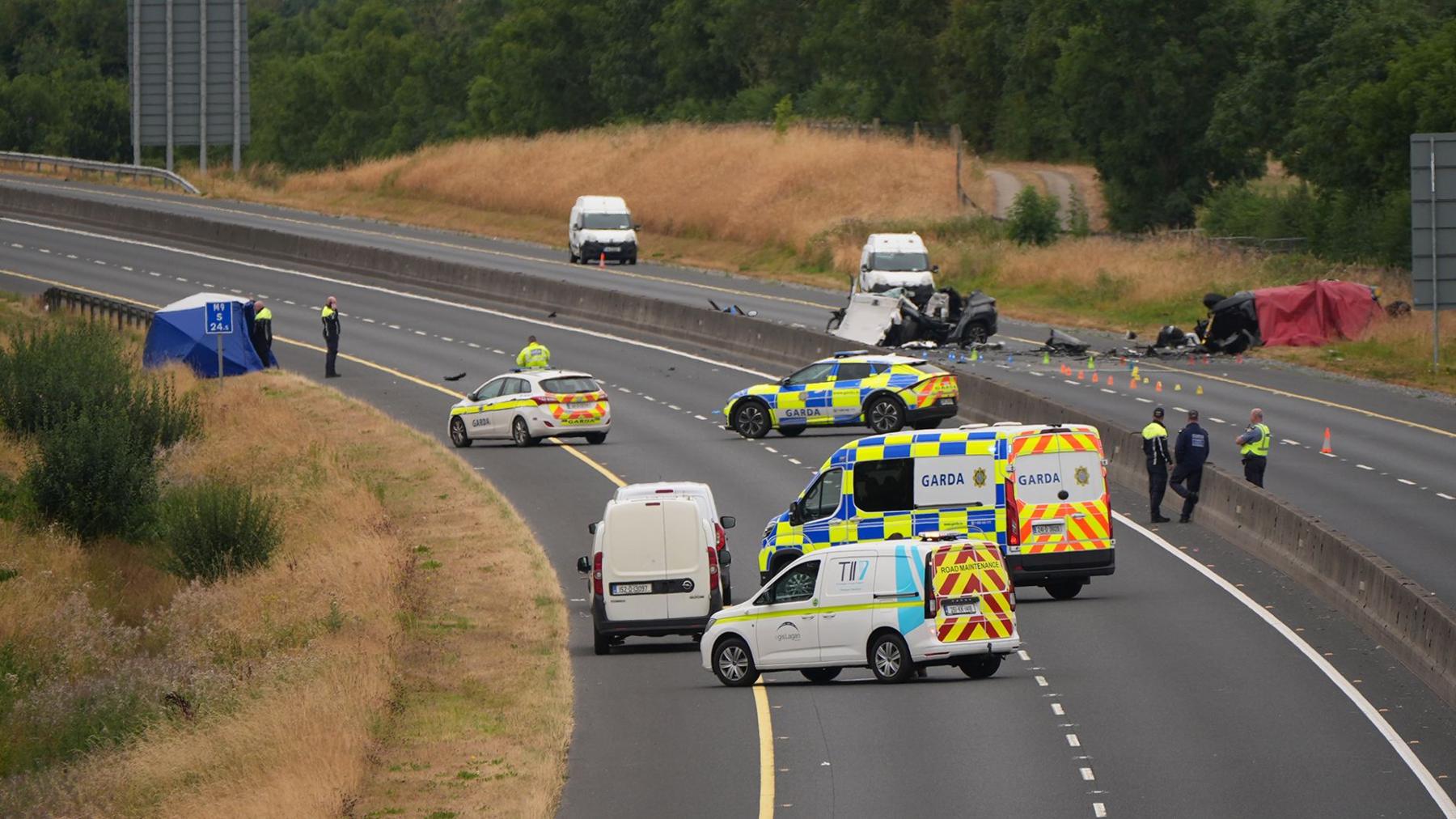 Image source, PA Media
-
Published
Gardaí (Irish police) were instructed to disengage from pursuing a car as it drove in the wrong direction on a motorway before a fatal crash, the Garda Representative Association has said.
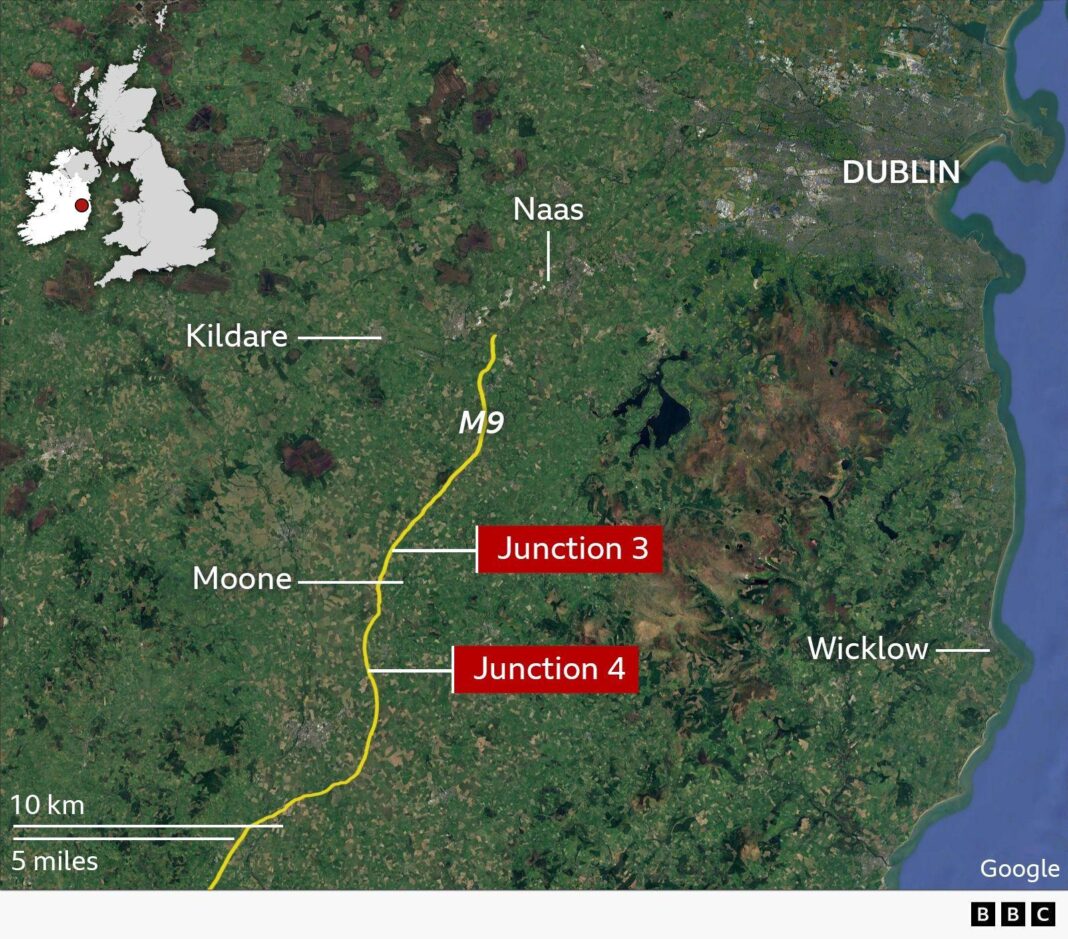
Five teenagers were killed in the head-on crash on the M9 in County Kildare on Sunday morning.
Two women are in a critical condition, while another woman and a seven–year-old boy are in a serious condition.
Assistant General Secretary of the Garda Representative Association (GRA), Tara McManus, told the BBC that garda roads policing officers “do not have pursuit training”.
She said officers involved in the Kildare incident were given a command to “disengage” with the car after it took “evasive action”.
Ireland’s Minister for Justice Jim O’Callaghan said that the Garda Commissioner has said he would introduce pursuit training this year.
The crash happened on the M9 Northbound at Junction 3 at about 03:00 local time.
The five teenagers who died have been named locally as Joe Carthy from Athy, County Kildare, Alex McCarthy from Carlow, Kamil Pustkowski from Limerick, Jeremy O’Brien and Jack Kennedy, according to Irish broadcaster RTÉ News.
The injured family – two women aged in their 30s and one in her 20s, and the young boy – are understood to be from Carlow.
McManus said the teenagers had been in the car for a number of hours before the collision and gardaí had attempted to interact with them and bring the vehicle to a stop on “several occasions”.
She told BBC NI’s Good Morning Ulster programme that officers deployed stinger devices in an attempt to stop the car, but it proceeded to travel in the direction of the motorway.
“At that stage our members would not continue in that pursuit and the directions that were given by our command and control centre were to disengage,” she said.
“That would be the normal procedure for us that we do not engage with a car that has decided to take that sort of evasive action.”
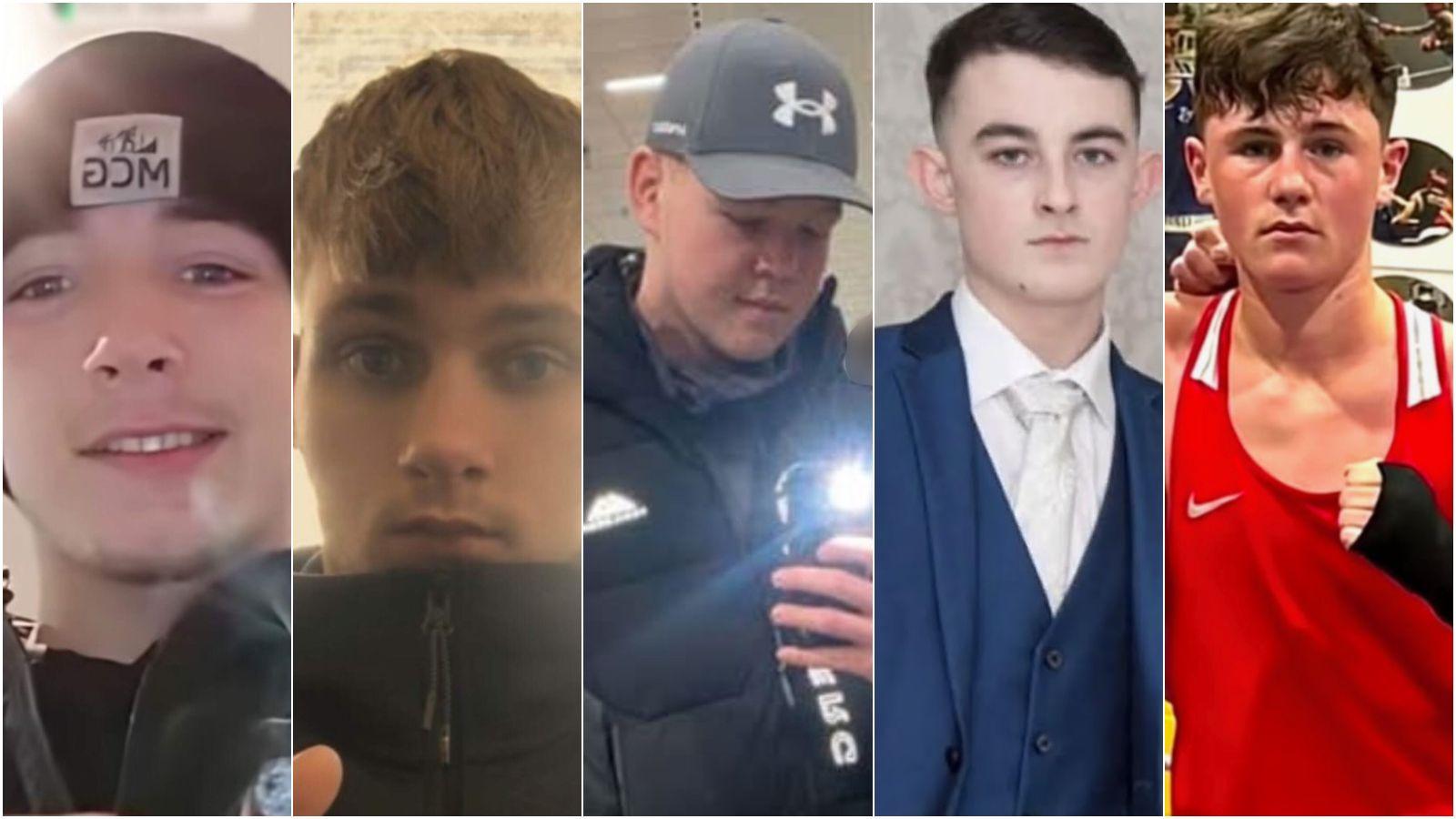 Image source, Social Media
“Our roads policing officers, whose speciality is obviously roads policing, do not have pursuit training,” she said.
She added that officers could face serious personal consequences if they took action without the appropriate training.
The GRA, which supports rank and file police officers, would support tougher legislation, including harsher sentences and driving bans for people caught engaging in dangerous behaviour on the roads, she said.
McManus also described the aftermath of the crash as “horrific” for the officers who attended the scene.
McManus said gardaí who attended the scene could require counselling for “months or years” to deal with the psychological impact of what they witnessed.
Pursuit training a ‘critical shortfall’
Brendan O’Connor, a Donegal garda and a former president of the GRA, said he believed the public would be “shocked” at the lack of pursuit training.
“The GRA have raised this for many, many years,” he told the BBC’s Nolan Show, adding that it was a “pressing police issue” and the “terrible events in Kildare” expose a “critical shortfall” in capacity.
“There has been massive investment in An Garda Síochána, contrary to what’s happening in Northern Ireland in relation to [police] funding, but police driver training has just seemed to be on the back foot and not prioritised,” he claimed.
An Garda Síochána has been contacted for comment.
Road deaths in Ireland
Leo Lieghio, vice president of the Irish Road Victims Association, has called for greater urgency in tackling road deaths.
Lieghio’s 16-year-old daughter, Marsia, was knocked down by a driver travelling at 50mph at a pedestrian crossing in Dublin in 2005. She died in hospital six days later.
He said the families of those killed and injured will be experiencing “torment”.
“Their lives have been turned upside down through no fault of their own. They will be going through hell.”
Lieghio added that there needs to be a stronger focus on consequences and early intervention, particularly for dangerous or criminal behaviour on the roads.
“We should be looking at structured intervention, something that teaches responsibility,” he said.
Lieghio called for a “reform programme” aimed at young people involved in criminal activity on the roads, alongside greater responsibility from drivers and the wider public.
There have been 123 road deaths in the Republic of Ireland so far in 2026, 18 more than at the same point in 2025., external
“We all have a responsibility on our roads, and if we see something wrong happening, we should be reporting it. We need consequences for a change of behaviour,” he said.
Lieghio said each death has consequences that extend far beyond the person who loses their life.
“I can imagine what’s going on in those hospitals now. I sat beside my daughter’s bed for six days, praying and hoping for something to change, but she couldn’t fight anymore,” he said.
‘Sadness, anger, compassion and grief’
The parish priest of Athy said his “heart, thoughts and prayers” are with all of those impacted by the “tragic situation”.
Fr Seamus McEntee said he travelled along the same stretch of the motorway just hours before the crash took place.
He said the people he has spoken to feel “a mixture of emotions” and are “carrying sadness, anger, compassion and grief”.