
This post was originally published on this site.
Tarling death shows risks of smaller races – Vaughters
-
Published
Riders are risking their lives in races where organisers battle huge costs, and cycling’s world governing body the UCI “cannot keep traffic off the roads”, according to former rider and team boss Jonathan Vaughters.
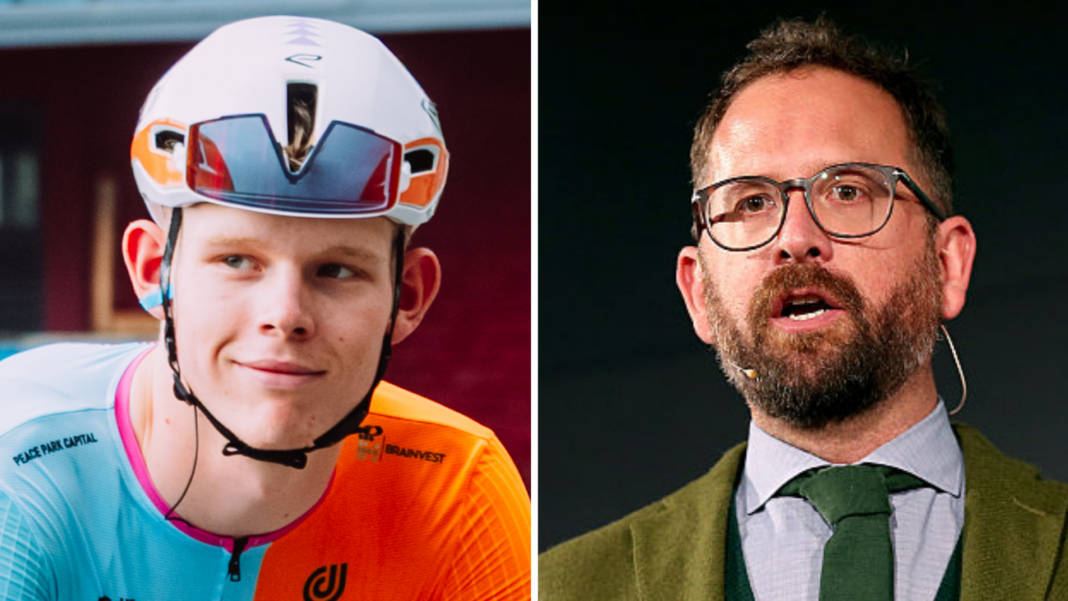
Britain’s Fin Tarling, 19, died during the Volta a Portugal on Friday following a high-speed collision with a van which had strayed on to the closed road.
A Go Fund Me page, external to promote young cycling talent has been set up in memory of Tarling, who rode for the NSN Cycling Development Team and was brother to Netcompany-Ineos’ Josh Tarling.
Vaughters, who is co-founder and boss of the EF Education-Easypost World Tour team told BBC Sport: “What I’m really not enjoying is this sentiment that’s coming from very powerful people in cycling, that says: ‘What can you do? Sometimes cars just end up on the road – this is just part of doing competitive sport on the open road.’ That is not true. This is preventable.”
He added: “People look at the Tour de France and see a bunch of riders going through the beautiful French countryside, but fundamentally it’s a very dangerous sport. From the start of my career I can’t tell you how many people we’ve lost.”
UCI ‘sanctioning events with a lack of safety measures’
While races in road cycling are set up by independent organisers, the UCI oversees most of the events and can set standards for race management.
Vaughters believes the UCI is focusing on the wrong areas of safety, such as a much-documented handlebar-width rule.
“I’m tired of the governance in charge of this sport introducing changes around ridiculous little issues, when they prove themselves to be unable to govern a sport to keep traffic off the road,” said Vaughters.
“The number of smaller races I’ve been to where there’s traffic on the course is unreal. I’m not blaming anyone other than the ultimate authority which needs to do a better job of governing the sport.
“[The Volta a Portugal] was sanctioned by the UCI. The UCI are a sanctioning authority of the race and take a fee from event organisers.
“If you are forcing teams to fight for ranking points at this event then you damn well better make sure the event is up to standard.”
After the fatal crash involving Tarling, the UCI put out a statement saying it was “deeply saddened, and extends its deepest condolences to Finlay’s family, friends, and team-mates”, but has not made further comment.
Six riders have died during road races in the past three years.
Following the death of Swiss Gino Mader in the 2023 Tour de Suisse, the UCI introduced the SafeR [SafeRoad cycling] initiative, in which stakeholders from bodies which represent teams, races and riders regularly meet to assess safety issues in the sport.
The BBC has contacted the UCI for a response to Vaughter’s comments.
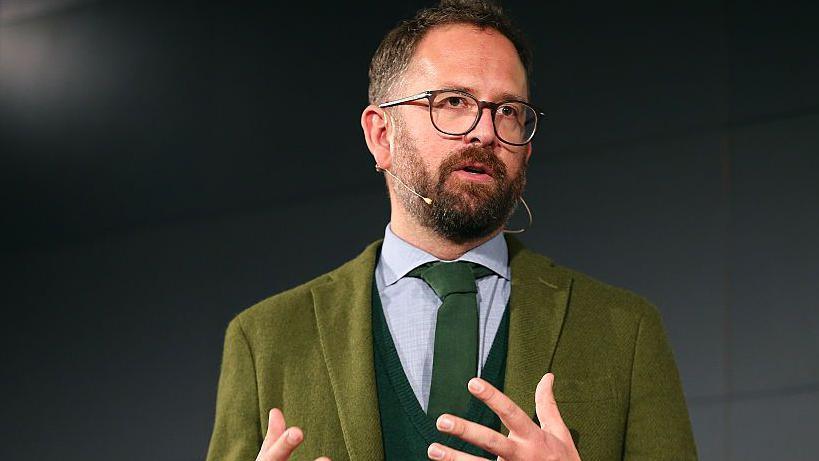 Image source, Getty Images
‘We don’t trust smaller races – organisers are struggling’
The Tour de France is by far cycling’s biggest and best-financed event in a calendar which boasts about 700 races, most of which make money by charging towns and cities for the race to pass through and selling television rights to broadcasters.
Smaller, lower-level events – such as the third-tier Volta a Portugal – sell their rights to be broadcast at a lower fee and use more cost-effective measures to manage road closures.
The Tour de France’s safety record remains one of the best, thanks in part to extensive safety measures which include total road closures on stages for much of the day, whereas smaller events such as the Volta a Portugal and Tour of Britain use ‘rolling roadblocks’, where police and officials travel in front of and behind the peloton.
“I’m not going to criticise the organisation of the Volta a Portugal,” said Vaughters, whose team did not take part in Portugal but frequently does at a similar level, along with competing at the Tour de France and other top events.
“There have been too many races at this level that have exactly the same problem. This [Tarling’s death] just happened to be terribly unlucky. It could have been any of the other races.
“The costs [for smaller races] are enormous, organisers are really struggling and hoofing it financially and I sympathise with that.
“The Tour de France closes its road for the duration many hours before an event. There’s a gendarme on every T-junction. A barricade at every T-junction.
“As a team, we trust races like the Tour de France, but we don’t trust smaller races.
“Rolling enclosures become a problem when the peloton splits into groups and you don’t have every T-junction blocked, and people think: ‘The race is done – I’m free to go on the road.’
“As soon as they turn on the road, they’re going 100km/h and the opposite way is the peloton at 50km/h – that’s a combined 150km/h. I mean, it’s horrible.”
“Rolling enclosures I don’t think work that well.”
-
‘Fury’ at Tarling death as cycling union calls for better helmets
-
Published2 days ago
-
-
Tarling family heartbroken as riders pay tribute to British cyclist
-
Published3 days ago
-
What could be done to improve safety?
Riders earn points set by the UCI to gain entry to the biggest races, which in turn means increased exposure for sponsors.
Every three years, three teams are eliminated from cycling’s World Tour and replaced by teams from the second-tier ProSeries.
For ‘relegated’ teams the risks can be a loss of sponsorship – and for riders their contracts to race. In turn, there is intensified competition on the road which means riders might take greater risks to secure higher finishing points.
The future of a team often hinges on retaining its highest-paying sponsor.
Unlike football and Formula 1, teams in road cycling do not receive revenue from TV rights.
In what was, at times, an emotional interview as Vaughters remembered one of his own riders being seriously injured in a crash, he added: “They’re being pressured by team managers like me saying: ‘We’ve got to get points – hurry up.’ There’s millions at stake so athletes feel that pressure.
“They start to take risks on the course – if they do that when it’s not properly managed and doesn’t have good enough traffic control, it’s a recipe for disaster.
“We have way too many events on the calendar – it’s just too much. It needs to be more selective and the governance needs to look at each race with a much higher degree of scepticism.
“Why do we need 700 race days around the world? It’s fine if those events occur, but not as sanctioned events with riders fighting for points. What’s wrong with 100 days on the race calendar?
“I’m scared for athletes and we are telling them they have to push themselves to the limit – that’s a dissonance that I think is reprehensible.
“Yes, it might mean less sanctioning fees for the UCI, fewer jobs for race organisers. I understand that, but in the modern world the price of a young athlete dying far outweighs all the other problems.”