


This post was originally published on this site.
Deaf patient given wrong jab due to sign language error, report says
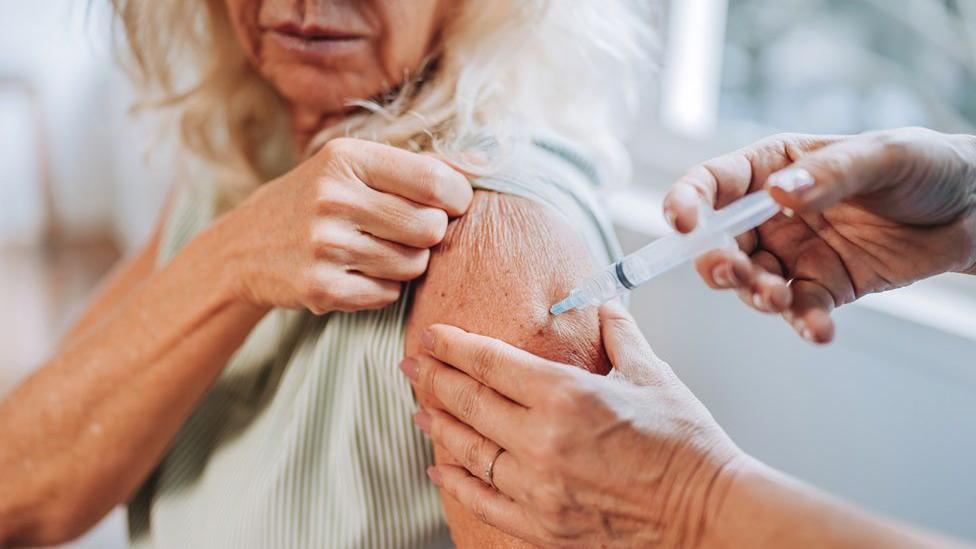 Image source, Getty Images
-
Published
A deaf woman was given the wrong vaccine because she was not provided with a British Sign Language (BSL) interpreter at her doctor’s surgery, a report says.
The Parliamentary and Health Service Ombudsman (PHSO) said disabled people were being let down by inaccessible communications.
It said the patient, Samantha, had booked a flu jab but was instead given a Covid vaccine after staff failed to show her a BSL video which would have highlighted the error. She said the experience had had a “profound impact” on her.
The Department of Health and Social Care said the “deeply upsetting stories” were “completely unacceptable” and NHS and social care organisations had a duty to make services accessible.
The PHSO investigates complaints about UK government departments, public organisations and the NHS in England.
It said public services were legally required to support people with their accessible communication needs, which might be due to a disability, neurodivergence or English not being their first language.
Samantha had booked her flu and Covid jabs for separate weeks and showed a nurse a note on her phone which said she was there for the “flu jab only”, the PHSO said.
Despite that, the practice said it believed it had correctly established Samantha wanted the Covid vaccine and had got her consent through her grandmother, even though she had early-stage dementia and was not in the treatment room.
Following an investigation, the PHSO recommended the surgery should apologise and pay Samantha £450. It has also since signed a contract with a sign language interpreting company.
The NHS Northamptonshire Integrated Care Board said it was “very sorry” about Samantha’s experience, and that it expected practices to make “reasonable adjustments to support effective communication”.
The PHSO said it had found disabled people risked not getting vital information about their healthcare, finances or employment because of a lack of accessible formats such as large print or audio materials.
Since April 2020, it said it had concluded 623 investigations related to reasonable adjustments, of which 496 were upheld or partly upheld.
The report also highlighted the case of Alan Graham, who was deaf and was being treated for cancer at University Hospitals Birmingham NHS Trust.
When an interpreter was not available, hospital staff asked his teenage grandson to interpret for the family and tell Graham’s deaf daughter that he might die.
Following an ombudsman investigation, the trust apologised and said “we did not get things right”.
They said new measures had been introduced to help deaf patients, including strengthening awareness and accessibility arrangements to ensure patients’ communication needs were better met.
“We remain committed to learning from this and to providing inclusive, compassionate care for all our patients,” they said.
Following the report by the ombudsman, NHS England said it was “completely unacceptable for those who are deaf or have visual loss to face barriers to accessing or understanding the healthcare they need”.
It added it had recently refreshed its standards setting out how services should provide safe and effective care for those with communication needs.
The PHSO said that while it was not a regulator, it could order public organisations to pay financial compensation if it upheld a complaint.
Rebecca Hilsenrath, its chief executive, said: “When people feel they are not listened to and that their needs are not met, they lose trust in the very services designed to support them.”
In its report, the PHSO highlighted North Cheshire and Mersey NHS Foundation Trust as a good example of providing effective communication, after it worked with local advocacy groups and deaf people to improve its service for deaf patients who reported feeling excluded.
The trust has provided guides for patients on how to access interpreting and translation services, increasing the use of interpreters by 50% in one year.
Get in touch
Have you been affected by the issues in this story?