
This post was originally published on this site.
The Bank of England might be best known for setting interest rates and printing banknotes, but there’s much more going on at the central bank you might not be aware of.
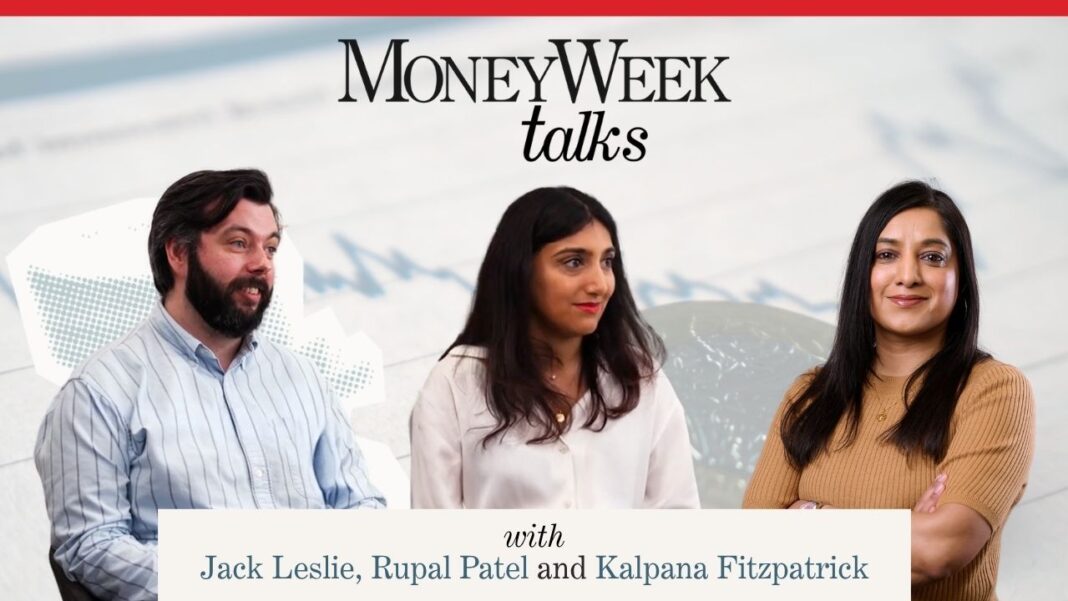
Jack Leslie and Rupal Patel, Bank of England (BoE) economists and authors of the new book Money: The Inside Story, discussed how the central bank holds 400,000 bars of gold and ‘giant’ and ‘titan’ banknotes worth up to £100 million in its vaults.
Speaking on the MoneyWeek Talks podcast, they also explained how electronic payments in the UK, from coffees to house purchases, go through the Bank’s ‘black box’.
Sign up to Money Morning
Don’t miss the latest investment and personal finances news, market analysis, plus money-saving tips with our free twice-daily newsletter
Don’t miss the latest investment and personal finances news, market analysis, plus money-saving tips with our free twice-daily newsletter
They recalled a “spooky” story of how a sewer worker in the 1800s accidentally discovered an old drain which led to the Bank’s gold vaults.
Plus, Leslie and Patel explained why the first colour banknotes were printed amid a German plot during World War Two to airdrop counterfeit notes over the UK and crash the economy.
The episode is also available to watch on our YouTube channel.
Bank of England facing ‘uncertain’ external environment
As well as some of the quirkier Bank of England-related facts, Leslie and Patel also addressed the biggest challenges facing the central bank – such as the rise in wholesale energy costs due to ongoing tensions in Ukraine and the Middle East.
Speaking to MoneyWeek’s digital editor-in-chief, Kalpana Fitzpatrick, Patel described increasing interest rates as a “blunt tool” to combat inflation, in that it can reduce demand, but that it is less effective at counteracting shocks on the supply side.
Patel also said interest rate decisions taken by the BoE’s Monetary Policy Committee can take “about 18 months to two years” to filter through to inflation.
She explained: “What the Bank of England is looking at is trying to think about inflation about two years ahead, and that’s quite difficult to do when the external environment is quite uncertain and you keep getting these new shocks.”
Leslie also addressed the issue of soaring government debt – recent analysis from The TaxPayers Alliance, a pressure group, estimates public sector debt has now tipped over the £3 trillion mark.
Asked whether printing more money could be the answer to pay off some of the debt, Leslie said: “When there’s more money in the system, you can actually buy fewer things because those things are more expensive.
“And so it’s really not a useful tool in helping out governments when they need more money.
“We can see the effects of that in other countries. A lot of people would’ve heard of Zimbabwe or Germany where money was printed and caused something called hyperinflation…and that’s just not useful.”
How you can get rid of old banknotes
They also explained what you can do if you come across an old banknote that’s no longer classed as legal tender.
You can exchange any Bank of England note that’s ever been issued back to 1694, for the same value modern note with the Bank of England, Leslie said.
He added: “You can physically come into the Bank of England because we have a counter for the public to exchange those notes.”
If you’ve got half or more of a note, you can exchange it for a new one.
“As long as you’ve got more than 50% [of the note], so just a fraction more than 50%, we’ll swap it for a new note,” he said.
About the podcast
MoneyWeek Talks is a podcast that helps you unlock the secrets to financial success. Editors Kalpana Fitzpatrick, Andrew Van Sickle and Cris Sholto Heaton are joined by influential guests – from CEOs and entrepreneurs to economists and policymakers – to share their top tips on managing money, investing wisely and building wealth.
Subscribe to the MoneyWeek Talks podcast and get ready to make it, keep it and spend it with confidence. You can also watch the episodes on our YouTube channel.
Explore More