
This post was originally published on this site.
Households will have a new energy-saving option that they can pickup in the supermarket from next week – plug-in solar panels.
The Iran conflict and cost of living crisis have pushed up energy bills in recent months with Ofgem’s price cap remaining high.
Rooftop solar panels are often highlighted as one way of going green and potentially reducing your electricity bills.
Sign up to Money Morning
Don’t miss the latest investment and personal finances news, market analysis, plus money-saving tips with our free twice-daily newsletter
Don’t miss the latest investment and personal finances news, market analysis, plus money-saving tips with our free twice-daily newsletter
But not everyone can afford the upfront cost and many don’t have the roof space or permission to install them.
Latest Videos FromMoneyWeek
There will be another option from 27 August though when government changes to energy power regulations go live and shops such as supermarkets and hardware stores including B&Q and Lidl will be allowed to sell plug-in solar panels.
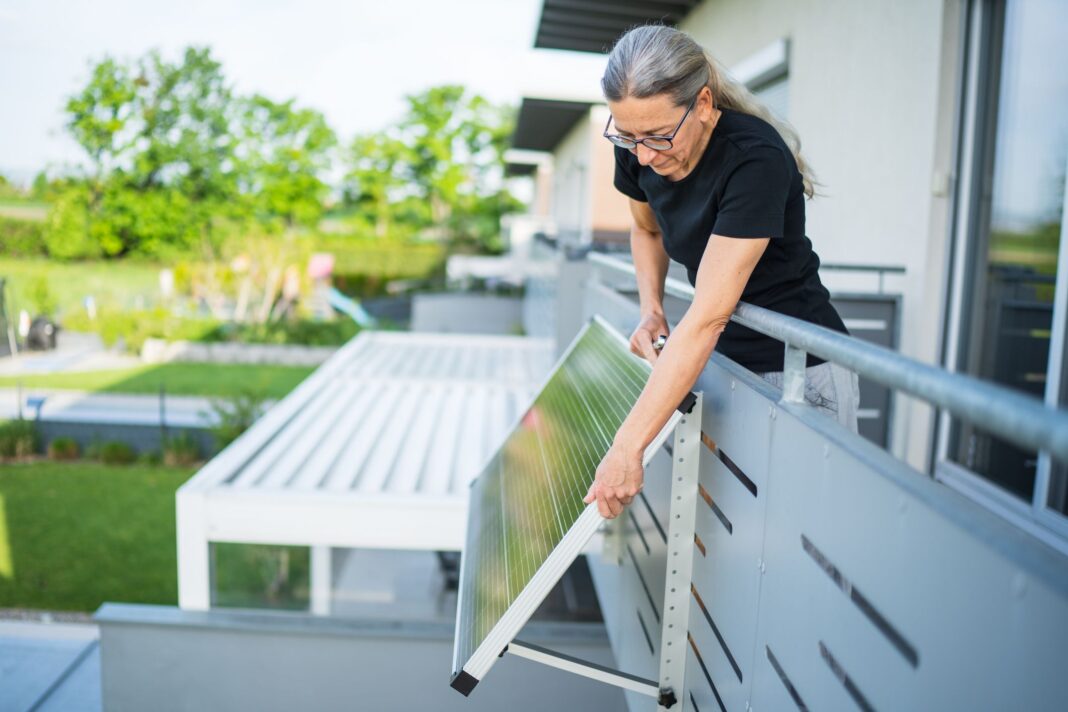
These can be installed on balconies or in gardens to capture energy from the sun.
What is a plug-in solar panel?
A plug-in solar panel is a smaller and less powerful version than a rooftop one.
They are popular in Europe but couldn’t be used in the UK until a change in regulations.
Rather than attaching to your roof, you can find a common sunny spot at your home such as a balcony or garden and connect it to your mains via a cable that plugs straight into a typical socket.
The idea is that people in flats or who can’t install panels on their roof such as renters or leaseholders can still try to reduce their energy bills and go solar.
Similar to a rooftop panel, electricity is generated from sunlight.
But there are differences as the plug-in panels can’t store power (with the rooftop versions, you can store the power in a special home battery), meaning you need to be home to actually use it as it is being generated.
How much could you save with a plug-in solar panel?
The government estimates that the panels could save households between £70 and £110 on energy per year.
There are other costs though. You will need to purchase the kit, which is estimated to cost between £400 and £600. You will also need a professional tradesperson to install it.
It may therefore take a few years to breakeven.
The savings will ultimately depend on your own energy usage but anything plugged in will use energy from the panel first before drawing it from the National Grid and your main bill.
Is a plug-in solar panel worth it?
The cost of installing a rooftop solar panel starts from £6,000, according to the Energy Saving Trust so a plug-in panel is cheaper to start with.
But there is less capacity for energy savings.
The maximum power of the plug-in panels has been capped at 800 watts.
The website Money Saving Expert suggests that’s the equivalent of two kilowatt hours of electricity per day, while the average UK household uses 7.4kWh.
Another issue is that the panels don’t store energy, so it is best to make sure they are being used while you are at home so you can benefit from the power being generated.
Renters and leaseholders may also need to get permission to install a plug-in panel depending what their rental or leasehold agreements say.
Martyn Fowler, founder of green energy supplier Elite Renewables, said: “The value is highest when you use the electricity as it is being generated. If the system produces a unit of electricity and you consume that unit in the house, you have avoided buying one from your supplier.
“Homes with a steady daytime load will benefit most. Someone working from home is likely to use more of the generation than a property that sits empty all day.”
Orientation matters as well.
Fowler added: “A panel mounted vertically on a balcony will generate less over the year than the same panel at a good angle facing south.
“Plug-in solar is a useful entry point into solar. It will not transform your energy bill, but it can be a low-cost way to reduce grid use and start generating some of your own power.”