
This post was originally published on this site.
Rosenberg: Shortage of petrol but not patriotism as Russians feel growing impact of war
To play this video you need to enable JavaScript in your browser.
This video can not be played
-
Published
At a petrol station in the south-east of Moscow, Svyatoslav has been queuing in his car for two hours.
The sign board up ahead has just been changed to show there’s no fuel.
“They say there will be petrol here,” Svyatoslav tells me optimistically. “They just don’t know when. Maybe today, maybe tomorrow.”
I ask him why he doesn’t drive off and look for another place to fill up.
“I haven’t got enough in the tank to do that,” Svyatoslav replies.
Even if he had, there’d be no quick fuel fix for Svyatoslav. This week across Moscow, and in other parts of Russia, there have been long queues for petrol.
“Unscheduled repairs at oil refineries,” explain Russian officials.
Those repairs have been triggered by Ukrainian drone strikes on Russian oil facilities. Such long-range attacks sparked major fuel shortages earlier this summer. The targeting of oil refineries has continued apace.
This time the queues in Moscow are even longer than before. The authorities appear to be struggling to resolve problems with refining capacity and logistics.
“The second wave of the fuel crisis is building,” declared broadsheet Nezavisimaya Gazeta this week.
Driving around Moscow this week two things catch the eye: patriotic announcements on giant billboards about Russian Flag Day…and giant petrol queues.
Outside one Moscow petrol station I count 80 vehicles waiting in line.
The search for fuel is now a constant struggle.
“Last night I went to get petrol at 11pm,” says Elizaveta who’s queuing again for fuel. “By midnight I’d reached the front of the queue. Then they shut the petrol station until 2am.”
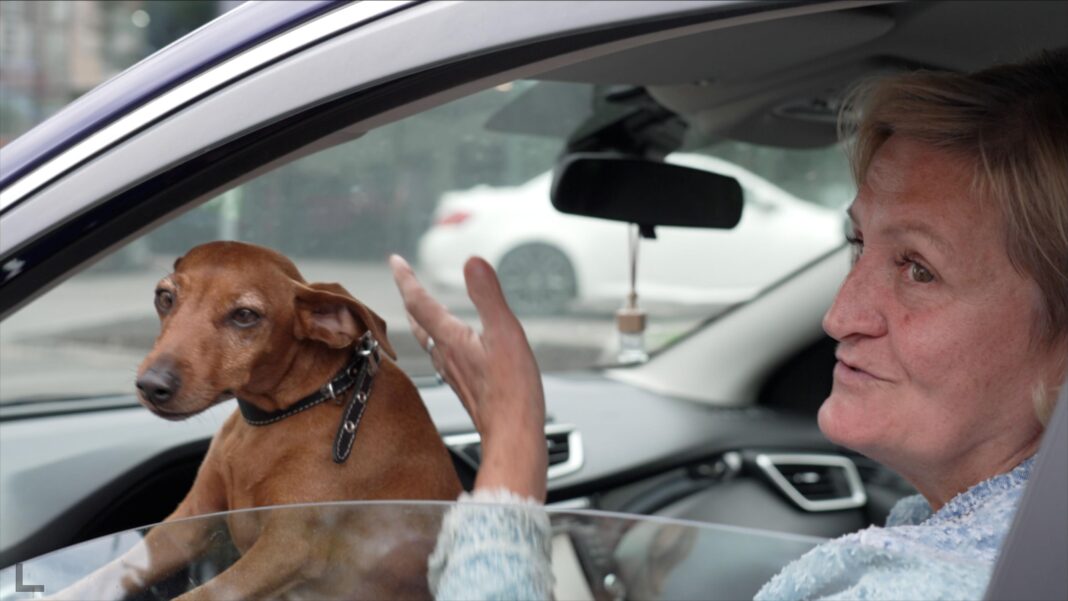
“I drove into Moscow yesterday from the provinces,” says Lyubov. “It was empty petrol stations all the way.”
To stay calm in the queue Lyubov is stroking her pet dog Agatha.
How does Lyubov view the fuel crisis?
“Everyone says there is a difficult situation in the country,” Lyubov tells me. “Everyone connects this to that situation.”
Before Russia’s full-scale invasion of Ukraine in 2022 there were no drone attacks on Russian oil refineries – or on any facilities inside Russia. These strikes haven’t forced the Kremlin to U-turn. It’s continuing what it still calls the “special military operation”, Russia’s war on Ukraine.
To ease the crisis, Russia has begun importing petrol.
That is extraordinary for a country widely recognised as an energy superpower and one of the world’s leading exporters of crude oil.
To reduce the fuel shortage the government has also temporarily authorised the production and sale of lower-grade petrol, like Euro 2, which is faster to produce. Euro 2 contains up to 50 times more sulphur than modern Euro 5 and was banned in Russia in 2013.
It comes with a warning.
“For modern cars,” wrote the government newspaper Rossiyskaya Gazeta, “regular use of lower-grade petrol can increase the pressure on the fuel injector, spark plugs, oxygen sensors, the catalytic converter and soot filter. Euro 2 won’t kill an engine on one re-fuelling. But it sharply reduces the margin of safety.”
It’s not just the targeting of oil facilities which have brought the war home to Russians.
Ukrainian strikes on distribution centres of Wildberries, Russia’s equivalent of Amazon, are causing disruption to shoppers and economic pain for sellers.
This week President Vladimir Putin conceded that attacks on industrial facilities and infrastructure “do inflict damage; this is obvious. We understand this, we see it.”
But the Kremlin leader played down the problems.
“There are no critical consequences from such attacks. There have not been and cannot be.”
In other words, no need for panic.
“It is a disconnect between people’s feelings and the description of reality by Vladimir Putin, the description of his personal reality in his head,” believes Andrei Kolesnikov, a columnist for independent news outlet Novaya Gazeta.
“Maybe he’s trying to hypnotise himself that everything is okay.”
Recent polling inside Russia, including by the Public Opinion Foundation, suggest that anxiety in society is rising. That would suggest that the Kremlin’s message of ‘keep calm and carry on’ isn’t landing.
“This permanent feeling of anxiety is with everyone right now. You feel that something is wrong. Anxiety is the main sentiment,” says Kolesnikov.
“This regime doesn’t demonstrate any model of the future: the nearest future, a middle- term future, a long-term future. We are ‘great’ right now. What are the qualities of this greatness? The petrol crisis? In that sense, the future is aborted. People are trying not to think about the future. The horizon of planning is very short.”
A few minutes’ drive from the petrol station where I’d been chatting with Svyatoslav, I spot another long queue.
But this one is for candyfloss.
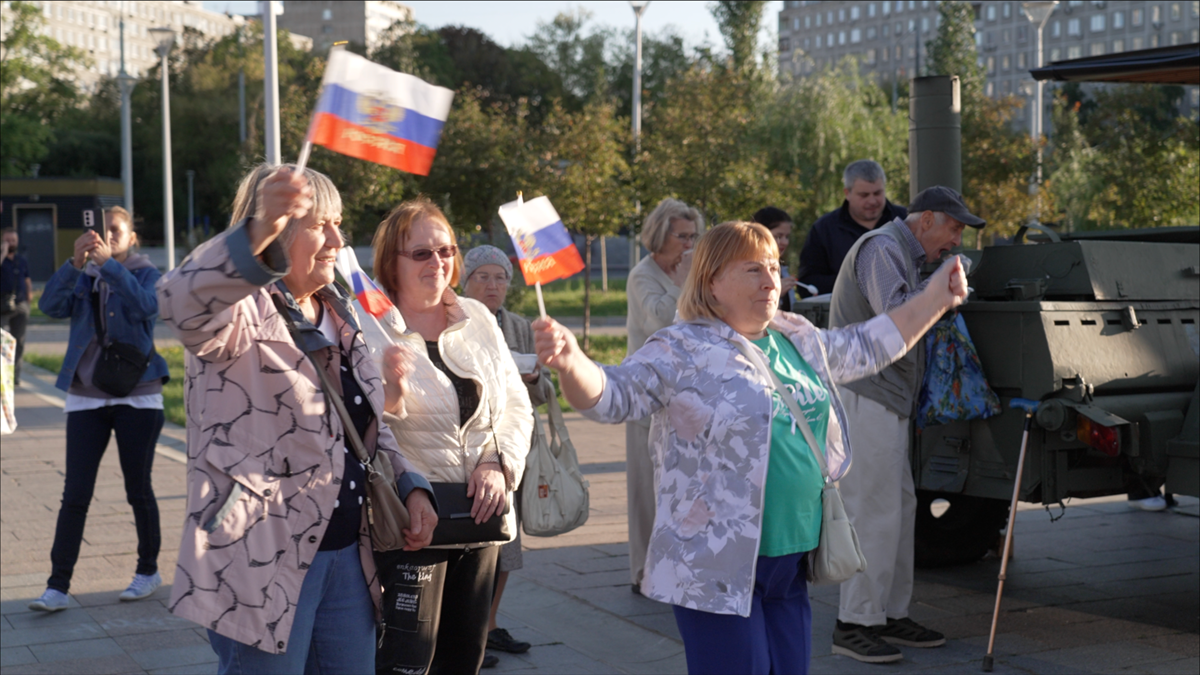
The local authorities have set up stalls and put on a street concert to mark Russian Flag Day.
There may be a shortage of petrol. But not of patriotism. Not here.
“It’s my country, my fate, my dream,” croons a singer. “I’m raising my flag. The flag of my country.”
Volunteers are handing out Russian tricolours to people on the square.
“Dear friends, we live in a wonderful country!” declares one of the speakers. “We know that we will always be victorious. I wish you peaceful skies, a good mood, comfort, prosperity and pride in our country.”
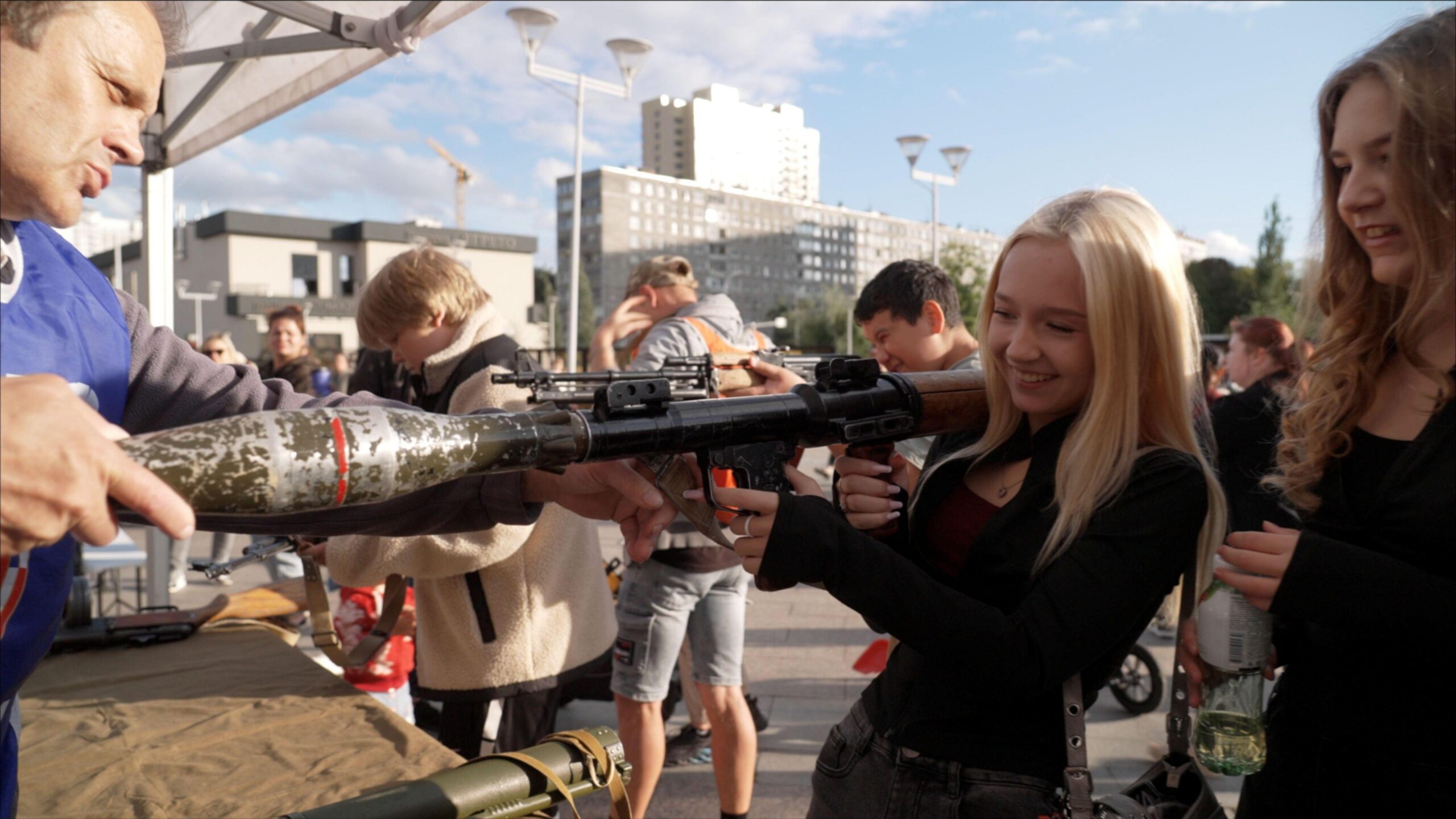
Along with the candyfloss there are Kalashnikovs. At one stall children are being shown an array of military hardware, including hand-held rocket launchers. The kids are picking up the weapons and posing with them.
It hints to the growing militarisation of Russian society.
The patriotic presentation is lifting some people’s spirits.
“Difficulties unite us,” pensioner Tatyana tells me. “The harder things are, the stronger we get.”
But the war is very much on people’s minds – especially the Ukrainian drone attacks on the Moscow region.
“When you go to sleep you don’t know if you’ll wake up in the morning,” Angelina tells me. “That’s the only problem. Everything else is fine.”
“The problems we have are high prices, petrol shortages and last night, for the first time, my windows shook…I heard ‘boom boom!’ another woman tells me.
“Right now, it’s important to take care of your psychological state, so that it’s strong and unbreakable. So that, whatever happens, you can say: ‘Oh well, never mind.’
Comments like that suggest that Russians don’t believe they can influence what’s happening around them. All they feel they can do is try to adapt.