
This post was originally published on this site.
UK missiles offer may help Ukraine – but they are not what Zelensky needs most
To play this video you need to enable JavaScript in your browser.
This video can not be played
-
Published
The UK is set to hand over blueprints for its British-French designed Storm Shadow cruise missiles to Ukraine – following a similar move from France – allowing Ukraine to produce the weapon domestically.
The move sends an important signal, showing that some Western nations are willing to share their expertise and know how to help Ukraine defend itself.
But, on its own, this won’t dramatically alter the course of the war.
Scalp and Storm Shadow missiles have already been provided to Kyiv by both Britain and France. They’ve already been used to hit military targets inside Russia.
-
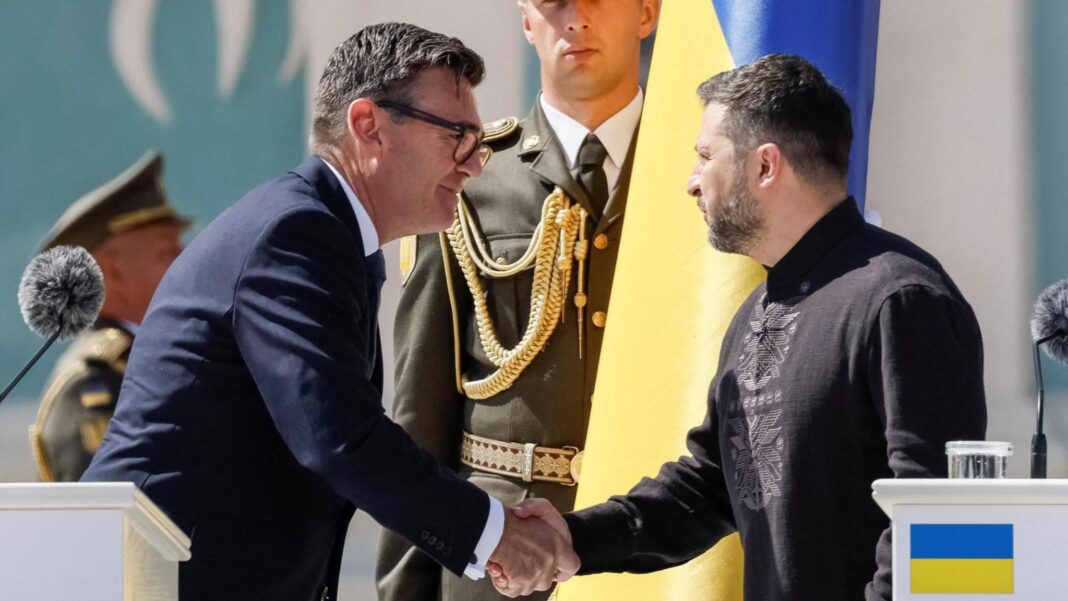
Burnham to hand long-range missile blueprints to Zelensky as he visits Kyiv
-
Published25 minutes ago
-
The weapons are not new – they were developed in the 1990’s – and they are expensive – at around £1m a piece.
They also rely on complex global supply chains and have been built in peacetime at relatively low rates – in the hundreds, not the thousands.
Even with the blueprints, Ukraine may find it hard to source components. It could take months, possibly years to make the cruise missile themselves.
Copying Western weapons production in peacetime is, in fact, no way to win a war. Even Nato nations now realise that.
Britain and many of its allies have tended to produce small quantities of highly advanced, expensive missiles which would quickly run out in any protracted conflict.
In 2021, the former head of the US Army in Europe, Gen Ben Hodges, said that in a Nato wargame the UK military ran out of key weapons within a matter of days.
Proof of the recent change in mindset is the UK military is no longer buying Storm Shadow missiles for itself.
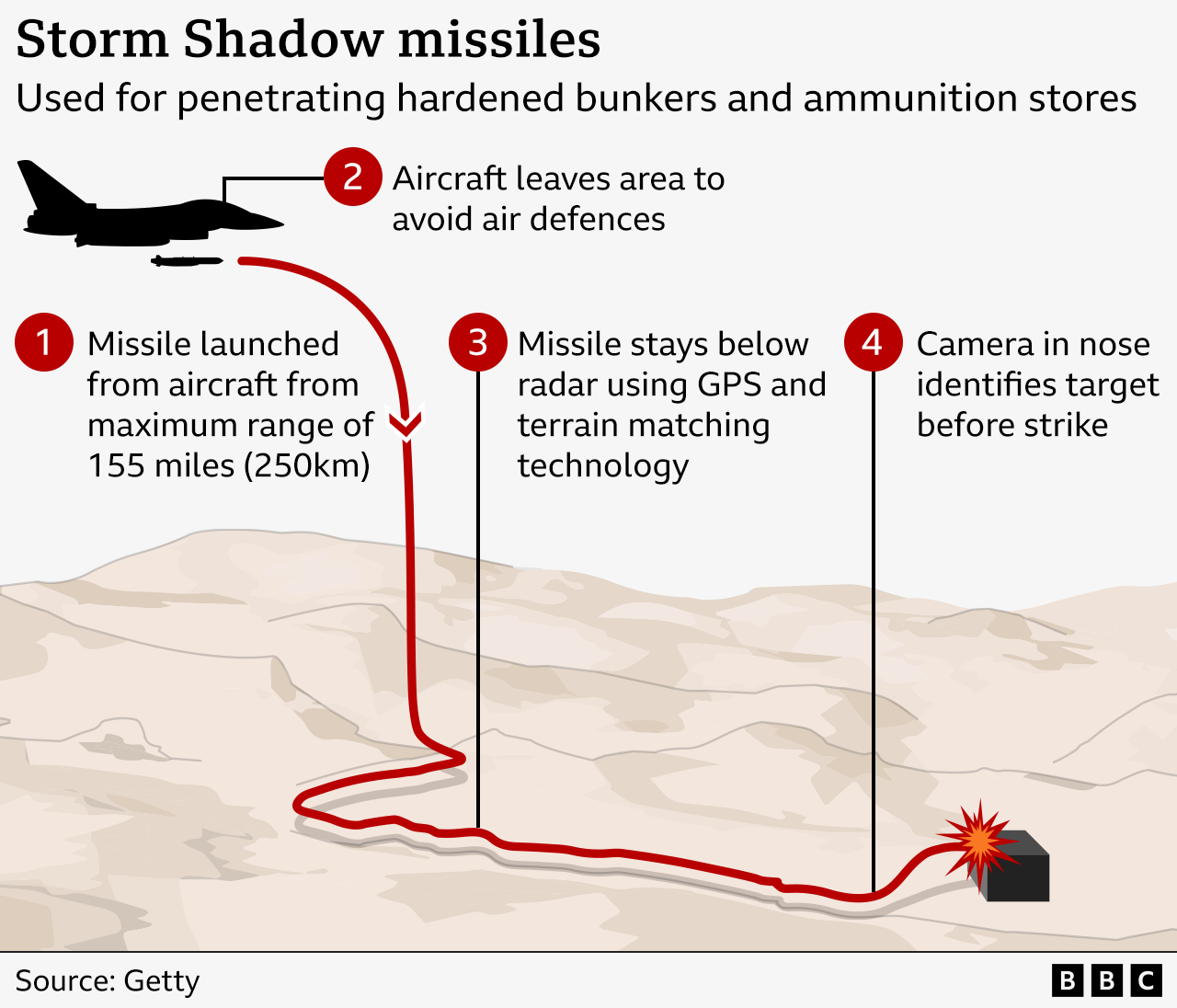
Instead, under Project Brakestop, it is developing its own long-range cruise missiles, free of foreign components, and less than half the price of a Storm Shadow.
Project Brakestop is also being done at break-neck speed. The UK hopes to have a new cruise missile ready by the end of the year. It is promising to supply the new weapon to Ukraine.
It is Ukraine which has shown the world how to produce relatively cheap, mass produced weapons, necessary for a long, protracted conflict.
Douglas Barrie, Senior Fellow for Military Aerospace at the International Institute for Strategic Studies (IISS) told the BBC: “The decision to share UK classified information on the MBDA SCALP missiles with Ukraine, as France and Ukraine work toward local assembly lines in Ukraine, is notable. Any impact, however, will in part depend on how quickly Ukrainian assembled SCALP cruise missiles can be introduced into service.
“Given that Ukraine has already operated both Storm Shadow and SCALP, familiarity with the missile may help speed the overall process, but this will also be dependent on the extent and pace at which local assembly can be established.”
At the start of the war its armed forces relied on old Cold War-era Soviet weaponry.
A slow supply of Western weapons helped it adapt. But now Ukraine produces 70% of its own weapons.
Key has been its rapid development of drone technology – from small First Person View (FPV) one-way attack drones for the front line, to larger long-range drones capable of striking deep into Russian territory, further than Storm Shadows can strike.
Kyiv is on track to build 10 million drones by the end of this year. And they can do it cheaper than the West, by using mass-produced Chinese parts.
Nato allies’ equivalent drones can be twice as expensive as they try to shun Chinese components.
However, there are still weapons that Ukraine needs and struggles to produce on its own. From fast fighter jets to the most urgent example, interceptors to take down Russian ballistic missiles
The most effective weapon to do that, by far, is the US-made Patriot interceptor. Ukraine has all but run out of them and Russian ballistic missiles now make it through Ukrainian air defences with ease.
America’s war in Iran has meant they’re in even shorter supply.
They’re also expensive – at around £3m a missile – and production rates have been slow. The US is planning to double production rates from around 600 Patriot missiles per annum to 2,000, but that will take several years.
President Donald Trump signalled last month that he would be willing to share Patriot technology with Ukraine, but has since rowed back.
Even if he had given approval, it would have taken a while for Ukraine to make Patriots themselves – some estimate at least a year. Ukraine would also be relying on the same sophisticated components that are in high demand across the globe.
Ukraine has embarked on a programme to develop its own interceptor missiles with European support – known as Project Freya.
But there are huge technological challenges in building a high-speed missile to take down another missile travelling at thousands of miles per hour. It is expensive and often time consuming.
Ukraine’s military and its weapons manufacturers have shown themselves to be fast learners.
One of its own companies, Fire Point, is developing its own ballistic missiles which it hopes will be ready to fire in anger next year.
But Russia has already ramped up its own ballistic missile production, to around 100 a month.
Developing sophisticated weapons is expensive and cannot be done quickly. Ukraine is short of both time and money.
So, the move to hand missile blueprints to Ukraine will be welcome, but it is not an immediate fix for Ukraine’s most pressing problems, and it wwill not dramatically alter Kyiv’s ability to strike Russia in new ways.