
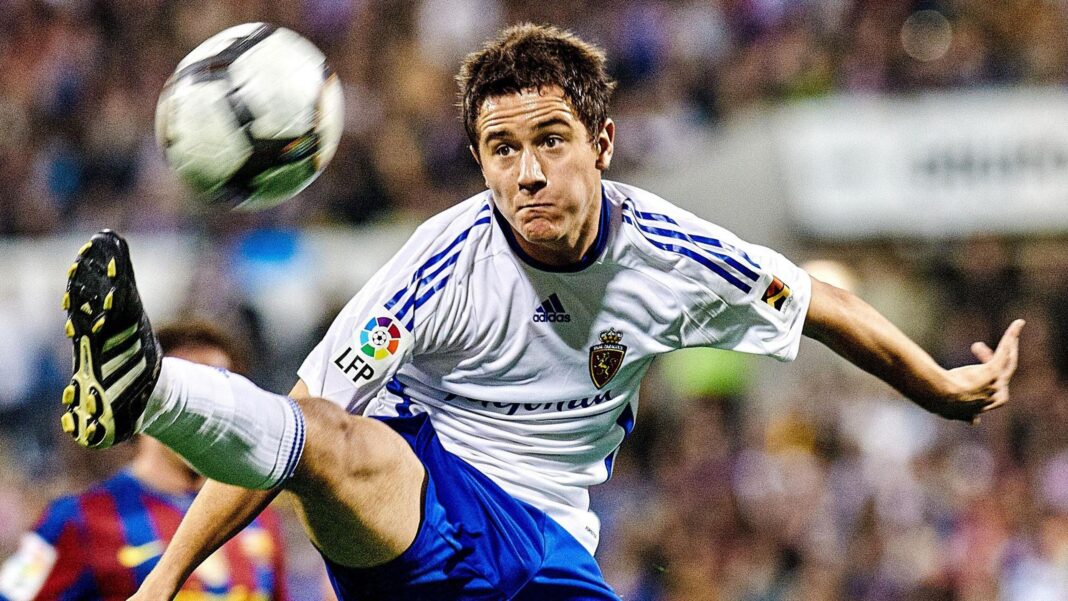


This post was originally published on this site.
Why Herrera is playing for free in Spanish third division
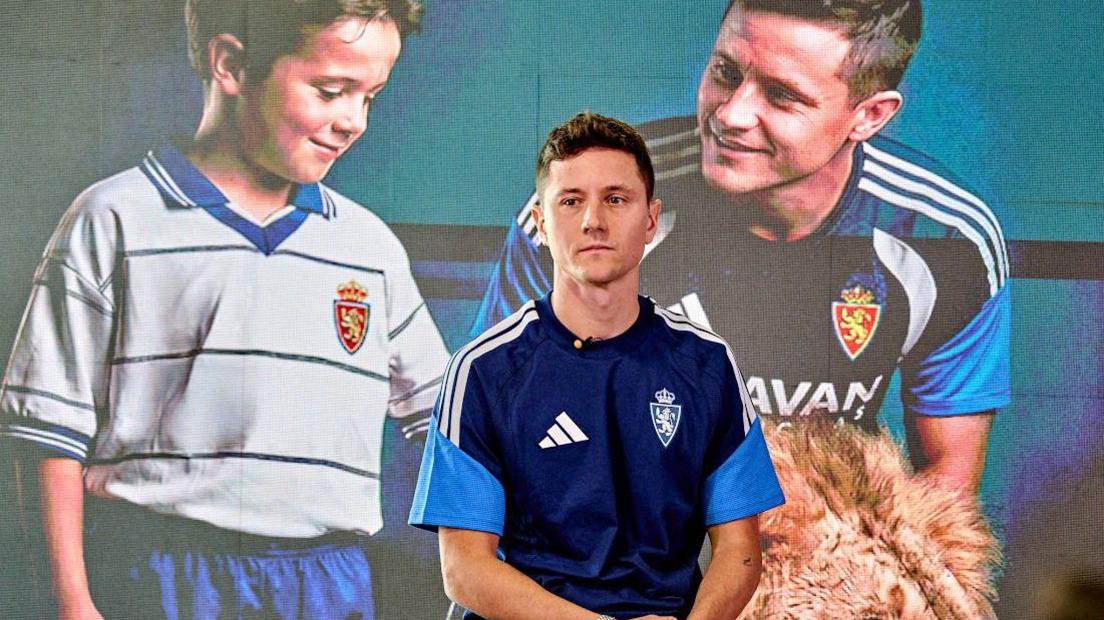 Image source, Real Zaragoza
-
Published
Ander Herrera’s most recent competitive game was in front of a raucous La Bombonera crowd playing for Boca Juniors in the Copa Libertadores.
His next will be in the Spanish third division in front of roughly 6,500 fans against a regional side, Gimnastic de Tarragona.
But Herrera says his return to Real Zaragoza on a free transfer from Boca is just as important as any move he has made in his career.
“This is probably the last dream that I wanted to make come true,” the Spaniard tells BBC Sport.
“To come back home, to the place where I grew up, that gave me the opportunity to be professional – not only in football, also as a human being.
“And I still have the passion, I still have the desire. I still have that love for football and to do it at home is the best way to end up in my career.
“In Spain, we say closing the circle.”
The midfielder has returned to his boyhood club after 15 years away – including two spells at Athletic Club and stints at Manchester United, Paris St-Germain and Boca.
The 37-year-old has won the Europa League, FA Cup and multiple league titles, played under Jose Mourinho, Thomas Tuchel and Marcelo Bielsa, and shared dressing rooms with Lionel Messi, Neymar and Wayne Rooney.
However, success has been in short supply in recent years for Zaragoza, who beat Arsenal in the 1995 Cup Winners’ Cup final.
They were relegated from La Liga in 2012-13 – two years after Herrera had left for Bilbao – and after 13 seasons of declining finishes in the second division, fell into the notoriously difficult third tier of Spanish football.
“It has been so sad, of course, for all us Zaragozistas,” says Herrera, who watched the club’s decline from afar.
“Real Zaragoza belong to Europe, they belong to compete for trophies, to be fighting with the biggest clubs in Spain and in Europe.
“I want to put my quality, my experience and my passion to try to help my team to come back where I think we belong.
“But since the first day I came, I don’t want to talk too much about the past. We have been talking too much about what we have done wrong.
“It’s always killing our minds why that happened, always thinking about negative things. Let’s stop crying about what happened in the past.
“Let’s build on the future. Let’s come every day to training with a smile.”
When Herrera left Zaragoza, who were in financial trouble, in 2011, he knew he wanted to return at some point.
While he did not know what the situation for his comeback would be, he has rejoined the club during their most challenging time – and opted to donate his salary to Zaragoza’s foundation.
“I don’t need a contract. I have a very successful career. I have taken care of my money,” Herrera says.
“I can give this present to myself. To put that shirt on… for free because I wanted to help my club, my team, my city.
“It’s something that I wanted to do. It’s something that I am able to do and it’s something that makes me feel so proud to be able to be here just to help.
“I am not thinking about money or contracts. I feel a privilege to be able to do that.”
Herrera was a fervent fan before his promotion to Zaragoza’s squad. His idols were from the club and his biggest inspiration – his father Pedro – was also a player before becoming general manager.
Herrera Sr’s time working at Zaragoza was when his son’s earliest football memories were created, including that famous 1995 European success.
The young Ander watched from home as his team beat Arsenal to clinch the trophy in the Parc des Princes, the home of PSG – a club he later spent three years at.
Herrera says: “You can now see the difference between Arsenal and Real Zaragoza – but we used to fight against those giants.”
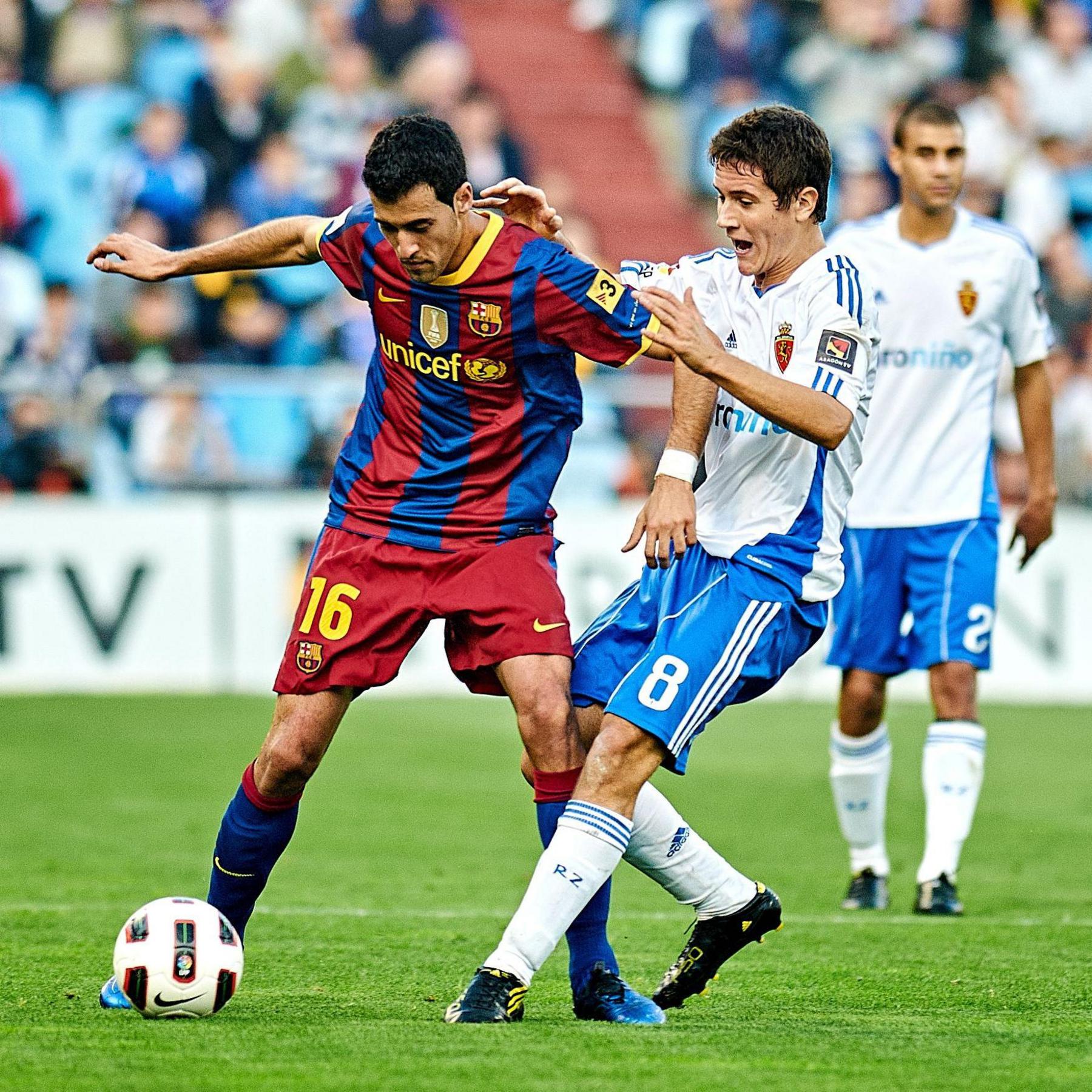 Image source, Tino Gil – Real Zaragoza
Herrera’s on-pitch peak may be behind him – although he remains focused on short-term objectives such as helping rebuild Zaragoza – but he is sure football will remain part of his future after his playing days are over.
“I like to work with young players,” he says. “I like to see the development and the process and I like to help them to avoid some mistakes that I have probably made.
“To help the families also manage situations that I have already managed in the past and I have probably done not as good as I should have done.
“I don’t know if I’m going to be a coach of professional football players. I don’t close any door because I love football, it’s my passion, it’s something that I have been doing my whole life and it’s something that I love.
“But I don’t know in which position I will find my place.”
As Herrera’s career progressed and he became a senior player in dressing rooms, he saw the effect social media can have on younger players.
“Young players want to run too fast and I think if you make two steps instead of one you can make a mistake,” says Herrera.
“When I was in Zaragoza’s academy I was one of the best players and I had the opportunity to leave, but I didn’t want to leave.
“I have always tried to enjoy every single step that I make in my career and you can see in our academy we are having problems to keep the players.
“But we have stats here that most of the players that leave don’t reach professional football and the players that stay have more possibilities to reach it.
“So because you run faster, it doesn’t mean you are going to reach the objective faster. Social media is making you run too much.
“Every player has his moment. Just because he’s doing it faster than you [it doesn’t mean] that he’s going to be a better player than you.
“Social media is making us live too fast in every aspect of society.”
 Image source, Getty Images
These are messages that Herrera wants to help pass on to a younger generation, either as a coach or in another role.
But if he does choose to become the former, he has a long, and expanding, list of coaches from the Basque Country to look at for inspiration.
Four current Premier League bosses – Xabi Alonso at Chelsea, Mikel Arteta at Arsenal, Aston Villa’s Unai Emery and Liverpool’s Andoni Iraola – all come from the northern region in Spain and have had established coaching careers.
Herrera, who was born in Bilbao, adds: “I don’t know how to explain it. I think it goes in the DNA.
“The capacity to work, the capacity to respect the sport, to make every step and try to be better every day.
“It’s difficult to explain this level of Basque coaches, but I think it is the respect for football that you can see in the Basque Country.
“People will never hear a Basque person saying that something in Madrid is better than in the Basque Country and you can replicate that in football.
“They have so much love for their own things and it’s something very special to experience.”
But Herrera’s future coaching ambitions are on hold.
The club he loves are languishing in the third division of Spanish football – and one thing is on his mind.
“I am so proud and I feel so privileged to do every single step that I have made in my career. Hopefully I can end up successful at home.”
To play this video you need to enable JavaScript in your browser.
This video can not be played