

This post was originally published on this site.
“What should I do if there’s a AI crash?” a friend asked me recently. It is a very sensible question – we don’t know there will be an AI crash, but having a clear plan to follow when you start to worry is better than waiting and panicking.
However, it’s also a very difficult question, because the AI theme is such a huge part of the market: tech is over 35% of the MSCI World index (once you allow for firms such as Amazon and Alphabet assigned to non-tech sectors), while the trillions of AI capital expenditure is also buoying other sectors.
My first suggestion is to look at what wealth preservation trusts such as Capital Gearing (LSE: CGT), Personal Assets Trusts (LSE:PNL)and Ruffer Investment Company (LSE: RICA) hold.
Sign up to Money Morning
Don’t miss the latest investment and personal finances news, market analysis, plus money-saving tips with our free twice-daily newsletter
Don’t miss the latest investment and personal finances news, market analysis, plus money-saving tips with our free twice-daily newsletter
These have diversified portfolios intended to cushion a market downturn, while still achieving growth. You could put some of your portfolio directly into these trusts, or you could look at how they allocate to cash, bonds, gold and other assets such as infrastructure as a template.
Latest Videos FromMoneyWeek
Even if you are a growth investor who is comfortable with high volatility to earn higher long-term returns, portfolios like these give you ideas for temporarily reducing risk that may be better than holding cash.
If you prefer open-ended funds, Orbis Global Balanced stands out for an active approach with more of a bottom-up value philosophy than most multi-asset funds.
Hedge against an AI crash with value stocks
If you want to stay entirely in stocks yet still dial down risk, you need to consider what kind of stocks are not caught up in the AI boom and may sell off less or rebound more quickly.
Think about this top down – by region (eg, UK and Europe) or sector (eg, pharmaceuticals and financials). Or you could look for value-focused stockpickers who favour other sectors.
That said, keep in mind that a European industrial that makes power equipment held in a value portfolio may still be a play on data-centre construction.
So it is difficult to anticipate how widely any pain from an AI crash may spread.
The most value-focused global trust is AVI Global (LSE:AGT), while most UK trusts have a value bias.
Among open-ended funds, Ranmore Global Equity has consistent returns from a portfolio that is very different to a typical global fund.
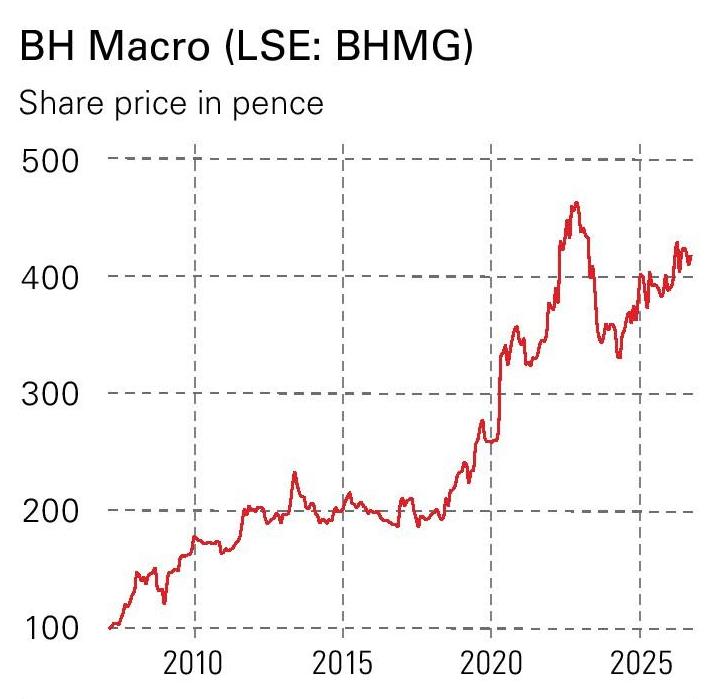
BH Macro (LSE:BHMG) is a specialist investment trust.
(Image credit: Unknown)
Some niche funds to consider
A third option is to look at very niche strategies whose medium-term returns should hopefully be unrelated to the AI-heavy global index.
Majedie Investments (LSE:MAJE) is now centred around such investments. It’s an interesting holding in its own right, while looking at its strategy may help shape your own.
There are many specialist investment trusts and funds such as BH Macro (LSE:BHMG), BioPharma Credit (LSE:BPCR), BlackRock Frontiers (LSE:BRFI), Nippon Active Value Fund (LSE:NAVF) and Rockwood Strategic (LSE:RKW) or Polar Capital Global Insurance.
However, picking such funds is an approach for experienced investors who clearly understand what they are buying.
This article was first published in MoneyWeek’s magazine. Enjoy exclusive early access to news, opinion and analysis from our team of financial experts with a MoneyWeek subscription.
Explore More