

This post was originally published on this site.
How England are building an attack to trouble Australia
To play this video you need to enable JavaScript in your browser.
This video can not be played
-
Published
Exciting or too early to say?
Any praise for England’s pace attack this summer comes with the caveat of the quality of Pakistan’s batting – and the fact they are operating in helpful home conditions.
But, after having their hand forced by the retirement of Ben Stokes, England have stumbled on something encouraging.
A four-man pace attack of Ollie Robinson, Jofra Archer, Josh Tongue and Gus Atkinson, who dismissed Pakistan for 110 on day two of the second Test at Lord’s, appears potent and, perhaps crucially for the future, are complementing each other in different ways…
-
Sarfaraz denies knowing about Pakistan threat to end tour
-
Published2 hours ago
-
No longer a need for speed
After the first-Test win at Headingley, captain Joe Root said his pace bowlers “do not know how good they can be” and praised the variety they offer.
Root suggested this group is ahead of bowling stocks from his previous stint as captain, when he often called upon right-arm seamers James Anderson, Stuart Broad, Chris Woakes and Ben Stokes, in terms of their variation.
The most obvious differential between his new quartet is pace – something brought into further focus by England’s decision to prioritise bowlers who reach high speeds during last winter’s Ashes defeat.
While Archer was touching 95mph in the quickest opening spell of his career on day two at Lord’s, Robinson was operating around 78mph at the other end.
Tongue’s average pace across the series is actually higher than Archer, though Archer has bowled a higher percentage of his deliveries over 90mph.
Atkinson slots in just below Tongue and Archer, who joked he could play until he is 40 given how his team-mates are sharing the load.
“It is a good attack,” said former England captain Michael Vaughan. “They can all get better and that is a really good sign.
“This batting line-up is possibly the easiest I have seen to bowl to but this attack, bowling the way they are doing, will challenge better batting line-ups.
“They will challenge the Australia line-up quite nicely if they bowl like this.”
To play this video you need to enable JavaScript in your browser.
This video can not be played
Robinson the metronome
What Robinson has lacked in pace, he is making up for with skill. Four more wickets on Friday took him to 17 wickets at an average of 8.84 across his three Tests this summer.
Helped by lively English pitches, Robinson has been able to concentrate on his greatest skill – his control of line and length.
Against Pakistan, he has hit a good length with 70% of his deliveries. Atkinson has the next best record with 52%.
It has meant Robinson has been relentlessly testing the defences of Pakistan’s batters, while giving them few bad balls to hit.
He bowled 31 deliveries in a row without conceding a run on Friday and 13 overs, which cost only 11 runs, were the most economical figures by a pace bowler bowling 10 overs or more in England for 13 years.
“Ollie Robinson is an extraordinarily skillful bowler,” said Vaughan.
“[England] are trying to get him to 81mph more consistently and if he can get to that he will challenge all batting line-ups in all conditions.
“He has been the tone-setter we were crying out for in the winter.”
-
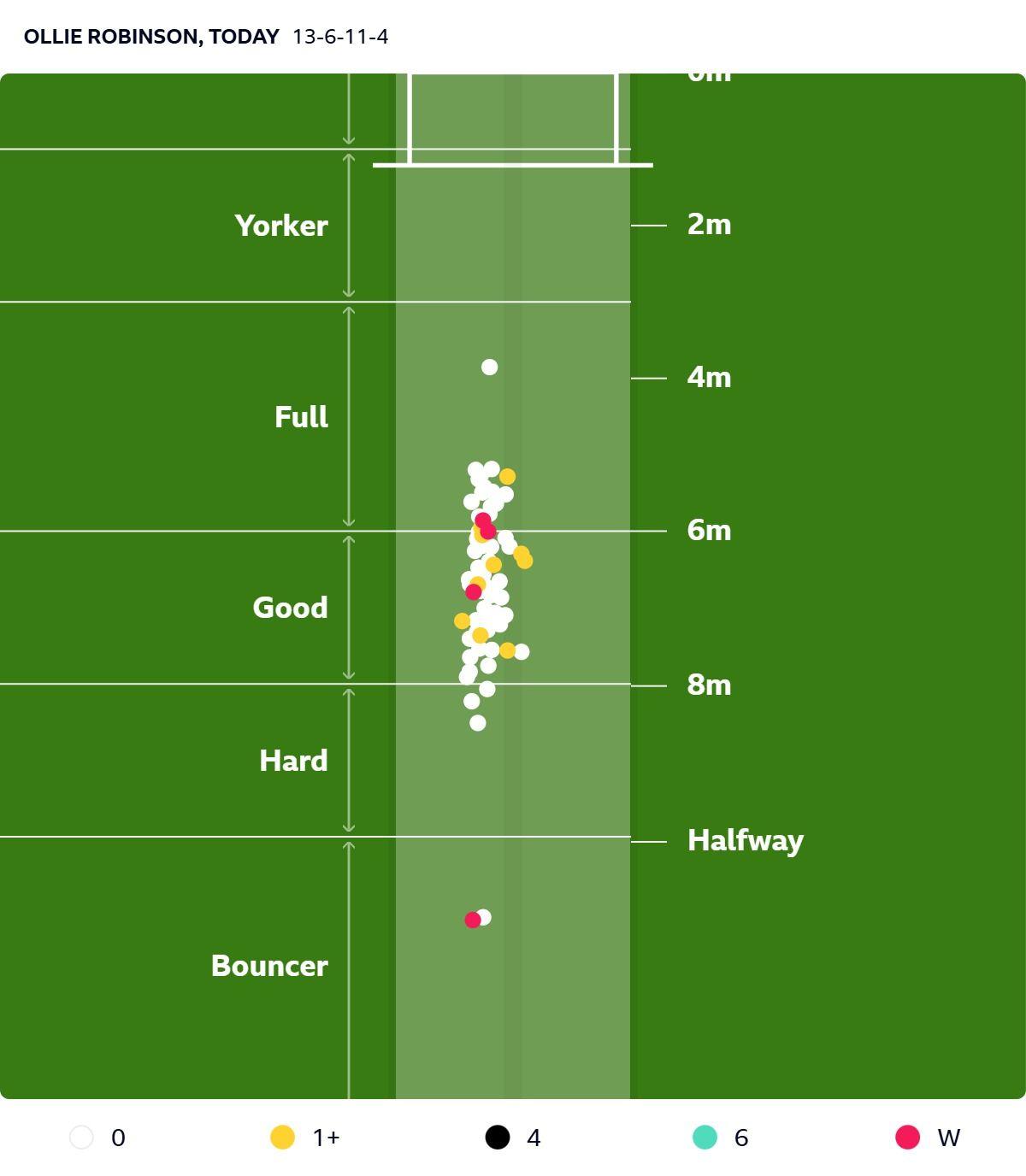
Image source, CricViz
1 of 2
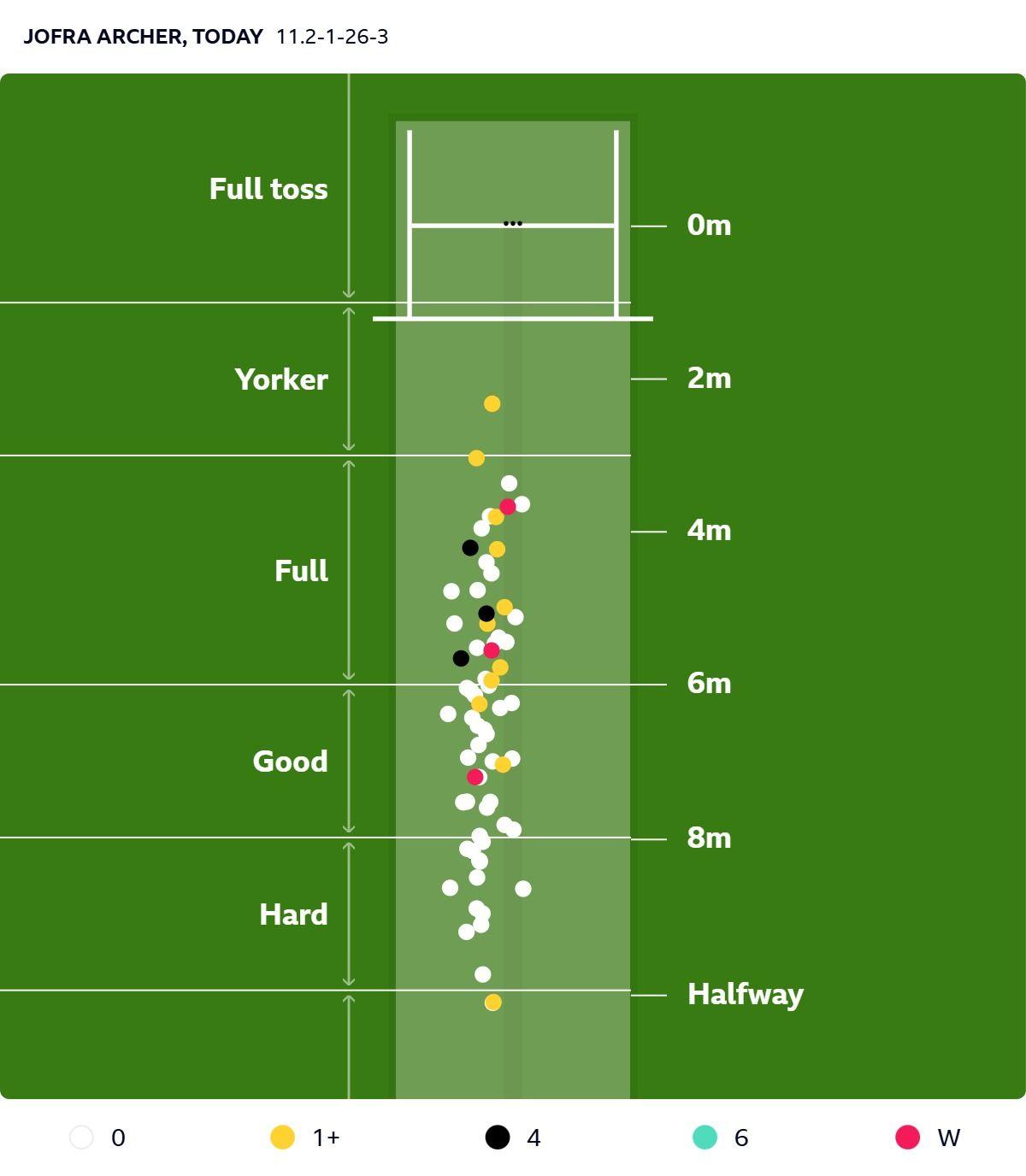
Slide 1 of 2, Ollie Robinson pitch map v Pakistan in second Test, Robinson was relentless with his line and length in Pakistan’s first innings at Lord’s
Similar but different
England’s 2005 pace attack of Stephen Harmison, Andrew Flintoff, Matthew Hoggard and Simon Jones is their best in terms of its all-round threat.
Harmison and Flintoff provided pace and bounce, Jones the skiddier threat and Hoggard genuine swing.
While Robinson and Archer can operate as swing bowlers as well as bowling their more natural seam, this current group’s variety comes more from their plans and their specific characteristics.
Archer and Robinson have particularly high release points, while Tongue delivers the ball from notably wide on the crease – 96.4cm from the stumps compared with Archer’s 40.3cm – with his unusual, beyond-the-perpendicular action.
Atkinson, who took 34 wickets at 20.17 in his first year in Test cricket in 2024, is the all-rounder who bowls accurately, but does so at a higher pace than Robinson.
“You want a bowler who can swing it, another bowler who has proper pace, another who can reverse swing it and another who can do the donkey work,” said BBC chief cricket commentator Jonathan Agnew.
“It is a well-balanced attack but without the spinner.”
Tongue targets the timbers
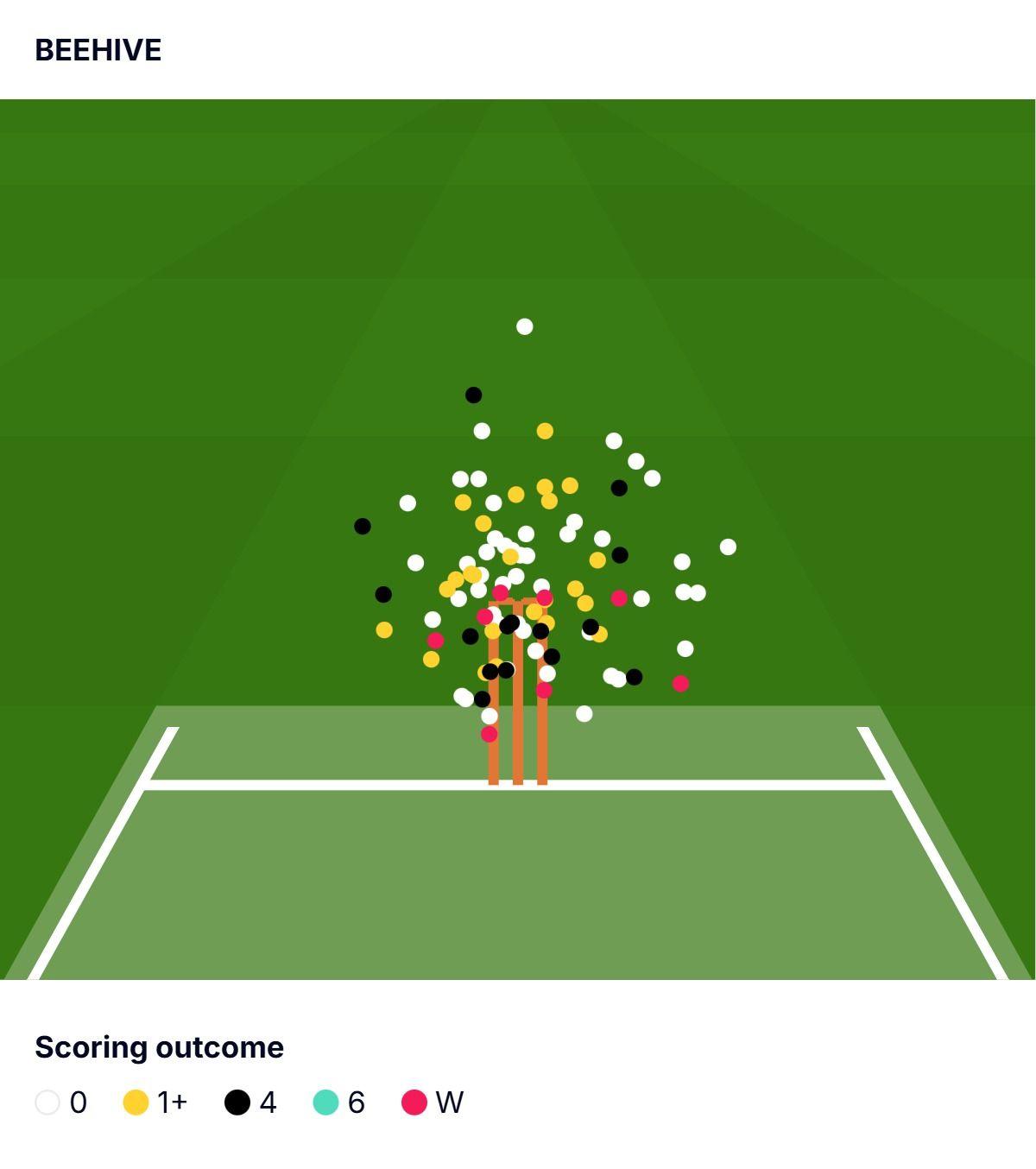 Image source, CricViz
Archer’s natural angle makes him particularly effective against left-handers.
He averages 23.9 against southpaws compared with 31.3 against right-handers – helpful for England because Tongue and Atkinson’s records are almost a mirror image.
Tongue averages 21.5 against right-handers but 35.7 against lefties. Atkinson’s record is 19.9 compared with 31.7.
Tongue’s position on the crease also aids him in his speciality of targeting the stumps.
Across this series, 22% of Tongue’s deliveries would have hit the timbers while a figure of 29% at Headingley, where he took eight wickets across the first Test, was the highest by an England bowler in a home Test for 15 years.
And after two more wickets on Friday, Tongue’s bowling strike-rate now stands at a dismissal once every 39.8 balls, putting him 12th on the list of bowlers to have taken 30 Test wickets.
“Tongue is the one who is really developing the best of them,” Agnew said.
A home Ashes series is less than one year away. England’s bowlers appear to be shaping up nicely.
-
-
Published3 days ago

-
-
-
Published11 hours ago
-