

This post was originally published on this site.
Project management in entrepreneurship is about systematically planning and executing your business projects. It helps you set clear goals, allocate resources efficiently, and manage risks effectively. By applying structured methodologies, you can streamline processes and enhance team collaboration. This approach not only boosts productivity but also enables you to adapt quickly to market changes. To make the most of project management, you’ll want to focus on key components like communication and risk navigation. So, how do you get started?
Key Takeaways
- Project management provides structured methodologies to plan, execute, and oversee projects, enhancing efficiency and resource management in entrepreneurship.
- It streamlines operations, potentially increasing productivity by 20% and reducing resource waste by 30%.
- Effective project management enables faster completion of projects by 25% through organized task management and prioritization.
- Key components include time management, risk management, and quality assurance, all vital for successful project execution and stakeholder satisfaction.
- Agile methodologies and tools facilitate adaptability, collaboration, and efficient resource allocation, essential for entrepreneurs navigating market changes.
What Is Project Management in Entrepreneurship?
Project management in entrepreneurship is an essential tool that helps you navigate the complexities of launching and running a business. It involves applying structured methodologies to plan, execute, and oversee projects that align with your business goals.
The definition of project management revolves around managing resources effectively, which allows you to minimize waste and manage risks efficiently.
The project management concept gives you a clear framework to prioritize tasks and optimize workflows. By establishing specific objectives and timelines, you can maintain focus on strategic goals while fostering collaboration within your team.
This approach enhances your agility, enabling you to adapt quickly to market changes and customer feedback.
To reduce the chance of project failure, utilize project management tools and techniques that help streamline processes.
Why Is Project Management Crucial for Entrepreneurs?
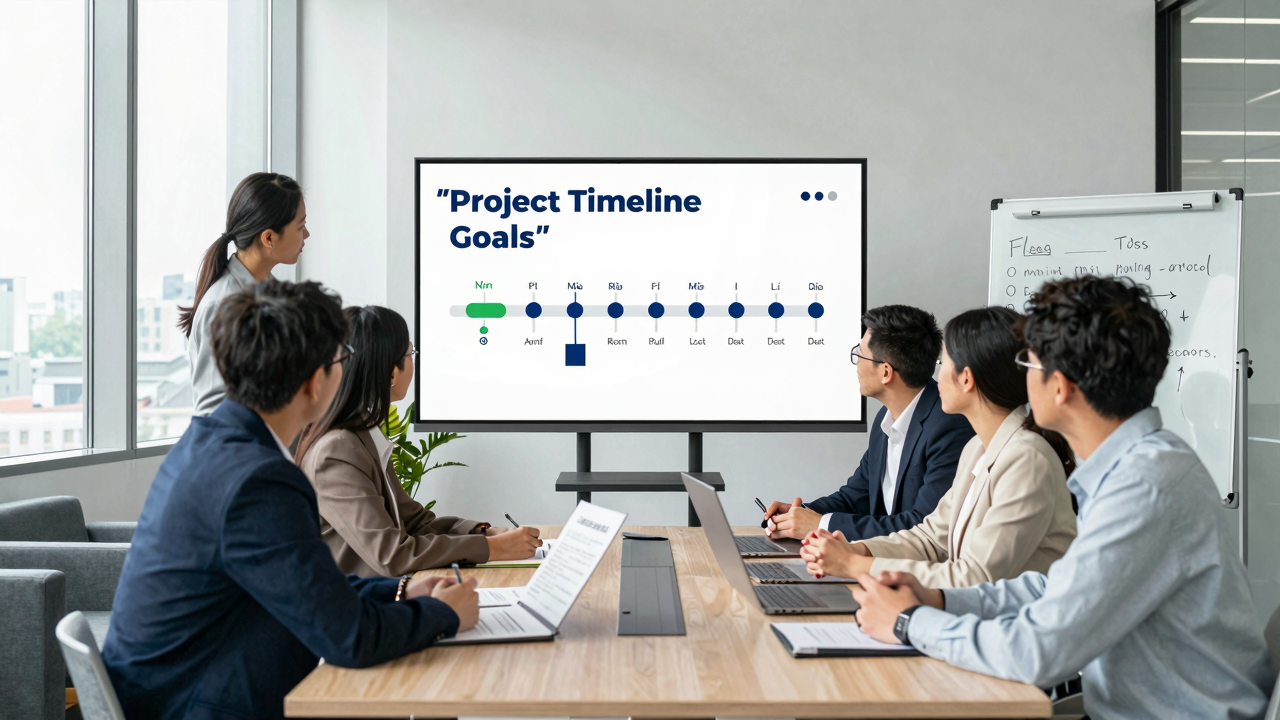
Project management is key for entrepreneurs because it streamlines operations and boosts efficiency, helping you focus on what really matters.
Streamlined Operations and Efficiency
When you’re managing a startup, having a structured approach can make all the difference in your operations. Effective project management streamlines tasks, helping you allocate resources wisely and adapt quickly to changes. By implementing clear project management practices, you can boost productivity by 20%, reduce wasted resources by 30%, and complete projects 25% faster.
Here’s how project management can enhance your efficiency:
[embedded content]
| Focus Area | Impact | Examples |
|---|---|---|
| Task Organization | Up to 30% efficiency | Clear timelines and priorities |
| Resource Allocation | 20% productivity boost | Budget tracking tools |
| Team Collaboration | 25% faster completion | Communication platforms |
Adopting these strategies in your entrepreneurship journey can elevate your corporate project management efforts remarkably.
Enhanced Risk Management Strategies
Identifying potential risks early in your entrepreneurial journey can save you from costly setbacks down the line. Using enhanced risk management strategies, you can effectively reduce resource waste by up to 11.4%.
[embedded content]
Start by utilizing risk assessment matrices to prioritize risks based on their potential impact, ensuring you allocate resources efficiently. Regularly monitor your projects and maintain open communication with your team to address issues before they escalate.
Embrace different types of project management, like Agile or Waterfall, to adapt quickly to market changes. Additionally, integrating technology, such as AI-driven insights, can enhance your risk detection, allowing you to make informed decisions even with limited information.
This proactive approach will empower you to navigate challenges more effectively.
What Does a Project Manager Do in a Startup?

In a startup, a project manager plays an essential role in steering the team toward success. You’ll define project goals and objectives, aligning them with the overall business strategy. This guarantees focused execution. Next, create actionable plans by breaking projects into manageable tasks, estimating resources, and setting realistic timelines.
Effective communication is key, so facilitate discussions among team members and stakeholders to keep everyone informed about progress and changes. Monitor project performance by tracking key metrics and milestones, making adjustments as needed to stay on track and within budget.
Additionally, implement risk management strategies to identify potential challenges early, allowing for proactive solutions.
Here’s a quick overview of important actions:
| Key Action | Description |
|---|---|
| Define Goals | Align with business strategy |
| Create Actionable Plans | Break down tasks, estimate resources |
| Facilitate Communication | Keep team and stakeholders informed |
Key Components of Project Management

Effective project management hinges on several key components that guarantee your startup runs smoothly and meets its goals.
First, focus on time management; stick to timelines to boost productivity and keep stakeholders satisfied.
Next, clearly define the project’s scope—this helps you avoid scope creep and guarantees all deliverables align with objectives.
Cost control is another essential; track both direct and indirect expenses to maintain your budget and financial viability.
[embedded content]
Don’t forget about quality assurance; consistently meeting or exceeding expectations will enhance customer satisfaction and long-term success.
Finally, engage in risk management; identify potential risks early, allowing you to navigate uncertainties effectively.
Understanding what’s the meaning of project management means recognizing these components as crucial for your entrepreneurial success, guaranteeing you remain proactive and organized throughout the project lifecycle.
Why Is Resource Allocation Key in Project Management?

Resource allocation is essential because it helps you use your available resources effectively, balancing cost and quality to meet project goals.
By assigning the right tools and skills to tasks, you not only boost team productivity but also reduce waste and avoid potential delays.
To guarantee success, plan your resource distribution carefully, keeping an eye on both budget limits and quality expectations.
Effective Resource Utilization
Maximizing the potential of your projects hinges on smart resource allocation. By effectively managing your resources, you can guarantee projects are completed on time and within budget, minimizing waste.
Here’s how to make resource utilization work for you:
- Align team strengths with project needs to boost productivity without overextending your workforce.
- Stay flexible by prioritizing resource allocation, allowing you to adapt quickly to market changes and stakeholder feedback.
- Use project management tools like Gantt charts and Kanban boards to visualize resource distribution, track progress, and improve communication.
Implementing these strategies won’t only drive growth but also enhance your startup’s sustainability, enabling you to reinvest savings into future innovations.
Balancing Cost and Quality
Balancing cost and quality is essential for successful project management, especially when resources are limited. Effective resource allocation helps you guarantee projects are on time and within budget while meeting stakeholder expectations. Poor allocation can waste about 11.4% of resources, so you need strategic planning.
To optimize your resources, consider this:
| Resource Type | Cost Efficiency | Quality Impact |
|---|---|---|
| Financial | Lowers overall costs | Maintains standards |
| Human Resources | Focused skill use | Enhances productivity |
| Tools & Software | Streamlines processes | Improves outcomes |
Utilizing tools like Gantt charts and Kanban boards gives you clear visibility, enabling your team to adapt without compromising quality or increasing costs. Prioritize tasks and allocate effectively for better project success.
Which Project Management Methodologies Work Best for Entrepreneurs?

When tackling project management as an entrepreneur, how do you choose the right methodology to fit your unique needs? Start by considering your project’s nature and your team’s dynamics.
Here are some effective methodologies to explore:
- Agile Methodology: Perfect for fast-paced environments, it allows you to adapt quickly to feedback and changing market conditions.
- Lean Project Management: Focus on eliminating waste and maximizing value, helping you optimize resources and streamline processes.
- Scrum Framework: This Agile subset promotes collaboration through defined roles and regular meetings, ensuring accountability and transparency.
You might also consider Kanban for visual task management, or a Hybrid Methodology to blend traditional and Agile elements, keeping structure while remaining flexible.
Choose what aligns best with your goals, and don’t hesitate to adjust as your business evolves; flexibility is key in entrepreneurship.
The Five Stages of Project Management Explained

Understanding the five stages of project management can transform how you approach your entrepreneurial ventures.
Start with initiation, where you define your project’s purpose and identify key stakeholders.
Then move on to planning, which involves creating a detailed roadmap to guide your efforts.
As you execute and monitor your project, stay flexible to make adjustments, ensuring you meet your objectives by the time you reach closure.
Key Project Management Phases
To successfully manage a project from start to finish, you need to navigate through five key stages: initiation, planning, execution, monitoring and controlling, and closure. Each stage serves a specific purpose in guiding your project from concept to completion.
- Initiation: Define the project’s purpose and identify stakeholders to guarantee alignment.
- Planning: Create a detailed roadmap outlining objectives, timelines, resources, and risk management strategies.
- Execution: Put the plan into action through team coordination and task assignments.
During monitoring and controlling, track performance against your plan, making real-time adjustments as necessary.
Finally, in the closure phase, wrap up activities and evaluate outcomes to learn from your experience. This structured approach helps you deliver successful projects.
Effective Planning Strategies
Effective planning strategies are essential for steering your project toward success. Start with the initiation stage, where you define project objectives and identify key stakeholders. This alignment guarantees everyone is on the same page.
Next, move to the planning stage. Develop a detailed roadmap that includes task lists, timelines, and resource allocations. Don’t forget to incorporate risk management strategies to prepare for potential challenges.
As you enter the execution phase, put your plan into action by coordinating with team members, assigning tasks, and maintaining quality assurance.
Finally, remember that effective planning doesn’t stop after execution; it sets the foundation for ongoing monitoring and adjustments, keeping your project on track for successful closure.
Monitoring Progress and Adjustments
While projects can often veer off course, you can keep them aligned with your goals through diligent monitoring and timely adjustments.
Regular evaluations help you identify issues early, so you can take action before they escalate. Use tools like Gantt charts and dashboards for real-time insights into your project’s progress and resource allocation.
Establish feedback loops to gather input from your team and stakeholders, integrating their insights into your adjustments.
- Track performance against timelines and objectives.
- Make adjustments to mitigate risks and prevent delays.
- Focus on continuous improvement to meet stakeholder expectations.

In today’s fast-paced business environment, choosing the right project management tools can greatly boost your team’s efficiency. Tools like Asana and Trello help you organize tasks, allowing your team to visualize timelines and responsibilities clearly. This setup enhances productivity and collaboration.
If you need customizable workflows, consider using Monday.com; it adapts to your project’s specific needs, letting you track progress in real time.
For remote teams, cloud-based platforms enable seamless collaboration, ensuring everyone accesses project documents and updates from anywhere. Tools like Microsoft Project and Smartsheet offer advanced features for resource allocation and scheduling, helping you optimize your plans and minimize delays.
Finally, integrating your project management software with communication tools like Slack keeps team members informed and aligned, enhancing transparency and accountability. By leveraging these tools, you can streamline your project management efforts and drive your entrepreneurial success.
Creating an Effective Project Plan

Creating a solid project plan is essential for your team’s success, as it sets the foundation for everything that follows. Start by outlining clear objectives, deliverables, and timelines to guarantee everyone understands the project scope.
Using visual tools, like Gantt charts, can make project stages clearer and improve management efficiency.
Here are key elements to include in your project plan:
- Risk Management: Identify potential issues early to mitigate their impact on timelines and costs.
- Team Responsibilities: Define roles to foster accountability and align tasks with individual strengths.
- Regular Updates: Communicate progress and adjust the plan based on feedback, keeping stakeholders engaged.
The Importance of Communication in Project Management

Communication is the backbone of successful project management, fostering clarity and collaboration among team members. To improve your projects, start by setting regular updates and feedback loops. This keeps everyone informed about progress and any potential issues, enhancing transparency.
Clearly define roles and responsibilities to reduce misunderstandings; when everyone knows their tasks, accountability increases.
Utilize visual tools, like Gantt charts or dashboards, to simplify complex information, making it easier to share project status with stakeholders. These tools help everyone grasp where the project stands at a glance.
Additionally, adopt proactive communication strategies to identify and address risks early. By discussing possible challenges in advance, you contribute to better project quality and higher stakeholder satisfaction.
How to Navigate Risks in Entrepreneurial Projects

Maneuvering risks in entrepreneurial projects requires a proactive mindset, as identifying potential challenges early can greatly improve your chances of success.
Start by adopting agile risk management strategies, distinguishing between manageable setbacks and existential threats. This allows you to pivot quickly when needed.
Consider implementing a structured risk assessment framework. This can help you identify up to 70% of risks before they impact your timelines or budgets.
Regularly reviewing and updating your risk management plans enhances resilience, potentially reducing resource waste by 11.4%.
To enhance your approach, leverage technology like predictive analytics tools for improved risk detection. This helps you make informed decisions under uncertainty.
- Identify risks early to boost success rates by 20%.
- Differentiate between minor issues and major threats.
- Use tech tools for quicker responses and better insights.
Measuring Success: Key Performance Indicators in Project Management

Success in project management hinges on your ability to measure outcomes effectively. To do this, focus on Key Performance Indicators (KPIs) that quantify your project’s success.
Start by tracking project completion rates to see how many tasks finish on time. Next, monitor budget variance to compare planned spending against actual costs, helping you stay financially aligned.
Don’t overlook customer satisfaction scores; these reflect how well your project meets stakeholder expectations. Additionally, evaluate team productivity by measuring the number of tasks completed per team member. This can reveal workflow efficiency and help with resource allocation.
Finally, keep an eye on risk management KPIs, such as the number of risks identified versus those mitigated.
Case Studies of Effective Project Management in Startups

Effective project management is essential for startups aiming to carve out a niche in competitive markets. By studying successful companies, you can apply their strategies to your own projects.
Here are some key examples:
- Airbnb launched by setting clear goals and timelines, leading to 1,000 bookings in its first year.
- Dropbox created a Minimum Viable Product (MVP) to gauge market demand, skyrocketing its user base from 5,000 to over 100,000 in months.
- Slack used agile practices for rapid iterations based on user feedback, achieving over 8 million daily active users in just three years.
To replicate their success, define your goals, prioritize team collaboration, and seek user feedback consistently.
Adopting these principles can help you navigate challenges and maximize your startup’s potential. Start implementing effective project management today, and you’ll set the foundation for sustainable growth.
Frequently Asked Questions

What Is Project Management and Explain Its Importance?
Project management involves organizing tasks, resources, and timelines to complete projects efficiently.
It’s essential because it helps you stay on track, avoid wasting resources, and meet your goals.
With effective planning, you can adapt to changes quickly, respond to feedback, and keep your team aligned.
Start by setting clear objectives, allocating resources wisely, and regularly reviewing progress.
This structured approach not only boosts productivity but also builds confidence among investors and stakeholders.
What Are the 5 C’s of Project Management?
The 5 C’s of project management are clarity, communication, collaboration, control, and commitment.
First, define project goals to guarantee everyone’s aligned.
Next, maintain open communication to foster teamwork and keep everyone informed.
Encourage collaboration among team members to leverage diverse skills.
Implement control measures to track progress and make necessary adjustments.
Finally, secure commitment from all stakeholders to boost motivation and accountability, guaranteeing everyone’s invested in achieving the project’s success.
Who Is the Greatest Businessman of All Time?
Many consider John D. Rockefeller the greatest businessman of all time due to his revolutionary impact on the petroleum industry and his ability to build a monopoly.
To assess business greatness, look at innovation, market influence, and legacy. Evaluate figures like Andrew Carnegie for his production advancements, or Steve Jobs for his visionary tech.
Identify traits that resonate with you and apply those lessons to your entrepreneurial journey, making strategic decisions to enhance your success.
What Are the 4 Stages of PM?
The four stages of project management are initiation, planning, execution, and closure.
First, define your project’s purpose and scope during initiation.
Next, create a detailed plan outlining tasks, timelines, and resources.
In the execution stage, implement your plan while coordinating with your team to guarantee quality.
Finally, during closure, finalize activities, deliver outcomes, and evaluate the project.
Document lessons learned to improve future projects.
Focus on clear communication throughout each stage.
Conclusion
In conclusion, project management is essential for entrepreneurs aiming to streamline their operations and maximize productivity. To succeed, focus on setting clear goals, allocating resources wisely, and maintaining open communication with your team. Regularly assess risks and use key performance indicators to measure your progress. By adopting these practices, you can enhance your startup’s agility and responsiveness to market changes, leading to better outcomes and a stronger foundation for growth. Start implementing these strategies today.
Image via Google Gemini and Small Business Trends