
This post was originally published on this site.
Swinney to cut number of mainland health boards from 11 to two
-
Published
Plans to cut the number of health boards providing local services across Scotland are to be set out at Holyrood this afternoon.
The BBC understands the number of territorial boards serving mainland Scotland are to be reduced from 11 to two.
Existing boards could be merged so that there would be one for the west and another for the east of Scotland.
Separate plans are being considered for the three island groups – Shetland, Orkney, and the Western Isles.
In these areas the idea would be to combine the local NHS boards with their respective councils to create unitary authorities providing most local services in each group of islands.
These changes would not necessarily affect the operation of national health boards that run the Scottish ambulance service or provide procurement and other support to the NHS.
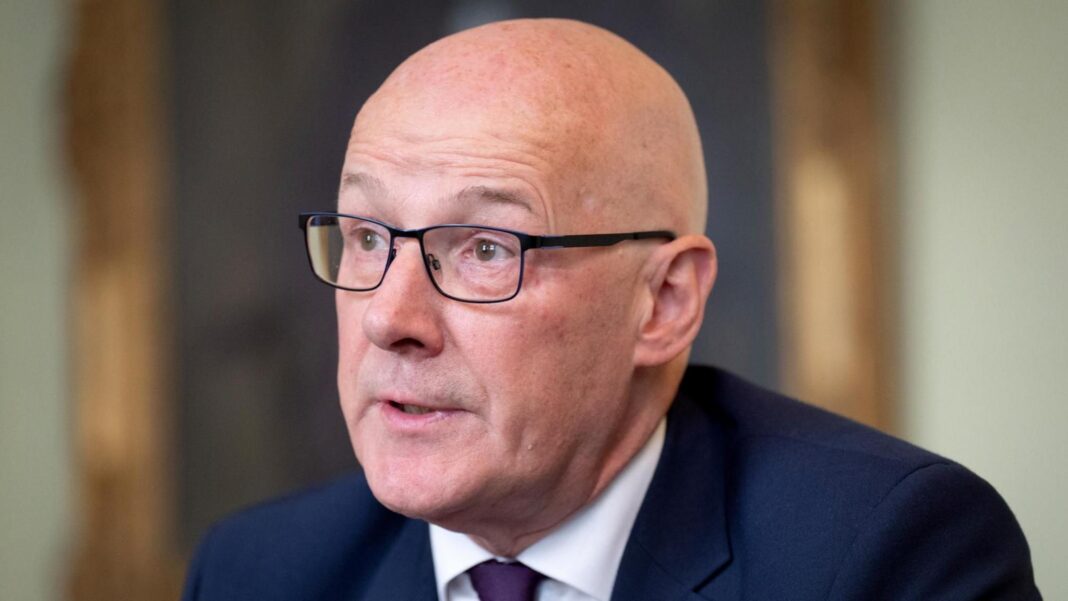
These proposed changes are expected to be set out by First Minister John Swinney in a statement on his programme for government.
Reform of the public sector aimed at saving money, cutting bureaucracy and improving how services are delivered is to be a major theme of his plans.
NHS health board savings
Swinney said it was time to “embrace change”, with reforms to sit at the heart of his programme for government.
He has already appointed a new cabinet minister to lead on public service reform.
The SNP leader is also expected to set out a range of policies aimed at growing the economy, eradicating child poverty, transitioning to net zero and addressing “the epidemic of violence against women and girls”.
There are currently 14 territorial health boards in Scotland.
But under the reforms the 11 on the mainland would be cut to two.
The BBC understands different proposals are being considered for Shetland, Orkney and the Western Isles.
On the island groups, the existing health boards could be merged with the local councils in each of these areas, creating unitary authorities providing all local services from health and education to bin collections.
Final decisions will only be taken after consultation.
Eradicating child poverty
Swinney is due to announce his programme for government to MSPs at the Scottish Parliament at 15:00.
He said: “The government came into office with a commitment to deliver a 100-day programme, and the government is going to do exactly that.
“And that’s the first stage of me repaying the trust that the people of Scotland have put in my government, which is to deliver what I said to the public I would deliver.”
He said the government had to review the way it delivered public services.
“We made clear before the election that was going to be necessary,” he said.
“I want to make sure that the programme for government reflects the ambitions I set out in my election manifesto, which was all about making sure that we tackle the cost of living challenges that people face in Scotland, that we deliver improvements in our public services.”
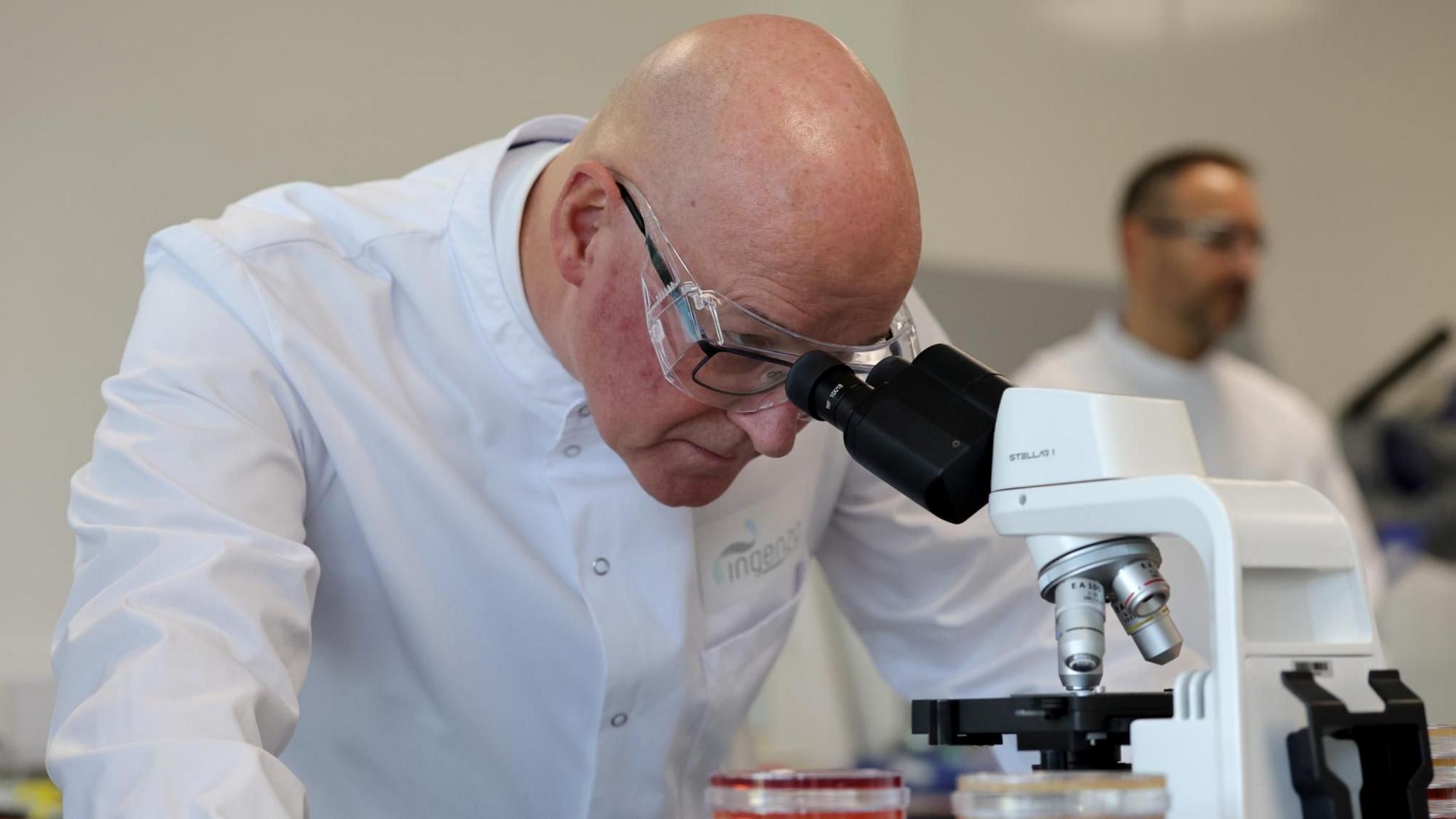 Image source, PA Media
The first minister said the government “always lives within its means”.
“Over the lifetime of the SNP government, we have balanced the budget on every occasion, and we will continue to do so,” he said.
“But it also means that we’ve got to embrace change and change the way in which we deliver our public services.”
He highlighted “significant improvements” in the NHS.
Swinney also said the government had made eradicating child poverty a priority and taken measures to make that possible through the delivery, for example, of the Scottish child payment and the expansion of whole family support.
“We work with families to help them out of poverty in addressing issues around housing or employability or, in some cases, addiction issues or childcare issues,” he said.
“We’re working alongside families to help those families get out of poverty and to make sure that children have the best chances of a start in life.
“It will be reinforced by the programme for government to make sure that the eradication of child poverty is written through all of the policy commitments of government to meet the expectations of the public in Scotland.”
-
Business groups urge Swinney to scrap ‘ineffective’ food price cap plan
-
Published1 day ago
-
-
Swinney’s 100-day push gives way to bigger battles ahead
-
Published2 days ago
-
-
We saw signs of domestic abuse, but we didn’t know how to protect Stacy
-
Published5 days ago
-
The first minister said he had been “appalled” by the number of cases involving violence against women and girls over the summer months.
“This has been a long-running issue within Scottish society,” he said.
“The government has taken many measures to tackle this, but I think events over the summer have said to me that I’ve got to exercise the strongest possible personal leadership as first minister to make sure that we tackle these issues.”
He said violence against women and girls could not be tolerated “in any way, shape or form in our society” and added that “making sure that we change the behaviour of men and boys in our society will be central to that programme”.
One of the government’s proposals to tackle the cost of living issue was to introduce a price cap on some food and drink items in large supermarkets.
Twenty-three organisations have since written a joint letter to Swinney urging him to scrap the plan.
Signatories include groups representing retail, food and drink production, manufacturing and distribution businesses in Scotland.
In response, Swinney said: “Many members of the public are struggling with the price of their shopping and I want to try to do something practical to address that and that’s about bringing forward a proposal for an affordable price cap on a limited number of items within our supermarkets.
“We’ve got to consult about this and make sure the legislation can have the effect that we want it to have and that’s exactly what the government is going to do.”