
This post was originally published on this site.
Families move out of ‘nightmare’ new-build homes plagued by defects, damp and mould
-
Published
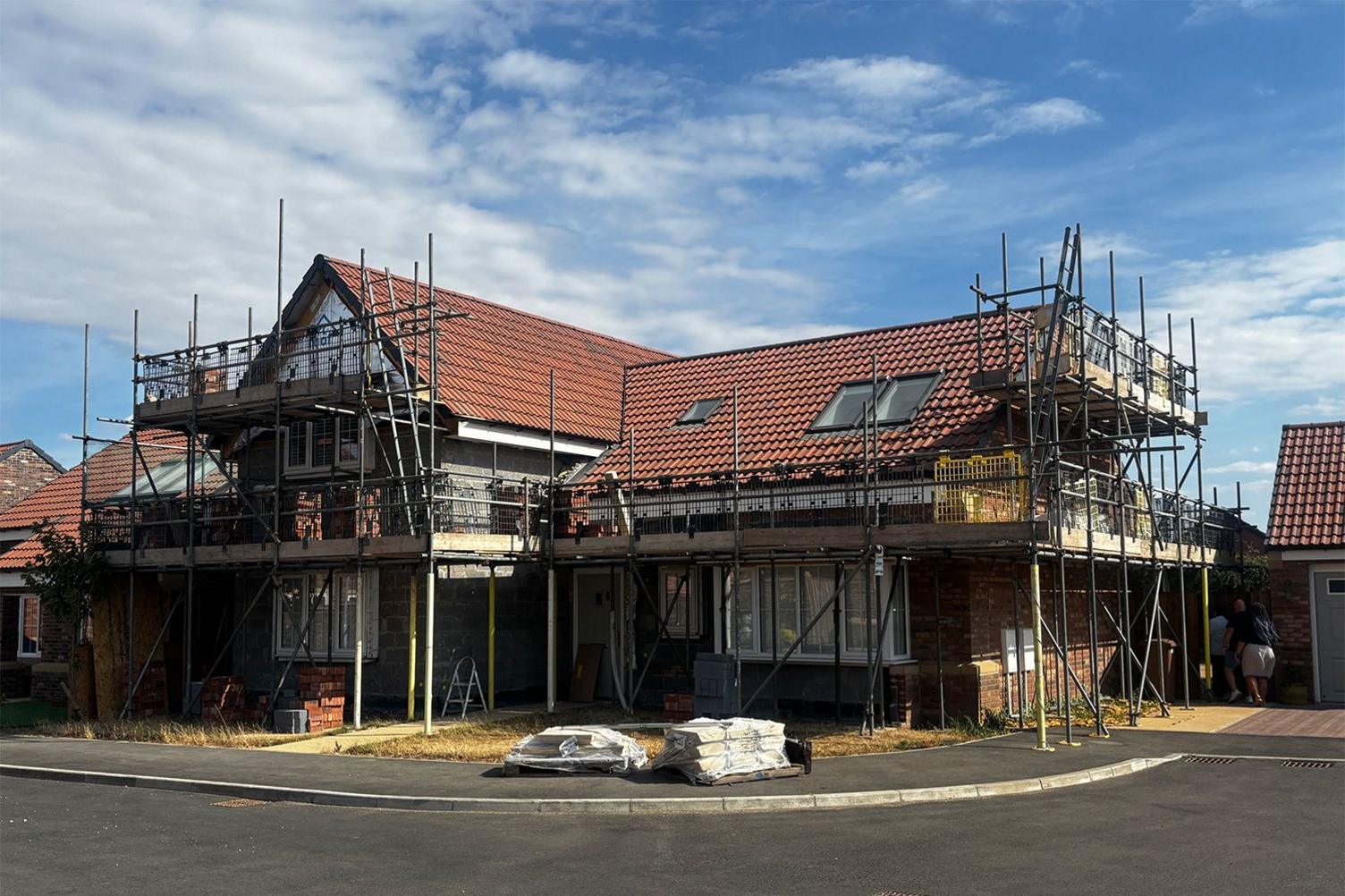
Elissa and Johnnie say their “forever home” – now wrapped in scaffolding and stripped back to bare breeze block – has become a nightmare.
The couple say they have been forced to move out of the four-bedroom property they bought 20 months ago.
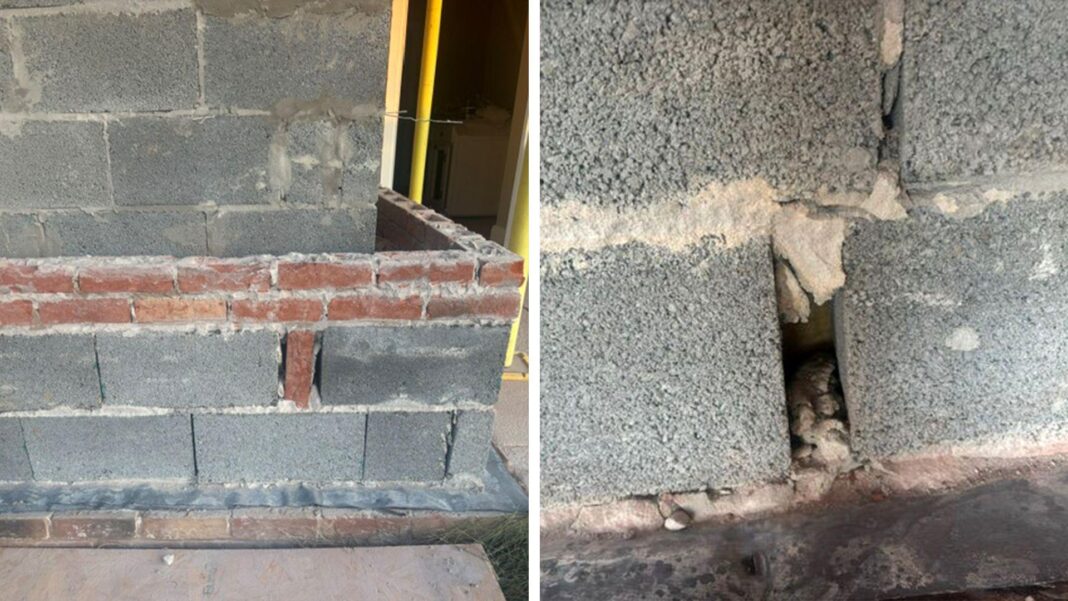
An independent inspector, known as a “snagger”, made a report identifying about 150 faults – including wonky walls, bowing windows and a poorly fitted kitchen.
Elissa, who has a long‑term health condition, says the stress has led to hospital visits. The couple are now in a rental home for the second time this year, while repairs are carried out.
Elissa is one of dozens of people from across the UK who have got in touch with BBC Your Voice about problems with new-build properties.
We have heard accounts from homeowners who bought outright, often with a mortgage, as well as those who purchased through shared-ownership schemes. Renters in brand-new flats and people who have moved into new social housing also got in touch. Everyone said they had felt stressed and desperate.
One new owner in Somerset told us she had found black mould throughout her property; a tenant in London said ceilings had collapsed in her apartment block; while a third resident in Essex described how his social housing property had been full of mould and damp when he moved in.
Their stories come as the number of complaints to the New Homes Ombudsman Service (NHOS) has more than tripled in a year, according to its latest annual report.
The UK-wide service received just over 1,800 complaints in 2025-26, up from fewer than 600 the previous year. Defects and snagging were the most common issues raised.
The ombudsman says the increase partly reflects more homeowners being eligible to use the service, as well as greater awareness of it.
The voluntary NHOS was set up by big stakeholders in the building industry, and although registrations increased by 26% in the past financial year, still about a third of all new homes sit outside the scheme – including Elissa and Johnnie’s.
The service can intervene when developers are “unable or unwilling to fix” problems, but it only covers new properties purchased outright – not those bought under shared-ownership.
It is a situation that MPs and chief ombudsman, Nigel Cates, say urgently needs to change.
Responding to those concerns, Housing Secretary Angela Rayner told us the government planned to set-up a mandatory ombudsman as soon as parliamentary time allowed, adding that homes should be “safe” and “built to last”.
In 2022, the Conservative government committed to establishing such a service as part of the Building Safety Act, aimed at strengthening safety and regulatory standards in light of the Grenfell Tower tragedy.
Elissa and Johnnie moved in to their home in North Lincolnshire just before Christmas 2024. After the initial excitement, they soon started to find defects and decided to hire the snagger.
They moved out for the first time in the new year, while Stonebridge Homes agreed to send in a contractor to carry out remedial work.
“It was absolutely shocking. I had to stand there and allow this guy to do work on my house, and he made it worse!” says Johnnie.
An independent surveyor’s report for Stonebridge Homes, seen by the BBC, described the mortar work as “low standard” that would make “cracking more likely”.
It also suggested the home’s outer walls had an “inward lean” with a deviation of up to 50mm. Structural warranty providers say the maximum should be 8mm over a three-metre stretch.
The couple say they have spent hundreds of hours dealing with the problems. Elissa says she has gone to hospital several times with chest pains that medics have attributed to “stress”.
“We are strong people, but we are really struggling,” she says.
In a statement, Stonebridge Homes apologised to the couple and said it was in discussion with them about the construction of their home. It said it had arranged “alternative accommodation and all associated relocation costs” while work is carried out.
The developer has also offered to buy the home back from Elissa and Johnnie, but the couple say they would end up about £100,000 out of pocket, having spent thousands on renovating, refurbishing and landscaping – as well as solicitors fees and Stamp Duty.
Other residents on the 48-home development have also reported problems. The BBC understands at least one further family has had to move out for renovation works.
Elissa and Johnnie believe quality control during the build was lacking and more “stringent legislation” is needed so builders know “they can’t build more rubbish homes”.
Elissa says a senior Stonebridge employee told her they were under “pressure” to increase output and sometimes that compromised quality.
We asked Stonebridge Homes about this, along with all the points of criticism raised above, but the company did not provide specific answers.
It told the BBC that customer service was one of its top priorities as well as access to “clear, transparent processes for raising concerns and seeking independent resolution where required”.
One of the biggest issues for homebuyers, says ombudsman Cates, is not the defects they find, but the way they feel treated by developers when they complain.
“For most people, this is the biggest purchase they’ll ever make. So, when something goes wrong, they need the developer to be on it straight away, take them seriously, really value them, understand them and put it right,” he tells us.
New homes are inspected several times during construction by either local council building inspectors or a registered building control approver, to make sure they meet legal, national building regulations. Most developers also use insurance providers, who carry out their own checks and offer 10-year warranties.
The government has set itself a target of building 1.5 million homes in England by 2029. As housebuilding speeds up, the industry could be “setting itself up for a huge fail”, says John Cooper, director of snagging company New Home Quality Control.
His inspectors frequently find breaches of building regulations, he tells us, including insulation, brickwork and carpentry problems. “We see some horrors,” he says, adding that current checks on new homes before handover are insufficient.
A panel of experts recently told MPs on the Housing, Communities and Local Government Committee that parts of the building industry are like the “wild west” and there needs to be a more robust, uniform system.
Cates, who sat on the panel, told MPs that residents not covered by NHOS faced a “patchwork of [building] codes” not designed to help homeowners.
He tells the BBC there is “a big difference between having a code, and standards very specifically tailored to modern home sales, and the issues coming with that”.
“It’s critical for the whole industry… that everyone has the same protections, access to an ombudsman service and an impartial investigation,” he adds.
The body representing big developers, the Home Builders Federation, says it supports a statutory ombudsman, so all new-build buyers are covered, but wants the government to reduce what it describes as the “regulatory burden”, including extra taxes and policy costs, which have rendered many potential sites, and businesses, “no longer viable”.
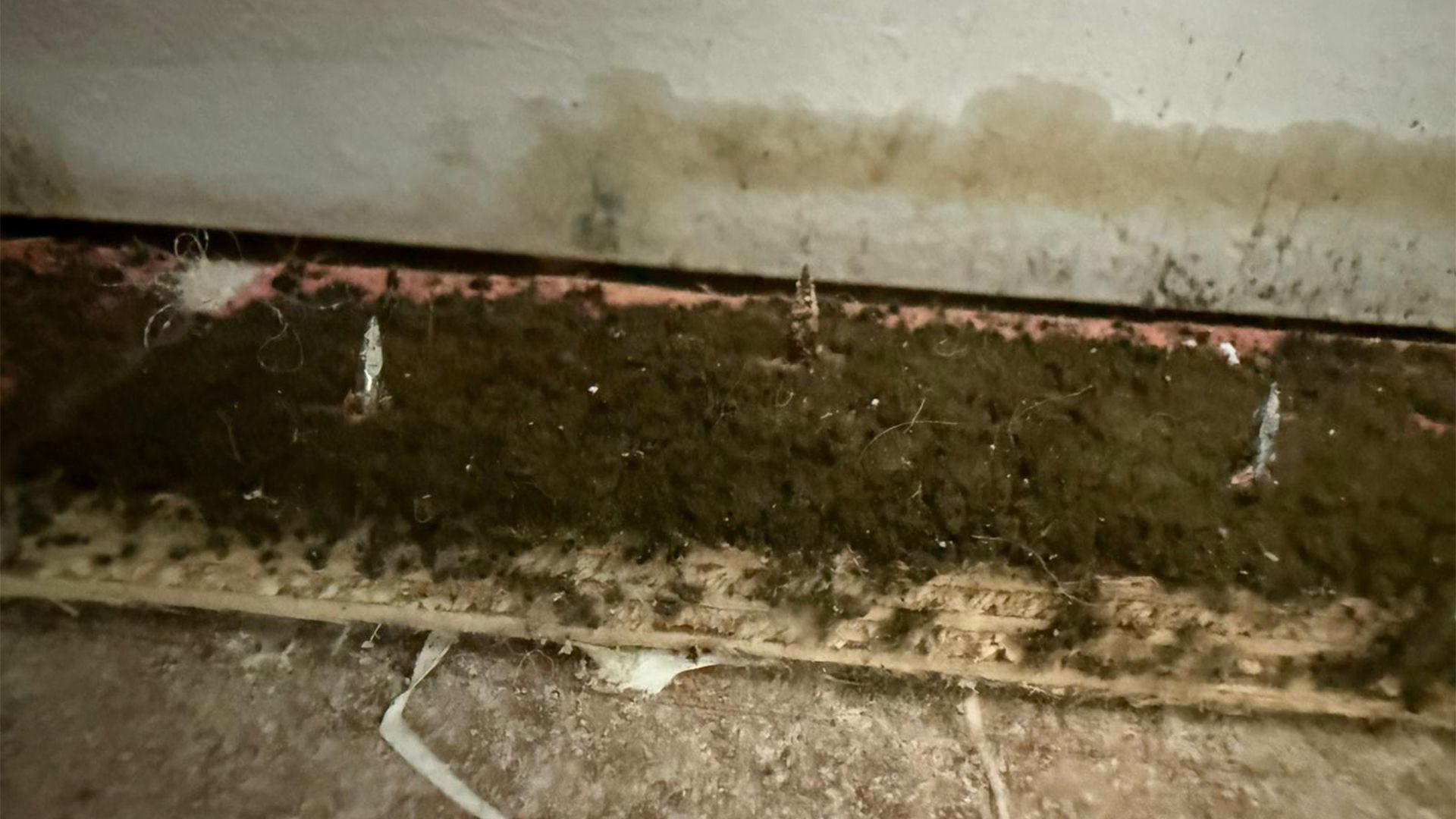
For Jess and her partner Darryl, NHOS could not help as it does not cover shared-ownership homes. The couple found black mould in their house 10 days after moving in.
The mother of three from Somerset told BBC Your Voice they put all their savings into the home. “We feel like we’re living in a nightmare”.
A surveyor’s report commissioned by shared-ownership provider, Sage Homes, found evidence the walls may have been wet when plasterboard was installed, and also identified issues with insulation and debris in the cavity walls.
Builder, Tilia Homes, moved the couple out of the property for five weeks while repairs were carried out.
“I’m in disbelief that 18 months later we are still in a position that the house that we bought still isn’t complete,” says Jess.
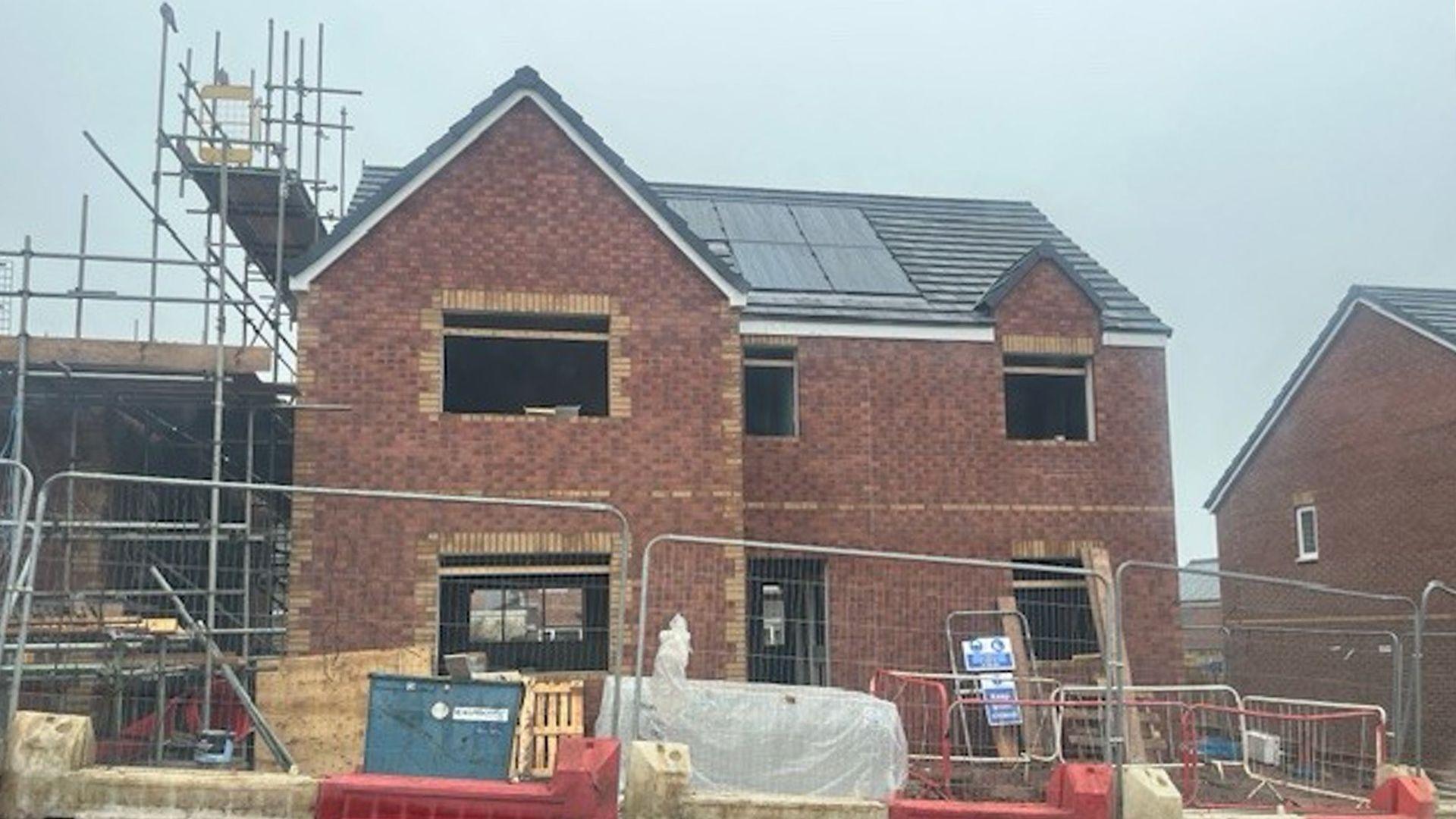 Image source, Photo provided by homeowners
Tilia Homes told us that previous investigations relating to mould problems have been addressed, but the couple say they will have to move out for a second time and could have to spend up to three months in temporary accommodation.
Three months is a “worst case” scenario, the developer told us, and it expected the work to be completed in three to four weeks. It added that it recognised how “upsetting and disruptive” the continued uncertainty had been for the homeowners and was sorry the reported issues “remain unresolved”.
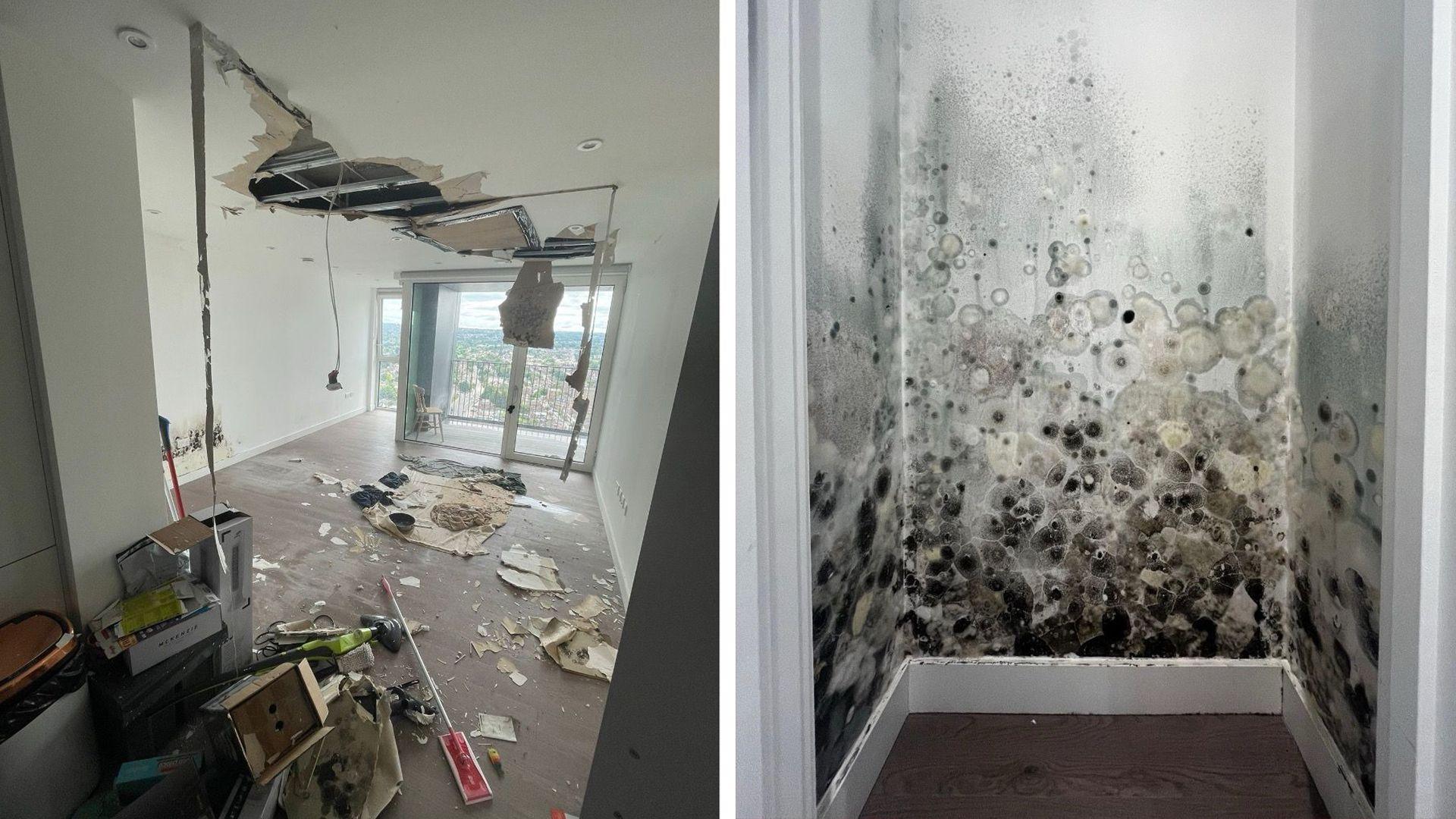
Tenants living in “build-to-rent” properties – specifically constructed to be rented out – are also not covered by the New Homes Ombudsman Service.
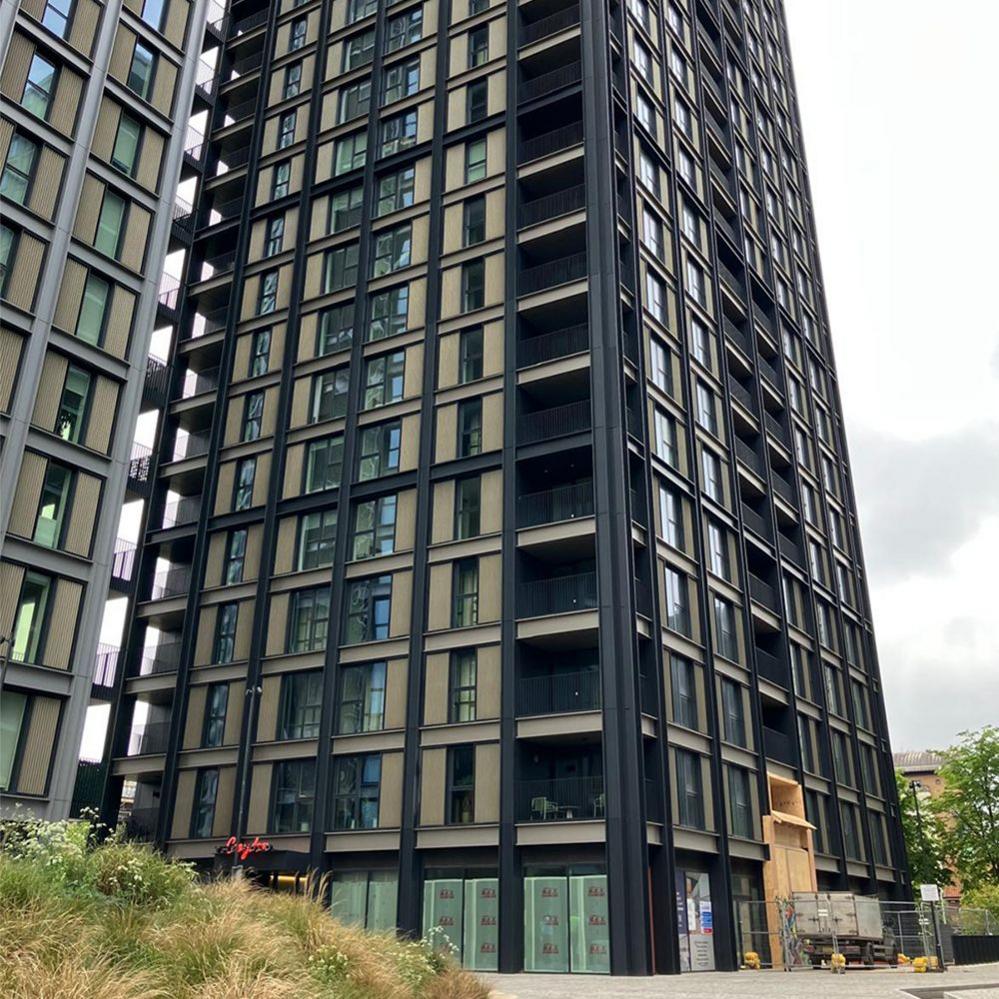
In Croydon, residents living in The Fold – a 35-storey complex completed in 2022 – reported serious problems soon after moving in.
Mphango Simwaka, who moved in with flatmate Sellah that year, was diagnosed with cancer shortly afterwards. She says the state of the building only exacerbated her health issues.

“People’s roofs were falling, and mould was growing in different flats all the time. It would start off something small and then within weeks it spread absolutely everywhere,” Mphango tells us.
After residents presented complaints to landlord, Legal & General (L&G), Mphango says they were told to move out late last year while renovations were carried out. Nearly a year on, she still has not moved back.
L&G told the BBC its priority was that The Fold’s residents were “safe, supported and kept informed”.
The complex had already been built – and approved by building control – before L&G “took it on”, it said. Independent fire safety experts, including the Building Safety Regulator (BSR), had confirmed the buildings were safe while investigative work was being carried out, it added, with each apartment compensated with £8,500 on average.
The BSR told us it would not describe its involvement as providing general assurance that the building was safe, noting that the duty holder normally retains responsibility. It said its role was to assess compliance with the Building Safety Act 2022.
In Essex, Luke Weaver got in touch with BBC Your Voice because his new home had damp and mould that he believed was making his two-year-old son ill.
However, his case is different from others because, as a social housing tenant, he was able to obtain support from an ombudsman service, separate from NHOS, which social-housing providers must join.
The Housing Ombudsman covers social housing in England and private landlords can sign up voluntarily. But this ombudsman can only deal with housing providers, not developers.
Other parts of the UK have similar ombudsmen schemes.
A surveyor working for Luke’s housing association, Clarion, found wet insulation inside a wall and further inspections identified elevated moisture levels.

The Housing Ombudsman found Clarion had not handled the damp, mould and snagging issues appropriately even though the builder, Dandara, would still have been responsible during the defect period.
Clarion apologised to Luke and said it was complying with the ombudsman’s orders, including paying him £1,150 in compensation and arranging a further inspection of his home.
Dandara said it took reports of damp and mould seriously and was “committed to working with Clarion and the resident” to address any concerns.
It said an End of Defects inspection in August found a small number of minor items, due for completion this month, and added it had requested the Housing Ombudsman’s conclusions from Clarion.
Luke says the findings have left him feeling “vindicated” and relieved. He does not believe he would have received the same support without the ombudsman.

Get in touch
Have you been affected by the issues raised in this story? Let us know.