

This post was originally published on this site.
Recurring revenue is an essential aspect of any business model, and understanding it can greatly impact your growth. Start by defining what recurring revenue means for your organization and why it matters. You’ll find that predictable income helps with cash flow and customer loyalty. Next, examine the key components and metrics that drive success. As you explore these elements, you’ll discover practical strategies to enhance your operations and boost profitability.
Key Takeaways
- Recurring revenue is predictable income from ongoing services or products, crucial for long-term financial stability and growth.
- Key benefits include predictable cash flow, higher valuations, reduced customer acquisition costs, and increased customer loyalty.
- Enhancing customer loyalty through value, trust, and personalized communications can significantly boost retention rates.
- Streamlining operations with automated billing and effective metric tracking aids in financial planning and growth identification.
- Essential metrics to monitor include Monthly Recurring Revenue (MRR), Annual Recurring Revenue (ARR), churn rates, and Net Revenue Retention (NRR).
What Is Recurring Revenue and Why Does It Matter?
Recurring revenue is an important concept for any business aiming to achieve long-term financial stability. It refers to predictable income generated from ongoing services or products, which is vital for planning and growth.
With the subscription economy booming by 435% over the past nine years, adopting a recurring income model can set your business apart.
To implement this, consider offering subscription services that encourage customer loyalty—almost half of subscription professionals focus on retention to guarantee steady revenue.
You’ll also want to track metrics like Annual Recurring Revenue (ARR), which helps you forecast income and allocate resources effectively.
The Benefits of Recurring Revenue for Businesses and Customers

When you implement a recurring revenue model, you gain predictable cash flow, which helps you plan your budget and allocate resources effectively.
This approach not only boosts customer loyalty through consistent engagement but also streamlines your business operations, making everything run more smoothly.
Predictable Cash Flow
Having a predictable cash flow can transform your business operations, making it easier to plan for the future.
With a focus on annual recurring revenue, you can enjoy several benefits:
- Informed Financial Decisions: Predictability lets you allocate resources efficiently.
- Higher Valuations: Businesses with strong recurring revenue models can achieve valuations up to eight times higher than traditional ones.
- Reduced Customer Acquisition Costs: Subscription models stabilize cash flow, making it cheaper to retain customers over time.
- Growing Market: The subscription economy is projected to hit $1.5 trillion by 2025, emphasizing the importance of predictable revenue.
2. Enhanced Customer Loyalty
Enhanced customer loyalty isn’t just a nice-to-have; it’s an essential component of a successful business model. When you adopt a recurring revenue model, you foster deeper relationships with your customers. This ongoing engagement leads to higher retention rates—up to 50%—and boosts your Customer Lifetime Value (LTV) by 30%.
Here’s a quick look at how recurring revenue enhances loyalty:
| Benefit | Impact |
|---|---|
| Consistent Value | Builds trust and satisfaction |
| Increased Retention | Reduces churn to 5% |
| Upsell Opportunities | Loyal customers buy more |
| Higher NRR | Small improvements lead to growth |
| Long-Term Relationships | Encourages ongoing engagement |
3. Streamlined Business Operations
Streamlined business operations are essential for maximizing efficiency and profitability, especially when you adopt a recurring revenue model. This model not only enhances cash flow but also improves your overall operational effectiveness.
Here’s how you can benefit:
- Predictable Cash Flow: Know what to expect each month, allowing for better financial planning.
- Lower Customer Acquisition Costs: Ongoing relationships foster loyalty, reducing churn rates.
- Growth Potential: Subscription-based businesses often grow faster than the S&P 500, highlighting the effectiveness of this model.
- Automated Billing Systems: Minimize manual tasks, reducing errors and improving cash flow management.
Understanding the ARR meaning is vital, as it helps you gauge revenue growth accurately.
Embrace these strategies to enhance your operations.
Key Components for Building a Successful Recurring Revenue Model

To build a successful recurring revenue model, it’s crucial to focus on several key components that can greatly impact your business’s sustainability. Start with clear subscription agreements that define terms and include auto-renewal clauses; this guarantees predictable revenue streams and reduces churn risks.
Next, implement an effective customer onboarding process to help users quickly understand your product’s value, enhancing retention and lifetime value. Don’t forget robust automated billing systems to minimize operational errors and streamline payment processes, which improves customer experience.
Regularly track key metrics like Monthly Recurring Revenue (MRR) and Net Revenue Retention (NRR) to assess growth trends and pinpoint retention challenges. Finally, develop customer engagement strategies, such as personalized communication and loyalty programs, to foster deeper relationships.
How to Calculate Monthly and Annual Recurring Revenue?
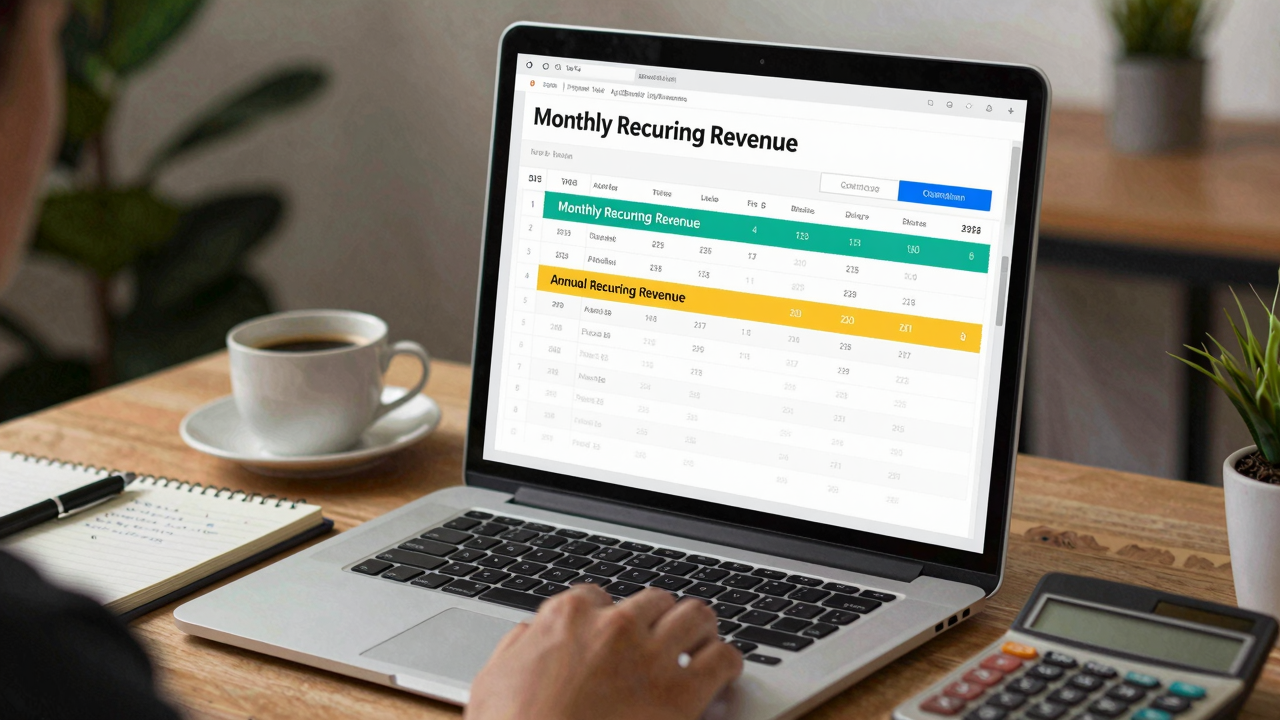
How can you effectively calculate your Monthly and Annual Recurring Revenue? Start by determining your Monthly Recurring Revenue (MRR). Follow these steps:
- Sum new customer revenue from subscriptions.
- Include existing customer revenue and any add-on fees.
- Subtract lost revenue due to churn and downgrades.
- Adjust for discounts and promotional pricing to reflect accurate figures.
Once you have your MRR, derive your Annual Recurring Revenue (ARR) by multiplying your MRR by 12.
If you have monthly contracts, normalize them by multiplying the Monthly Contract Value by 12 for accurate annual valuation.
Remember to account for any deferred revenue separately, as it represents payments for services not yet rendered.
Customer Acquisition Cost and Lifetime Value

Understanding your Monthly and Annual Recurring Revenue is just one piece of the financial puzzle. To effectively manage your business, you need to grasp Customer Acquisition Cost (CAC) and Customer Lifetime Value (LTV).
CAC measures the total cost to acquire a new customer, including marketing and sales expenses. A lower CAC means you’re spending less to bring in customers, boosting your profitability.
On the other hand, LTV estimates the total revenue you can expect from a customer throughout their relationship with you. Aim for a LTV to CAC ratio of 3:1, meaning you should earn three times more from a customer than you spend to acquire them.
By closely monitoring both CAC and LTV, you can refine your marketing strategies, improve customer retention, and optimize your profitability, ensuring you align with the recurring revenue definition.
Focus on balancing acquisition costs with long-term customer value for sustainable growth.
Avoid These Mistakes When Managing Recurring Revenue

When managing recurring revenue, it’s essential to stay vigilant about common pitfalls.
You shouldn’t ignore churn rates, since high churn can erode your revenue base, so regularly track and address customer retention.
Additionally, don’t overlook your pricing strategy or financial forecasting, as these elements are key to maintaining a healthy revenue stream.
Ignoring Churn Rates
Ignoring churn rates can cost you more than just lost customers; it can lead to a cycle of increased acquisition costs and dwindling morale within your team.
To effectively manage churn, focus on these key actions:
- Analyze churn metrics: Regularly check your Gross Retention Rate (GRR) and Net Revenue Retention (NRR) to gauge customer satisfaction.
- Boost retention: Remember, a 5% increase in retention can raise profits by 25% to 95%.
- Engage customers: Implement proactive strategies to support customer success, aiming for a 20% reduction in churn.
- Address issues promptly: Tackle customer concerns immediately to avoid negative feedback loops that can harm your ARR definition and team morale.
Overlooking Pricing Strategy
A sound pricing strategy is essential for your recurring revenue success, as overlooking it can lead to missed opportunities and dissatisfied customers.
[embedded content]
Regularly review and adjust your pricing, since 80% of SaaS companies found that effective price increases positively impacted their ARR.
Avoid complicated pricing structures that confuse customers; around 30% abandon purchases due to unclear pricing.
Test your strategies through A/B testing to potentially boost revenue by 10-15%.
Pay attention to customer feedback, as 70% value transparency in pricing, which builds loyalty.
Finally, guarantee your pricing aligns with the perceived value of your service, since 55% of customers might switch providers if they feel they’re not getting adequate value for their payments.
Neglecting Financial Forecasting
Neglecting financial forecasting can create substantial issues for your recurring revenue model, leading to cash flow problems and inaccurate budgets.
To avoid these pitfalls, focus on these key areas:
[embedded content]
- Calculate MRR and ARR accurately: Regularly update your revenue figures to reflect current customer numbers and contract values.
- Monitor churn rates: Understand that a small retention increase can greatly boost profits; aim for strategies that enhance customer loyalty.
- Account for seasonality: If your business experiences seasonal fluctuations, adjust forecasts accordingly to prevent revenue surprises.
- Evaluate LTV and CAC: Regularly assess these metrics to gauge the effectiveness of your growth strategies and customer retention efforts.
Strategies for Enhancing Customer Retention and Reducing Churn

To enhance customer retention and reduce churn, it’s essential to implement targeted strategies that directly address your customers’ needs.
Start by automating your billing systems to minimize errors, which can lead to a 25% decrease in churn rates.
Regularly engage your customers with personalized communications, like newsletters, to boost loyalty by up to 50%.
Consider offering incentives for long-term commitments, such as discounts on annual plans, to enhance retention by as much as 30%.
Monitoring key metrics, like churn rate and Net Revenue Retention (NRR), will help you identify churn signals early, allowing for timely interventions.
Additionally, focus on delivering exceptional onboarding experiences, as satisfied customers are 20% more likely to stick around.

Streamlining your recurring revenue operations can greatly boost efficiency and improve cash flow. To achieve this, consider the following tools:
- Automated Billing Systems: These reduce manual errors and speed up payment processes, enhancing cash flow stability for your ARR SaaS model.
- Customer Relationship Management (CRM) Tools: Use these to track renewal pipelines and customer interactions, ensuring timely engagement and higher retention rates.
- Accounting Software Integration: Integrate your billing platforms with accounting software for real-time financial reporting, giving you better visibility into monthly and annual recurring revenue metrics.
- Dunning Management Strategies: Employ these to automate reminders for payment failures, helping to mitigate involuntary churn.
Frequently Asked Questions

How Do You Define Recurring Revenue?
Recurring revenue is predictable income your business earns from ongoing agreements, like subscriptions or service contracts.
To define it, focus on income streams that provide consistent cash flow, rather than one-time sales. Identify your primary models, such as monthly subscriptions or annual memberships.
Track these revenues regularly to assess stability and growth. This understanding helps you make informed decisions and attract investors who value reliable financial forecasts.
What Is the 5 Step Revenue Management Process?
The five-step revenue management process includes: first, collect relevant data to track metrics like MRR and ARR.
Next, analyze this data to spot trends that might affect future revenue.
Then, develop strategies for pricing and promotions based on your findings.
[embedded content]
After that, implement these strategies, ensuring all teams work together smoothly.
Finally, monitor performance against your goals and adjust as needed to keep optimizing revenue growth.
What Is the Formula for Recurring Revenue?
To calculate recurring revenue, use the formula: Annual Recurring Revenue (ARR) equals Monthly Recurring Revenue (MRR) times 12.
First, find your MRR by adding new customer revenue, existing customer revenue, and any add-on fees, then subtract lost revenue from churn and downgrades. This gives you a clear picture of your predictable income.
Remember to adjust for discounts or late payments to guarantee your figures accurately reflect your financial health.
What Is the Rule of 40 Recurring Revenue?
The Rule of 40 for recurring revenue states that your company’s growth rate plus profit margin should equal or exceed 40%.
For example, if your growth rate is 25%, aim for a profit margin of at least 15%. This balance shows you’re managing growth effectively while staying profitable.
To implement this, regularly assess your metrics, adjust your strategies for pricing or funding, and focus on sustainable growth to attract more investors.
Conclusion

To conclude, building a successful recurring revenue model is essential for your business’s growth and stability. Start by understanding your customers’ needs and creating personalized experiences. Focus on calculating your MRR and NRR to track progress. Avoid common pitfalls, like neglecting customer feedback, and implement retention strategies to reduce churn. Utilize tools that streamline your operations, making management easier. By taking these steps, you can enhance your revenue stream and foster long-term customer loyalty.
Image via Google Gemini and Small Business Trends