

This post was originally published on this site.
Kyiv air raid alerts at record high as Russia launches round-the-clock strikes
To play this video you need to enable JavaScript in your browser.
This video can not be played
-
Published
Kyiv is suffering more daily air raid alerts than at any time since Russia’s full-scale invasion in 2022, according to BBC Verify analysis of government figures.
Most air attacks used to come at night but Russia’s new tactic of striking Ukraine’s capital during the day is causing huge disruption to schools and businesses.
The round the clock attacks have forced people to head for shelter as many as 13 times a day, with air raid alerts lasting from a few minutes to nearly four and a half hours.
Residents in Kyiv are struggling to adapt to this new reality, adding to existing stress and anxiety. The alerts force pupils to leave their classrooms and workers their offices and leave commuters struggling to get home as overland trains stop.
This has forced the government to plan a new, two-tier warning system that allows people to carry on working, travelling and studying depending on the scale of the threat.
There was a brief pause in attacks on Kyiv over the weekend while US envoys were in town for talks about trying to end the war.
But analysis of figures from the state-owned app Kyiv digital shows that since the round-the-clock Russian attacks began at the end of August, air raid sirens have sounded across Kyiv’s skies on average 10 times a day.
In the seven days from Thursday 27 August, Kyiv endured 76 air raid alerts. The largest comparable number in 2022 was the week beginning 27 February when there were around 66 alerts.
Absolute comparisons are not possible because data gathered in the first few days of the invasion was sometimes incomplete. But the trend shown by the numbers is clear.
From the BBC’s office, we hear the near constant rumble of air defences and drone explosions.
The more frequent Russian strikes are exacerbated by a second development, the use of newer and faster attack drones powered by jet engines. Some of these fly almost 370 mph (595 km/h), three times as fast the older Shahed drones driven by propellers, and are harder to shoot down. Ukraine’s air force says Russia launched 2,800 fast drones in August, almost twice as many as in July.
Ukrainian President Volodymyr Zelensky has held an emergency meeting with ministers and commanders to work out how to produce new high-speed missiles that can intercept the faster Russian drones.
“You can all see that the Russians have changed the tactics of their strikes against Ukraine and, since August, have been terrorising our people, our cities and our villages far more intensely,” the president said.
Diplomats say the risk is that Russia will manufacture its fast attack drones more quickly than Ukraine can develop a new generation of interceptors. Some military sources say this threat could become far greater than Russia’s ballistic missiles which have largely overcome Ukraine’s depleted Patriot defences.
Ukraine uses warplanes, anti-aircraft guns and shoulder-launched missiles to try to bring down the jet-powered drones.
But Yurii Ihnat, spokesman for the Ukrainian Air Force, said only about 60 percent of the drones were being shot down and they needed new interceptors to tackle the threat.
“The task now is to make them faster and equip them with specialised guidance systems so that they can shoot down jet-powered UAVs, the jet-powered Shaheds,” he said.
“The key issue really is having guidance systems, because that is one of the crucial elements. It is not enough for the interceptor simply to fly fast — it has to hit the target. That is very important.”
Analysts say Russia’s aim is not only to weaken Kyiv’s morale but also damage Ukraine’s economy by targeting businesses and warehouses.
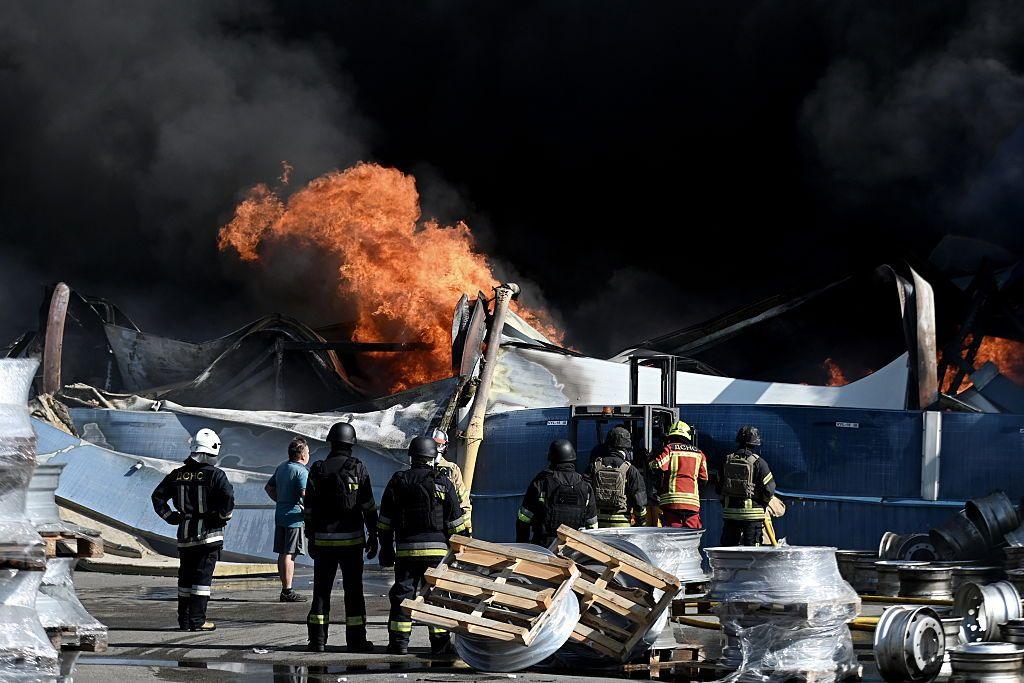 Image source, NurPhoto via Getty Images
The alerts are also disrupting the start of the new academic year and forcing school children to leave their classrooms throughout the day.
When another air raid began, some students at the Drahomanov Ukrainian State University in central Kyiv headed underground; others stayed chatting on the street, such is the normality of these alerts.
Diana, a student teacher, said she did not sleep well at night and her schedule was disrupted during the day. “Sometimes it is hard because most of the day I need to go to safe places, like the metro or somewhere underground,” she said. “It’s a terrible time, but thank God we are alive. We go day by day.”
Ihor, studying to become a chemistry teacher, said he was used to the alerts after many years of war but life was still hard. “We are annoyed by the sirens because they are constant,” he said. “It destroys the quality of our education… We cannot study normally.”
After a drone attack in a residential part of central Kyiv, students from a nearby school were evacuated for fear of explosions or a secondary, so-called “double-tap” attack.
Sophia, 17, told us it was very sad but this is what life was like now. “It’s a little bit scary to live here in Kyiv,” she said. “It’s very difficult.” The interview was then interrupted by another siren. “We need to go,” she said. “It is very dangerous for you to stand in the streets. Maybe we can have a second detonation.”

The constant air raids are a huge problem for businesses, many of which have to shut their doors every time a siren wails. We saw crowds of shop workers from Kyiv’s biggest department store hanging around the streets during an alert, forced to leave their work place but not fearful enough to seek shelter.
There is also disruption to public transport. Some metro trains have to stop during an alert because they travel overground across the Dnipro river that bisects the city. This causes chaos for commuters who are forced to get on replacement buses.
To minimise this disruption, the government has agreed a new air-raid warning system with two different threat levels. A yellow warning to indicate a drone attack with less threat and fewer restrictions on work and travel. A red warning to indicate a more dangerous missile attack with more severe constraints on activity.
As ever, Ukraine is adapting to a yet another new threat. But the fear is that Russia’s constant attacks now may leave the country and its capital less prepared for what many expect to be a tough winter as Russia shifts its attack back to Ukraine’s energy infrastructure.
More on the Ukraine war
-
-
Published5 days ago
-
-
-
Published27 August

-
-
-
Published4 days ago

-