
This post was originally published on this site.
Shares in housebuilder Vistry (LSE: VTY) jumped 18% on 25 August when it was announced that the Kent-based company would receive £350 million as part of the government’s £39 billion social and affordable homes programme.
The funding package was significantly higher than the award under the previous programme (£278 million). It was also the largest possible award in the first round of funding allocations (£9.5 billion). Vistry said it will deploy the funds immediately to more than 3,000 affordable homes. Per-home funding is £116,000, up from £79,000.
Vistry delivers around 15% of the UK’s social/affordable homes and is one of the best ways for investors to benefit from Labour’s drive to get the country building again, but the firm has consistently disappointed investors. After the recent funding package, there could be some light on the horizon. At the current valuation, investors don’t seem to be pricing in any growth.
Sign up to Money Morning
Don’t miss the latest investment and personal finances news, market analysis, plus money-saving tips with our free twice-daily newsletter
Don’t miss the latest investment and personal finances news, market analysis, plus money-saving tips with our free twice-daily newsletter
How Vistry became the UK’s most shorted company
It’s fair to say that Vistry has a chequered history as a public company. Greg Fitzgerald, the former CEO and executive chair, built the firm, which was formerly known as Bovis Homes, through a series of deals, rebranding the group as Vistry in 2020 following its £1.1 billion acquisition of Galliford Try‘s housing businesses. Fitzgerald aimed to create a builder focused on partnerships with local housing providers and local authorities, rather than sales to private markets, which seemed the right course as politicians began to re-prioritise public-sector housebuilding. To that end, the group bought Countryside Partnerships for £1.3 billion in 2022.
Fitzgerald had the vision, but struggled to realise it. Vistry’s vocal shareholders, US hedge funds Abrams Capital and Browning West (more than 20% ownership), haven’t helped. The funds came on board with the Countryside merger and have since increased their stakes. In March 2023, it emerged that they wanted to offer Fitzgerald a bonus of up to £60 million if the shares hit £18 within three years. The proposal mimicked the agreement with Persimmon’s former boss Jeff Fairburn, who was forced to resign following public outcry over his £75 million long-term bonus package. Vistry’s remuneration committee voted it down, but the damage was done.
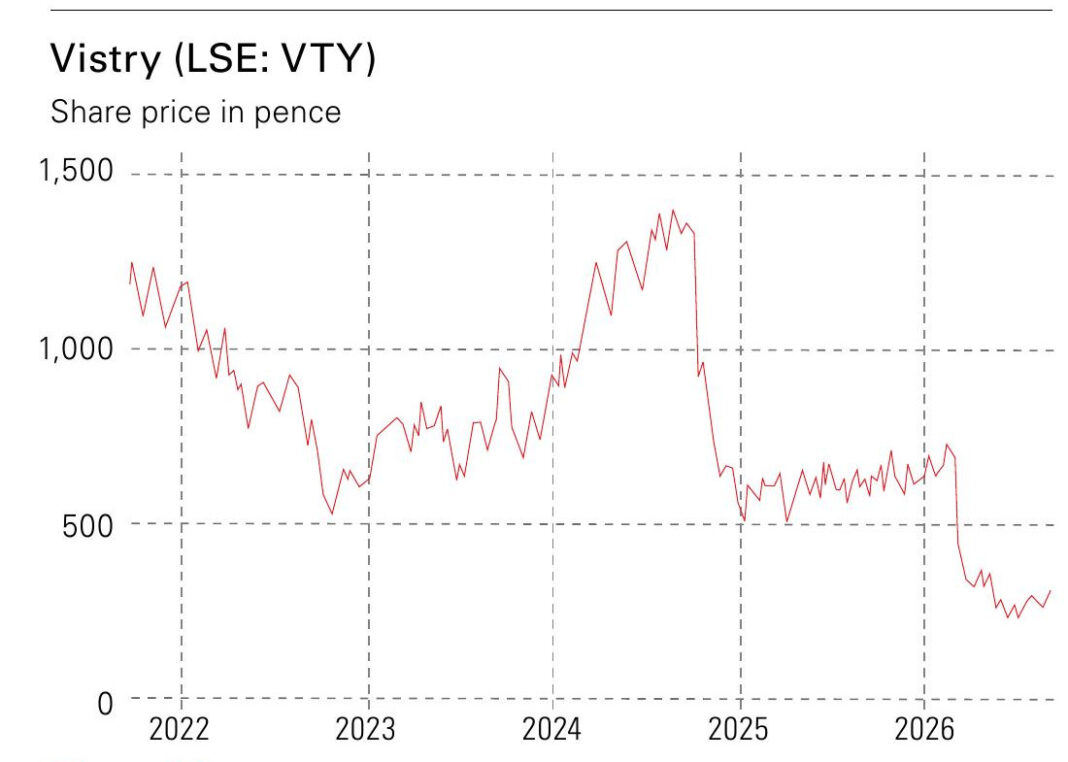
Since then, the firm has issued six profit warnings. In October, November and on Christmas Eve in 2024, it issued three consecutive warnings that higher-than-expected costs would hit the bottom line. This trend continued in 2026. In March, the shares plunged more than 20% in one day when Vistry announced Fitzgerald would retire and the firm lowered its outlook for the year. Then, in May, Vistry said material cost inflation would hit pre-tax profit by around 10% for the year. In July, these forecasts were scrapped altogether. The firm told investors it would report a pre-tax loss of about £30 million for the first half of 2026 on top of the £40 million reported for the first half of 2025.
This stream of bad news has crushed the shares. Although they have risen 20% since their multi-decade low in June, they’re off 80% after peaking in August 2024. Vistry is now the most shorted company listed on the London market.
Is there any silver lining for Vistry shareholders?
Unfortunately for long-suffering shareholders, there could be more bad news to come. Reports suggest Fitzgerald pushed Vistry’s land buyers to purchase any land they could get their hands on, some of which can’t be used. It’s believed that the new CEO, Adam Daniels, is working to undo these errors. Ultimately, sales will help him improve the balance sheet, but there could also be write-downs. Buyers know the company is in a rush to sell and they will push a hard bargain.
So where’s the good news in all of this? Well, Vistry is operating in a structurally sound market with increasingly supportive stakeholders across the value chain. The government’s £350 million cash pot has removed immediate speculation about a deeply discounted rights issue and private bank funding for social housing is starting to be crowded in. Lloyds and Santander have both announced boosts to funding for the sector this year.
As a new CEO, Daniels has a chance to get to grips with all past problems (the group is also replacing the CFO) and reset expectations. Vistry needs to take control of costs and move forward rather than stumbling over its own mistakes.
Vistry is a deep value play
While the company faces an uphill struggle, brokers are optimistic. Panmure Liberum thinks the company is taking the right steps to reduce leverage (with a year-end target of £100 million of net cash and average daily debt of £650 million in the second half compared with last year’s £771 million) and has pencilled in housing completions of 16,330 for fiscal 2026, up from 15,658 as stalled developments from last year reach completion. The broker believes completions will rise further to 17,170 in 2027 and to 20,157 by 2030. Panmure has pre-tax reported profit falling from £196 million to £29 million in fiscal 2026, before rebounding to £173 million in 2027 and then £452 million by 2030.
Peel Hunt has a similar outlook, with a pre-tax profit of around £300 million pencilled in by the end of the decade. If Vistry comes close to these figures, the shares look cheap at current levels. Vistry is trading at an average forward price-to-earnings (P/E) ratio of 5.5 for 2027 based on Peel Hunt’s and Panmure’s figures. What’s more, its tangible book value per share – mostly land and property yet to be sold – is 625p, a full 120% above the current price. With the shares priced at around half the sector average and more than 50% below book value, if Vistry can prove to the market it’s back on track, the shares could double.
This article was first published in MoneyWeek’s magazine. Enjoy exclusive early access to news, opinion and analysis from our team of financial experts with a MoneyWeek subscription.