This post was originally published on this site.
Police searching for six men over anti-migrant protest
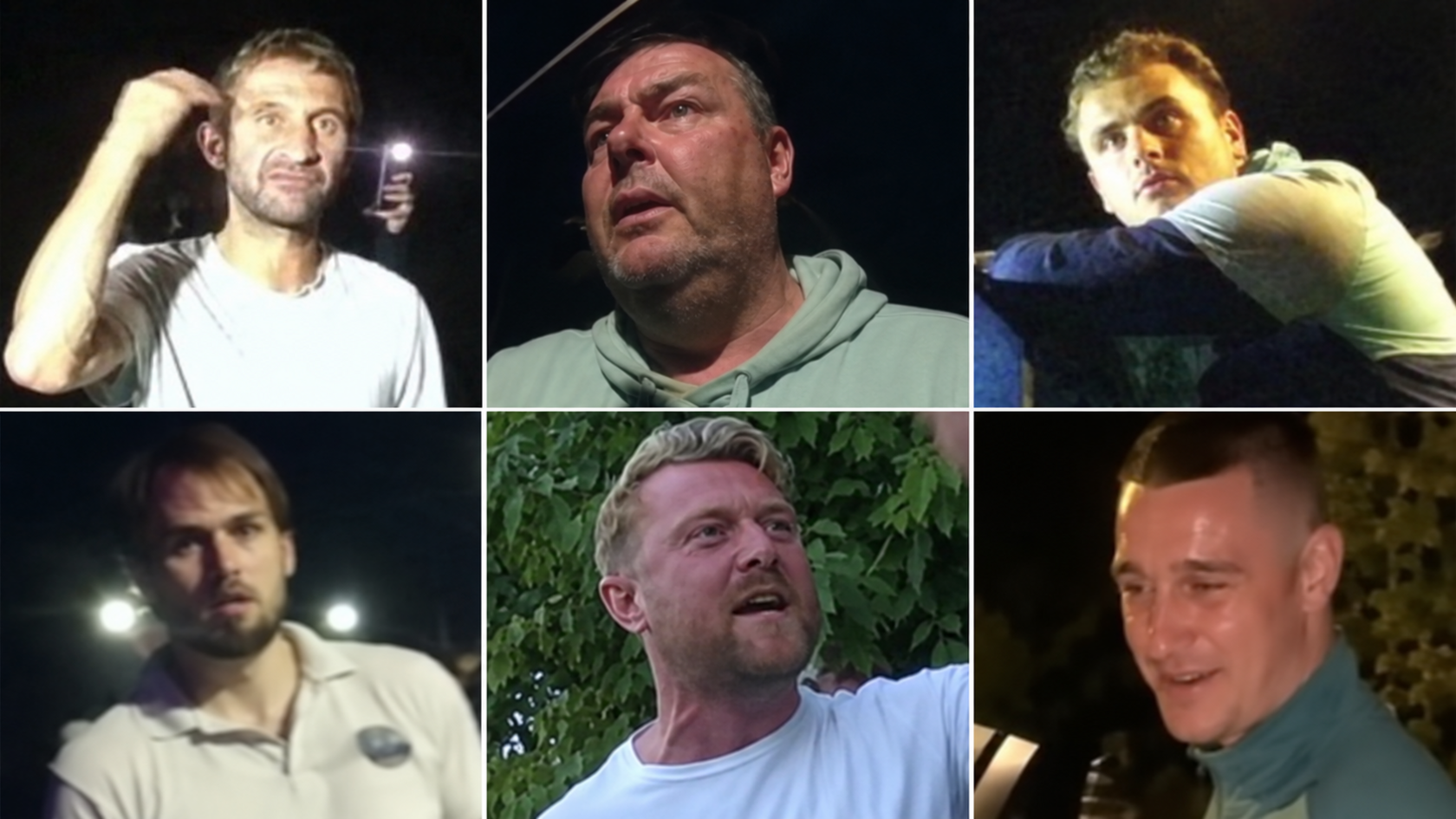 Image source, Hampshire and Isle of Wight Constabulary
-
Published
Police have released images of six men they want to speak to in connection with an anti-migrant protest in Portsmouth.
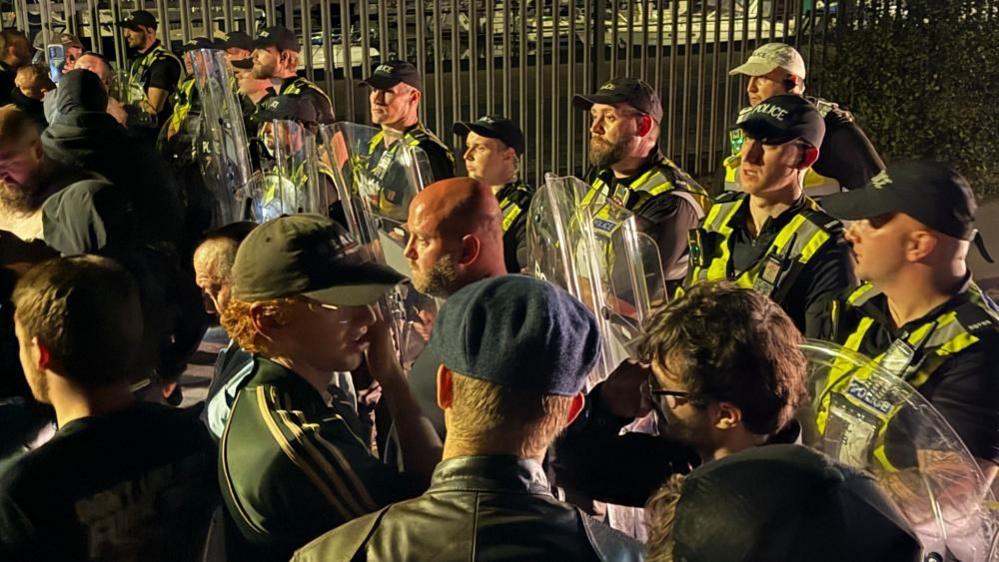
Hampshire police attended Eastney Marina on 6 September after hundreds of demonstrators blocked roads in an attempt to stop coaches carrying 120 migrants, who had crossed the Channel in a dinghy, from leaving the city.
The force said several police, coastguard and Border Force vehicles had been damaged during the evening. Seven officers were treated at the scene for injuries, but no-one in attendance was seriously hurt.
Assistant Chief Constable Tony Rowlinson urged anyone who recognised the six men to contact police.
The government condemned “intimidating and thuggish behaviour” at the demonstration, while stressing the right to peaceful protest.
On Friday, a 42-year-old man from Paulsgrove was charged with violent disorder and assaulting a police officer in connection with the incident. He has been remanded into custody.
A 16-year-old boy was arrested on Saturday in connection with the disorder. He has been released on bail pending further enquiries.
Rowlinson said: “The reality of public order policing is that arrests at the time are not always possible, especially where evidence may need to be reviewed to clearly identify who is responsible for offences.”
The force had reviewed “hundreds of hours’ worth” of footage, he said, adding: “The actions we have been taking as part of our investigation send a clear warning to anyone intent on causing disruption and disorder at any future events.”
Around 500 anti-migrant protesters took to the streets of Portsmouth on Saturday and were met by hundreds of counter-protesters from Stand up to Racism.
Migrants intercepted in the Channel are typically brought to Dover for initial processing.
However, the dinghy that arrived at Eastney Marina had set off from near Cherbourg in the Bay of the Seine, about 170 miles (274km) west of Calais and significantly further west than the usual departure points.
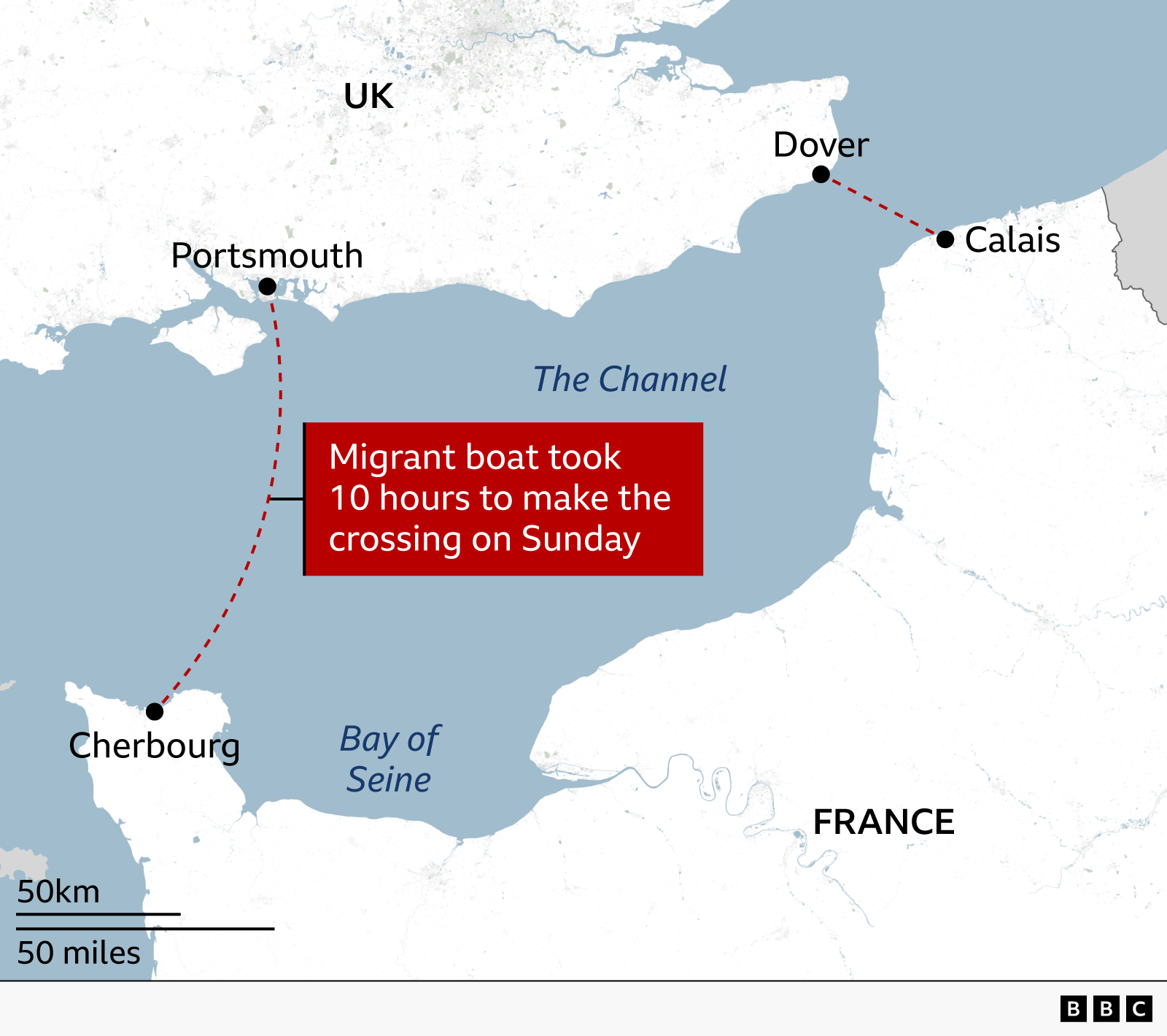
Taking those on board to Dover would have added another four to five hours to a journey that had already lasted around 10 hours. It would also have required lifeboats to operate outside their normal patrol area for longer.
As a result, Border Force and the coastguard opted to bring the group ashore at Eastney Landing in Portsmouth, with lifeboats from Bembridge and Yarmouth on the Isle of Wight assisting in the operation.
Migration analysts say people smugglers may be experimenting with new departure points to avoid a heavy police presence in Calais and Dunkirk.
Crew members from the RNLI were later targeted by protesters, sharing their photos and names in posts on social media accusing them of treason.
Get in touch
Your Voice
-
-
Published6 days ago
-