
EU announces plan to restrict social media access for under-15s
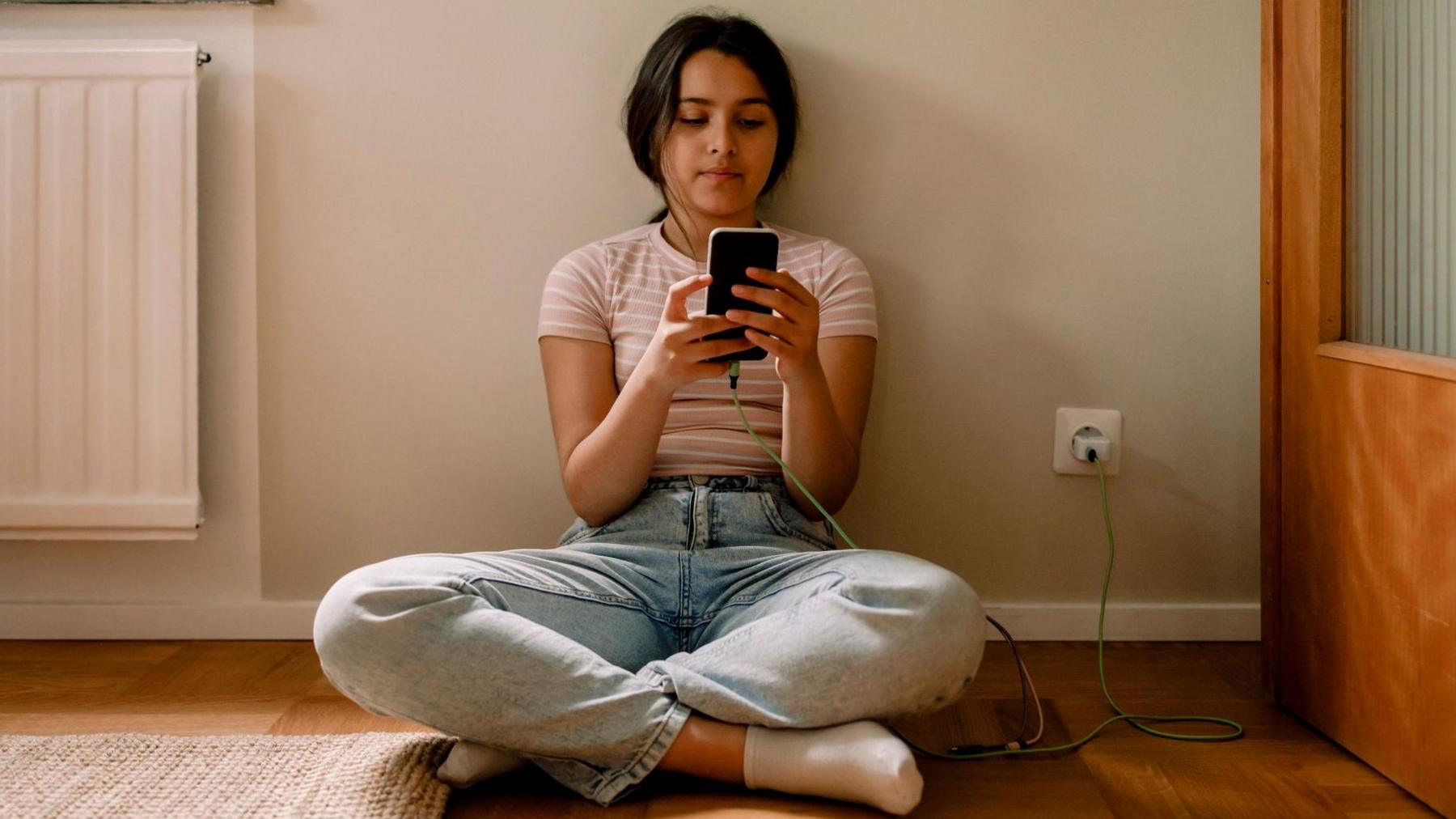 Image source, Getty Images
-
Published
The EU has announced plans to restrict social media access for under-15s across its member states, in a bid to increase wellbeing and tackle online safety.
Under the plans, there would be a gradual approach to children using social media which would include banning under 13s from accessing platforms.
Those aged 13 to 15 would only be able to access platforms for an hour per day via “mini accounts” set up through their parent or guardian’s social media account.
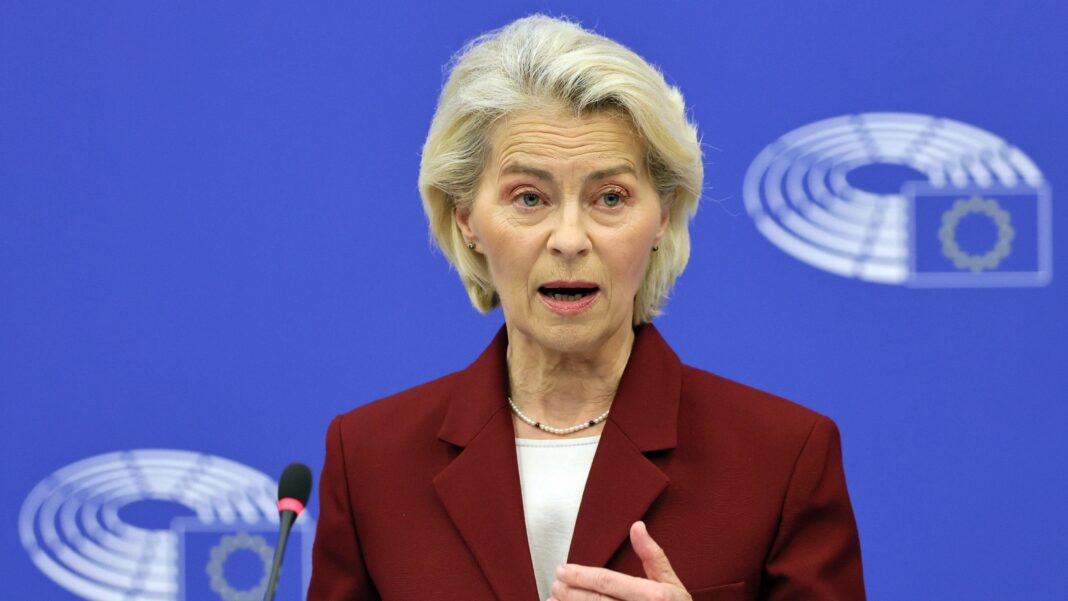
The European Commission said social media companies would need to prove platforms were safe by design or face fines of up to 6% of their global sales. EU chief Ursula von der Leyen said the move would “put parents back in the driving seat”.
She added the legislation – called the EU Kids Act – would give parents “the tools to help their children navigate a safer world”.
The restrictions would not just affect well-known apps such as TikTok, Instagram, and Snapchat but also YouTube and other video sharing platforms as well as AI chatbots and online games.
“Too many children are being exposed too early to an online world they are not ready to navigate – an environment where bullying can follow you home, where every mistake can be recorded forever,” von der Leyen said.
Under the act, only children aged 15 and over would be able to set up their own social media accounts.
But von der Leyen told the EU Parliament on Thursday that “an age limit does not mean letting tech companies off the hook for the content on the platform”.
She added that under the legislation – if it is approved – companies would be required to submit detailed child safety plans.
“For every person under 18, the platforms must follow the principal of safety by design, no toxic or addictive features, no traps, etc,” she said.
Some individual EU countries have already announced their own separate plans to restrict social media for children, including France and Spain.
Any potential EU-wide legislation would supersede those, but it would be possible for individual EU members to then go further than the bloc’s action.
Already there are questions about how this EU-wide legislation would be enforced and the plans are likely to face opposition in the months to come.
France provides an indication of how the path ahead could be bumpy as individual member states may try to strength or weaken the proposals.
The Macron government drew up legislation for a ban on social media for under-15s but last month the country’s top court blocked it, ruling that it infringed upon freedom of expression.
French ministers have now amended their original plans.
Some critics of social media bans for children cite privacy concerns.
They worry about teenagers being forced to submit personal information as they go through an age verification process to prove they are old enough to access platforms.
The Commission has said age would be verified using the EU’s preexisting age verification app, and no personal data would be collected or shared.
Social media companies will also make their position on the restrictions clear as the act is debated in the months to come.
Von der Leyen had previously proposed a social media “delay” for children in Europe, saying in May that “the discussion about a minimum age for social media can no longer be ignored”.
The policy, formally outlined on Thursday, was also trailed in the EU chief’s annual address on Wednesday.
In July, the EU said Meta must change the “addictive” design of Facebook and Instagram or face a heavy fine.
In preliminary findings, the European Commission said features such as infinite scroll, autoplaying videos and personalised recommendations could encourage “compulsive use”, particularly among children and teens.
A spokesperson for the tech giant told the BBC it disagreed with the findings “which don’t accurately take into account the significant steps we’ve taken to protect teens”.
In a separate case, Meta agreed in August to a $18bn (£13.3bn) settlement with US states and territories to resolve claims that Facebook and Instagram harmed children. It denied any wrongdoing as part of the settlement.
The European Commission said its proposed legislation built on findings, external from its special panel on child safety online, which recommended age-appropriate regulation for children, with different guidance for each age group.
It also cited recent EU survey data, external, which found 92% of respondents considered the need to strengthen children’s protection online as a top policy priority.
Von der Leyen said the Commission had “looked at Australia” – which banned social media platforms for under-16s last year – when putting together the proposal.
The ban has been difficult for the country to enforce, with its Communications Minister Anika Wells admitting earlier this month that so far no tech firm had been fined despite research showing many under-16s were still on platforms.
A similar ban for under-16s is set to come into force in the UK in spring next year.
-
-
Published14 August
-
-
-
Published3 February

-
-
-
Published15 July

-