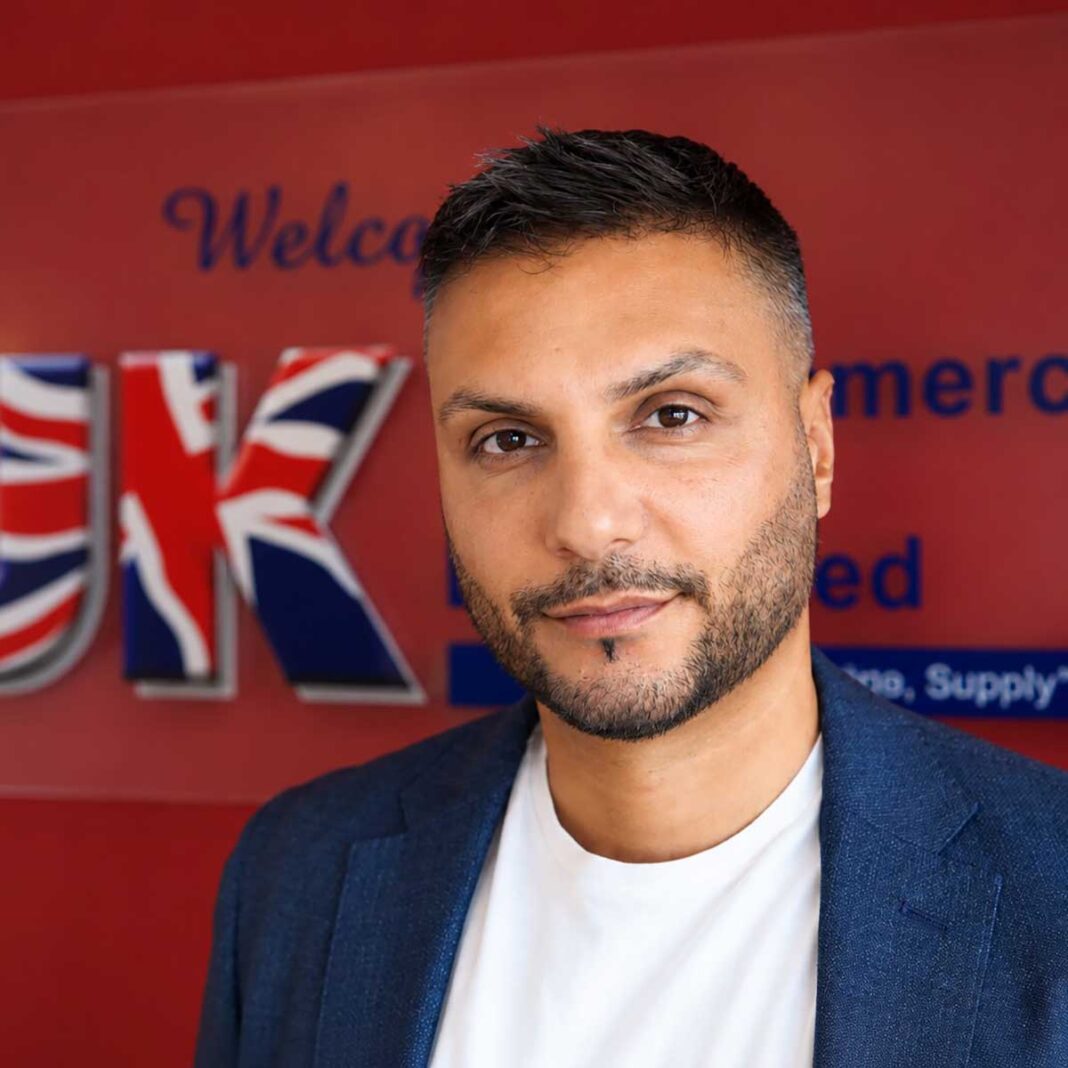

Tony Earnshaw is chief executive of UK Commercial Group, a national facilities management business with offices in Gateshead, Manchester, Leeds and London. The company says he started it with £300 and that it secured £100,000 of investment on Dragons’ Den in 2009; turnover now exceeds £10m. He tells Business Matters what he has learned on the way.
What do you currently do at UK Commercial Group?
As CEO, I oversee our senior management team and provide the strategic direction for the organisation. My role is to set the vision for where we want the business to go, drive sustainable growth and ensure that every part of the company continues to deliver the high standards our customers expect from us.
A significant part of the role is looking ahead. It is important that we understand where the opportunities are, how the market is changing and what we need to do as a business to continue developing. You cannot afford to stand still, particularly when you have ambitions to grow.
What does the business actually do?
We run two divisions, UK Commercial Cleaning and UK Commercial Supplies. The work ranges from deep cleaning, kitchen extraction and decontamination through to mould removal, fire and flood restoration, crime scene cleaning, window and cladding cleaning and grounds maintenance. On the maintenance side we cover HVAC, commercial ventilation, refrigeration and drainage. We also supply janitorial products and run training courses.
Our customers include NHS hospitals, care homes, schools, restaurant chains, pubs and hotels. Some of the specialist work is not what most people picture when they hear facilities management, and our teams have appeared on the Channel 4 series Crime Scene Cleaners.
What was the inspiration behind your business?
I did not grow up with a great deal, which gave me a strong determination to create opportunities for myself and build a better future. From an early stage I wanted to make something of my life, make my family proud and create the security and lifestyle that I had always aspired to achieve.
That determination has always been a major driver for me. I knew that if I wanted to achieve those things, I would have to work hard, take opportunities and be prepared to keep pushing myself.
Over time that ambition developed into something much bigger. It became less about what I could achieve personally and more about building a successful organisation that creates employment, develops people and gives others the opportunity to build rewarding careers of their own.
Seeing the company grow is obviously incredibly rewarding, but so is watching our employees develop and progress. When you see people taking on greater responsibility, developing their skills and building careers within the organisation, it gives you another reason to keep pushing the business forward. That is now one of my greatest motivations.
Who do you admire?
I have enormous admiration for the hardworking people within our organisation. We have many employees who consistently go above and beyond, take real pride in their work and contribute greatly to the success of the business.
You need people around you who care about what they do. I admire those who take responsibility, want to improve and understand that their individual contribution matters to the wider organisation. A successful company is never down to one person; it is built by people working together and sharing high standards.
Away from work, I also admire my daughter, my family and the close friends I am privileged to have in my life. They keep me grounded, give me perspective and remind me that success is not only measured by business achievements.
Looking back, is there anything you would have done differently?
There are certainly many things I would approach differently with the experience I have today. That is inevitable. As you gain experience, you learn to recognise situations differently and hopefully make better decisions.
However, I do not believe in dwelling on the past. Mistakes are an essential part of becoming a better leader and building a stronger business. If you are constantly making decisions and trying to move an organisation forward, there will inevitably be occasions when things do not work out exactly as you expected.
Some of my most valuable lessons have come from situations that did not go according to plan. The important thing is to take responsibility, understand what went wrong, learn quickly, adapt and make better decisions moving forward.
What defines your way of doing business?
Professionalism, quality and care define the way I do business. Customer service is extremely important to me, and I believe our reputation is built through consistently delivering on our promises and taking responsibility when something needs to be improved.
Standards matter. Customers need to know they can rely on you, and that trust has to be earned through what you actually deliver rather than simply what you say.
Developing people is an important part of building a sustainable business. If someone has the right attitude and is prepared to put the work in, I believe in giving them opportunities to show what they can achieve.
What advice would you give to someone starting out?
Begin with a clear plan and a strong understanding of what you want to achieve. Set an ambitious five-year vision, then break it down into realistic annual goals, shorter-term targets and measurable actions. A big ambition becomes far more achievable when you work towards it consistently, one milestone at a time.
Dream big, remain determined and do not allow setbacks to convince you to give up. There will always be challenges, and very few successful businesses or careers develop in a perfectly straight line.
Ambition is important, but it must be supported by discipline, delivery and results. Be willing to work harder than expected, learn from your mistakes and adapt when circumstances change. Keep looking at what is working, what is not working and what you can do better.
On the investment side, my advice is to be clear about what you are giving away and what you are getting back. Plenty of founders have found that the right investor matters more than the money, and the businesses that go on to do well, like the ones that outgrow the pitch, are usually the ones that kept delivering long after the cameras left.