
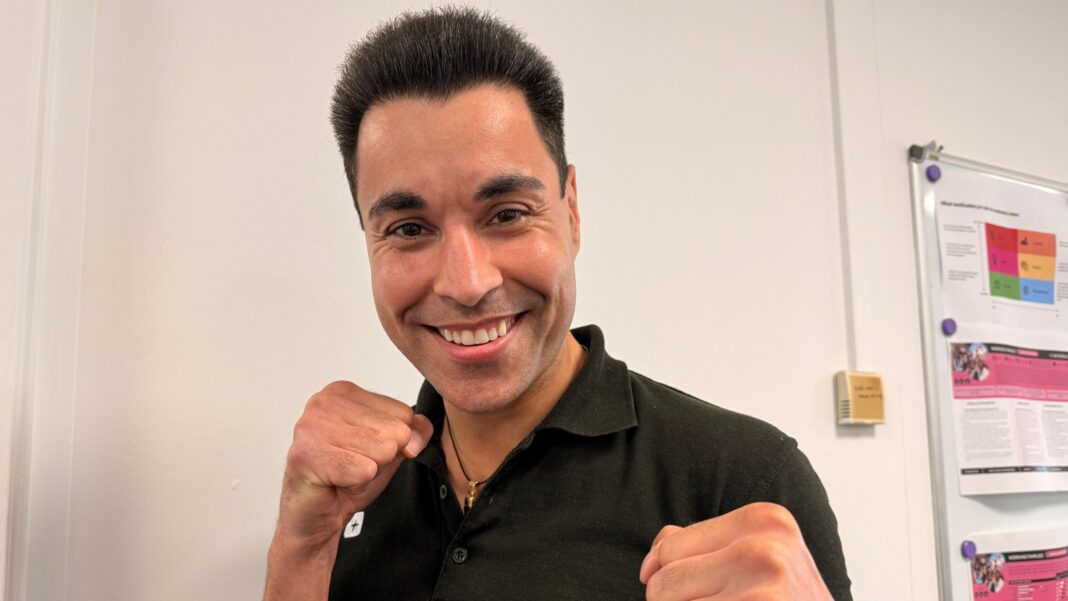


The man who would be king – the rise and fall of ‘the next Prince Naseem’
 Image source, Simon Roberts
-
Published
Boxer Daniel Teasdale was hailed as the heir to the legendary Prince Naseem Hamed, but his promise never materialised into fame, fortune and films.
“He’s better than Naz at the same age,” said trainer Brendan Ingle.
Hamed had won his first world title aged 21. Teasdale was still a teenager.
Ingle, from his gym in Sheffield, moulded the careers of a conveyor belt of world-beaters and title winners. He guided both of the fighters from childhood.
Before super-middleweight Teasdale’s first professional bout, the Rotherham fighter had been featured in national newspapers, books and was being documented by photographers and film-makers.
He won a succession of national titles, establishing himself as the next contender to emerge from the Ingle gym.
Photographer Simon Roberts travelled to the Ingle gym in 1997 hoping to photograph Hamed.
“Brendan said ‘don’t worry about Naz, start photographing that kid in the corner. He’s going to be bigger than Naz’. That was Daniel,” Roberts said.
Roberts began to follow the young sensation, hoping to capture his rise on camera.
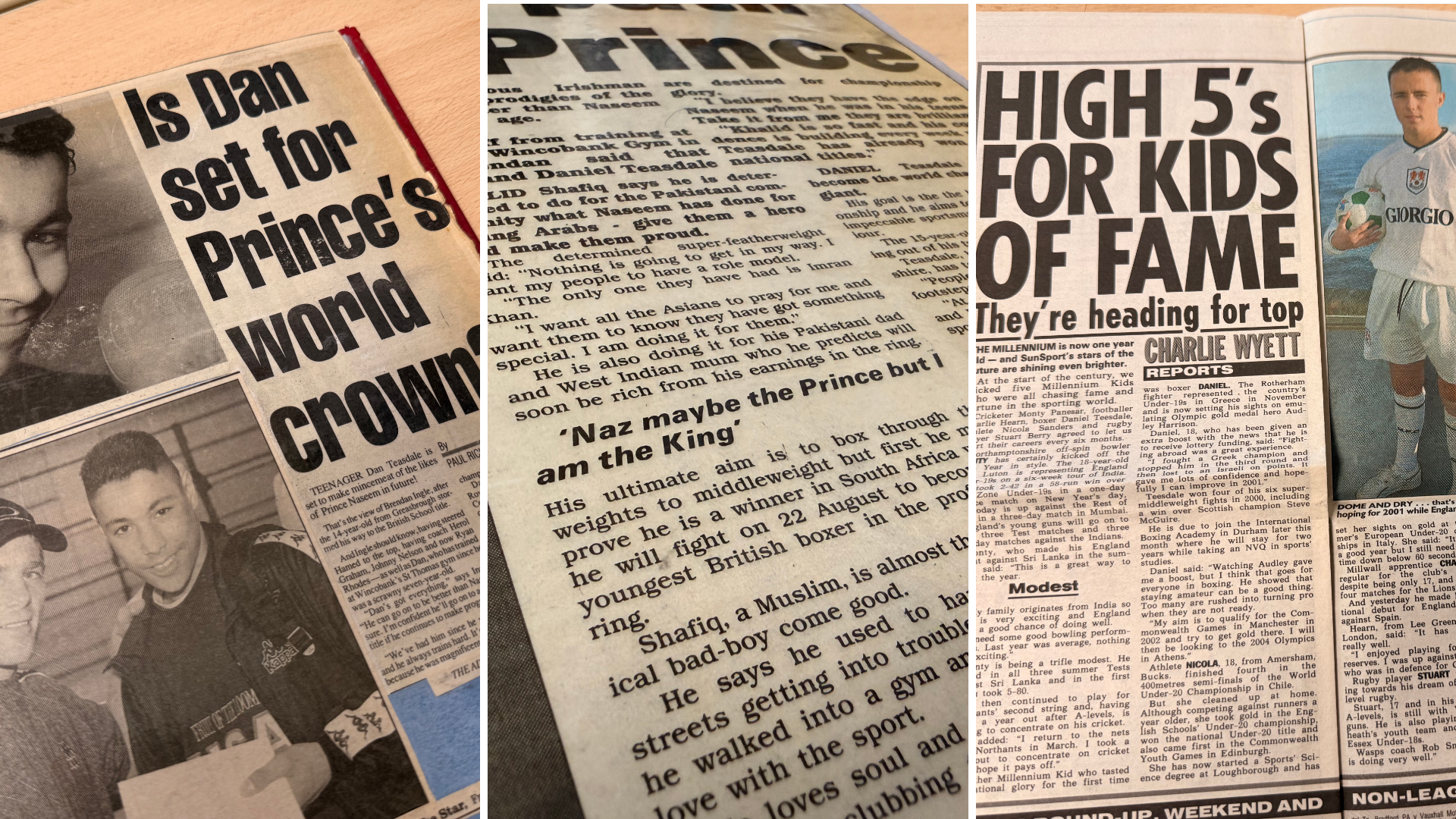 Image source, Aaron Outram/BBC
Filmmaker Stuart Mitchell had a similar brief.
“We were selling the documentary as ‘who’s the next Prince Naseem?’,” says Mitchell.
He recalls Teasdale being the subject of similar headlines in national newspapers, and later accompanying him to an event gathering together the best British prospects from every sport for the new Millennium.
Attention on Ingle’s latest protégé was more than just hype.
“He was like Oscar de la Hoya,” recalls former stablemate Amer Khan.
“Teasdale was exceptional as a junior, he was stopping everyone.”
Teasdale learnt both ballet and gymnastics to develop his footwork and skills in the ring and was seemingly set for stardom.
“I was very teachable, could talk, had the looks and could box,” says Teasdale, who took up the sport aged six.
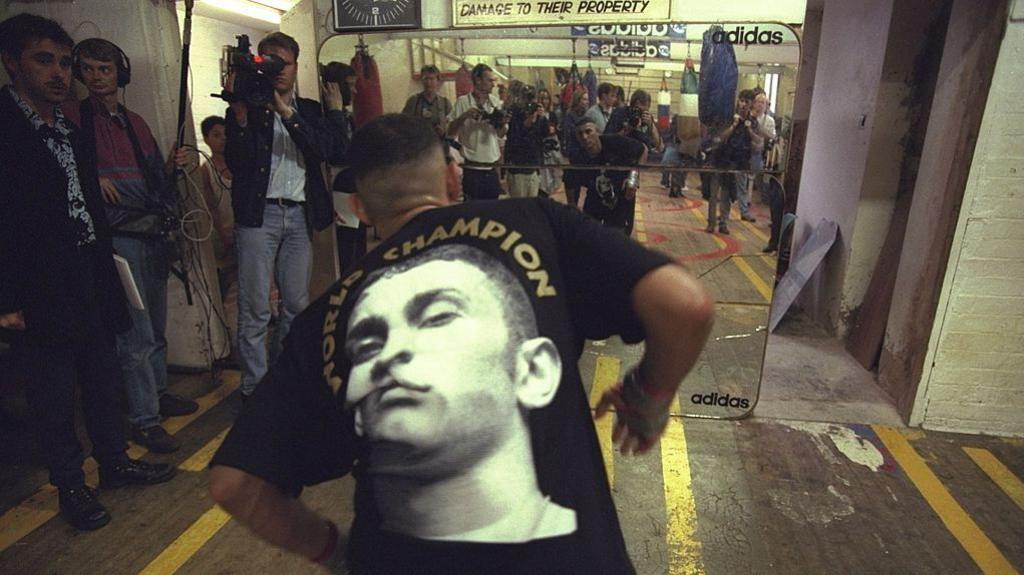 Image source, Getty Images
The bitterness of Hamed’s split from trainer Ingle in 1998 has been well-documented, with both sides seemingly losing.
“Brendan lost the focus with the up-and-comers,” Teasdale says.
He followed Naz in leaving the gym, linking up with one of its greatest exports, three-time world title challenger Herol ‘Bomber’ Graham.
The exit was said to have been spearheaded by Teasdale’s father who “essentially gave up his career” to help his son fulfil his potential, Roberts says.
It was funded by a businessman with no prior experience in boxing, but a thirst to be part of Teasdale’s rise to the top.
Teasdale remembers Graham’s influence as “a breath of fresh air”, but the presence of others was less helpful.
“People started to try and feed off Daniel,” says Roberts.
“I photographed [Mike] Tyson and Lennox [Lewis], I have seen all of this stuff before.”
‘Everybody wanted a piece’
Mitchell was also filming future Olympic bronze medallist Darren Sutherland when he arrived at the Ingle gym from Ireland.
“Daniel was probably more talented than Darren, the trouble with Daniel was he was always being wooed,” reveals Mitchell.
Teasdale’s tag as the next Prince Naseem also hung heavy.
“I was like catnip for cats, everybody wanted a piece,” Teasdale explains.
While the career of some talented prospects is carefully nurtured, Teasdale may not have been as well protected.
“To some extent Daniel was used because he was seen as a big potential and was a good scalp for somebody who wanted to get through the ranks,” Roberts says.
Different trainers, managers and promoters followed, but Teasdale admits instability harmed his progress.
His debut had been a disaster – abandoned due to rioting in the crowd – while the following year he received death threats before a bout.
Despite undeniable talent, those early misfortunes could now be seen as an omen of what was to come.
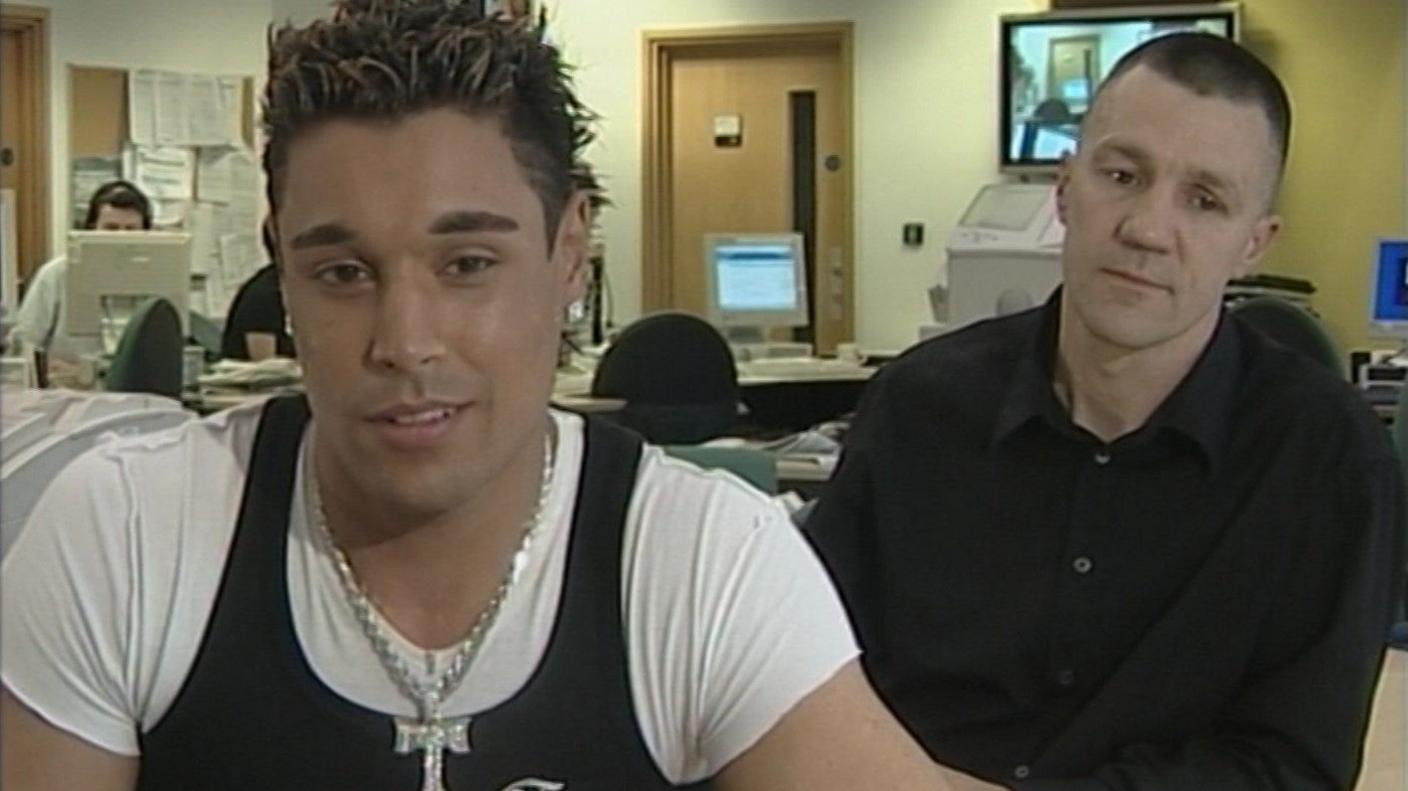
After filming Teasdale across five years, Mitchell shelved his documentary when commissioners lost interest.
He too lost faith after a training session in Graham’s garage.
“It felt very small and I didn’t think this was going anywhere,” he says bluntly.
Many have since raised doubts over whether the “pretty boy” was made for a career getting punched in the face.
“Everybody has a weakness and mine was women,” Teasdale confesses.
“I lost the edge and my focus wasn’t where it should be.”
He walked away from the sport in 2005 after he was stopped in the first round of a light-heavyweight contest – his first professional defeat.
He returned in 2010 and reunited with Ingle, winning his one and only comeback fight.
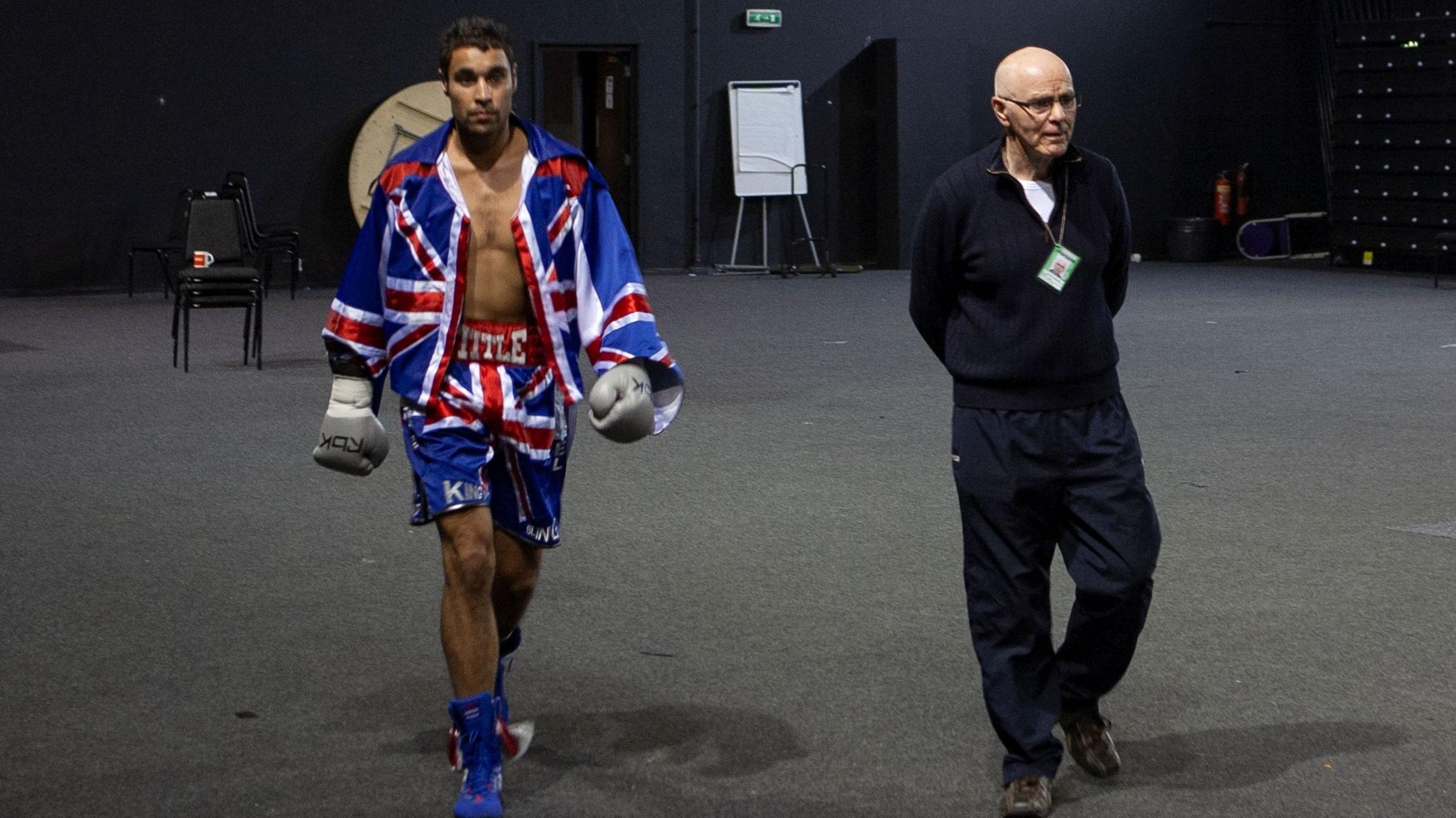 Image source, Simon Roberts
“After that I just gave it up, I thought ‘I’m not going to be second best to the first me,” says Teasdale, whose professional career ended after just five fights over a seven-year period.
“At 27 I should have been a world champion defending my title.”
Roberts continued to photograph Teasdale.
“There were a lot of unfortunate circumstances with him which meant he didn’t fulfil his potential,” Roberts says.
“There was a lot of bad advice and a lot of people wanting something from him, and not necessarily for the good.”
Mitchell did some “soul searching” over his role in Teasdale’s journey.
“There was so much clamour around him – then it just evaporated,” he recalls.
“That must be very difficult to deal with when expectations are that you are going to be a successful and famous boxer.”
Teasdale says “everything went up in the air” as a professional, in contrast to the stability of his early years.
Bad management played a part in not fulfilling his potential, but he admits “living for other people’s dreams and ambitions.”
Still, there are no regrets about how his career turned out.
“It’s made me who I am,” says Teasdale, now enjoying an altogether different career as a support worker.
“I’m doing the job that I love, it’s not the profile that I was but it’s all about being stable in your life.”
-
‘Prince Naseem blazed a trail for people like us’
-
Published18 October 2025
-
-
Prince Naseem actor on playing his hero
-
Published10 January
-
Get in touch
Your Voice
Listen to highlights from South Yorkshire on BBC Sounds, catch up with the latest episode of Look North