In the weeks after the Budget of October 2024, pension schemes started receiving an unusual request. Savers who had taken their tax-free cash wanted to hand it back.
They had taken it because of rumours that the then chancellor, Rachel Reeves, was about to cut it in the Budget. She didn’t.
By December 2024, HMRC was writing to schemes to explain the position. The money could go back into the pension pot, but because there is only so much tax-free in a lifetime, what these savers had taken had counted against that limit for good. The decision they took could not be reversed. There are strict rules around the tax-free pensions lump sum allowance.
Try 6 free issues of MoneyWeek today
Get unparalleled financial insight, analysis and expert opinion you can profit from.
Start your trial
Sign up to Money Morning
Don’t miss the latest investment and personal finances news, market analysis, plus money-saving tips with our free twice-daily newsletter
Don’t miss the latest investment and personal finances news, market analysis, plus money-saving tips with our free twice-daily newsletter
The same thing happened the following year, before the Budget of November 2025, and again the rules were left alone.
Latest Videos FromMoneyWeek
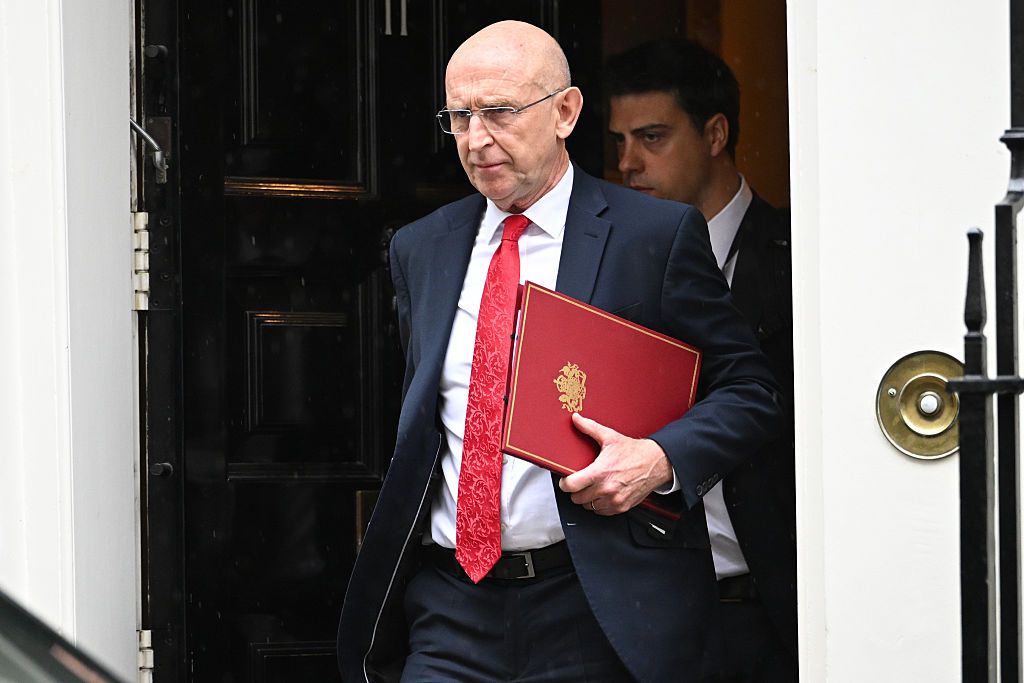
Now the same warnings are circulating ahead of chancellor John Healey’s first Budget on 28 October about pensions tax changes.
Healey himself has not made an announcement. This does not mean that this year’s speculation is wrong, but the rumours simply mean you are being invited to act on a claim that has been made twice in two years, and been wrong twice. Which raises the question of where the claim keeps coming from.
Why Budget tax rumours keep appearing
I’ve worked in financial journalism long enough to know how these stories start. Journalists hear genuine policy discussions and think tanks publish proposals – and out come the warnings.
Interested parties lobby, and readers do need warning about measures that might plausibly arrive. But often, stories are
The difficulty is what happens on the way to the reader. ‘This is being discussed’ becomes ‘this may happen’. By the time it reaches the kitchen table, it has become ‘this will probably happen’, prompting some to take action too soon.
Where the numbers actually come from
In August 2024, the Fabian Society proposed that the maximum tax-free lump sum be cut to the lower of £100,000 or a quarter of someone’s pension wealth. Torsten Bell, the pensions minister, had argued for £40,000 back in 2019, when he ran the Resolution Foundation.
The case for reform is a serious one, and it isn’t confined to think tanks with a political affiliation. Writing in September 2024, the Institute for Fiscal Studies called the tax subsidies for pension saving generous, opaque and poorly targeted, and said they could sensibly be reformed. But it also warned against constant tinkering, and argued that savers need to know where pensions policy is going, whatever any one Budget does.
Two Budgets have come and gone since then, and savers are no clearer than they were. What they do have is a set of proposals, and no statement from any chancellor that he intends to act on them.
But the seeds of fear have been planted.
Why you can’t simply put your tax free pension back
You can usually take a quarter of a pension without paying income tax on it. What far fewer people know is that there is also a limit on the total you can take tax-free across all your pensions in your lifetime, currently £268,275. It is called the lump sum allowance, and it moves in one direction. Once you have used part of it, it stays used.
HMRC’s position is that sending the money back does not restore the allowance, and that there is no legal mechanism for doing so. The Financial Conduct Authority, which regulates pension providers, has said that taking tax-free cash does not by itself give you a right to cancel. Cooling-off rights attach to buying something new, an annuity for instance. Taking your own money out of your own pension isn’t buying anything.
Suppose someone of 58 with a £600,000 pension draws the full quarter she is entitled to, £150,000, years before she needs it, because she has read that the allowance may be cut. The Budget comes and goes and nothing changes. Her £150,000 is now sitting outside a pension, where growth would have gone untaxed. And of the £268,275 she could have taken tax-free across her lifetime, £150,000 is gone. That part of her allowance is spent. None of what she had read was from anyone who really knew.
Are Budget rumours ever right?
Waiting is not always cheaper than acting.
In October 2024, capital gains tax rates rose from 20% to 24% for higher-rate taxpayers, and they rose on Budget day itself. People who had already decided to sell something, and brought the sale forward, saved four percentage points. The official forecasters later confirmed that enough of them did it to show up in the tax figures.
The speculation about cash ISAs proved right too. The cash allowance falls to £12,000 for savers under 65 from April 2027. So did the speculation about salary sacrifice, though that change doesn’t take effect until 2029. Anyone who reorganised their pay in the autumn of 2025 moved more than three years early.
The people who gained in these three cases had something in common. They were mostly bringing forward a sale or a change they had already settled on, not doing something new because of something they had read.
Not everything in the news this autumn is speculation. Two changes affecting pensions and savings are already settled. The cash ISA change and the pension inheritance tax change both arrive in April 2027. You can plan around both, because both are coming.
A cut to the lump sum allowance is different. It has been proposed, and it has been reported. No government has said it is going to happen.
Three questions to ask yourself before 28 October
Before acting on anything you read between now, here’s what you should ask yourself first:
- Has this been announced, or is somebody predicting it?
- If the prediction is wrong, can you undo what you did?
- What will waiting cost you?
The third question isn’t a way of talking yourself into doing nothing. Sometimes waiting has a real price, as anyone who sold an asset after 30 October 2024 discovered. But that price is usually one you can work out in advance. The cost of acting on a rumour that turns out to be wrong often isn’t.
The Budget is on 28 October. Until then, the thing to keep hold of is the difference between what the government has announced and what other people think it might do. The first one you can plan around. The second is a forecast, and there’s no way of knowing in advance which forecasts are the right ones. Where a decision can’t be undone, that difference is worth waiting a few weeks to resolve.