
Ponant and Woods Hole Oceanographic Institution (WHOI) were featured on Condé Nast Traveler’s Bright Ideas in Travel 2026. Read the full list of winners here.
Each time I’ve visited the Arctic or Antarctica on assignment—something I’ve had the privilege of doing twice this year alone—I’ve been humbled by the experience of attempting to accurately the document the sheer magnitude and fragility of the Earth’s polar regions. It’s one thing to photograph charismatic animals and marine megafauna, but with such wide, open landscapes you often need a human or animal subject to give the place scale. Most times, I’m left feeling like I only captured the tip of the iceberg, so to speak.
Like most environmental photographers, I still try to, because I believe that the right photo or video can make someone care about a place they might never visit. It’s an age-old question in conservation, and a poignant one for the poles: regions that many people picture as empty, remote, and largely irrelevant to their lives. You can be told that the Arctic Circle and Antarctica are fragile, yes. You can intellectually grasp their endangered status, sure. But, still, you may not feel emotionally connected to their plight. That gap between knowing and feeling is exactly what a new initiative between the cruise line Ponant and the Woods Hole Oceanographic Institution (WHOI) is trying to close.
Building on a partnership launched in 2025, the two organizations unveiled the Polar Ocean Image Collection in May this year: a library of more than 500 images from the Arctic and Antarctic, released for free through the Ocean Image Bank. Many of the images come from Ponant’s own Polar Studio team, supplemented by the work of photographers from around the world. Overall, more than 200 photographers donated their work for non-commercial, according to Richard Vevers, who leads the WHOI’s efforts as the director of its Ocean Communication Academy and Room 71.
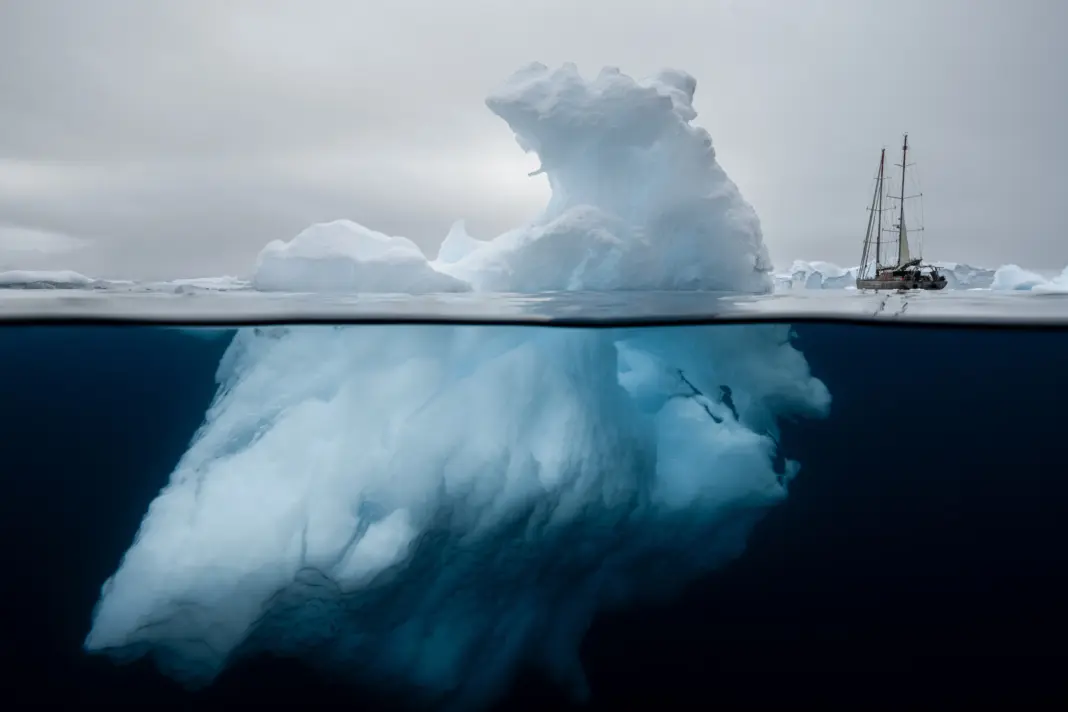
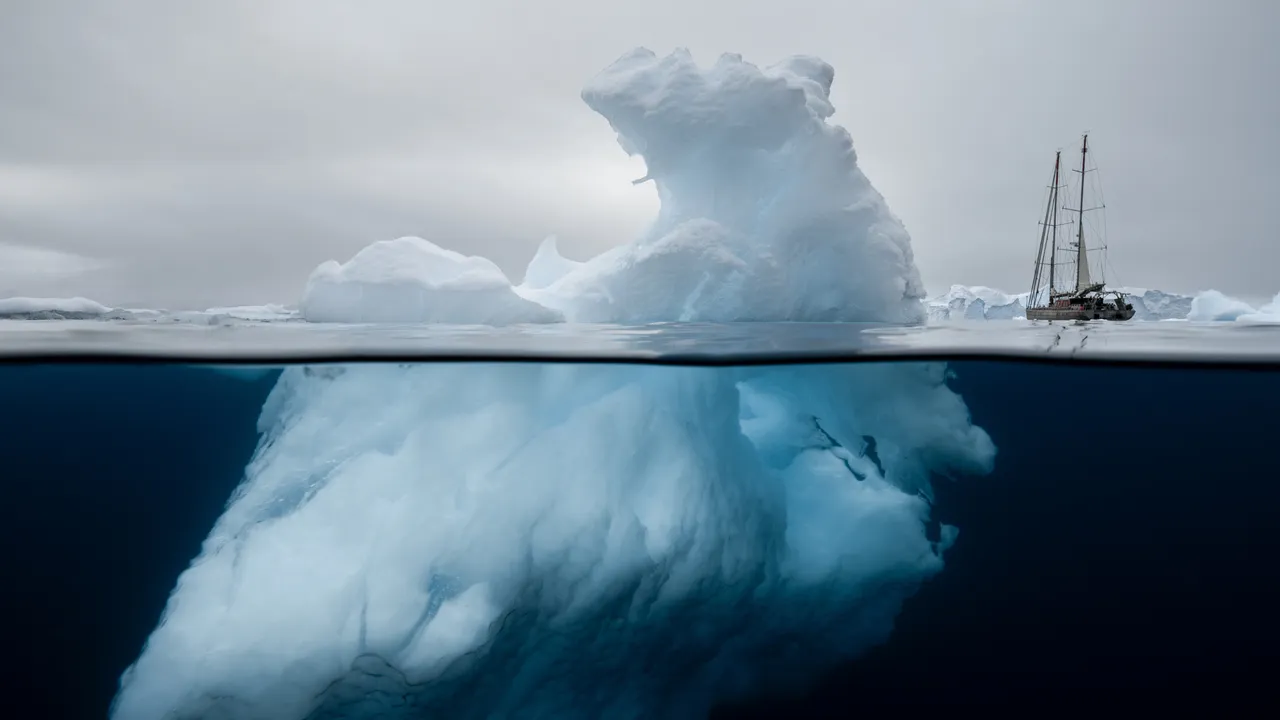
A flick through the Polar Ocean Image Collection reveals an array of icebergs, polar bears, penguins, and endless shades of blue. An image catches my eye, what we call a “splitshot” in underwater photography: a half-submerged iceberg, dwarfing the sailboat beside it. It reminds me of the era of polar exploration, that feeling of smallness beside something so much larger than ourselves. The visual is transportive. I can almost feel a shiver down my spine—of excitement and wonder and awe.
When I first visited Antarctica with Ponant in 2014, I saw firsthand how the White Continent is filled with life and movement. A fledgling penguin pecked curiously at my lens cap. A seal pup hauled itself over my legs, entirely unbothered by my presence. Icebergs that barely fit into the frame of my wide-angle lens floated past. It’s been over a decade since that trip, and I’ve been back to the polar regions multiple times since, but that first memory is still seared into my mind. When I recount the experience to Vevers, he nods knowingly. “And great photographers can capture that and allow people to see it, even those who aren’t there,” he says.
Though Room 71 sounds like something out of a sci-fi story, the cryptic name is simply a reference to the fact that 71% of the planet is covered by oceans. It’s the institute’s dedicated storytelling and communications unit, with a goal to, as Vevers describes it, “reimagine how we design technology to engage new audiences.” Before WHOI, Vevers spent a decade in advertising before founding The Ocean Agency, an international nonprofit for marine conservation, inspired by an “ocean epiphany.”