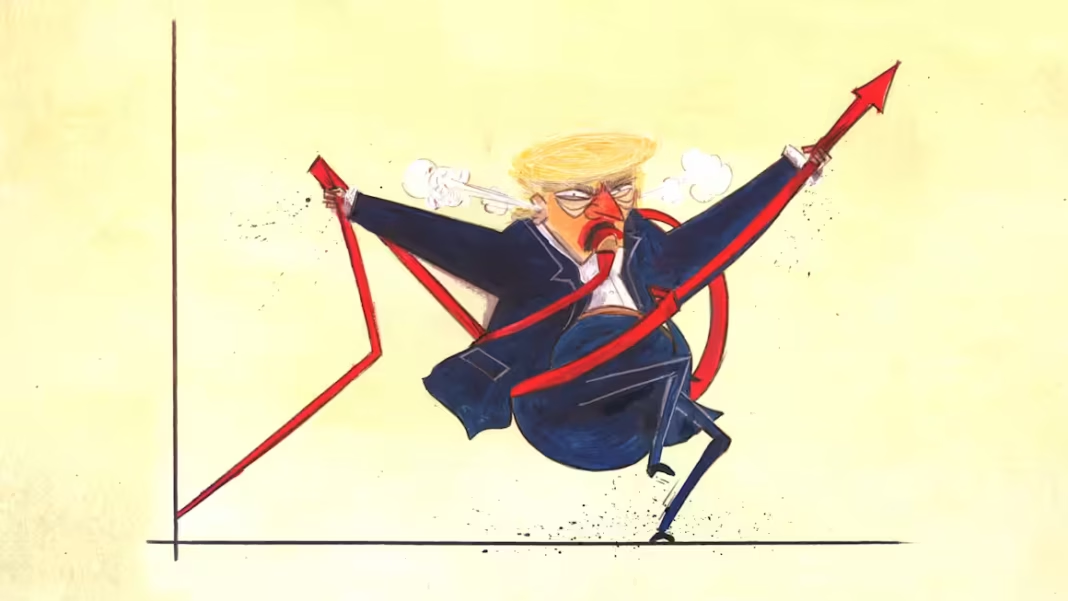

Only one in ten of the UK’s highest earners pay close to the top headline rate of tax, according to research published today by the Centre for the Analysis of Taxation (CenTax), which is calling on John Healey to equalise capital gains and income tax rates in next month’s budget.
The researchers said only 10 per cent of the richest 0.01 per cent of the population paid close to the top 47 per cent rate on earnings. A quarter of that group paid an effective average tax rate of 20 per cent or less, the report said.
CenTax estimated that aligning the rates of capital gains tax and income tax at the budget on 28 October could raise an extra £19.7bn for the Treasury by 2030.
The findings are based on an analysis of anonymised HM Revenue & Customs data on top earners from 2022. The lower effective rates are likely to reflect the richest individuals generating a bigger share of their income from capital gains, which are taxed at a lower rate than earnings.
Earnings are subject to income tax and national insurance contributions, with the combined top rate reaching 47 per cent. Capital gains tax is charged on profits from the sale of assets such as shares, or a property that is not the seller’s main home.
According to HMRC guidance on capital gains tax rates, higher rate taxpayers pay 24 per cent on gains from 6 April 2026, while basic rate taxpayers pay 18 per cent on gains within the basic income tax band. Gains qualifying for Business Asset Disposal Relief are taxed at 18 per cent, and the tax-free allowance for 2026-27 is £3,000. An additional charge applies to workers predominantly in the private equity industry.
CenTax said the effective rate paid by the richest individuals was likely to have risen to 23 per cent after Rachel Reeves increased the lower and higher rates of capital gains tax in the October 2024 budget.
According to its analysis, tax rates paid by the top 1 per cent of earners have increased since 2008, but have fallen for the top 0.01 per cent over the same period. For the average earner, tax rates declined.
Andy Summers, director of CenTax and a professor of law at the London School of Economics, said: “The assumption that our tax system is already steeply progressive only holds for some top earners and is frequently not true at the very top.”
Arun Advani, director of CenTax and professor of economics at the University of Warwick, said: “By creating inequalities across individuals with otherwise similar incomes, the current tax system is getting in the way of growth, encouraging individuals to chase low rates rather than working in the most productive way.”
Opponents of equalisation argue that it would drive down investment and deter entrepreneurship by reducing the profits made from risk taking. Others have said it would lead to more billionaires leaving Britain, following the departures of hedge fund manager Chris Rokos and Lakshmi Mittal. Conservative leader Kemi Badenoch has blamed Labour’s tax plans for an exodus of wealth creators.
The report lands as Healey, who succeeded Reeves as chancellor, and prime minister Andy Burnham prepare the budget. Economists have estimated that fiscal headroom, the margin against the government’s fiscal rules, has fallen to £10bn from £23.7bn because of the rise in government bond yields since the start of the Iran war nearly seven months ago. Business Matters reported last week that Healey faces a £10bn gap as borrowing costs hit a 19-year high.
Whitehall sources said last week that the prime minister and chancellor had considered lowering the valuation threshold for the incoming mansion tax to £1.5m, in what was described as a more “aggressive” approach to taxing wealth. In July, more than 100 millionaires signed a letter urging Burnham to introduce a wealth tax.
The Office for Budget Responsibility forecasts that the tax burden, public revenues relative to GDP, is already on course for a post-Second World War high of 38 per cent.
The Treasury was contacted for comment.