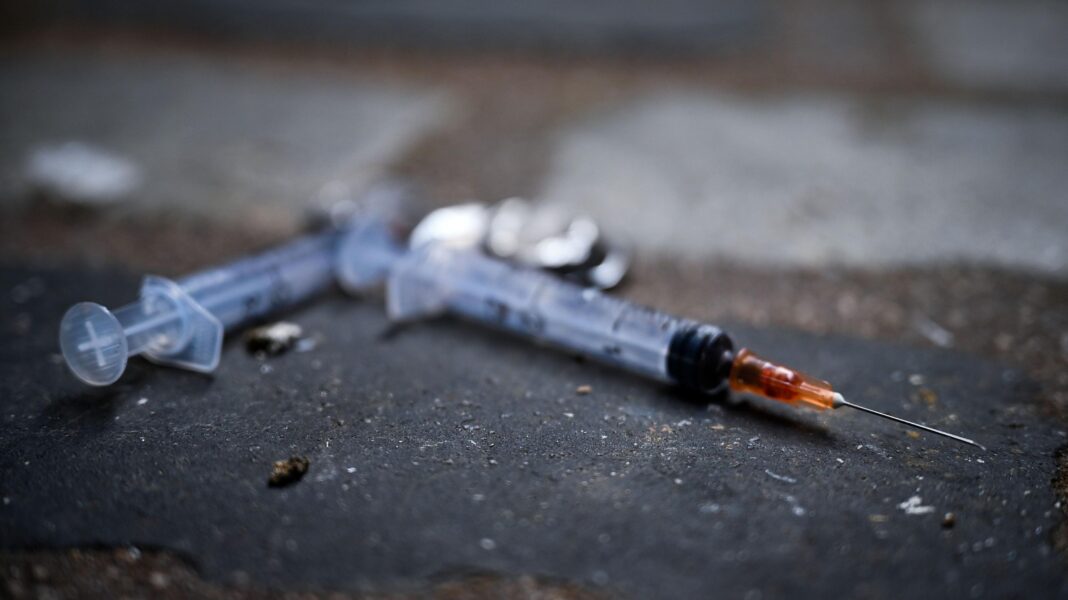

Drug deaths rise sharply in Scotland as figures remain worst in Europe
-
Published
Deaths related to illicit drugs rose by 11% in Scotland last year to 1,133 as the country struggles to tackle the worst fatality rate in Europe.
National Records of Scotland (NRS) said the figure for 2025 was 116 higher than the previous year, bringing the total deaths in a decade to more than 11,000.
After adjusting for age, there were 214 drug-related deaths per million people.
NRS defines drug-related deaths as those where the underlying cause was drug poisoning, a controlled substance was in the body at the time of death, and drug use led directly to the death.
Efforts to save lives over the past year have been hampered by criminal gangs mixing powerful synthetic opioids such as nitazenes with existing drugs including heroin, cocaine and fake Valium pills.
Nitazenes were implicated in 247 deaths in 2025 – more than 22% of the total. The figure had more than trebled from 76 deaths the previous year.
Opiates and opioids, such as heroin, continued to be the most common type of drug implicated in deaths, accounting for 78% of the total.
Cocaine was implicated in 52% of deaths, the highest figure since NRS began publishing specific data in 2008.
NRS said the increase had been driven by a rise in deaths of male drug users. This increased by 19%, while the rate of female deaths fell by 5%.
The rate of drug-related deaths in the most deprived areas of Scotland was 15 times as high as in the least deprived areas.
The average age of death has increased from 32 in 2000 to 46 years in 2025.
Over a five year period from 2021-25, Glasgow recorded the highest average death rate at 380 per million, followed by 340 per million in Dundee and 310 per million in North Ayrshire.
When comparing Scotland with the rest of Europe, NRS measures the death rate among 15-64 year olds – which was 277 per million in 2025.
The next highest rate in Europe was Estonia with 112 deaths per million in 2024, the most recent year for which figures are available from the European Union Drugs Agency (EUDA).
Scotland’s death rate in 2024 was 246 per million.
NRS says its methodology produces “similar” outcomes to EUDA’s count of “drug-induced deaths”, with the caveat that the two methods use slightly different lists of drugs.
When comparing Scotland with the rest of the UK, NRS uses a wider measure of age-adjusted drug poisoning deaths.
This includes all deaths where the underlying cause was listed as mental and behavioural disorders due to psychoactive substance abuse or poisoning by drugs whether accidental, intentional, of unknown intent or as a result of assault.
The most recent comparable data are for 2024 and show that Scotland had an age-adjusted death rate of 216 per million compared with 91 for England, 140 for Wales and 135 for Northern Ireland.
Catriona Matheson, professor of substance use at Stirling University, told BBC Radio Scotland Breakfast that the potency of nitazenes was unpredictable. Some can be 50 times stronger than heroin.
“People are not expecting that in the drugs that they’re taking,” she said.
“They may be buying what they think is heroin and in fact it may contain several other substances in it.”
Matheson said an increase in “polydrug use” in recent years had contributed to the problem and could prove to be lethal.
Scotcast: The new killer drugs flooding Scotland
Martin Geissler speaks to James Cook about the criminal gangs making nitazenes and how law enforcement is struggling to keep up.
Kirsteen Horsburgh, chief executive of the Scottish Drugs Forum, said the link between deprivation, health inequalities and drug-related deaths was “really stark”.
“The risk is we become fixed on chasing individual substances in an unregulated market and we lose sight of the individual circumstances that are related to that,” she said.
“Drugs don’t explain the extraordinary inequality and social disparity that we see in these deaths.
“Drug-related deaths are an extremely visible manifestation of who gets to live long and healthy lives.”
-
-
Published3 days ago
-
-
-
Published2 September 2025
-