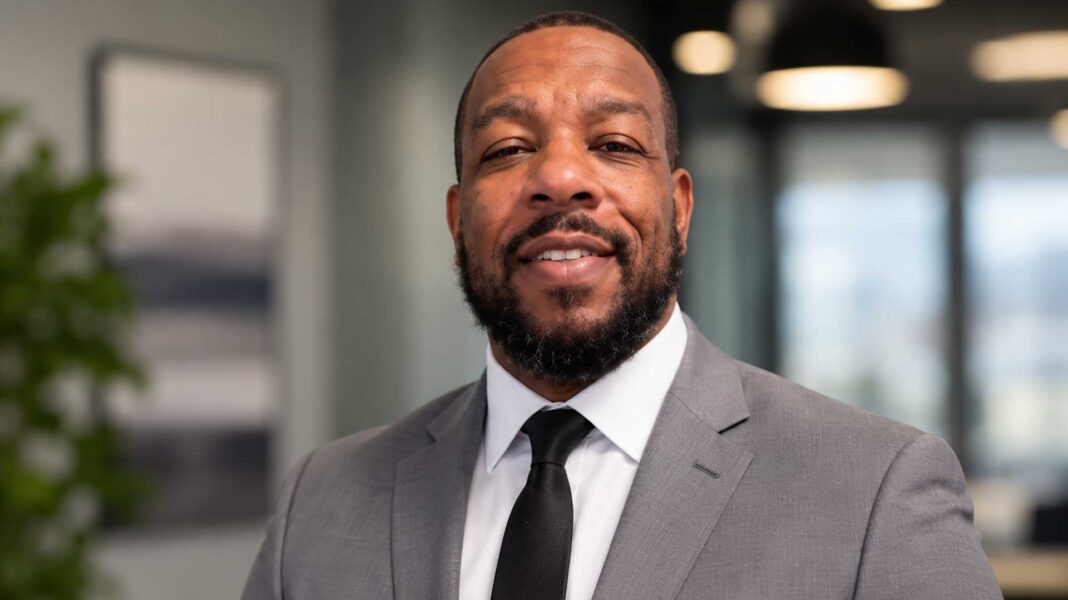

His career has centred on programme management, organisational change, business processes, technology, and helping complex organisations work more effectively.
Born in Puerto Rico, Morales-Llanos grew up in a military family. His father served in the US Army, which meant the family lived in different parts of the world, including Germany and Italy. They eventually settled in Columbia when his father completed his military service. Growing up around different cultures gave Morales-Llanos an early understanding of how people adapt to unfamiliar environments and ways of working.
He graduated from Richland Northeast High School in 1996 and earned his bachelor’s degree from the University of South Carolina in 2001. He later completed an MBA and a master’s degree in Health Services Management at Webster University in 2003.
Pedro Morales-Llanos went on to build a career in the US federal government. At the National Institutes of Health, he served in senior programme management and management analysis roles within the Office of the Director and the Center for Information Technology. In 2020, he joined the US Department of Justice as an Operational Support Manager and Enterprise Program Manager.
After leaving federal service in 2024, Morales-Llanos founded Strategic Rise Advisory Group. Today, his work draws on years of experience managing programmes, improving processes, navigating organisational change, and connecting strategy with practical execution.
You grew up moving between different countries. Did that influence how you approach leadership today?
Very much so. My father was in the Army, so moving was simply part of life. I was born in Puerto Rico, but we spent time in places such as Germany and Italy before eventually settling in Columbia, South Carolina.
When you move frequently, you learn that you cannot assume every environment works the same way. You have to observe first. You listen, understand the culture and then figure out how you fit into it.
That has carried into my professional life. When I enter a new organisation or look at a business problem, I try not to arrive with a fixed answer. I want to understand the environment, the people and the history behind the problem first.
What led you towards management and programme work?
My education gave me a broad foundation. I studied at the University of South Carolina and later completed both an MBA and a master’s degree in Health Services Management at Webster University.
What interested me was how organisations function behind the scenes. A lot of people see the final service or product, but there are systems, decisions and processes supporting everything that happens.
I became interested in how those pieces connect. That naturally led me towards programme management, organisational development and process improvement.
What did your time at the National Institutes of Health teach you?
Working at NIH taught me a great deal about operating within large and complex organisations.
From 2011 to 2015, I worked as a Lead Management Analyst and Senior Program Manager within the Office of the Director. I then moved to the Center for Information Technology, where I served as a Supervisory Management and Program Analyst and Senior Program Manager until 2020.
Those roles showed me how closely technology, people, policy and operations are connected. You could have a technology project that looked straightforward on paper, but the real challenge might involve communication, responsibilities or how different groups worked together.
I learned to look beyond the first problem presented to me.
How did your work at the Department of Justice differ?
I joined the Department of Justice in 2020 as an Operational Support Manager and Enterprise Program Manager.
The environment was different, but many of the core leadership lessons were similar. Large programmes require structure, communication and an understanding of risk. They also require people to see how their individual work connects to a wider goal.
One thing I became increasingly aware of was that organisational change cannot simply be announced. People need context. They need to understand why something is changing and what it means for their work.
Why did you decide to move into consulting?
After many years in federal service, I wanted to take what I had learned and apply it in different environments.
That led me to establish Strategic Rise Advisory Group, LLC. Consulting gives me an opportunity to work through challenges involving organisational change, business processes, strategy and programme management from another perspective.
I also enjoy the discovery part of consulting. You are not there simply to tell somebody what to do. You have to ask questions, understand what is actually happening and identify where the real obstacles are.
Sometimes the issue an organisation believes it has is not the underlying problem.
What do organisations often misunderstand about change management?
I think there can be too much focus on the technical side of change.
An organisation might introduce new technology, restructure a team or redesign a process. Those things matter, but people ultimately have to make them work.
If employees do not understand the purpose of the change, or if leadership has not communicated clearly, even a good plan can struggle.
For me, change management is about bringing the people, process and strategy together. You cannot treat them as completely separate things.
How has technology changed the work of management consultants?
Technology gives organisations access to far more information than they had before. Data analytics, cybersecurity and digital systems can all support better decisions.
However, having more data does not automatically mean making better decisions. Organisations still need to understand what information matters and how it connects to their goals.
That is where management and technology increasingly overlap. Leaders need enough understanding of technology to ask good questions, even if they are not technical specialists themselves.
What keeps you learning outside your professional work?
I have always been curious. I enjoy reading about history and different cultures. I travel when I can, listen to podcasts and probably spend more time in coffee shops than I should.
Fitness is also important to me. I do CrossFit and Brazilian jiu-jitsu. Both teach you that progress comes through repetition, discipline and being willing to learn from mistakes.
There is a connection to professional development there. You are never really finished learning.
What lesson has stayed with you throughout your career?
Do not assume you understand a problem too quickly.
Whether you are working in government, consulting or any large organisation, there is usually more happening beneath the surface.
Listen to people. Understand the process. Look at the data. Ask why something works the way it does before trying to change it.
Good leadership is not about having every answer immediately. It is about creating enough understanding to make a better decision.