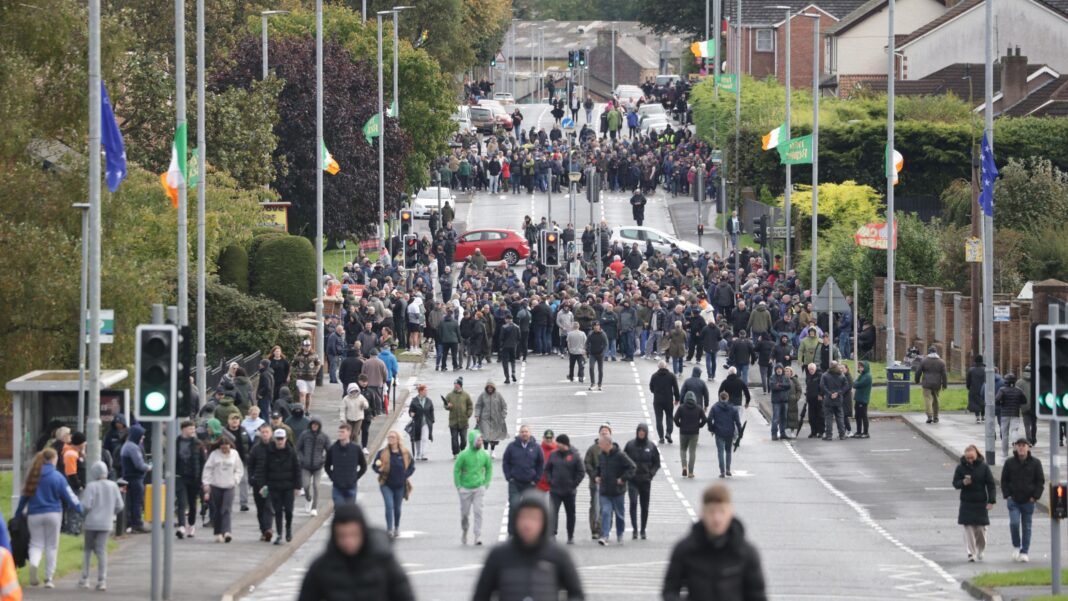

Protesters disperse after blocking contentious Orange Order parade
To play this video you need to enable JavaScript in your browser.
This video can not be played
-
Published
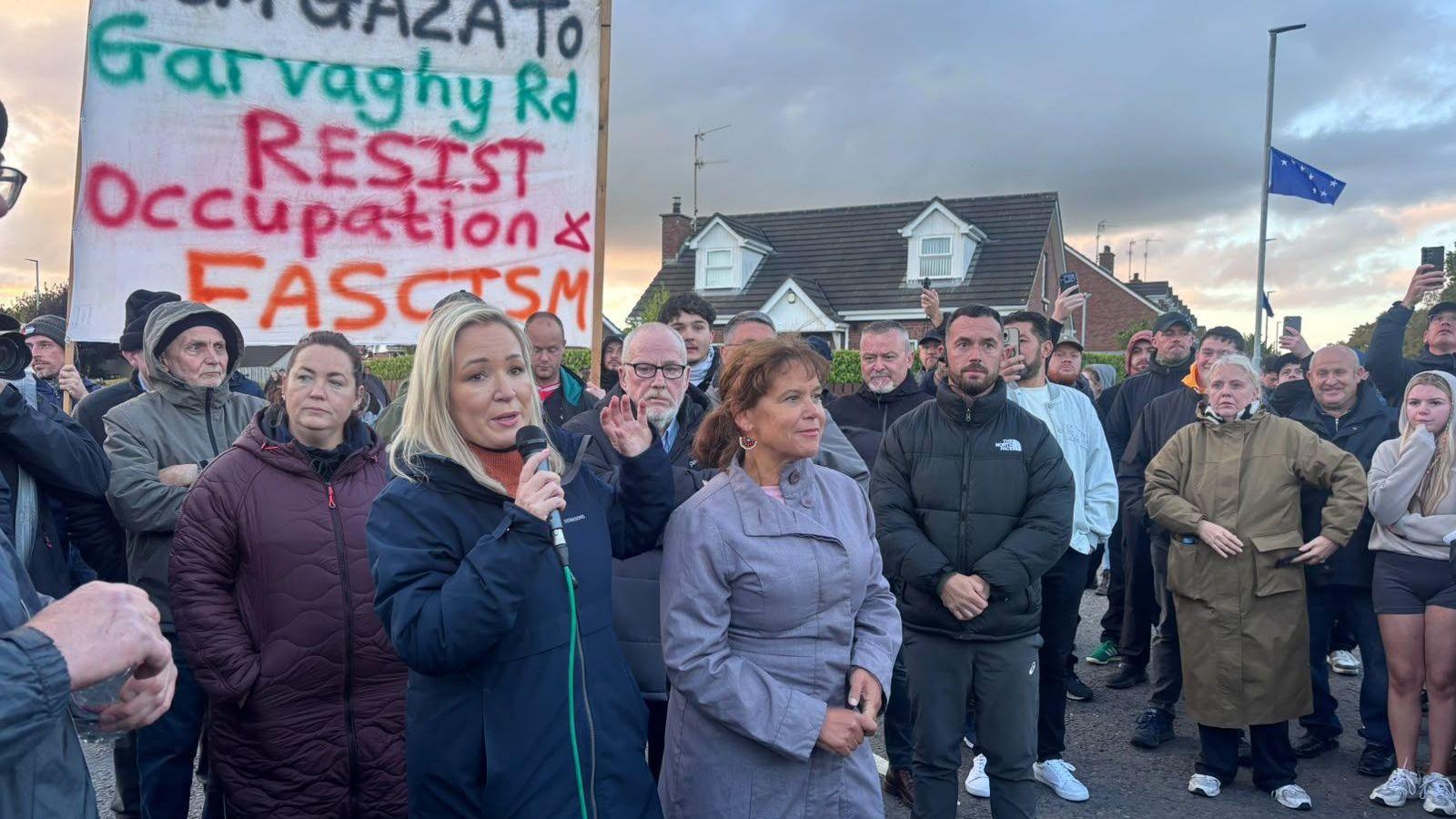
Hundreds of protesters blocked a road in Portadown, County Armagh on Sunday, preventing a contentious Orange Order march from taking place.
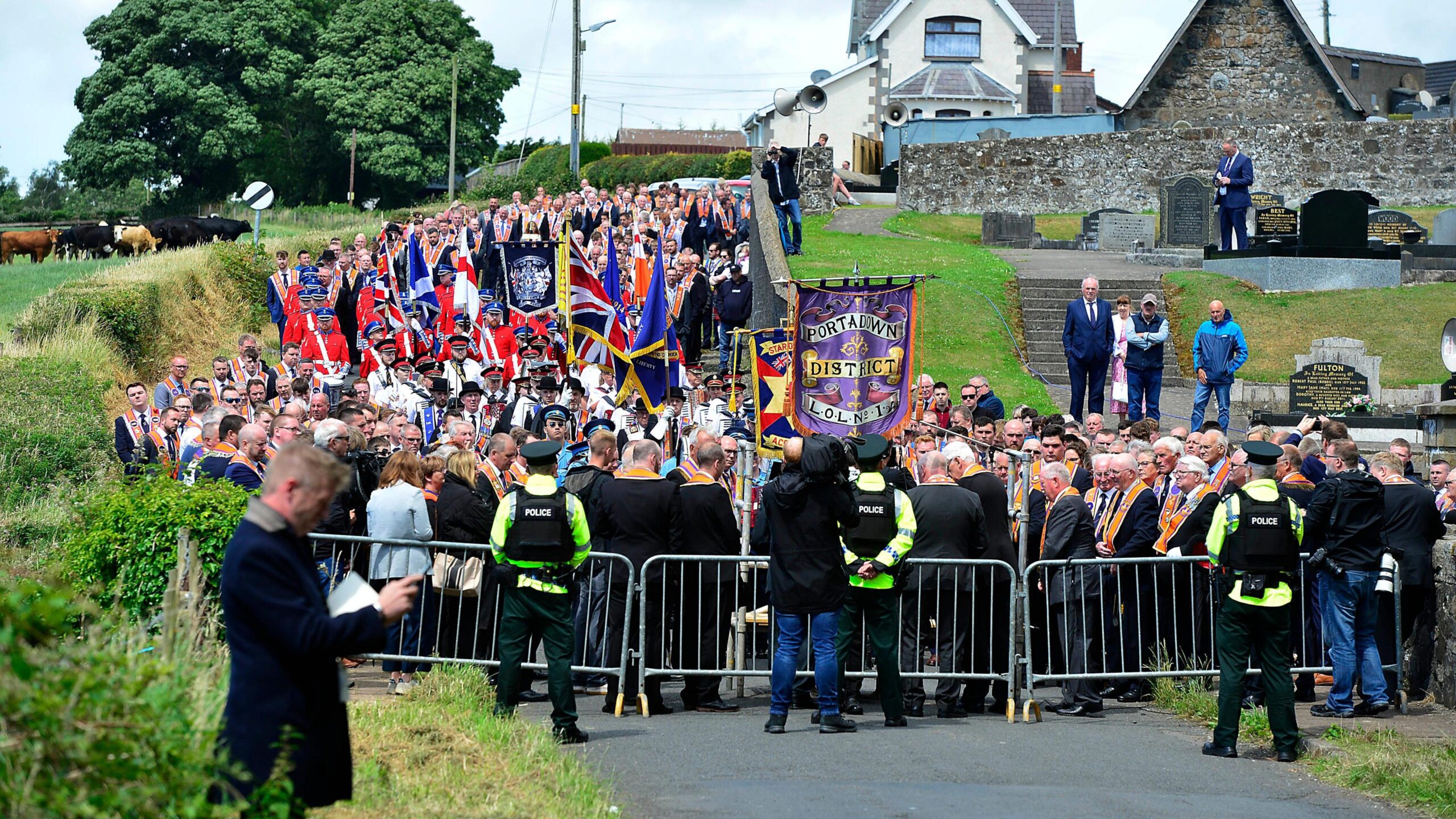
The Drumcree parade, which in the 1990s sparked some of the most serious disorder in Northern Ireland’s history, was due to go ahead for the first time in 30 years following a series of late legal challenges.
Northern Ireland’s First Minister Michelle O’Neill joined the protesters, while members of the Orange Order and Democratic Unionist Party (DUP) politicians gathered about a mile away, waiting for the road to clear.
Most of the protesters have since dispersed, but some members of the Order remain and still intend to march.
Since 1998, the Order had been banned from completing its Dumcree march – and until this year had been repeatedly refused permission to finish the route by the Parades Commission, which was set up to adjudicate disputes.
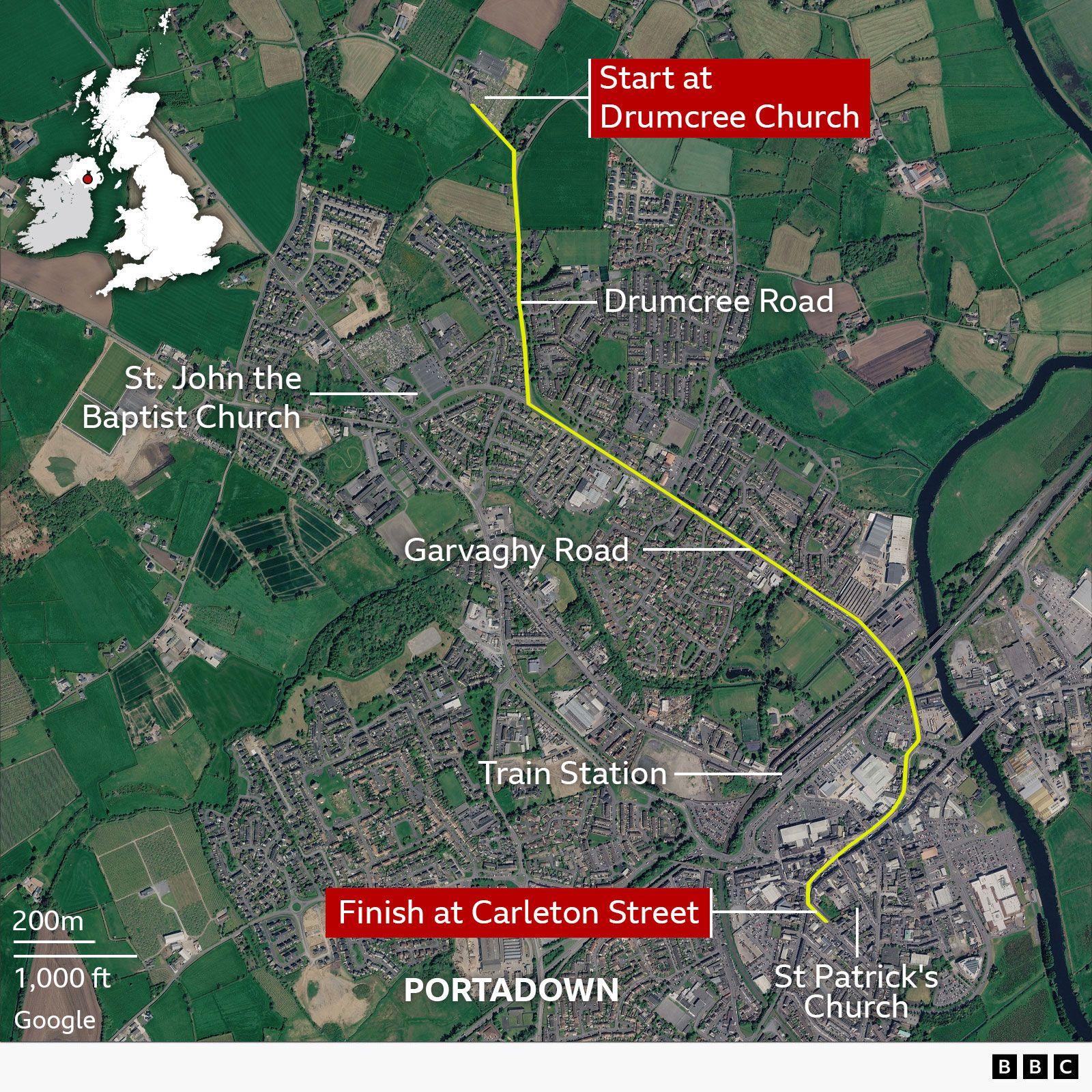
The Orange Order is a Protestant pro-British organisation, while the area where it wants to walk – specifically along the Garvaghy Road – is largely Catholic and predominantly inhabited by pro-Irish nationalists.
Many Catholics see the marches as sectarian and object to them passing through, or close to, Catholic or nationalist areas.
-
Orange Order march row goes to heart of ongoing divisions in Northern Ireland
-
Published12 hours ago
-
-
What is the Garvaghy Road dispute all about?
-
Published2 days ago
-
Late on Sunday night, the Order’s local deputy district master said he was “disappointed and frustrated” by what he called a lack of a “proper policing plan” to allow the march to go ahead.
Nigel Dawson, who remains at Dumcree Parish Church, insisted the Order would “complete our 1998 parade, which we set out this morning to do”.
Asked if the 35 Orange Order members would consider going home for the night, he told BBC News NI: “Absolutely and unequivocally no.”
Breandán Mac Cionnaith, from the Garvaghy Road Residents Coalition (GRRC) which was protesting the march, said: “We said they weren’t getting down and we stopped them getting down.”
Addressing protesters as they cleared the area on Sunday night, he said their goal now was to “make sure we stop them permanently”.
He also asked some residents to remain on the streets, saying he thinks the stand-off is going to “drag on for a while”.
Mac Cionnaith said they will meet the Police Service of Northern Ireland (PSNI) chief constable and the Northern Ireland secretary on Monday.
He told BBC News NI “we’re going to sit down and see how this can be avoided so this community doesn’t have to go through this ever again”.
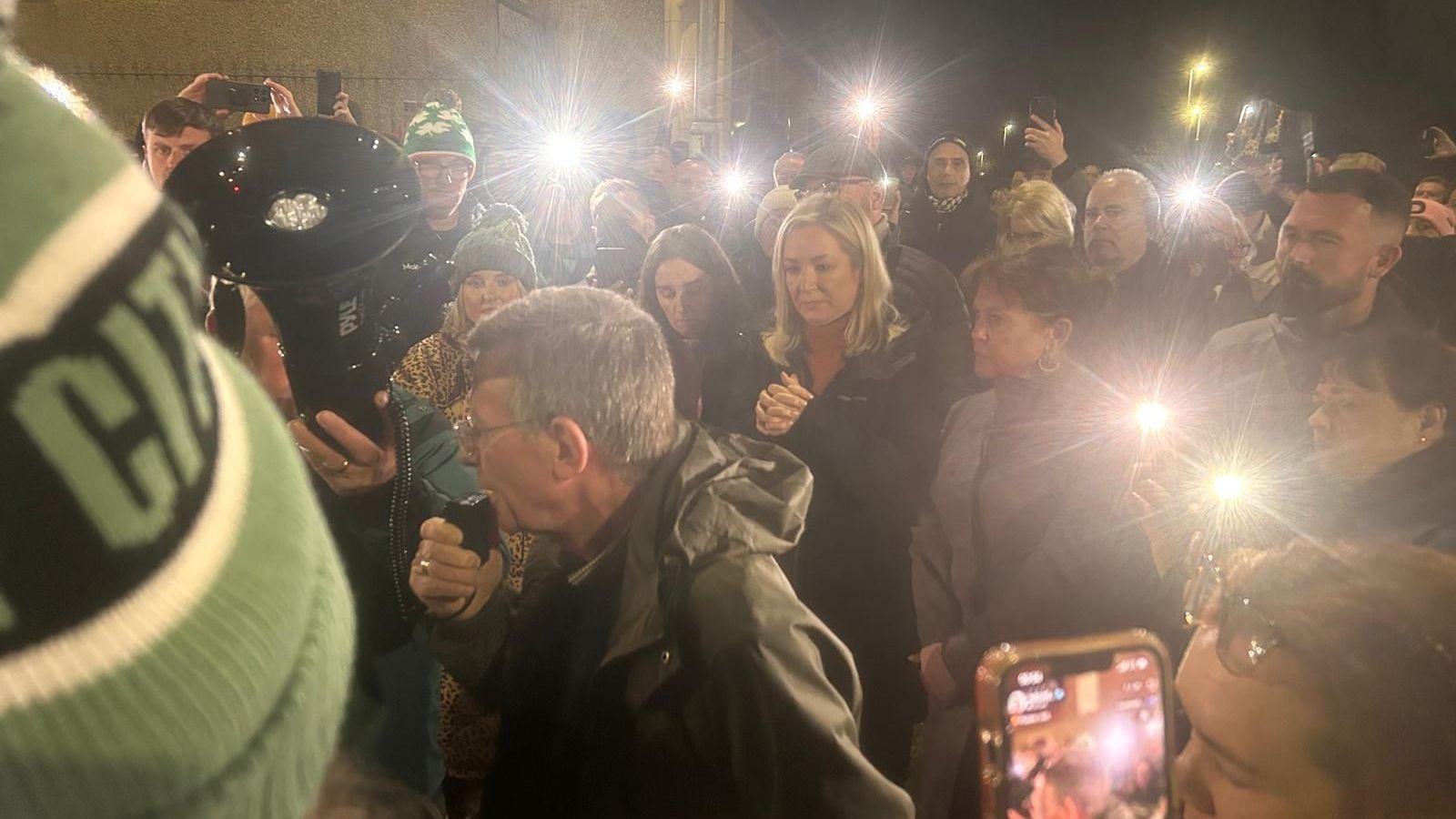
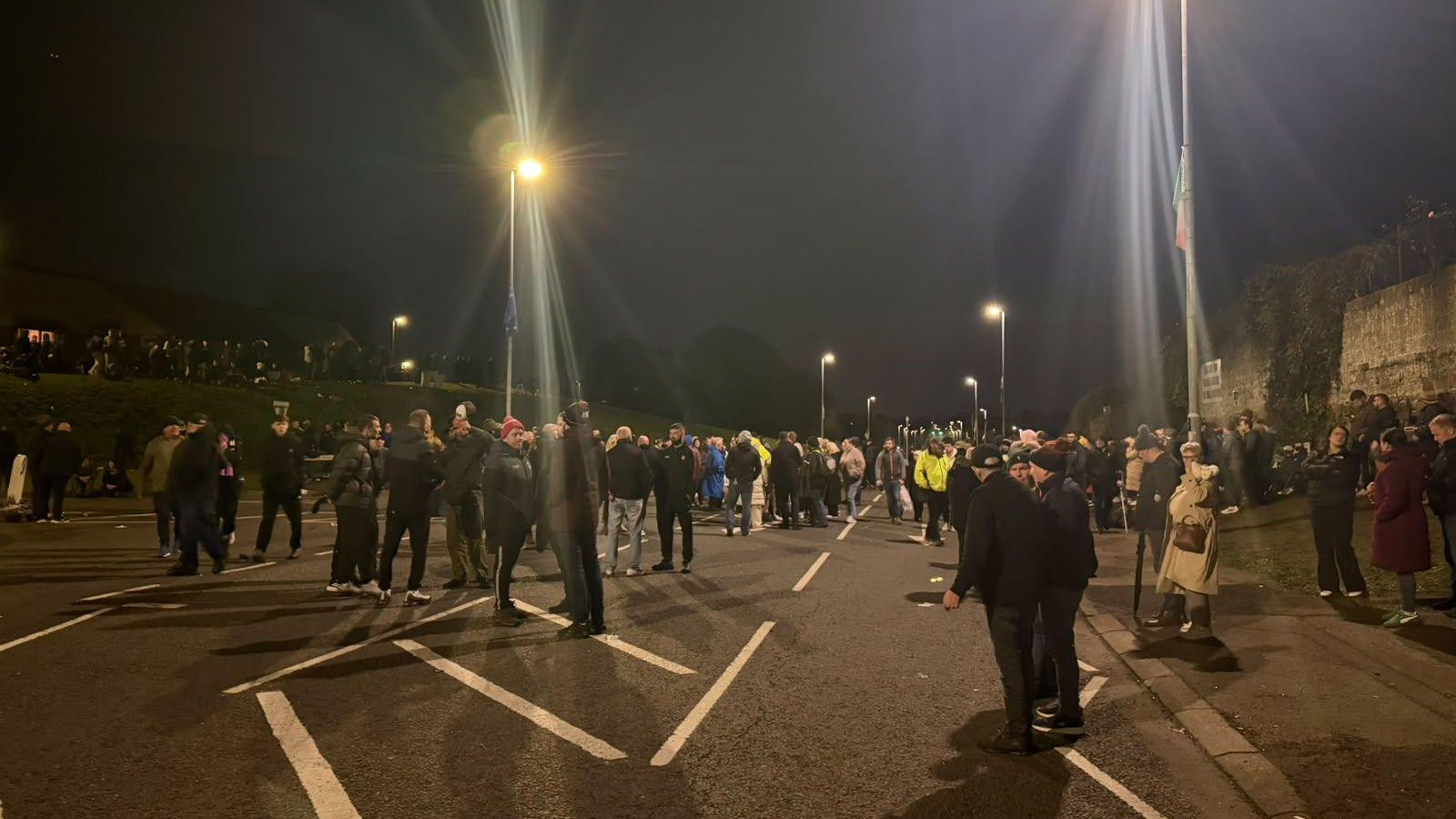
Protesters started gathering on the Garvaghy Road in the early hours of Sunday, after the march was given the go ahead.
Dozens of armoured police vehicles arrived later, with officers calling on protesters to clear the route.
The march was meant to begin no later than 08:00 BST, but police told the Orange Order that the road was not clear to begin.
Northern Ireland’s First Minister Michelle O’Neill, who had joined protesters, said the Garvaghy Road community had won a “victory”.
“This community do not want this, they do not want this march,” she said shortly after midnight on Monday morning.
“And tonight, I believe, is another victory for this community in standing steadfast for the right to live free from sectarian harassment and intimidation.”
Earlier, she had urged protesters to stay on the road until at least midnight.
DUP leader Gavin Robinson said O’Neill was breaking the law by protesting, and had “broken her pledge of office”.
Speaking earlier on Sunday, he said “it is shameful that we see on the streets of Portadown, a first minister, a collection of ministers and series of elected representatives who are participating in an unlawful protest”.
Sinn Féin has been contacted for comment.
‘We haven’t got a solution yet’
Northern Ireland Secretary Sir Chris Bryant, who returned from the Labour Party conference for talks, urged both sides to “double down on compromise”.
He said “nobody should be attending an unlawful protest”, but he added it was not his job “to decide whether somebody has or hasn’t broken the law”.
Sir Chris met politicians from the DUP, the Alliance Party, the Ulster Unionist Party (UUP) and the Social Democratic and Labour Party (SDLP) on Sunday evening.
Sinn Féin said, while they had agreed to meet, the form did not suit the secretary of state. Sir Chris said he had been in discussions with the party’s vice president, O’Neill, on Sunday evening.
Sir Chris said “there are a few ideas around” about how to move forward, but that “we haven’t got a solution yet”.
Earlier on Sunday, Prime Minister Andy Burnham appealed for “calm on all sides”, saying there have been “big gains made in Northern Ireland, and we don’t want to see things go backwards”.
Taoiseach (Irish prime minister) Micheál Martin also appealed for calm, but he said he found the original decision by the Parades Commission to approve the march “incomprehensible and wrong”.
Speaking to reporters on Sunday morning, First Minister Michelle O’Neill had questioned the decision making of the Parades Commission and called on the Northern Ireland Secretary Sir Chris Bryant to intervene in the parade dispute.
Asked if she thought Stormont could collapse over Drumcree, she said: “The progress of the last 28 years have been brought into question by the actions of the Orange Order and those within political unionism that want to drag us backwards.
“What’s the point? What’s the point whenever people are going to railroad over their rights?”
DUP MP Carla Lockhart said the first minister was “whipping up hysteria” at an unlawful protest.
She called O’Neill’s comments “outrageous” and the protesters a “rabble”.
“The law is on our side,” she said. “They’re afraid of 35 men, walking down a road silently.”
She later warned of “profound” consequences if the Parade Commission’s determination is not upheld.
The SDLP leader Claire Hanna called for “political leadership” and said it was “necessary to de-escalate”.
Hanna, who was at the protest, has called on the chief constable and Northern Ireland secretary to “use every power available” to intervene, and said she had reminded both that they had the “ability to revoke any permission for this parade”.
Following talks at Hillsborough, her party called for an international mediator to help resolve the dispute, with Sir Chris saying he is “giving consideration to anything that anybody comes up with”.
He said he is determined to keep on working and talking with people, but added that “we haven’t got a solution yet”.
Also speaking after the meeting, UUP leader Jon Burrows said the rule of law needed to apply to “everyone”, and that Stormont has been “put under threat”.
“It is vital that everyone obeys the law. I don’t care who that is. I don’t care how senior you are. The law applies to everyone. It cannot be enforced basically on the basis of it might be politically inconvenient,” he added.
Speaking to the media at Waterfront Hall, where she attended a National Police Memorial Day event, the Justice Minister Naomi Long said there was a “predictability about all of this” adding that this was an “entirely avoidable conflict”.
The Alliance Party leader urged the dispute to be “pulled back from the brink”.
Long said there was “there was no need to drag us back towards the past” and, irrespective of the decision made, she said public representatives must “respect the rule of law”, adding that it was up to the PSNI chief constable to decide if the law has been broken.
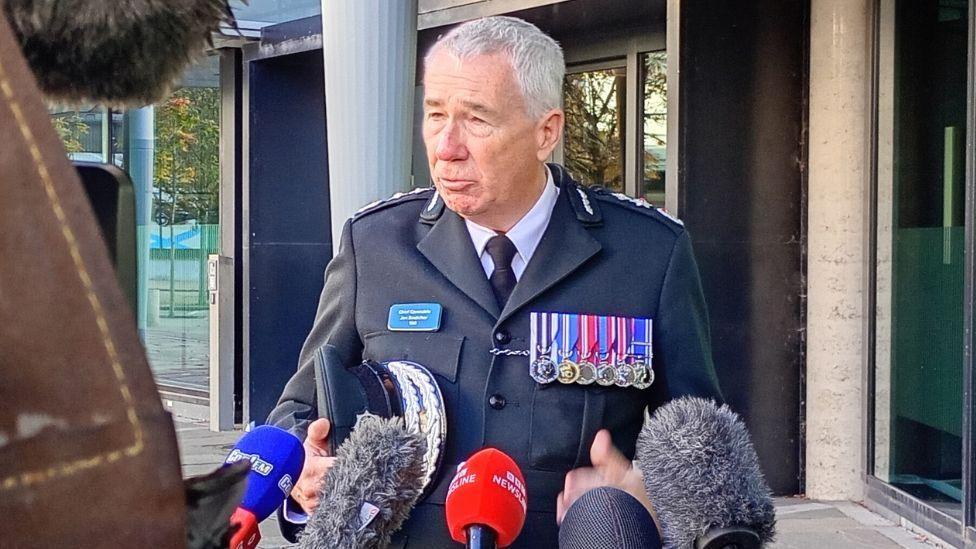
Chief Constable Jon Boutcher said the policing operation “helped ensure there has been no violence or disorder”.
The last 24 hours have been “very challenging for our people”, he later told reporters at the Waterfront, adding that the police have been “evidence gathering”.
“So whatever’s been happening, by whatever party, we’ve been gathering the evidence of what they’ve been doing,” he said. “So we’ll deal with that at the right time.”
He added he wants everybody to find “a place that they can, with dignity, walk away from the current situation”, and said the policing response will remain “proportionate”.
Boutcher said a successful conclusion to the situation would be that “not one hair on one head gets harmed”, but added there needs to be a “longer-term conversation”.
On Friday, the Parades Commission said the march could go ahead along Garvaghy Road.
Rather than start at 13:00 on Sunday as intended, the commission said it could begin no later than 08:00 and with 35 participants rather than the 60 the Orange Order requested.
But an initial legal challenge from the Garvaghy Road Residents’ Coalition (GRRC) at the High Court saw a judge issue an injunction banning the parade, with Judge Patricia Smyth saying the “long-running dispute has the potential to escalate within Northern Ireland”.
This was later successfully challenged by an Orange Order member at the Court of Appeal.
Late on Saturday evening, the GRRC was given permission to challenge that decision at the High Court – an appeal which was dismissed by Justice Humphreys.
In a hearing concluding at 02:15 BST on Sunday morning, Justice Humphreys acknowledged the “unusual if not unprecedented circumstances… with a parade due to begin in just over six hours’ time”.
Delivering his judgement, he said: “This court cannot substitute its own view or anyone else’s view for that of the commission.”
Northern Ireland’s most senior judge, Lady Chief Justice Siobhan Keegan, similarly described the situation as “unprecedented”.
What is the Garvaghy Road dispute all about?
The Orange Order, the most prominent of the loyal orders associated with Protestants in Northern Ireland, holds thousands of parades every year and the vast majority pass off without incident.
However, many Catholics see the marches as sectarian and object to them passing through, or close to, Catholic or nationalist areas.
The Garvaghy Road had been part of the Drumcree route, but by the mid 1990s nationalist residents protested against the parade.
When the Orange Order was prevented by police from walking down the route in July 1995, there was a tense stand-off. It was the same for the next three years.
Violence related to the dispute resulted in riots, roadblocks and murders across Northern Ireland.
In 1998, the newly-established Parades Commission ruled that the Orange Order should not march down the road – a decision upheld until Friday.
-
-
Published4 days ago
-
-
-
Published5 days ago

-
-
-
Published25 August
-