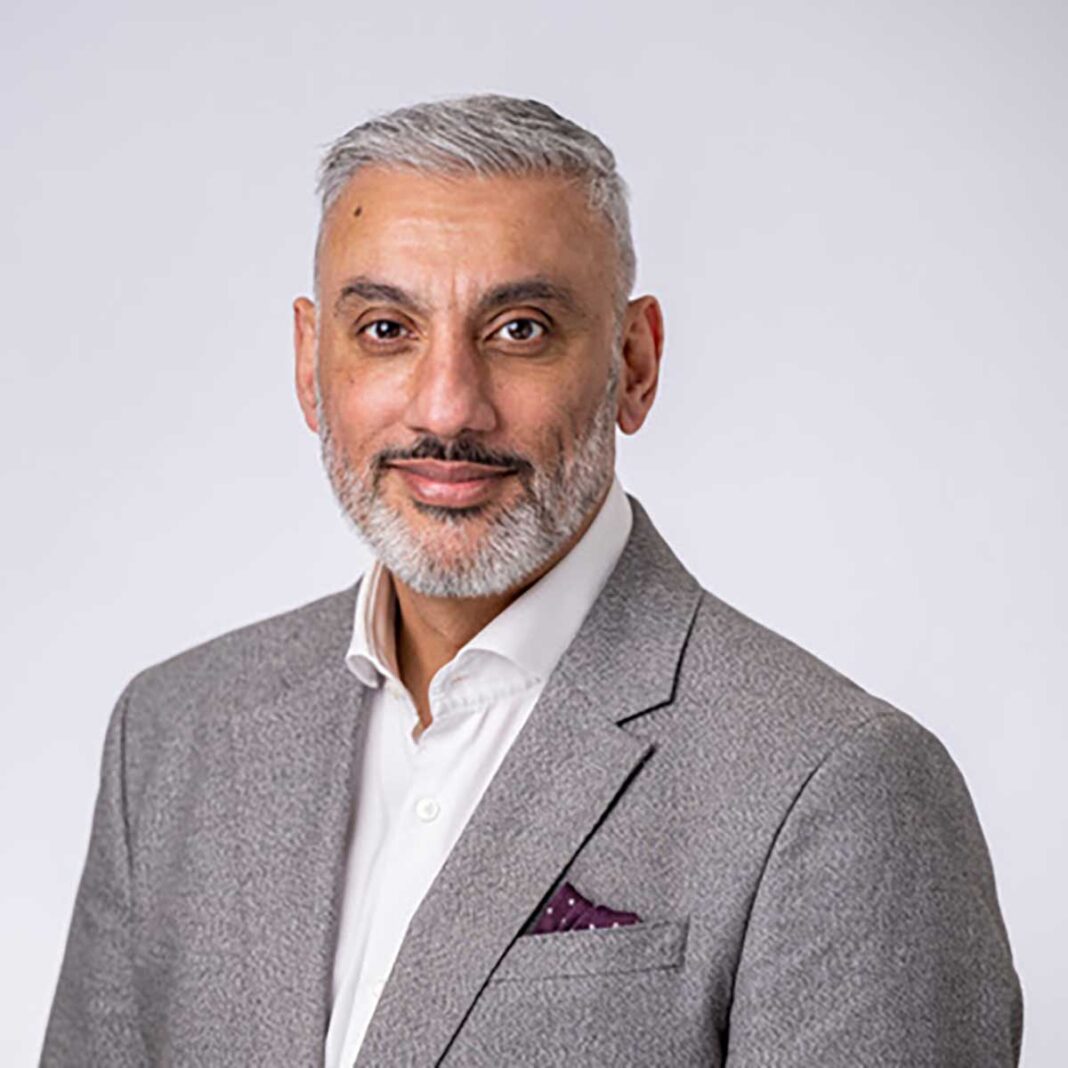

Tanweer Khan is the founder and chief executive of Causee, a UK online marketplace for second-hand goods that charges sellers no commission and gives its surplus profits to charity.
The platform opened in beta on 1 September 2026, with the Malawi schools charity Pepala, which has delivered more than 120,000 donated books, stationery and school supplies, as its first charity partner. He tells Business Matters why a background in financial markets led him to redesign where a marketplace’s value goes.
What do you currently do at Causee?
I am the founder of Causee, a new not-for-profit online marketplace that lets people buy and sell items while the platform supports good causes. The idea behind the business is simple: sellers keep 100 per cent of their sale price, while buyers pay a small protection fee. After the platform costs, Causee’s distributable profits support charities chosen by our community.
My job is not just to build this marketplace, but also to prove that a marketplace can operate successfully with a different purpose. Looking at the role more granularly, I get stuck into whatever needs doing. Causee only launched its beta marketplace on 1 September, so we are still very much at the beginning of the journey.
I can spend part of the morning discussing technology and product development, another part looking at shipping and payments, then speak with charities, respond to sellers, look at marketing, or work through the next stage of our strategy. Being this close to everything is incredibly valuable at this stage. You learn far more from a seller telling you why something is frustrating than you ever could from looking at a spreadsheet.
What was the inspiration behind your business?
My background is largely in financial markets, so I have spent much of my career thinking about markets, capital, incentives and how economic systems work. Causee is obviously very different from investment banking, but the underlying question is not entirely different: can you design a system where everyone has a reason to participate, while the cumulative outcome becomes greater than the individual transactions that created it?
Millions of people already buy and sell second-hand goods online, and what interested me was whether we could take that existing behaviour and economic activity and change where some of the value ultimately goes.
Normally, a marketplace brings buyers and sellers together, and the value created for the platform ultimately benefits its owners or shareholders. There is nothing inherently wrong with that model, but I wondered whether there was another way. What if sellers could keep everything they earned from selling an item, while the platform used the value generated through millions of relatively small transactions to help fund good causes?
One of the things that crystallised the idea for me was seeing how relatively modest sums can make a very tangible difference. Our launch charity partner, Pepala, provides schoolbags to children in Malawi for roughly £1 each. That changes your perspective on what constitutes a meaningful amount of money.
A few pence or pounds generated through an individual transaction may not sound transformational, but multiply that across thousands, and eventually millions, of transactions and suddenly those small actions can collectively become very significant.
Who do you admire?
I have always admired people who give something back to society, particularly when they do it without expecting recognition or reward.
One person I have always had a lot of respect for is Abdul Sattar Edhi. He started with very little and went on to build an extraordinary charitable welfare network in Pakistan, providing ambulances, shelters, orphanages and other services to people regardless of their background, religion or ability to pay.
I also really admire people who manage to hold on to what they believe in, even when they face enormous setbacks. Nelson Mandela is an obvious example, because despite spending 27 years in prison, he continued to believe in what South Africa could ultimately become, which I think takes an extraordinary amount of resilience and conviction.
But it is not just famous people I admire. There is a lot to be said for the teacher who stays behind to help a child who is struggling, the volunteer giving up their evening at a food bank, or the person coaching a children’s football team at the weekend. Those things might seem small, but they make a real difference to people’s lives.
I suppose that is also part of what inspired me to build Causee. I like the idea that doing something good does not have to involve a grand gesture. Sometimes, it is lots of small contributions coming together that can achieve something much bigger.
Looking back, is there anything you would have done differently?
I think I would have accepted earlier that you cannot build the finished product before you launch, and I would spend less time worrying about whether everything was perfect.
In some ways, perfection at launch would worry me. If version one is perfect, version two has nowhere to go. If nothing breaks at the beginning, you probably have not learned enough to build what comes next.
Eventually, you have to put something in front of real people. We describe our current platform internally using the product-development analogy of starting with a skateboard rather than trying to build the finished car immediately.
Our beta is not the finished Causee I have in my head. There are features we want to improve, integrated shipping we are working on, and iOS and Android apps on the way. But launching now has taught us things that another six months sitting around a meeting table never could.
What defines your way of doing business?
It is all about aligning interests, where there is a clear understanding of what each person involved is getting out of an arrangement and a genuine reason for them to want to be part of it.
For sellers, that means giving them a reason to use us, which is why we do not charge commission and they get to keep 100 per cent of their sale price. For buyers, it is about having good products at sensible prices, with the right protections in place and an experience that gets easier over time.
For charities, it means meaningful, sustainable financial support, rather than warm words or just being part of a nice story about doing good. And Causee itself needs to be financially sustainable, because however worthwhile the social mission, it is difficult to achieve much in the long term if the underlying economic model does not work.
The same principle applies to people. Give somebody genuine responsibility, listen to their ideas and give them the freedom to solve problems, and something interesting happens: they become invested in making things better. It stops being simply your problem that they are being paid to work on and starts becoming something they want to improve themselves.
I also believe very strongly in listening to customers. When somebody takes the trouble to write to us explaining that a button is not where they expected it to be or that listing an item took too long, they have effectively given us free product research. I want us to retain that as we grow.
What advice would you give to someone starting out?
Just start. It sounds ridiculously simple, but I think a surprising number of potentially good businesses never get beyond the planning stage. And before you start building, be very clear about the problem you are trying to solve and ask whether what you are planning is genuinely better than what already exists. It does not have to be better at everything, but there needs to be something.
With Causee, we are not pretending that we invented the online marketplace. What we are focused on is disrupting the business model itself and, in turn, changing the emotional experience of using marketplaces.
Selling something can feel good because you have made some money and given an item another life. Buying something can feel good because you have found something you wanted. Causee asks whether that same transaction can create a third feeling: that simply by doing something you were going to do anyway, you have contributed in a small way to something positive. That is our dimension, and I think every founder needs to know theirs.
Also, know why you are doing it. Money can certainly be a motivation, but having a purpose beyond that gives you considerably more resilience. For me, the exciting thing about Causee is imagining what happens if the model works at scale.