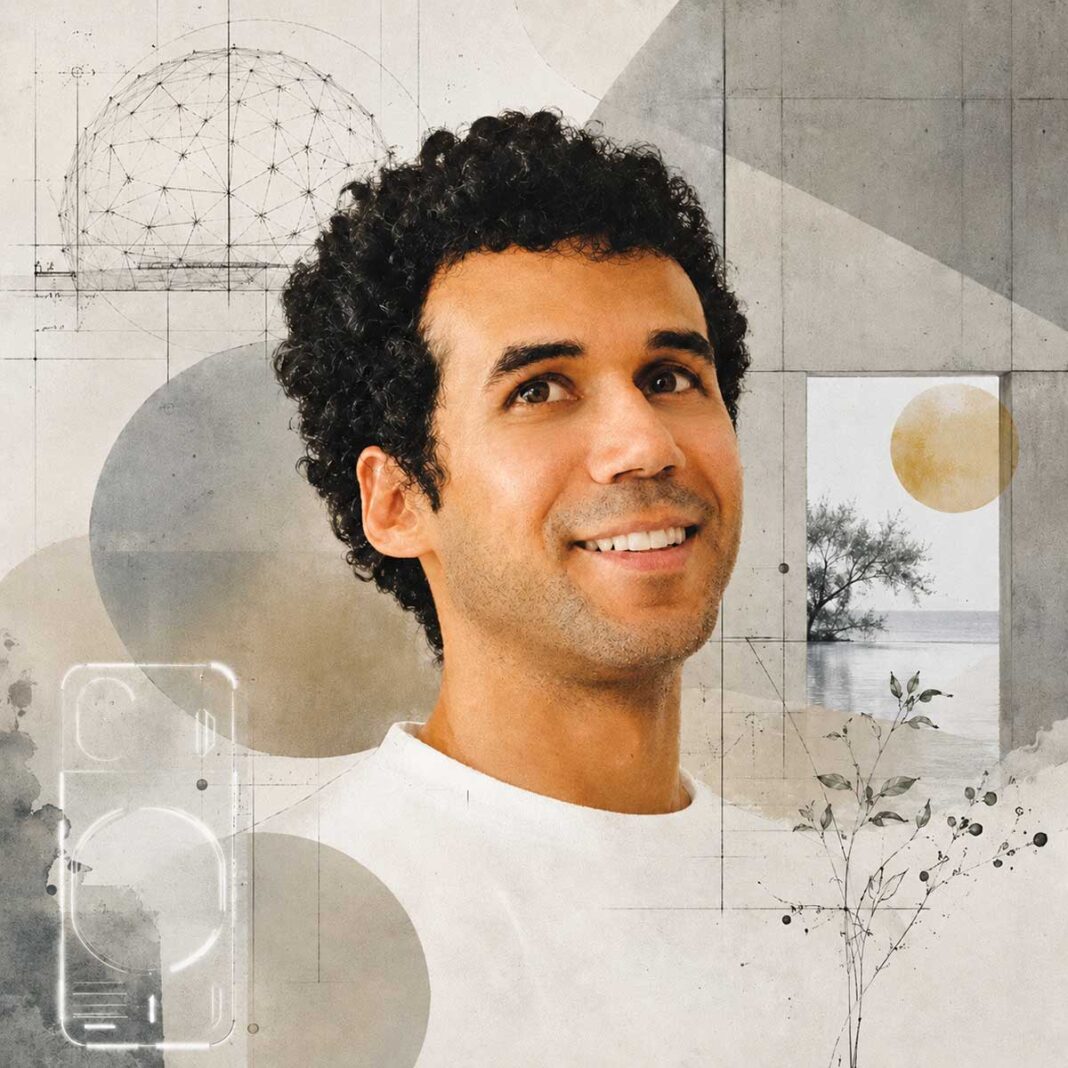

Its first three “worlds”, covering saunas, speciality coffee and laptop-friendly workspaces, are already live on the web. He tells Business Matters why conventional maps hide so much, and why founders should share ideas early.
What do you currently do at Hypermaps?
I am a co-founder and Chief Ecosystem Officer of Hypermaps. We are building a new kind of mapping platform for communities that care deeply about particular types of places.
We are still at the zero-to-one stage, so my role is wide: product development, research, partnerships and, increasingly, building the ecosystem around the product. At the moment there are two co-founders and a small group of remote collaborators, so we are very close to both the technology and the people we are building it for.
Our starting point is what I call “worlds”: communities that see places through a particular lens. In London, for example, we are working with people who know saunas and wellness spaces, speciality coffee shops, and places that are genuinely good to work from.
Each of these communities evaluates a place differently. A serious coffee person notices the beans, the equipment and the skill of the barista. Someone looking for a place to work notices noise, seating, plug sockets and whether spending three hours with a laptop is actually socially acceptable.
My job is to work with those people to turn their tacit knowledge into useful place data and products. On the other side, we are exploring how that richer data can become useful to businesses: from venue operators deciding where to open their next location to researchers trying to understand how different groups use a city.
So a lot of what I currently do is go out into the world, talk to people who really know their domain, prototype something with them, see what survives contact with reality, and then change the product accordingly.
What was the inspiration behind your business?
My background sits between software engineering and urban planning, so I have always been interested in the relationship between digital systems and physical places.
The inspiration for Hypermaps came from a fairly simple observation: maps have become incredibly good at telling us what exists, but they are still quite poor at telling us what a place means to a particular person. Google Maps and Apple Maps are extraordinary pieces of infrastructure, but the basic consumer map has not fundamentally changed to reflect just how differently people now navigate the world.
A parent with a young child experiences a city differently from a digital nomad. Someone using a wheelchair needs to know things most people never notice. A coffee enthusiast, an architecture photographer, a cyclist, someone avoiding gluten and someone looking for a quiet place to read can stand on exactly the same street but need a completely different set of directions. Yet they still use the same map.
That led us to the idea behind Hypermaps: instead of one universal map pretending to be equally useful to everyone, what if communities could build their own maps of the world, with their own criteria, knowledge and standards?
Ultimately, I think places have many dimensions that conventional maps make invisible. Hypermaps is an attempt to make more of those dimensions visible.
Who do you admire?
The first person who comes to mind is Jack Dorsey.
Before Twitter, he was fascinated by cities, maps and dispatch systems. He taught himself programming partly to visualise what was happening across a city: taxis, couriers, ambulances and other moving parts reporting where they were and what they were doing. He has described eventually realising that this picture of the city was missing its most interesting layer: the people. That line of thinking eventually contributed to the idea behind Twitter.
I find that fascinating because it treats technology not simply as software on a screen, but as a way of perceiving a living city.
I also admire his willingness to pursue ideas that do not necessarily fit neatly into an existing category, and the contemplative side of his personality. He has practised Vipassana meditation extensively, which is unusual among prominent technology founders and something I personally relate to.
There is a tension in good entrepreneurship that I find interesting: you need enormous ambition, but you also need enough distance from your own ideas to observe reality clearly. The founders I admire most tend to have some version of both.
Looking back, is there anything you would have done differently?
I would have built the prototype earlier. I have a tendency to become fascinated by the architecture of a problem: how the whole system could eventually work, what the data model should be, what the long-term platform might become. That can be useful, particularly when you are trying to build something genuinely new, but it can also postpone the most important test: putting something in front of a real person.
With Hypermaps, I would have moved earlier from thinking about “the future of maps” to sitting down with one person who knows one particular type of place extremely well and asking: what would your perfect map contain?
I also would have embedded myself earlier in environments where people were experimenting intensely with new technology. Working from AI and founder-focused coworking spaces in London has reminded me how much faster you learn simply by being around people building things, exchanging tools and showing each other unfinished work.
The lesson for me has been that environment matters enormously. Sometimes the fastest way to change the trajectory of a company is not another strategy document; it is changing the room you are sitting in.
What defines your way of doing business?
Direct contact with reality. One principle I keep coming back to is: go into the world, see what is actually happening, and build from there.
That sounds obvious, but technology makes it increasingly easy to do the opposite. We can spend months looking at dashboards, generating strategy documents, talking to AI systems and debating abstractions without encountering the actual person or place we are trying to understand.
Hypermaps is literally about the physical world, so I want our company to have a culture of observation. Talk to the sauna enthusiast. Visit the venue and feel how the light and the acoustics affect your energy. Watch how somebody chooses a cafe, then ask them why they chose it today. Ask the owner about the story behind the place and the concept they want to portray.
Internally, we also experiment a lot with how we work. My co-founder and I have known each other for years but had never built a company together before, so we have treated our own working system almost like a product. We have experimented with remote work, living and working together, coworking spaces, different weekly rhythms and different ways of setting goals.
I do not believe there is one universally correct founder operating system. The important thing is to be honest about whether yours is actually producing good work.
What advice would you give to someone starting out?
Talk about your idea much earlier than feels comfortable.
Founders are often protective of early ideas because they worry that somebody will steal them. In my experience, that risk is dramatically overrated. Execution requires such a specific combination of motivation, knowledge, timing and persistence that hearing an idea is rarely enough to make somebody abandon their life and build it before you do.
I have been talking about versions of the Hypermaps idea for more than two years. Nobody has stolen it. What has happened instead is much more valuable: people have challenged parts of it, introduced me to others, suggested applications I had not considered and occasionally become collaborators themselves.
Pay particular attention when somebody becomes unusually animated by what you are building. That reaction is information.
You do not necessarily need to hire that person, but keep the relationship alive. Some of the most important people around a company can begin as somebody who simply said, “I love this idea, let me know when you get to this part.” Often, that means “when you can pay me”, and that is all right.
An early-stage company is partly a process of discovering not only the right product, but the right constellation of people around it.