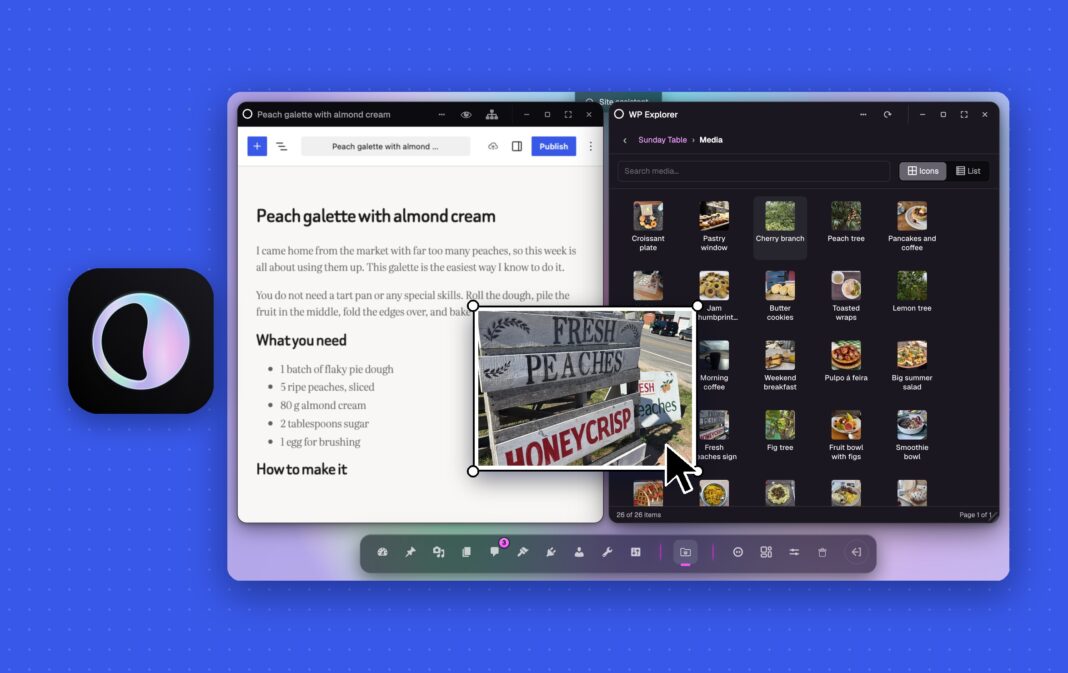

Imagine that you’re writing a new post when a reader asks a question about something you published yesterday.
In WP Admin, answering it means leaving the editor, and when you come back, you need to wait for the draft to load again.
With OpenStation, you can keep both open, side by side, in the same browser tab. The same goes for your media, your pages, and any other WP Admin screen.
It’s the same plugin that we introduced in June as Desktop Mode, now called OpenStation. Since then, we’ve redesigned the workspace, made it faster, and begun bringing the experience to phones.
Your WP Admin screens, side by side
Open a post, then open your media next to it. When you find the photo you want, drag it into the post.
The media picker in the editor works well for a single image. For a recipe with a photo for every step, keep your library open beside the draft instead of opening the picker again and again.
Photos on your computer work the same way. You can drag a few of them, or even a whole folder.
Preview your post while you write
Every post and page window has an eye icon at the top. Click it, and your draft moves to the left half of the screen while a preview opens on the right, showing how your visitors will see the post.
Keep writing. Every time you save, the preview updates, so you can check how a new title wraps or how a photo looks in your theme without switching tabs.
Come back to exactly where you were
Windows in OpenStation stay open until you close them. So, switching back to one is instant.
We compared navigation times in OpenStation and classic WP Admin. In the classic WP Admin, going back to a screen you had left a moment earlier took between 2.4 and 3.7 seconds. In OpenStation, there was nothing to load.
Your layout is saved too. Close the browser, come back again (even from another computer), and your windows will be right where you left them.
A desk for each job
Some days are for writing. Others are for answering comments or sorting through photos. Workspaces give each of those jobs its own desk, so you can focus more easily on the right task.
Jump between workspaces from the dock or with the arrow keys (nothing closes when you switch to another workspace).
Make it look like yours
Pick a wallpaper, or use one of your own photos. Change the accent color, move the dock to the left or right side of the screen, or enlarge it.
You’ll find all of it in System -> OpenStation Preferences → Appearance.
Use it as an app on your phone
You can install OpenStation on your phone via the System -> Install web app option in the dock.
The phone layout is still experimental, so we’d love to hear in the comments or our OpenStation support forum how it works for you.
Why the new name?
Desktop mode is best known as a setting in mobile browsers, so searching for it mostly turned up browser help pages.
The plugin had also grown past the idea of a mode you switch on. It’s closer to a workstation for your WordPress site, and it’s open source, so we called it OpenStation.
If you already use Desktop Mode, you don’t have to do anything. It’s the same plugin; it keeps updating as usual, and your windows and settings are still there.
Your site stays the same
OpenStation changes how WP Admin looks only for the people who turn it on. Visitors see your site as they always have. If you deactivate the plugin, WP Admin goes back to the way it was.
OpenStation is open source. You can read the code on GitHub, and the team writes about what they’re building on the OpenStation blog.
Try OpenStation
On WordPress.com, you can install OpenStation on any paid plan.
- From your site’s dashboard, go to “Plugins“, search for “OpenStation,” and click the “Install and activate” button.
- Click the “Switch to OpenStation” link at the top right of the admin bar.

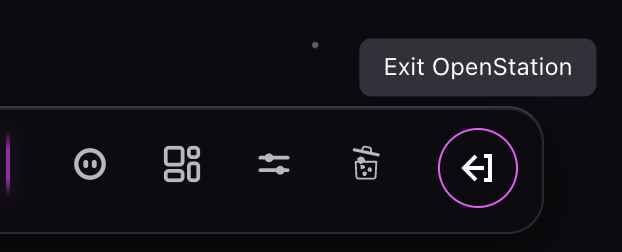
- To go back to the classic WP Admin, click the “Exit OpenStation” icon at the end of the dock.
Want to try it before installing anything? This live preview runs OpenStation in your browser, with nothing to install.
If something doesn’t work the way you expect, tell us in the OpenStation support forum or open an issue on GitHub.
Now you can go ahead and close a few tabs.