Art market watchers are hoping that Claude Monet will fuel a recovery in sales in this year’s important autumn auction season. The French painter, best known for his late-19th-century Impressionist works, died 100 years ago this December. To mark the occasion, a number of his paintings are appearing at auction in Paris, the city where Monet was born in 1840.
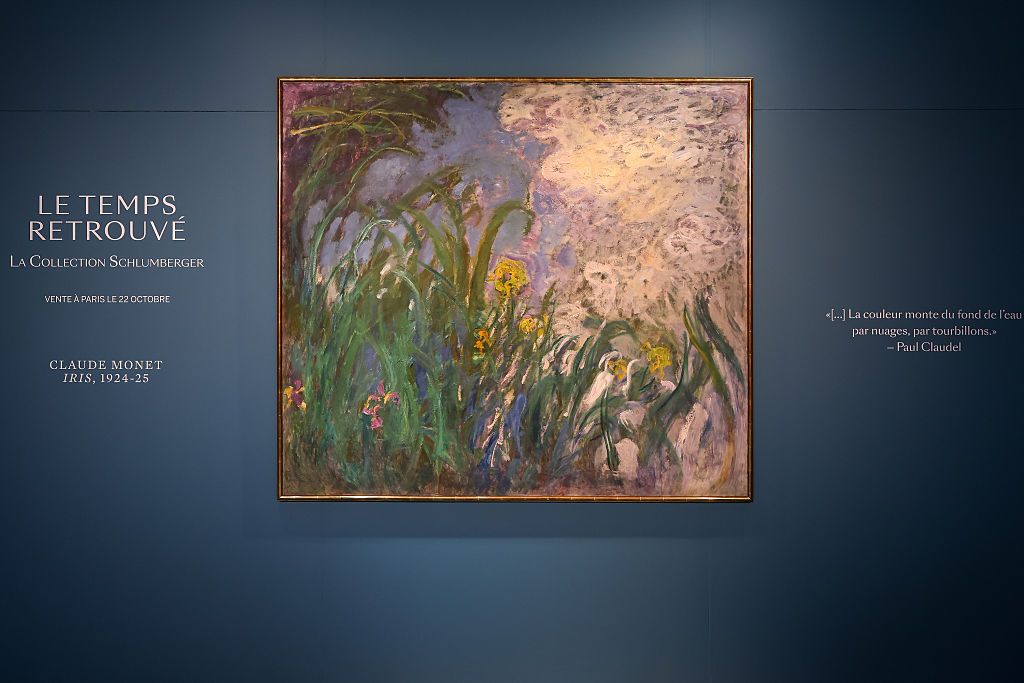
Fittingly, Sotheby’s is focusing on Monet’s late career, when the artist was working on a painting called Iris in his famously colourful garden in Giverny, Normandy, just a few months before he died. It is a large painting and one of only a few to reside outside the collection of a museum. That perhaps explains why its existence had only been known thanks to a black-and-white photograph – until now. Iris will lead Sotheby’s “Le Temps Retrouvé: The Schlumberger Collection” sale on 22 October, where it will appear alongside several other works assembled by collector Jeanne Schlumberger over four decades from the 1950s.
Monet’s Iris could fetch €30 million
Yet, it is not even its first public viewing that makes Iris so special. It’s what it tells us about the development of Monet as a painter. It doesn’t so much represent the “final chapters of Impressionism,” says Sotheby’s, as it does “the opening pages of Modernism and Abstraction” – artistic styles that Monet had begun to explore in the mid-1920s. It’s little wonder, then, that Iris has been given an upper pre-sale estimate of €30 million – the highest ever bestowed on a painting at auction in France. A second late-career Monet is also appearing in the sale – Saule pleureur (Weeping willow), painted in 1918-1919 and valued at up to €12 million.
Try 6 free issues of MoneyWeek today
Get unparalleled financial insight, analysis and expert opinion you can profit from.
Start your trial
Sign up for MoneyWeek’s free twice-daily newsletter.
Join more than 165,000 subscribers and keep yourself informed with latest financial news, insights and expert analysis to help you understand what really matters when it comes to your finances.
Join more than 165,000 subscribers and keep yourself informed with latest financial news, insights and expert analysis to help you understand what really matters when it comes to your finances.
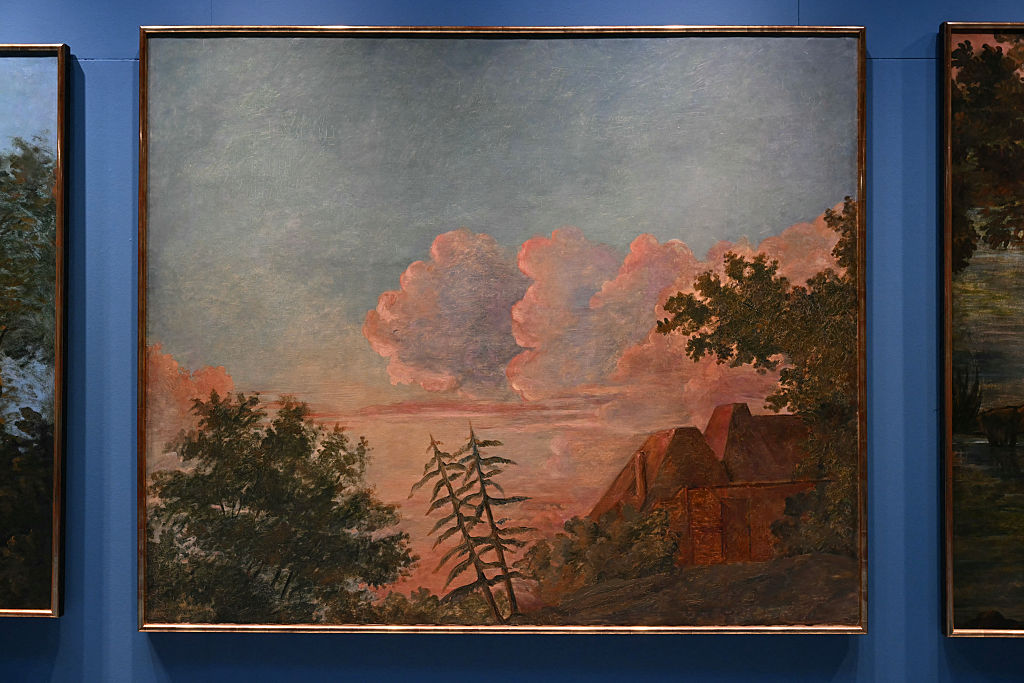
Beyond the Monets at Sotheby’s, highlights of the sale include La Ferme, Arbres au Bord de la Rivière and Ciel Entre les Arbres, all painted by a young Paul Cézanne in 1862-1864 as a single large mural at his home in Provence. The mural was later detached from the wall and transferred to canvases, including these three with upper estimates ranging from €600,000 to €800,000. As rare, early examples of Cézanne’s work, they have been designated Trésors nationaux – important works of major value to France’s cultural heritage.
Paul Cézanne’s La Ferme
(Image credit: LOU BENOIST / AFP via Getty Images)
Paris, however, is not quite done with Monet. Over at rival auction house Christie’s, also on 22 October, Monet’s Impressionist work Bord des falaises à Pourville (Edge of the Cliffs at Pourville) is leading the marquee sale of paintings from the collection of the revered 19th-century collector Paul Durand-Ruel, who was also Monet’s art dealer.
Painted during Monet’s stay in Pourville-sur-Mer in 1882, it “ranks among the artist’s most remarkable depictions of the Norman coast,” says Christie’s. It is expected to fetch in the region of €11 million to €15 million.
This article was first published in MoneyWeek’s magazine. Enjoy exclusive early access to news, opinion and analysis from our team of financial experts with a MoneyWeek subscription.