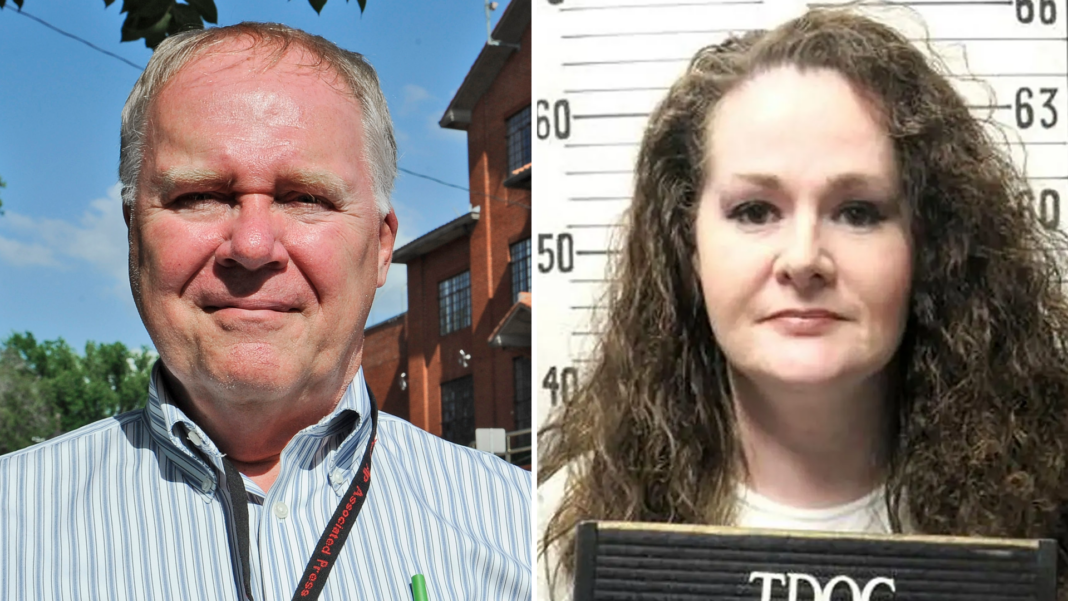

Christa Pike now walking after failed US execution, lawyer tells BBC
To play this video you need to enable JavaScript in your browser.
This video can not be played
-
Published
Christa Pike is “up and walking” though mentally “foggy” while in hospital after last week’s botched attempt to execute her in the US state of Tennessee, her legal team says.
Pike, 50, who was sentenced to death after murdering Colleen Slemmer with her then-boyfriend in 1995, survived two lethal injections on 30 September. Experts described it as unprecedented.
Speaking late on Wednesday to BBC Radio 4’s Today programme, lawyer Stephen Ferrell said he had not spoken to Pike directly but had learned her arms were swollen and barely functioning as she took her first steps around her hospital room.
A court has ordered state officials to preserve all evidence related to the failed execution.
That evidence could lay the groundwork for a future lawsuit against the state.
The Pike case is now in uncharted territory, as Pike is believed to be the only person to have survived an execution attempt by lethal injection.
The failed execution was branded a “mess” by the mother of Slemmer, who was among those pushing for Pike to be put to death.
Pike’s boyfriend at the time of Slemmer’s gruesome murder, Tadaryl Shipp, was spared the death penalty because he was not legally an adult when the crime was committed. He remains in prison.
Pike was 18 and Shipp was 17 when they beat, tortured and killed 19-year-old Slemmer, whom they had met at a job training camp for low-income young people.
-
How did Christa Pike survive two lethal injections?
-
Published6 hours ago
-
-
What happens next in the Pike case?
-
Published7 hours ago
-
In their previous updates on Pike’s condition after the attempted execution, her team had said she was awake and speaking, and experiencing anger and confusion. She was said at that stage to be handcuffed to her bed.
Her lawyer Randy Spivey said after Wednesday’s court hearing: “She cannot move either of her arms.” He added: “Both of her arms and hands are tremendously swollen, and we do not know what if any function she will regain in her arms.”
In the later updates, given on Wednesday to the BBC, Ferrell said Pike was continuing to experience the after-effects of the drug pentobarbital.
The drug was injected into her body in two doses by prison staff during the scheduled execution on 30 September. But once it became clear that Pike was not going to die from the execution attempt, she was taken to hospital, where she was initially unconscious and declared to be in a critical condition.
As of late on Wednesday, though, Pike was “fairly well”, Ferrell said.
“What’s been described to me is that physically there’s quite a bit going on, that her arms are very injured and she’s not able to use them very much.”
Of her physical movements, Ferrell added: “She is up and walking for the first time today, but just around the room, not very far.”
Turning to her mental state, he said: “I think it’s kind of good and bad. Good that she is fairly with it, but she’s also somewhat foggy. She can lose her train of thought really easily and forgets where she’s going.”
Ferrell said much remained unknown about what happens next. “I assume [the situation for Pike] will keep improving, but there could be some permanent damage. We don’t know that yet.”
He added that the team wanted Pike to receive psychological support, since that “clearly is necessary now”.
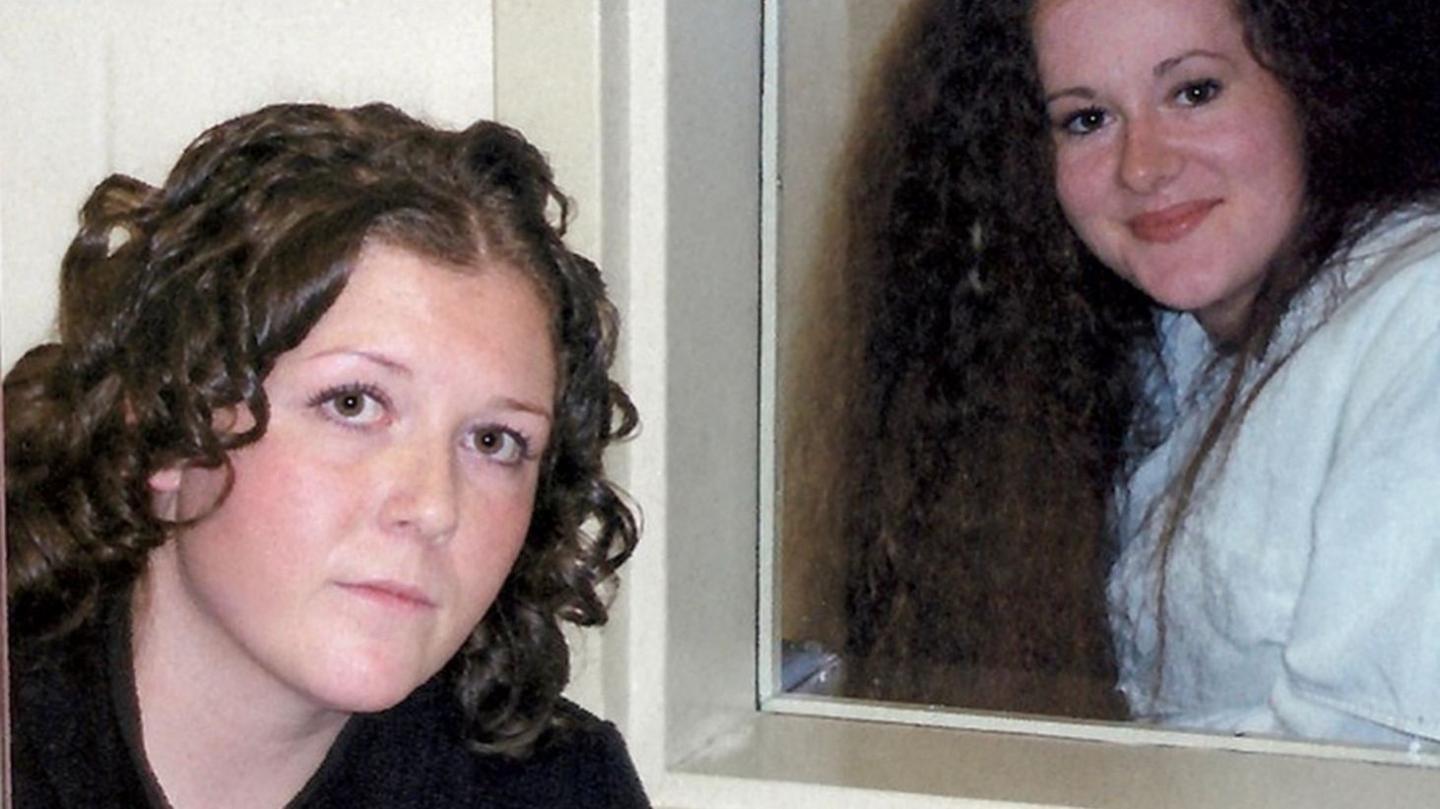
 Image source, Family handout
Ferrell and his colleagues – who highlighted ahead of the attempted execution that Pike had a condition that would make the injection method difficult – oppose any new attempt by state prison authorities to follow the same approach.
They are also calling on the state governor, Bill Lee, to downgrade Pike’s punishment to the lesser sentence of life in prison without parole.
Meanwhile, Tennessee’s proponents of capital punishment have suggested that a different method be used. Senator Marsha Blackburn, the Republican candidate for state governor in next month’s election, said: “Bring back the electric chair.”
Asked during a court hearing on Wednesday whether the state intended to reschedule Pike’s execution, the state’s attorney general said he did not know.
For now, Tennessee Governor Bill Lee has ordered a pause on all executions in the state for the rest of the year, and has said he wants answers about what went wrong. The state’s prisons chief is resigning after the failed execution.
Wednesday’s court hearing related to the preservation of evidence following the first attempt.
The judge, I’Ashea Myles, ordered that “anything that was in the actual room needs to be preserved and maintained,” including IV lines and syringes, as well as waste, like packaging, inserts, and labels.
The judge also demanded documentation on Pike’s psychological condition prior to, during and after the 30 September execution attempt.
She advised the state to take “special care” not to misplace or accidentally delete any information that may be pertinent to the case.
Correction 8 October: This article originally said that Pike and her boyfriend had first met Colleen Slemmer at a job training camp for “troubled teens”. This has been amended to make clear that the scheme was for low-income youths aged 16 to 24 and was not specifically for troubled teenagers.
Killing Death Row
Could the US death penalty ever die out? A surreal story about a man in Acton, London, who supplied the USA with lethal drugs tips Livvy Haydock into the macabre world of Death Row.
-
-
Published6 days ago
-
-
-
Published5 days ago
-