
Burnham to push for new post-Brexit deals at EU summit
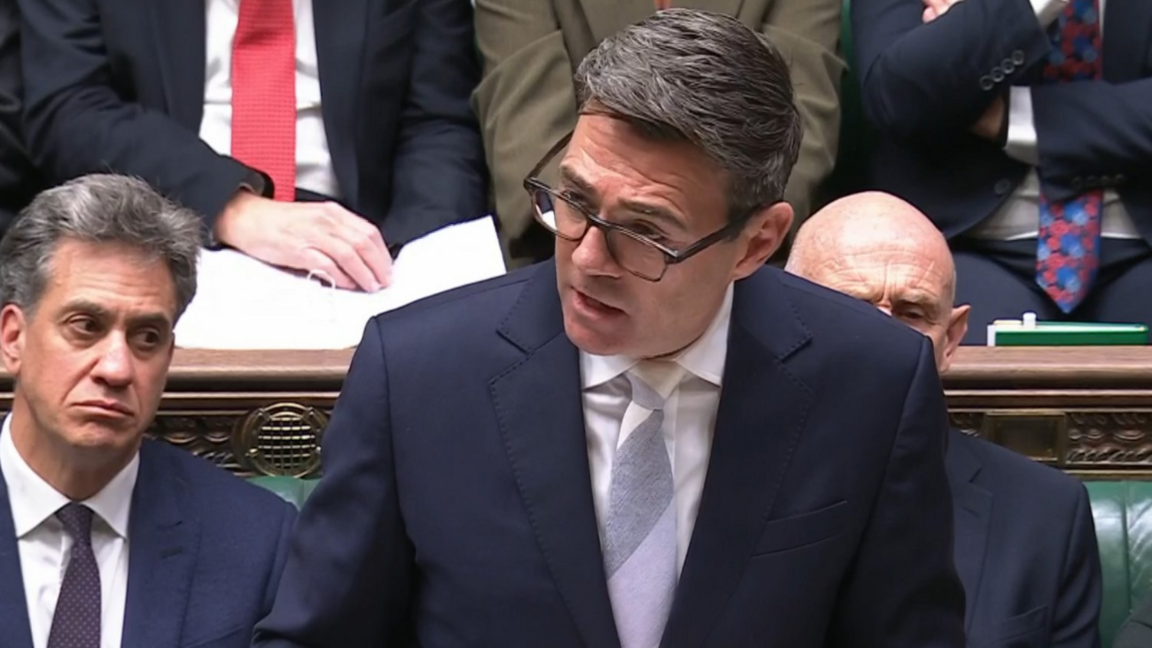 Image source, UK Parliament/PA
-
Published
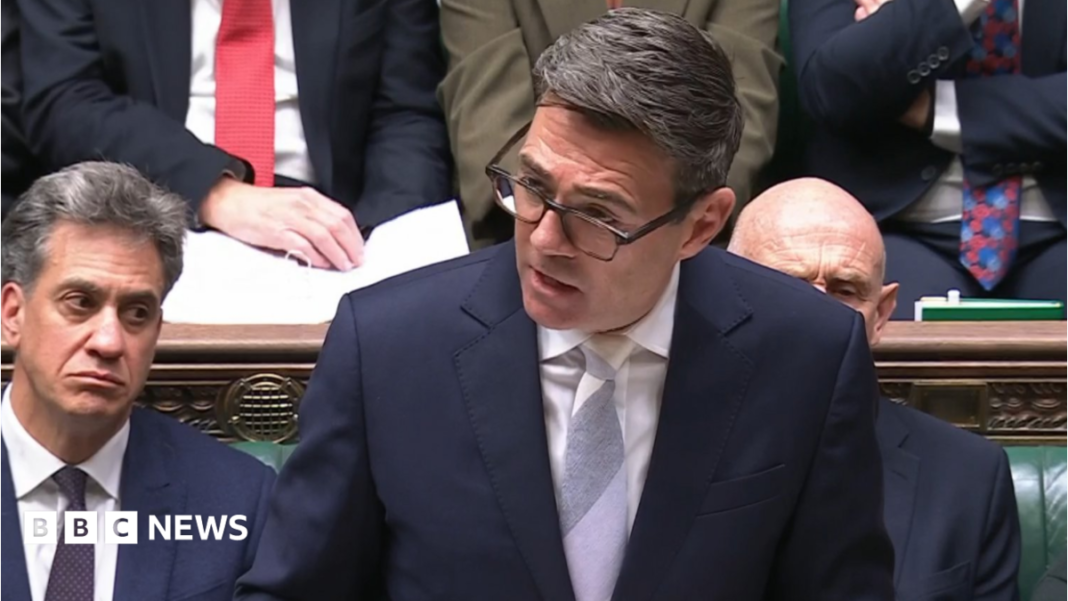
Prime Minister Andy Burnham has told MPs he will push for new post-Brexit deals with the EU at a summit next month.
He said “deeper cooperation” on some key issues – including youth mobility, food and drink, and energy – would help drive economic growth in the UK.
In a statement to MPs, Burnham also warned the EU’s Made In Europe plans posed “a risk to UK manufacturing” and said he was in talks to get “an arrangement” that worked for the UK. The EU proposals aim to protect EU industry from Chinese competitors but could impact British industry and supply chains.
But Conservative leader Kemi Badenoch said the prime minister was “unpicking” the deal the UK signed with the EU.
Although he said he was keen to negotiate a closer relationship with the EU, Burnham made clear Labour’s manifesto commitments not to return to the single market, the customs union, or freedom of movement, would stay in place until the next election.
Burnham said the “immediate priority” was securing a successful outcome at the November summit, adding: “I believe we should then set up a serious dialogue about the different options for our relationship in the long term.
“At every stage, the British public will be the boss, and I am clear that public opinion currently supports a pragmatic approach like the one I am suggesting.”
While the prime minister has committed to the current Labour manifesto’s red lines about Brexit, in interviews after Labour conference, he did not rule out a new manifesto, which could include re-joining the EU.
It is increasingly clear that economic growth, and cooperation on illegal immigration, are going to be at the centre of No 10’s arguments when it comes to selling a closer relationship both at – and beyond – next month’s summit.
The Brexit withdrawal agreement in 2020 agreed the UK’s “divorce bill” payments to the EU, and allowed the rules and regulations in the UK to start to diverge from those in the EU, which was necessary in order to negotiate trade deal with other countries.
But the divergence in food standards caused problems for UK food exports to its largest market, a problem that Sir Keir Starmer started to try to fix by renegotiating some common rules to reduce red tape.
In May 2025, this resulted in a post-Brexit deal agreeing continued access to UK waters for EU fishing boats until 2038, in return for a deal to reduce checks on food exports to the EU, which meant the UK was able to sell raw burgers and sausages back into the EU for the first time since Brexit.
The summit next month will see a series of deals with the EU on the table, Burnham told MPs, including food and drink, energy trading, and coordinating on immigration.
Burnham claimed these agreements could add the equivalent of £10bn per year to the economy by 2040, arguing that it would be a “dereliction of duty” to turn away from the chance to cut bureaucracy.
“At present entire truckloads of plants or fresh produce can be destroyed because of a single missing stamp or a minor paperwork delay,” he said.
“Fresh meat and fish spoil while waiting in trucks, and tonnes of exports have to be written off. Our largest food export, Scottish salmon, faces a 100% rate of document checks at the border, costing us around £100m in lost exports.
“British burgers and other fresh meat products cannot be sold in the EU, seed potatoes from Scotland and shellfish from Wales are banned – this is having a real impact on businesses and the agreement on the table could reverse some of that damage.”
The prime minister said a fresh agreement at the EU summit would also “ease the pressure on prices in the supermarket”.
He said securing an energy deal, involving emissions trading, could “lower energy costs for households and businesses alike”, adding this could cut wholesale energy costs by 20% in Northern Ireland.
Burnham said he also hoped to rebuild links with EU police and security agencies to boost information-sharing and help tackle smuggling gangs.
And he said being open about a new relationship with the EU was necessary to get a good deal on all these things: “If we are serious about promoting growth, controlling immigration, upholding our values and security, it is a conversation we must have.
“Sticking with the status quo is not good enough for Britain.”
-
PM believes Brexit vote was legitimate despite Russia interference claims, No 10 says
-
Published3 hours ago
-
-
Ten years on, Brexit’s economic impact is becoming clearer
-
Published14 September
-
-
Who are the winners and losers from the UK-EU agreement?
-
Published19 May 2025
-
The Conservative leader criticised the prime minister for “unpicking the deal this country signed with the EU a decade after the referendum”.
Badenoch added Burnham would not get a better deal than the one secured by the Conservatives, accusing him of giving the game away ahead of the summit.
“His exact words earlier this year were, ‘the last thing we should do right now is re-run those arguments’ and yet here he is unpicking the deal this country signed with the EU a decade after the referendum,” she said.
“He is not going to get a better deal. The EU are tough negotiators, and it’s not just that the EU are tough negotiators, he has already revealed his entire negotiating hand.
“He has just blurted out everything he wants in this statement and I will tell him now, as a former trade secretary, this is not how you conduct negotiations.”
Mocking the previous negotiations, Burnham said: “She says that, oh, I’ve revealed what I want to do and this isn’t any way to negotiate it – because the Tories were so good, weren’t they, at negotiating deals with our partners?”
Conservative Nigel Huddleston pointed out that post-Brexit trade deals with countries like the US and India meant a new EU deal would not be straightforward.
He said: “As a former trade minister can I also advise the PM, because his officials and minsters clearly have not, that actually it may not be as easy after all, because of clauses in some of the 70-something other trade deals that we did with other countries, to unwind all the things he would like to do.”
However, Liberal Democrat leader Sir Ed Davey welcomed Burnham’s recognition of the “damage” of Brexit and called on him to go further, dropping Labour’s red lines and opening negotiations on joining the EU single market and customs union.

Sign up for our Politics Essential newsletter to read top political analysis, gain insight from across the UK and stay up to speed with the big moments. It’ll be delivered straight to your inbox every weekday.