
A ‘landmark’ moment – why has Rwanda been chosen to host F1?
-
Published
Formula 1 president Stefano Domenicali hailed the new deal to take the sport back to Africa – ending an absence of nearly 40 years – as a “landmark” achievement.
Lewis Hamilton has been pushing the importance of having a grand prix in Africa for some time.
But the sport’s bosses already recognised the importance of the project. And this deal marks the end of nearly 10 years of effort by F1’s owners Liberty Media, which has had an ambition to hold a race in Africa since it bought the sport at the start of 2017.
Rwanda, which has signed a 10-year deal to host an African Grand Prix from the “early 2030s”, has succeeded where Morocco and South Africa, among others, have failed.
That’s because the east-central African country has managed to put together a single plan with the requisite financial backing and ambition to make the project work.
Morocco never found the requisite finances and South Africa has up to four separate projects ongoing with different promoters in three different locations, two in Cape Town.
For F1, with other countries also interested in slots on an already crowded schedule, that was too much to deal with.
The new Rwandan circuit being built in Bugesera, 25 miles south of the capital Kigali, is part of a wider development near a new international airport, currently under construction, that also includes facilities in sectors such as entertainment, residential, hotels, spas and sports science, as well as an innovation hub.
At the moment it is a greenfield site, but insiders say there should be no difficulties completing the project by 2030.
The race is likely to be controversial as Rwanda has previously been accused of sportswashing.
But for Domenicali the deal marks a key moment in the sport’s development under his leadership.
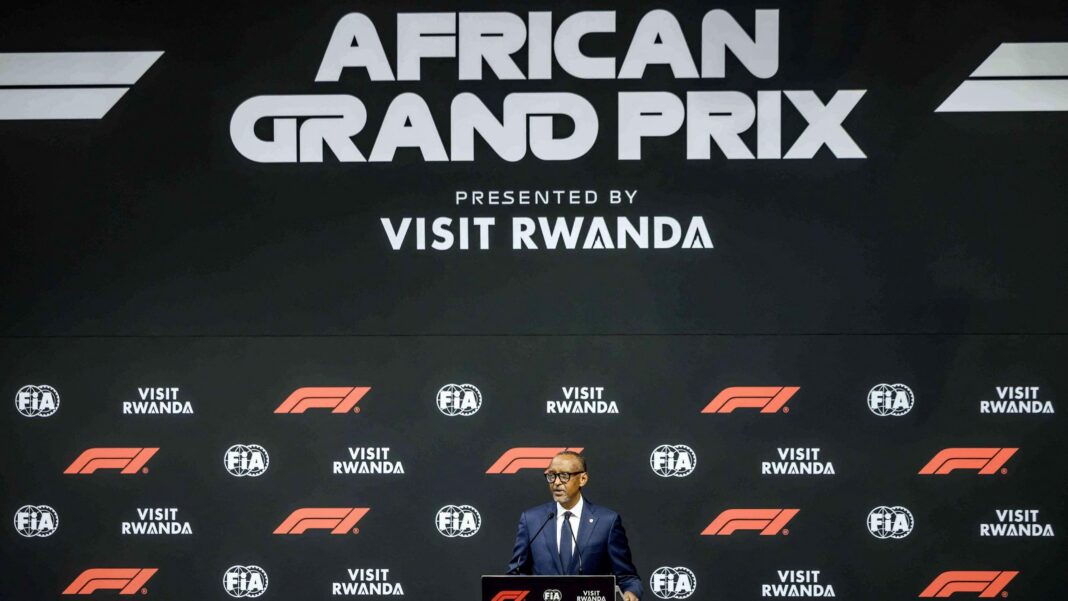
“It is the legacy of all of us to be in this very special moment,” he said as he took the stage at the announcement in Kigali with Rwandan President Paul Kagame and FIA president Mohammed Ben Sulayem.
He added that he was “very proud”, and that F1 was “showing the world what it means to be a country that has a vision”.
“Rwanda is one of the world’s great success stories,” he said. “A nation of extraordinary natural beauty and stunning landscapes, combined with resilience and courage to overcome and be reborn from challenges of its past.
“It is a nation filled with ambition, creativity and determination. A nation that has become a destination for international investment, innovation and opportunity.”
-
Does Norris-Piastri crash show ‘papaya rules’ failing? – F1 Q&A
-
Published8 hours ago
-
From a purely sporting point of view, it’s easy to see why Domenicali is so chuffed.
He has brought F1 back to Africa, where the last grand prix was held in 1993 in South Africa, and opened up a potential market of 100 million people that is largely untapped.
And the track, designed by former F1 driver Alex Wurz, promises a great deal.
Wurz is passionate about creating circuits with natural flow that challenge drivers, and he has envisaged this one in the style of the classic Spa-Francorchamps, Suzuka and Mugello tracks, with its own unique character – and the renders released do bear some obvious similarities to the first part of Suzuka.
The track is not completely finalised – there will be further consultation with teams and drivers – but is envisaged to be about 6km (3.7 miles) long, with 17 corners, and will use the undulating Rwandan landscape to help create a dramatic layout. It has nearly 200m of elevation change.
President Kagame has backed this project as a way of showcasing his country on the global stage, saying it would bring “jobs, skills, tourism and new business” to Africa.
Kagame said he wanted to “pave the way for other races to be hosted on the continent”, and that projects such as this act as a catalyst to “help break the cycle” of African athletes achieving on the world stage but the continent getting little in return.
“We are not just looking at Rwanda alone,” he said. “We are looking at Rwanda in the context of a continent and we have ambitions to bring in our African brothers and sisters to participate. We have had many other big events.”
Why is Rwanda a controversial choice?
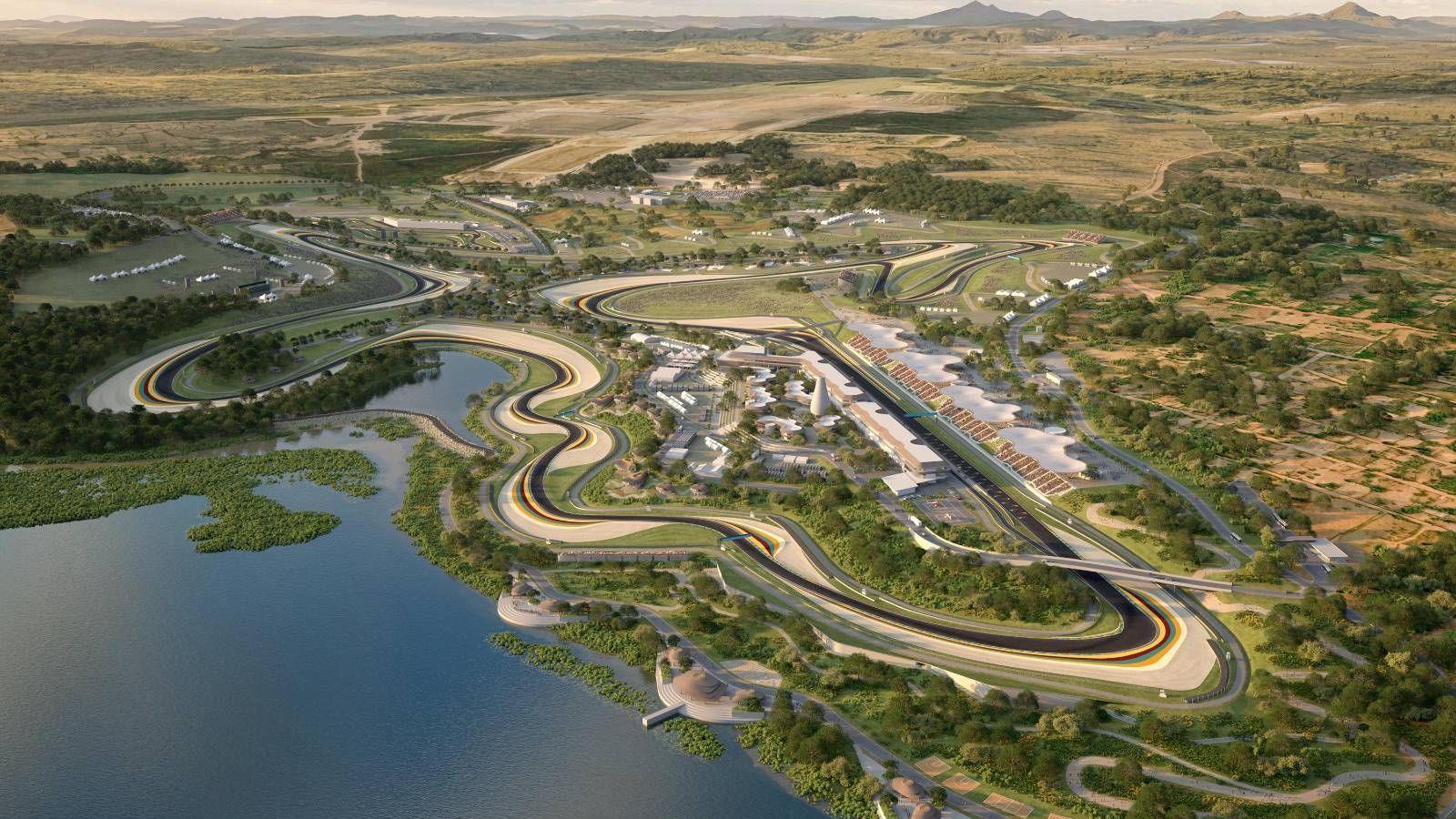 Image source, Formula 1
Rwanda is fighting off any allegations that money that would be better directed elsewhere, in a country that receives international aid, by emphasising that the funding is coming from a newly established development fund combining public and private investment.
Last month, it launched a five-year plan aiming to attract £3.5bn in private investment to accelerate Rwanda’s economic transformation and expansion.
The grand prix is part of the country’s wider strategy to increase tourism, international investment, services and entertainment, bringing more prospects to the country and further growing the overall GDP of the nation.
But Rwanda is not the first country to want to use F1 in this way. And the use of sport to build a country’s image can, depending on context, be viewed in a less positive light, as sportswashing – the use of major sports events to distract from aspects of the country’s conduct that parts of the wider international community find problematic.
The F1 calendar already contains a number of countries that fall into this category, not least Saudi Arabia.
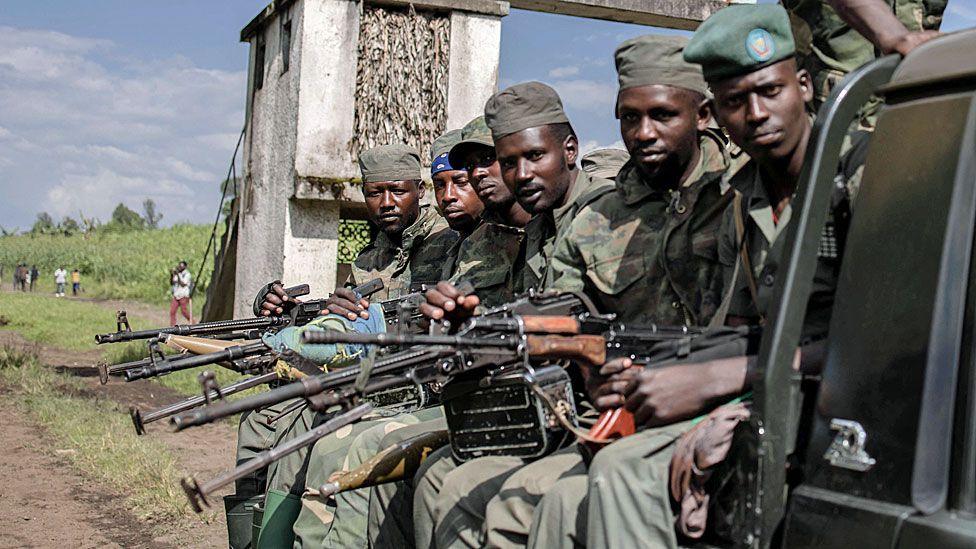
Rwanda is the subject of a case brought by its neighbour, the Democratic Republic of Congo at the International Court of Justice, accusing it of breaching multiple international treaties covering genocide prevention, racial discrimination, women’s rights and torture.
F1 is far from the only sport to face such accusations. They have been levelled at Premier League football clubs Arsenal and Aston Villa as a consequence of sponsorship deals with Rwanda.
Saudi Arabia will host the Fifa World Cup in 2034. Boxing has become heavily reliant on Saudi Arabian finance. Golf came close to being torn apart by Saudi money and the establishment of the rival LIV tour.
F1 is not blind to such issues. Its own charter commits it to “respecting internationally recognised human rights in its operations globally” and emphasises the importance of understanding and monitoring potential human rights impacts and engaging with stakeholders to address any issues that arise.
It also says it focuses its efforts “in relation to those areas which are within our own direct influence”.
A statement in the context of the Rwandan announcement said: “We have the opportunity to inspire and bring the passion of F1 to 100 million people across Africa and sport can be a positive force for good.”
But Felix Jakens, Amnesty International UK’s head of campaigns, said: “Rwanda is buying into the world’s biggest sports to polish its image and deflect from its appalling human rights record.
“Formula 1 says sport can be ‘a positive force for good’. That rings hollow if F1 shrugs off who it is partnering with.
“Formula 1 must not be a bystander. It should use its influence with the Rwandan authorities to push for change, rather than lend its brand to a PR exercise.”
-
-
Published26 June
-