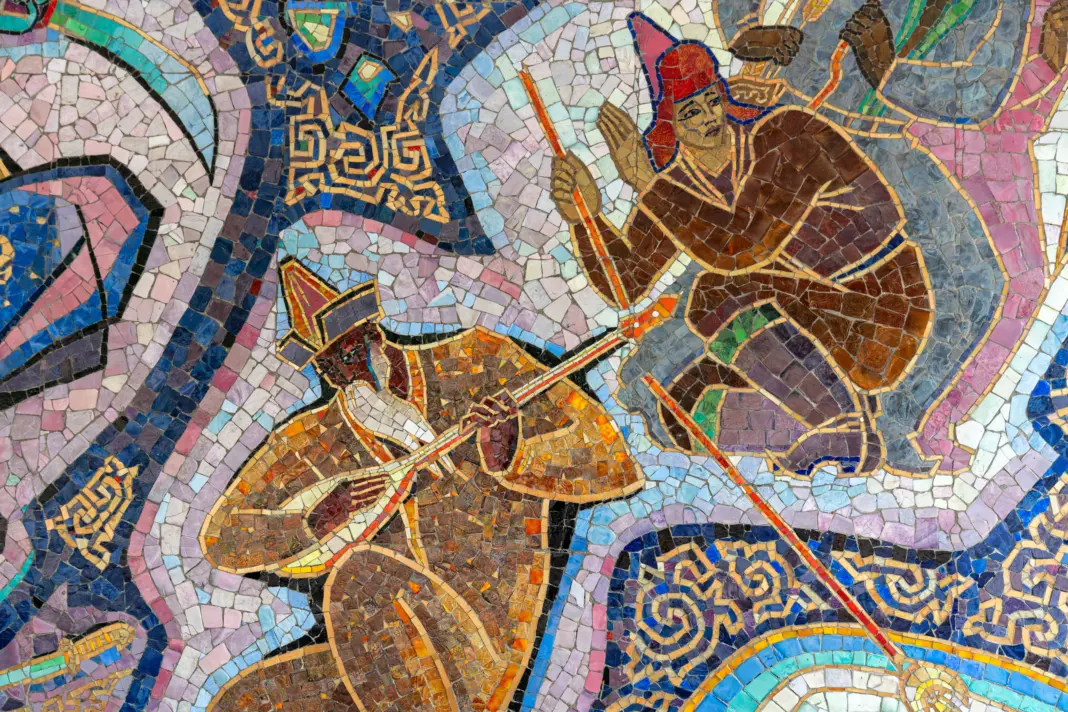

Many of these artisans are building their practice in Almaty, the country’s de facto economic and cultural heart, where remnants of its Soviet past shoulder neo-nomad restaurants on leafy boulevards. Yet despite Almaty’s urban spread, the steppe is never too far away—nor is its indelible imprint on the Kazakh psyche. For millennia, the Great Steppe, a vast landscape of grasslands, deserts, and rolling fields that covers much of Kazakhstan, was home to roaming Turkic tribes, known by the 15th century as the Kazakh Khanate. They raised livestock, changed pastures with the seasons, and used portable yurts as shelter.
Beyond a space to live, the yurt was a sacral structure, based on the belief that the universe itself was shaped like a giant yurt. In the last two centuries, this identity became systematically suppressed: Collectivization, forced settlements, and the Soviet-induced famine of the 1930s killed and displaced over a third of the Kazakh population. Former nomads lost much of their lands, animals, and way of life.
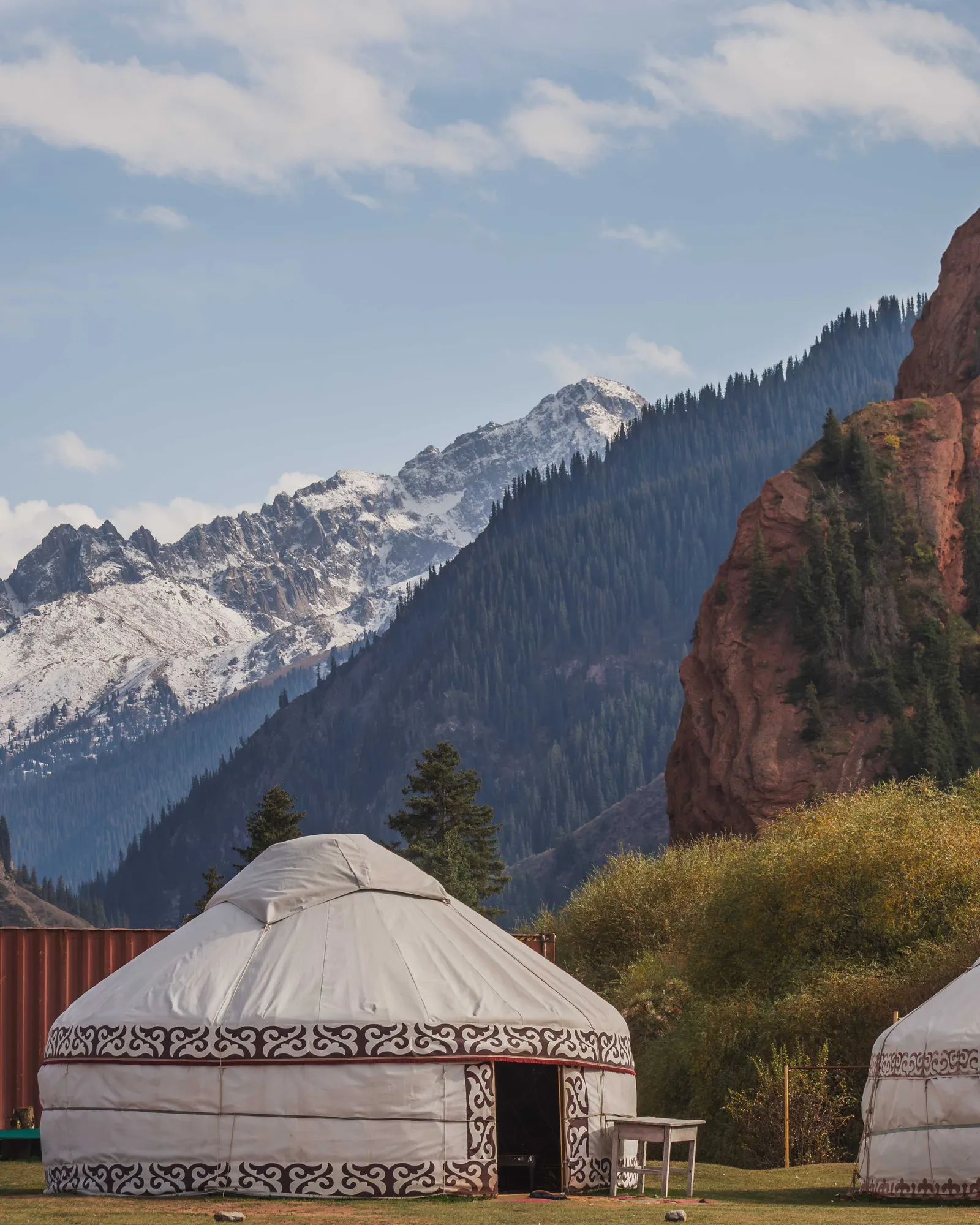
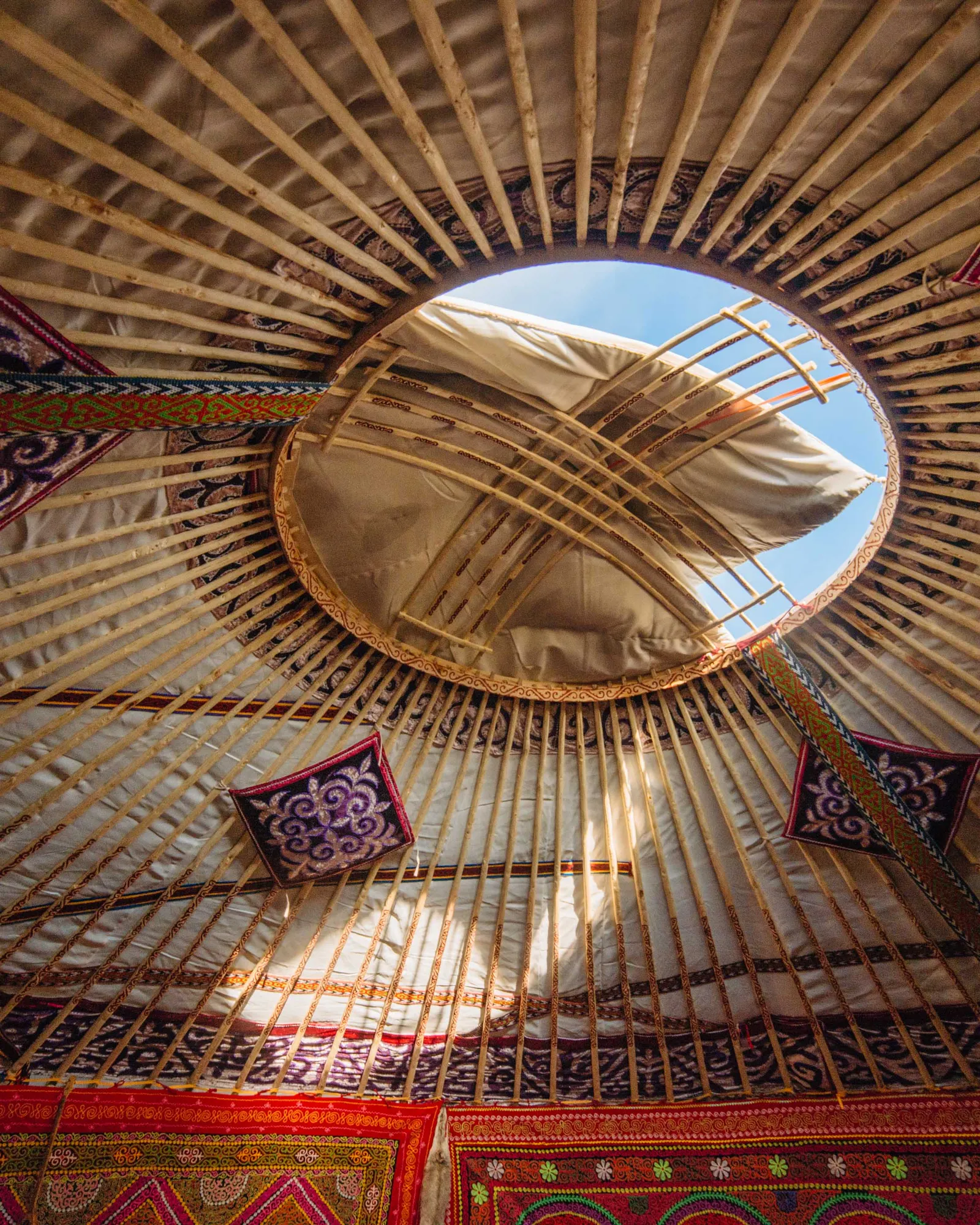
Since gaining independence following the collapse of the Soviet Union in 1991, Kazakhstan has gone through a tumultuous period of change. In the early years, many of the artefacts I remembered from my childhood, like Qarlygash’s mosaics, were dismantled. Felt—used for everything from clothing to rugs to insulation for yurts, and already hard to find in Soviet times—gave way to Chinese imports, and then, as purchasing power improved, to brands like Prada and Gucci.