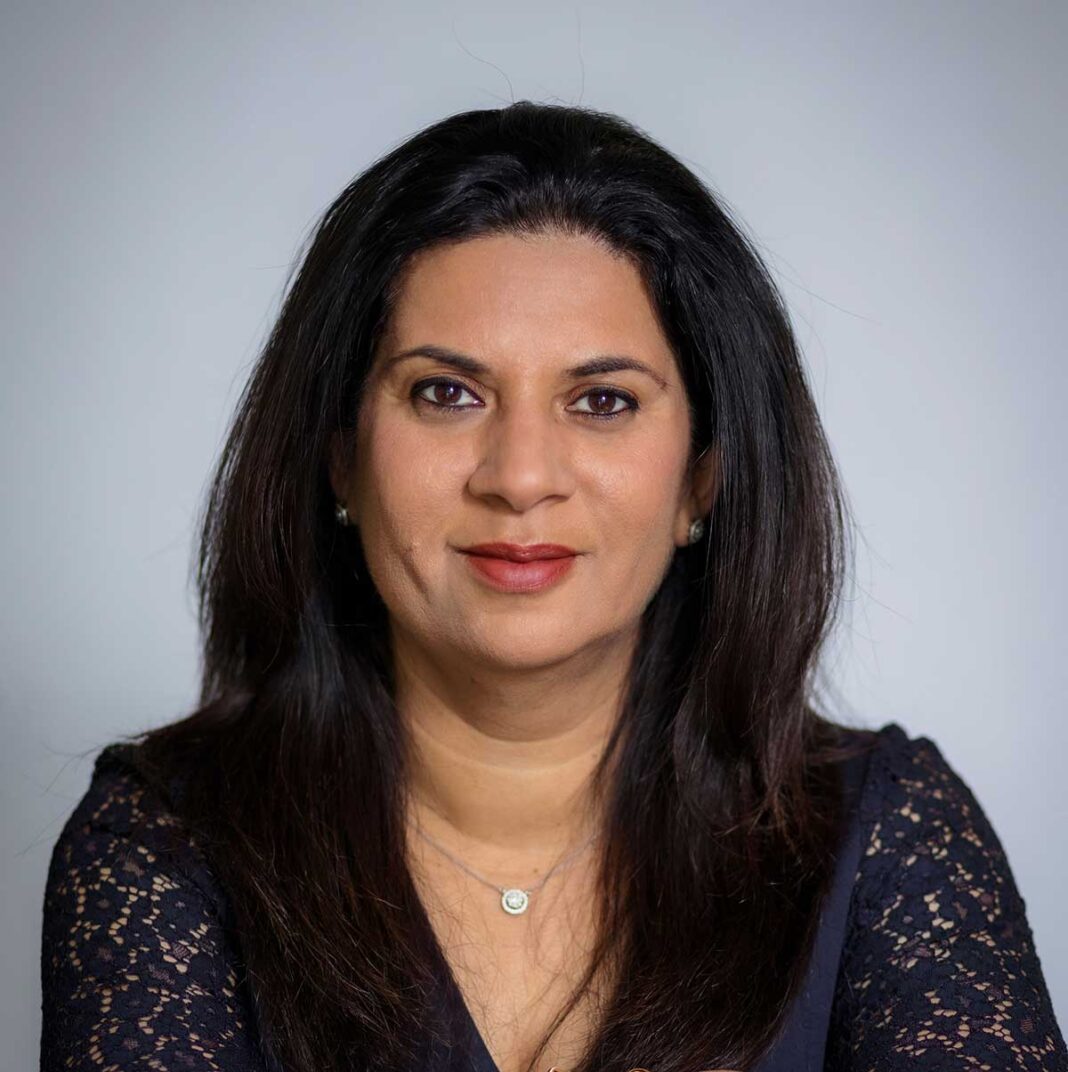

Ritika Wadhwa is the founder and CEO of Prabhaav Global, the London-based consultancy she set up in 2023 to help leaders and organisations use Cultural Intelligence to navigate difference, complexity and change.
Her first book, Not Optional: Applying Cultural Intelligence to Lead Through Complexity and Change, is published by Practical Inspiration Publishing on 27 October 2026. It draws on 30 years of experience across three continents and argues that Cultural Intelligence is a practical, measurable and learnable leadership skill.
She tells Business Matters why she left three decades of employment to start the business, and what she wishes she had done sooner.
What do you currently do at Prabhaav Global?
I am the Founder and CEO of Prabhaav Global, where we help leaders and organisations navigate difference, complexity and change through Cultural Intelligence.
My work is a mixture of keynote speaking, workshops, masterclasses, advisory work and working directly with senior leaders. The organisations I work with range from charities and public services to global businesses, which means I am constantly seeing Cultural Intelligence through different lenses.
I have worked with organisations including London Fire Brigade, The Children’s Society and Comic Relief, and I love that variety. The challenges may look very different on the surface, but underneath there are often the same questions: how do we lead people well, how do we navigate different perspectives, cultures and ways of working, and how do we turn good intentions into meaningful action?
And, most recently, I have added “author” to the list. My first book, Not Optional: Applying Cultural Intelligence to Lead Through Complexity and Change, is launching at the end of this month.
What was the inspiration behind your business?
In many ways, my mother and my daughters have been my biggest inspirations.
My mother was an incredible woman and, although she never set out to teach me lessons about leadership or business, I learnt so much from watching her. She gave me a sense of resilience, possibility and the importance of knowing who you are.
Becoming a mother myself has also made me think differently about the world I want my daughters to grow up and lead in. Questions around opportunity, inclusion, confidence and whose voices get heard feel much more personal to me now.
Almost five years ago, my mother died suddenly. Losing her made me think very differently about impact, purpose and legacy. None of us knows how long we have, so what are we going to do with the time we have?
That was a big part of the motivation behind Prabhaav Global. Prabhaav means impact in Hindi, and I wanted to build something that reflected who I am, what I have learnt and, ultimately, the difference I want to make. I had spent around 30 years being a “pay cheque girl” and eventually decided it was time to follow where my blood beats.
How did writing Not Optional fit into that journey?
Writing Not Optional has been another part of that journey. I had always wanted to write a book, but after my mother died, the idea of creating something that could have an impact beyond me took on a much deeper meaning. I wanted to explore what happens to people who are trying to lead, contribute and succeed within systems that were not necessarily built with them in mind.
Launching the book this year was incredibly emotional. I returned to the University of Westminster, where I studied nearly 20 years ago, this time as an alumna, Board member and author, with more than 200 people in the room.
I dedicated the book to my mother, so having that moment and seeing something that started as an idea become real felt like a very special full circle. For me, Prabhaav and the book are both about the same thing: what impact will we leave behind, and what can we do with the time we have?
Who do you admire?
My mother, without question. She taught me a lot without ever giving me a lecture about it. She had resilience, warmth and an incredible ability to see possibility, even when circumstances were not necessarily easy.
I also admire people who are prepared to be themselves, particularly when that means going against the grain. I have always been drawn to people who challenge the status quo but do it with humanity.
For me, leadership is not about having the loudest voice in the room or having all the answers. It is about being curious, being willing to listen and having the courage to look at yourself as well as everyone else.
That is probably why Cultural Intelligence resonates so strongly with me. It asks us to understand ourselves, understand others and then do something differently as a result.
Looking back, is there anything you would have done differently?
I would have bet on myself sooner.
For a long time, I did what many of us do. I followed the conventional path, worked hard, built a career and waited for the “right” moment. I probably spent too much time worrying about whether I was ready and not enough time asking whether I was willing to learn.
Launching a business after 30 years of employment, and with a young family, was not an easy decision. But I have learnt that you rarely feel completely ready for the things that matter most.
I also wish I had invested in my personal brand earlier. I have always had something to say, but I underestimated the value of making your voice and your point of view visible.
So perhaps the lesson is: do not wait until you feel ready. Sometimes you have to take the leap and grow into it.
What defines your way of doing business?
Purpose, people and impact.
I am very relationship-led. I want people to feel that they can bring their whole selves into a conversation with me, and I try to create the same environment in the organisations I work with.
I am also curious. I ask a lot of questions, sometimes probably more than people expect. I would rather understand what is really happening than arrive with a ready-made answer.
That is important because I do not believe Cultural Intelligence should be something that sits in a policy document or gets wheeled out for a training day. It has to show up in the way people actually lead, make decisions and work together.
That is what I try to bring to my work, whether I am working with a global business, a charity or a public service organisation. The context changes, but the ambition is the same: meaningful change that lasts beyond the room.
What advice would you give to someone starting out?
Believe in yourself and bet on yourself.
But also understand that you do not have to do everything alone. Build your tribe. Find people who believe in you, challenge you, open doors for you and will tell you the truth when you need to hear it.
I would also say: find your own micro-niche. You do not need to be everything to everyone. Work out what makes you different, become known for it and keep getting better at it.
And do not be afraid to evolve. Your first version of yourself or your business does not have to be your final version.
I spent 30 years building a career before I built Prabhaav Global. All of that experience came with me. Sometimes the things you think are detours are actually preparing you for the thing you were meant to do next.