

Why is Starlink internet so important on the battlefield in Ukraine?
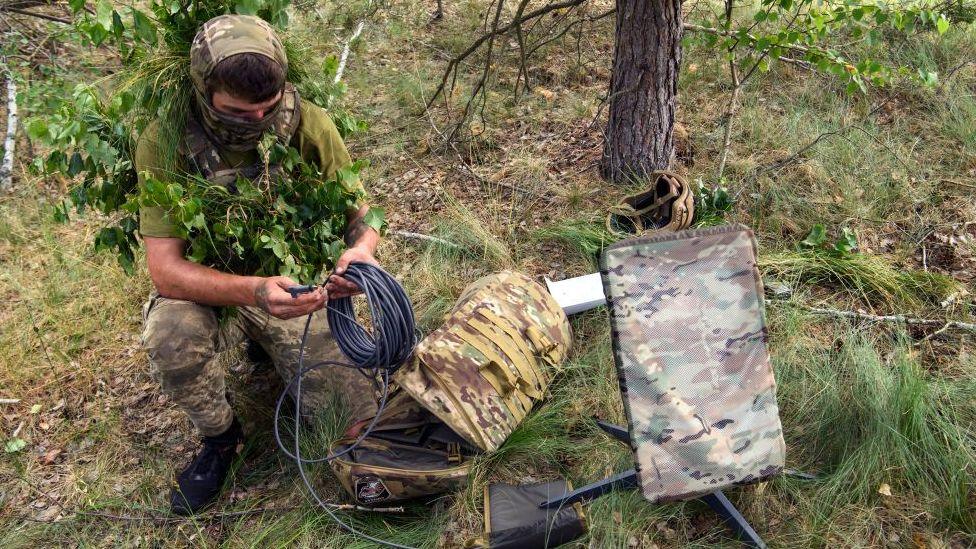 Image source, Getty Images
-
Published
Starlink satellites operated by Elon Musk’s SpaceX provide high-speed internet – something modern war relies heavily on.
For Ukraine, it is vital for communications on the battlefield and effective drone warfare.
Using Starlink, Ukrainian drones can stay connected to operators over longer distances than conventional radio networks and are less vulnerable to jamming.
But on Tuesday night, Starlink suddenly and unexpectedly restricted the speed at which drones could fly while still maintaining internet connection. This disrupted some battlefield “missions”, a top Ukrainian official said, and hampered Kyiv’s ability to protect itself from incoming Russian attacks.
The restriction at 100mph (160km/h) meant that any drone travelling faster than that lost connection and was effectively useless.
“Starlink gives Ukraine the ability to see what’s coming, to protect people,” Kurt Volker, former US ambassador to Nato, told the BBC’s Radio 4 Today programme. “If you cut that off, then more people are going to get killed – and that is a very cynical and callous decision to slow that down the way that has been done.”
Connectivity had been restored by Wednesday evening.
The move has once again shown how Starlink can impact the conflict, which has been raging since Russia launched its full-scale invasion of Ukraine in February 2022.
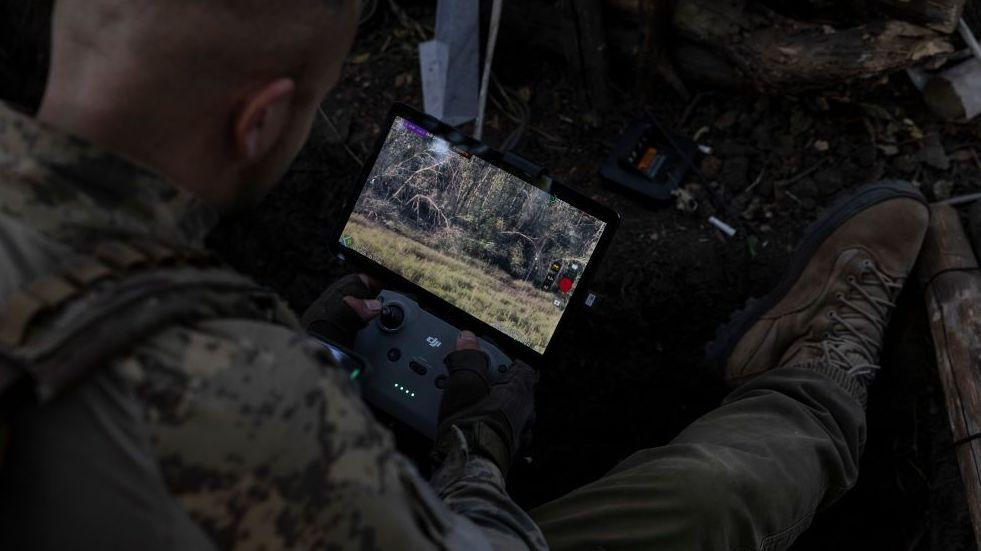 Image source, Getty Images
What are Starlink and Starshield?
Starlink is an internet network that uses satellites in low Earth orbit to provide connectivity, particularly in remote areas and battlefields.
It currently relies on more than 10,000 active satellites, making Starlink the world’s largest satellite constellation.
It is owned by Elon Musk’s SpaceX, and is the company’s biggest revenue driver.
While Starlink is for civilian use, Starshield is its military-grade service, designed for use by the Pentagon.
Starshield relies on the Starlink network, but has greater security like enhanced encryption so that sensitive information can be transmitted without interception.
The US government has allowed Ukraine to use Starlink and Starshield in its defence against Russia. Musk cut Moscow’s access to the service in February, giving Kyiv an advantage in the conflict.
How does Starlink work on a battlefield?
Put simply, Starlink uses its thousands of satellites to ping high-speed internet back to almost every corner of the globe, using terminals on the ground that users can easily buy and set up themselves. As Musk said, they have two instructions: “point at sky, plug in”.
This makes them ideal for use on the battlefield.
“It’s a connection… that you can basically use pretty fast, you don’t need any special equipment, you don’t need to prepare, you just go to the field and usually it works,” Neo, a soldier with one of Ukraine’s drone reconnaissance units, told the Today programme.
The network has become “the backbone of military communications in Ukraine”, George Barros from the Institute for the Study of War (ISW) said, and is used across Kyiv’s naval, land, and air forces.
In Ukraine, both Starlink (the civilian service) and Starshield (the military service) are used, depending on what communications are needed.
It is crucial for the effective use of weapons such as drones, which connect to the network so that operators can see their targets in real time.
The technology effectively allows “drones, artillery and command posts to function as a single real-time network where the time between sensor-to-shooter is minimised,” Barros, who is the ISW’s Director of Innovation and Open Source Tradecraft, told the BBC.
Ukraine also relies on the Starlink network to protect its own skies against incoming Russian attacks, especially jet-powered Shahed drones, Barros said.
Shaheds fly at speeds in excess of 198mph (319 km/h), meaning SpaceX’s restriction makes Ukrainian efforts to chase them down all but impossible.
With no ready replacement for the Starlink network, any speed restrictions or loss of connectivity have major implications for Ukraine defences, and the recent limits have shown how dependent Kyiv is on the network.
 Image source, Lev Radin/ Getty Images
While Starlink can provide access nearly everywhere in the world, that does not mean it can be accessed everywhere, and countries must be licenced to use it.
Russia is one place where it is not authorised, although Kyiv has in the past said that Moscow was still getting hold of the terminals and using them in occupied territory in Ukraine.
“If SpaceX obtains knowledge that Starlink terminal is being used by a sanctioned or unauthorized party, we investigate the claim and take actions to deactivate the terminal if confirmed,” Starlink said in 2024.
But with tens of thousands of terminals in Ukraine alone, it could be a near impossible task to determine which terminals are authorised and which ones are not.
Why did Starlink restrict drone speeds?
The answer remains unclear.
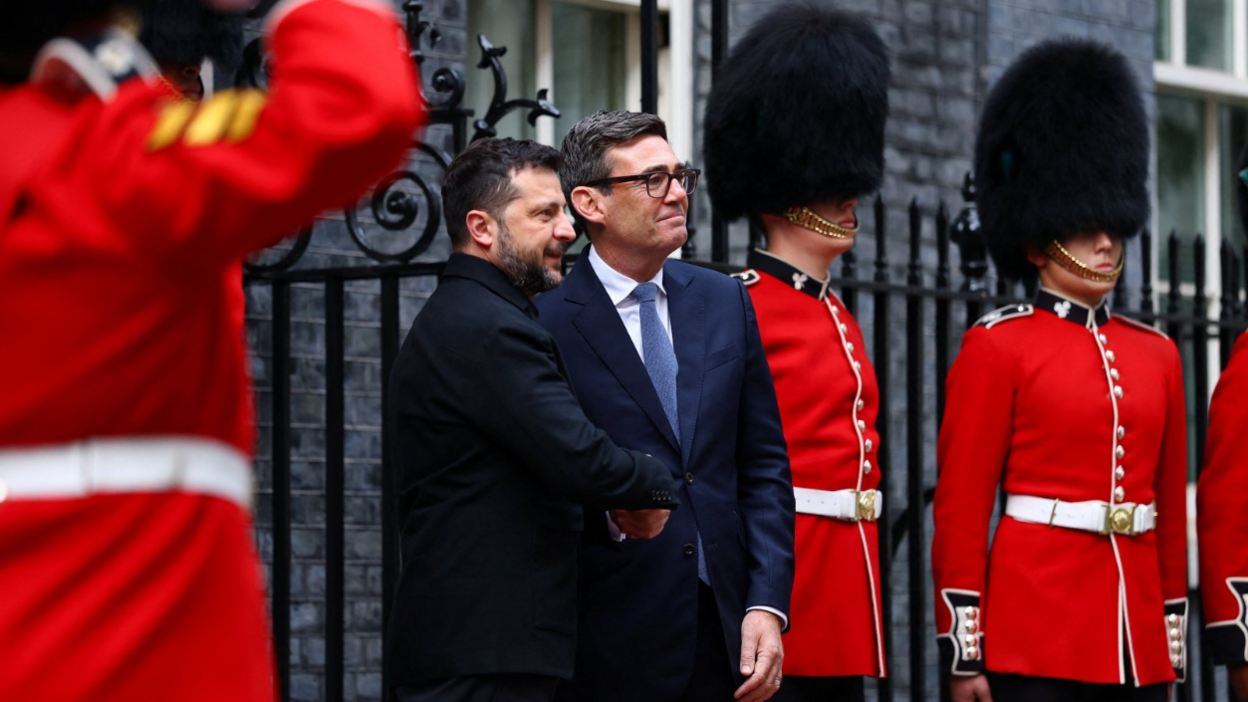
During a visit to London on Wednesday, Zelensky had said he hoped it was just a mistake, however, in a later interview with the Financial Times, he said: “It was not a technical problem, it was the will.”
Musk said that Starshield is managed by the US government and suggested the Pentagon could be responsible.
“Starshield systems are owned and controlled by the US government,” he wrote on X, external. “Any limits on speed or usage are decided by the US military and ultimately POTUS [the president of the United States].”
He added: “Starlink is a commercial service owned and controlled by SpaceX. Usage of Starlink is limited to civilian or defensive activities and cannot be used for offensive military action, as doing so would be inappropriate for a commercial company.”
The BBC has contacted the White House and Pentagon for comment.
The restrictions on Tuesday night came as Russia launched deadly attacks against Ukraine that left 600,000 without power and hit communications and energy facilities used by Ukraine’s military. Residents said they received no warning of incoming drones before they hit.
“It is clear that this action cannot be a coincidence and is related to the current political situation,” Zelensky’s adviser Serhiy Beskrestnov wrote on Telegram on Wednesday morning.
Relations between the US and Ukraine have worsened recently, especially since the US announced a deal with Russia to import its diesel into the American market.
Zelensky called it a gift to Russian President Vladimir Putin, and in response Donald Trump said he thinks “it’s time for Ukraine to get a new president”.
On Sunday, Trump announced a ceasefire on energy infrastructure, but three days later, Ukraine said it would resume the strikes, accusing Russia of ignoring it (the Kremlin said it had never agreed to a ceasefire), and the US of withdrawing crucial support.
Zelensky has accused the US of threatening to withhold crucial intelligence if Ukraine continues striking Russian oil facilities. Trump has denied this, but last week told reporters that Zelensky had “better damn well stop” the strikes.
While in London, Zelensky agreed that he felt betrayed by the US.
Trump’s deal with Russia is his administration’s latest effort to lower US fuel prices ahead of next month’s midterm elections, after months spent grappling with the political consequences of the Iran war which has seen prices skyrocket, souring his standing with the American public.
-
-
Published15 hours ago
-
-
-
Published2 days ago
-
-
-
Published28 May 2025

-