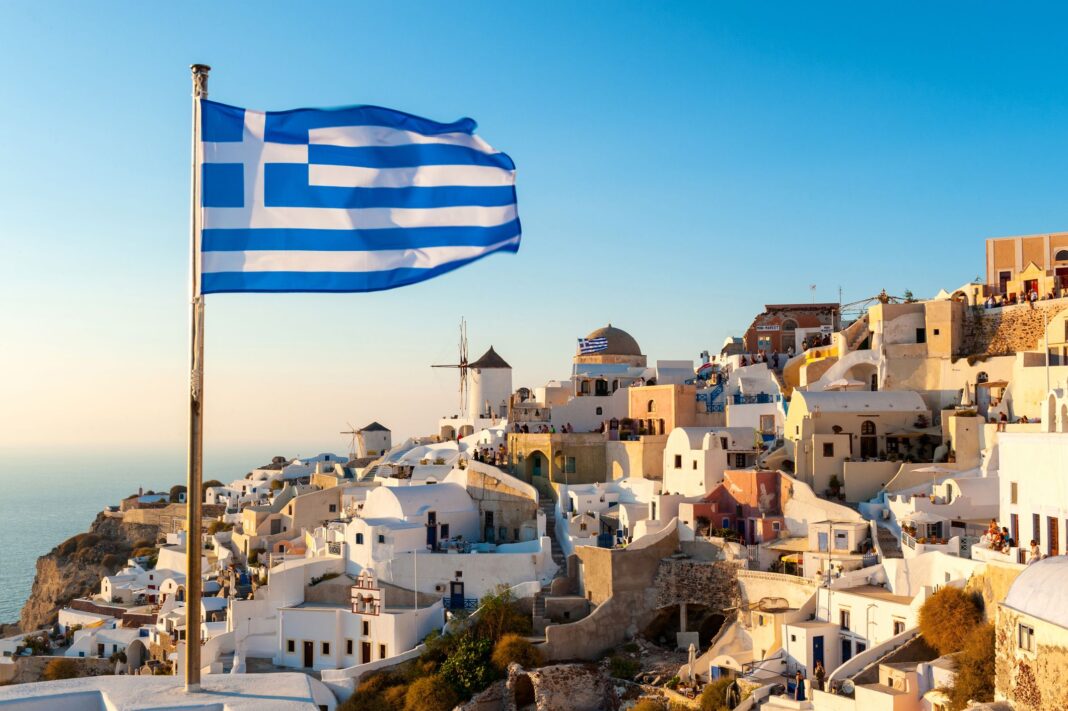
Greece is bouncing back from its crippling sovereign debt crisis of 2009-2018. The Greek economy is starting to perform a lot better and the government has just upgraded its growth forecast for this year from 2% to 2.3%. Unemployment fell from 7.9% last month to 7.4%; it reached 27% at the peak of the debt crisis in 2013. Investment is starting to flow into the country. The government says it is running a primary budget surplus and the debt-to-GDP ratio, close to 200% at the peak, is now 136% and it is set to fall to 128% next year.
The bond markets like the look of all those figures and are charging Greece less and less to borrow money. The yield on its ten-year bonds has fallen to just 4.4%, a lot less than in France or Britain. The days when Greece was about to go bust and threatened to take down the eurozone as it collapsed are now firmly in the past.
Greece has welcomed foreign capital
At the same time, Greece is starting to acquire a reputation as the “new Dubai”. The British hedge-fund billionaire Chris Rokos, the country’s third-largest individual taxpayer, recently moved there. US hedge fund Millennium Management is opening its first office there. Skyscrapers are going up along the Athens Riviera, a stretch of coastline just outside the capital.
Start your trial of MoneyWeek today
Get unparalleled financial insight, analysis and expert opinion you can profit from.
Start your trial
Sign up for MoneyWeek’s free twice-daily newsletter.
Join more than 165,000 subscribers and keep yourself informed with latest financial news, insights and expert analysis to help you understand what really matters when it comes to your finances.
Join more than 165,000 subscribers and keep yourself informed with latest financial news, insights and expert analysis to help you understand what really matters when it comes to your finances.
You can see why. The Greek government has offered a series of tax incentives to bring money into the country. Executives who relocate their tax residency to Greece pay only 5% on their bonuses and carried interest, far less than they would in London, Paris, or even New York. And there is a flat-tax regime that caps tax on foreign income at €100,000, with foreign assets exempt from Greek inheritance tax. A similar deal in Italy helped turn Milan into a booming financial centre, at least until the government increased the flat-rate payment to €300,000, and now it is doing the same for Athens. With the war in the Persian Gulf, there is a space in the global market for a low-tax, trading and financial centre, and Greece looks willing to take the prize.
It has, however, been a long, hard slog for Greece to get itself back on track. At the height of the eurozone crisis, it could have left the single currency and massively devalued, while defaulting on its debts. That would have been one way out of the mess. In the end, the country resolved to knuckle down and work its way back to financial stability. Over five painful years, GDP fell by almost 30%, a collapse on the scale of the Great Depression of the 1930s, and it has still not managed to get back to its pre-crisis level of output. Public spending was cut by 25%. The civil service was slashed from one million to slightly over 600,000, while wages were frozen.
Unemployment soared, wages fell by 25% or more and up to 50% in sectors such as tourism. Pensions were cut 11 times to keep pace with the austerity programme. Most of the toughest cuts were imposed by the so-called “troika”, made up of the European Union, the European Central Bank and the International Monetary Fund, and that gave the local politicians the space to make some very hard decisions. Even so, eventually spending was brought down and the public finances started to stabilise.
There is a lesson in that. More and more countries are starting to come under sustained attacks from the bond markets. France is right in the firing line, but so is Britain, and perhaps Italy as well. Yields are starting to soar as investors become more and more nervous of the deadly combination of rising debt and sluggish or non-existent growth. They may find themselves caught up in a full-scale sovereign-debt crisis at any moment.
Greece shows that there is eventually a path to recovery. The trouble is, it takes a long time, deep cuts to the size of the state, and a willingness among the voters to make a lot of sacrifices to restore the country’s competitiveness. The outlook for Greece is bright again. But it was a very tough slog. It is hard to imagine countries such as France and Britain putting up with the same kind of austerity – even though, just like Greece, it may be the only way finally to bring their debts under control.
This article was first published in MoneyWeek’s magazine. Enjoy exclusive early access to news, opinion and analysis from our team of financial experts with a MoneyWeek subscription.